Michael Sheen on Welsh Identity and Political Shift
Actor Michael Sheen discusses the evolving nature of Welsh identity, community values, and the shifting political landscape, emphasizing a potential departure from long-standing Labour dominance. He explores the importance of cultural platforms like the National Theatre of Wales in fostering national conversations and advocates for Wales to achieve self-sufficiency for a free choice in its future.

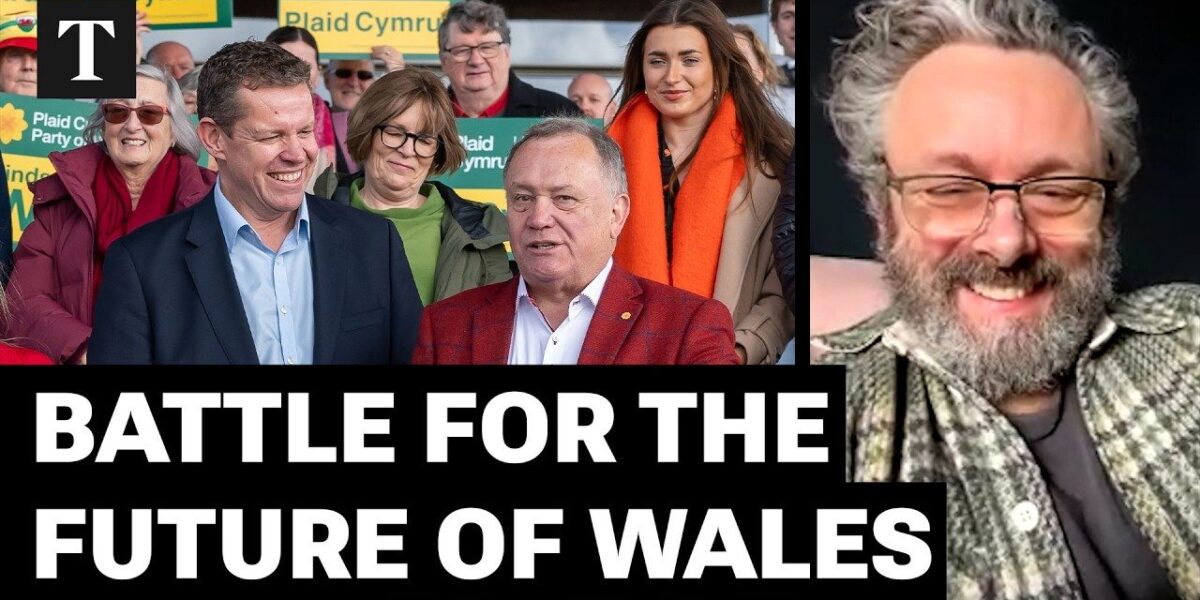
Michael Sheen Reflects on Welsh Identity Amidst Political Crossroads
In a candid discussion, acclaimed actor Michael Sheen delves into the evolving landscape of Welsh identity, culture, and politics, particularly in the lead-up to significant Senedd elections. Sheen, known for his powerful performances and deep connection to his homeland, articulates a complex view of what it means to be Welsh, emphasizing community, history, and a yearning for self-determination.
The Essence of Being Welsh
On the eve of St. David’s Day, Wales’s national day, Michael Sheen shared his profound connection to his Welsh heritage. “It’s um, you know I mean in one way you know a lot of the stuff around nationalism and you know patriotism it’s a complete accident of birth isn’t it? Where you born who you born to is a complete accident,” Sheen mused. However, he quickly pivoted to the profound impact of his upbringing. “I do feel particularly grateful for having grown up in a in a community um that was very uh loving and supportive and generous and resilient.” He explained that his appreciation for these qualities grew with distance, realizing that not all communities share the same inherent warmth and solidarity, qualities he sees as a hallmark of Welsh communities, often forged in the crucible of industrial hardship.
Sheen elaborated on how his experiences living and working abroad, from London to America, only deepened his understanding and appreciation for his Welsh roots. “Each time I moved, I had a new appreciation for where I came from because I realized that not everywhere is the same and the places are different.” He noted that the historical context of Welsh communities, often built around challenging industrial circumstances, instilled values that persist even after the industries themselves have faded. This unique history, culture, and the distinctive landscape of Wales, from its coastal beginnings to its valleys, collectively form his sense of homeland.
“Our particular history as well is something that has come to mean more to me over time. Um, and I suppose I’ve I that has that has bound me to my to my country, the the history of it, the culture of it. Um, and the communities, the people, the values there.”
Navigating the Anglo-Welsh Relationship and Historical Narratives
The conversation naturally turned to the complex relationship between Wales and England within the United Kingdom. Sheen described it as an “always going to be a roller coaster ride,” acknowledging both shared history and inherent tensions, particularly concerning dominant cultures. His upcoming role as Owain Glyndŵr in a Gary Owen play is seen as a deliberate exploration of this historical dynamic.
“I’m really looking forward to to playing O England and doing uh Gary Owen’s play because I think it’s really important for us to to to ask those questions and to look at that history and and and not just about the historical aspect of it, but you know, what it says about now and and where we’re at now.” He connected this historical introspection to the current political climate in Wales, suggesting the play will resonate in the aftermath of upcoming Senedd elections.
The Shifting Political Landscape in Wales
Sheen observed a significant potential shift in Welsh politics, moving away from the long-standing dominance of Welsh Labour. He characterized the upcoming Senedd election as a potential battleground between two distinct visions for Wales, primarily represented by Plaid Cymru and Reform UK. “Labor is obviously Welsh Labor has been the dominant political force in in Wales um for as long as anyone can remember. That seems to be about to change,” he stated.
When asked about Labour’s perceived decline, Sheen pointed to a global sentiment of change and dissatisfaction with existing systems. “I think everyone acknowledges that we’re we’re in a a moment of um of huge transformation um where whether it’s conscious or not, people are sort of uh feeling that the old order is dying or has died.” He identified a “vacuum” where the new order has yet to fully emerge, leading to anxiety about the future.
The Question of Welsh Independence
The topic of Welsh independence was addressed with nuance. Sheen expressed a desire for Wales to reach a point of self-sufficiency and strength, enabling a free choice about its future. He likened the argument against independence based on perceived weakness to an abusive relationship.
“My my sense is look, let’s get to the point where we can survive, where we do have everything going for us, and then we can choose freely what we want to do. Do we want to be part of or do we want to be separate from um or alongside?”
He believes that the long period of Labour’s dominance may have stifled these crucial conversations about Wales’s economic, socioeconomic, and political standing. He explicitly stated his support for Plaid Cymru among the parties with a realistic chance of gaining significant influence, believing they have Wales’s best interests at heart.
The Role of the National Theatre of Wales and Arts in National Conversation
Sheen discussed his instrumental role in establishing the National Theatre of Wales, stepping in during a funding crisis. He sees the theatre as a vital platform for national conversations, enabling a deeper understanding of Wales’s present by exploring its past.
“I think what what then I started to realize was that um, you know, it’s incredibly important I think for us all to culturally to have a platform to have these conversations national conversations um to be able to to to understand where we’re at now is so important in order to know well where what are the options moving forward.” He emphasized the importance of arts and culture as arenas for imagining possibilities and fostering rounded discussions, particularly by enabling writers to tell significant stories on a grand scale.
‘Our Town’ and Universal Themes Through a Welsh Lens
The inaugural production of the National Theatre of Wales, Thornton Wilder’s ‘Our Town,’ was highlighted. Sheen explained how the play, despite its American origins, was adapted to resonate with Welsh audiences by incorporating Welsh hymns and place names. He found the play’s themes of community, family, and cherishing life’s moments deeply aligned with his own Welsh heritage and values.
“So I always sort of it always resonated for me um in terms of my Welsh heritage then um and I always thought it would make uh it it could have a lot of impact for Welsh audiences.” He noted that the play’s specificity, when viewed through a Welsh lens, paradoxically enhances its universal appeal, a lesson he’s learned throughout his career: “the more specific you are about something, paradoxically, the more chance it has to be universal somehow.” The positive reception in Wales and subsequent previews in England reinforced this belief.
Welsh Language and Global Anxieties
While Sheen acknowledges the importance of the Welsh language, he admits he is not yet fluent, though he aspires to perform in Welsh. He highlighted the collaboration between the National Theatre of Wales and Theatr Genedlaethol Cymru as a positive step towards integrating both languages on stage.
Reflecting on the broader state of the world, Sheen described it as an “anxious time,” referencing the concept of a liminal space where “the old is dying, but the new cannot yet be born.” He expressed concern about the fragility of democratic institutions and the rise of ideologies thought to be in the past. However, he also sees this period as an opportunity for renewal and reimagining how societies live together, emphasizing that positive change is possible if actively pursued.
The Tightrope Walk Between Identity and Division
Sheen concluded by addressing the paradox of identity and community, which can sometimes morph into nationalism or jingoism. He believes the current political discourse, regardless of party affiliation, reflects a deep-seated desire for community and a feeling of being exploited. He hopes for a positive resolution to these societal tensions, drawing optimism from the resilience and collaborative spirit he observes in people.
“It’s when you’re actually dealing with the person standing next to you, people t it tends to bring the best out of people, I think.”
Looking ahead, Sheen’s focus remains on fostering dialogue, celebrating Welsh culture, and advocating for a future where Wales can make free and informed choices about its destiny, driven by a strong sense of community and self-worth.
Source: Michael Sheen: Senedd Election Is Reform Vs Plaid Cymru (YouTube)

Related Articles


Sleepwalking Tragedy: Husband Kills Wife in Tragic Accident
A romantic getaway turned into a nightmare for Brian Thomas when he sleepwalked and tragically killed his wife. The court later dropped all charges due to the extreme circumstances.

J.D. Vance’s ‘Humiliation Tour’ Hits Rock Bottom Amid Empty Event
Senator J.D. Vance experienced a significant public relations setback this week, highlighted by a poorly attended Turning Point USA event and criticism for his remarks about Pope Francis. The senator's recent political engagements appear to have backfired, raising questions about his standing.


Trump Sees Iran War Ending Soon Amidst Escalating Threats
U.S. President Donald Trump expressed optimism that the conflict with Iran could end soon, despite ongoing threats between the two nations. A senior Iranian official warned of regional trade blockades if U.S. naval blockades are not lifted. Experts caution that any deal must address core issues, not just short-term military gains, to achieve lasting strategic success.