Epstein Domino Effect: Prince Andrew’s UK Arrest Could Force US Hand, Exposing Powerful Elites
Prince Andrew's recent arrest in the UK on charges linked to Jeffrey Epstein's sex trafficking ring could be the catalyst needed to expose powerful US co-conspirators. Legal experts anticipate Andrew's cooperation, potentially forcing a reluctant US Department of Justice to act, while state-level investigations offer a crucial workaround to pursue justice against those implicated.

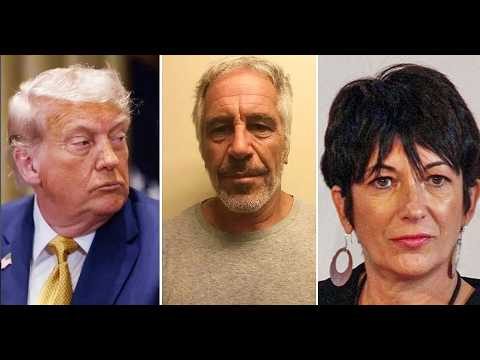
Epstein Domino Effect: Prince Andrew’s UK Arrest Could Force US Hand, Exposing Powerful Elites
The recent arrest of Prince Andrew in the United Kingdom on charges related to the Jeffrey Epstein sex trafficking scandal has sent shockwaves across the globe, igniting a fresh wave of speculation and renewed calls for accountability. While many in the United States have lamented a perceived lack of progress in holding American co-conspirators responsible, legal experts suggest that Andrew’s detention across the Atlantic could be the crucial catalyst needed to unravel the broader network of powerful individuals implicated in Epstein’s heinous crimes, potentially forcing the hand of a seemingly reluctant U.S. Department of Justice (DOJ).
The development marks a significant turning point in the ongoing saga surrounding the late financier Jeffrey Epstein, whose vast criminal enterprise of sexual abuse and trafficking of underage girls spanned decades and continents. Epstein’s 2019 arrest and subsequent death in a New York jail cell left many questions unanswered and a lingering sense of injustice, particularly concerning the identities and culpability of his high-profile associates.
The Prince Andrew Catalyst: Unlocking a Pandora’s Box
For career prosecutors, the arrest of a figure as prominent as Prince Andrew immediately conjures a familiar scenario: the potential for a cooperating witness. Glenn Kirschner, a former federal prosecutor, articulates this perspective with stark clarity. “The minute I saw the news, frankly, the pretty surprising news that they arrested former Prince Andrew, my mind went to a place that it always went as a career prosecutor when I heard that somebody got locked up or I indicted somebody who I knew could implicate others, and that is to cooperating witness land.”
This ‘cooperating witness land’ is a crucial legal strategy where defendants, facing severe penalties, opt to provide information against others – often those in higher positions or with deeper involvement – in exchange for a reduced sentence or other legal concessions. While Kirschner concedes he never prosecuted royalty, his extensive experience with serious criminals, particularly those involved in child abuse, informs his assessment. He notes that few criminals are weaker than those who abuse children, and when the full force of the law comes crashing down, their inclination is often to point fingers at others within their circle of influence.
The motivation for such cooperation is multi-faceted. Beyond the obvious desire for leniency, there’s a psychological element. “Misery loves company,” Kirschner explains. The anger and resentment of being held accountable while other equally culpable, powerful individuals remain untouched can be a powerful driver for disclosure. Prince Andrew, stripped of his royal titles and facing criminal charges, would likely contemplate why he alone should bear the brunt of justice when he was part of an “elite club of those with lots of money and those who thought they were above the law and those who like to sexually abuse young girls.” This sentiment could compel him to reveal what he knows about the illicit activities of other rich, influential, and connected individuals.
Unpacking the Epstein Network: A Global Web of Influence
Jeffrey Epstein cultivated a vast network of powerful friends and associates, ranging from politicians and business magnates to royalty and academics. His private jets, dubbed the “Lolita Express,” and properties in New York, Florida, and the Caribbean, served as venues for his crimes and meeting points for his elite circle. The allegations against Epstein and his alleged co-conspirators include not only direct sexual abuse but also sex trafficking, procurement of underage girls, and obstruction of justice.
Prince Andrew’s association with Epstein has been a subject of intense scrutiny for years. He has consistently denied allegations of sexual misconduct and any knowledge of Epstein’s criminal activities. However, his continued presence in Epstein’s orbit, even after Epstein’s 2008 conviction for soliciting prostitution from a minor, raised serious questions. The civil lawsuit filed by Virginia Giuffre, alleging that she was trafficked to Andrew by Epstein when she was underage, brought these allegations into sharp public focus and ultimately led to a settlement and the stripping of Andrew’s military titles and royal patronages. The current “arrest” mentioned in the transcript likely refers to a significant legal development that heightened the pressure on Andrew, even if it was not a formal criminal arrest leading to immediate incarceration in the traditional sense, but rather a major step in judicial proceedings or extradition efforts that put him squarely in the crosshairs of criminal accountability.
The potential for Andrew’s cooperation is not merely speculative; it’s a calculated expectation based on the dynamics of criminal prosecution. Should he begin to talk, the information he possesses could be invaluable, potentially shedding light on others who participated in or facilitated Epstein’s crimes, whether in the UK, the US, or elsewhere.
Monitoring for Movement: Signs of Cooperation and US Action
Detecting whether Prince Andrew is cooperating with authorities would depend on several factors, as Kirschner outlines:
- Public Record in the UK: Any formal cooperation agreement or plea deal would likely become a matter of public record.
- Leaks to Investigative Journalists: The UK, like the US, boasts a robust tradition of investigative journalism. Information about high-profile cooperation could leak to the press.
- US DOJ Criminal Probes: Most significantly, a sudden flurry of criminal investigations launched by the US Department of Justice would be a strong indicator that new, actionable intelligence has been received, potentially from overseas sources like Prince Andrew.
The latter point is particularly salient, given the widespread perception of federal inaction in the US regarding the Epstein case. Kirschner critically notes that certain figures within the US legal landscape (specifically mentioning “Pam Bondi and Todd Blanch and Cash Patel”) have shown no inclination to launch criminal probes related to the Epstein files. This perceived reticence stands in stark contrast to the actions of other “civilized countries” such as France, the UK, Turkey, Latvia, Lithuania, and Poland, which have actively pursued investigations into Epstein-related crimes.
The implication is clear: if the US DOJ, currently seen as turning a “blind eye,” were to suddenly initiate investigations, it would likely not be due to a change of heart, but rather due to overwhelming information provided by foreign authorities – information that becomes impossible to ignore. This would signal that international pressure, coupled with potential cooperation from individuals like Prince Andrew, is finally compelling federal action.
The Current State of US-UK Legal Cooperation: A Troubled Landscape
Historically, the US and UK have enjoyed a robust and cooperative relationship in cross-border criminal investigations and extradition matters. Kirschner recalls his own experience working with British authorities on an extradition case for a murder suspect. This synergy ensured that criminals could not easily evade justice by simply crossing international borders.
However, the current political climate and perceived politicization of the US Department of Justice under the previous administration have cast a shadow over this once-reliable partnership. Kirschner expresses concern that even if UK authorities were to reach out to the US DOJ with critical information from Prince Andrew, they might be “snubbed” or met with continued inaction. The prevailing sentiment, as articulated in the discussion, suggests that the federal DOJ has been prioritizing the protection of politically connected individuals, implicitly “dear leader in the Oval Office,” over the impartial enforcement of the law.
This breakdown in traditional international cooperation underscores the unique challenges in pursuing justice in the Epstein case, where political influence appears to intersect with criminal accountability. It highlights a troubling erosion of the rule of law, where perceived political allegiances seemingly supersede the fundamental duty to investigate serious crimes, especially those involving the sexual exploitation of minors.
The State-Level Workaround: A Beacon of Hope
Given the perceived federal paralysis, a crucial “workaround” emerges: state-level investigations. While ordinarily, foreign law enforcement would engage directly with federal authorities on international criminal matters, the current circumstances might necessitate a different approach. “Nothing is to stop state authorities from opening criminal probes provided they have jurisdiction over the crimes,” Kirschner affirms.
This means that state Attorneys General and District Attorneys in jurisdictions where Epstein’s crimes allegedly occurred could step in. For instance:
- New York: Epstein’s infamous Manhattan mansion was a central hub for his activities. Alvin Bragg’s District Attorney’s office in New York or Attorney General Letitia James’s office would have clear jurisdiction over crimes committed there.
- New Mexico: Epstein’s Zorro Ranch has been a subject of intense scrutiny, with allegations of abuse occurring on the property. State authorities in New Mexico could launch investigations.
- Florida: Epstein’s primary residence in Palm Beach, Florida, was the site of many of his crimes, leading to his initial lenient plea deal in 2008. Florida state law enforcement could pursue new investigations.
These state-level officials, particularly those in jurisdictions with Democratic leadership, might be more inclined to pursue justice aggressively, free from the political pressures that appear to influence the federal DOJ. Should foreign authorities find themselves rebuffed by the federal government, they could directly approach these state prosecutors, offering information and cooperation.
Building Cases for the Future: Concurrent Jurisdiction and Federal Transition
A critical advantage of state-level investigations is their ability to lay the groundwork for future federal action. As a former federal prosecutor, Kirschner confirms the common practice of cooperation between state and federal law enforcement agencies. “In my lived experience as a federal prosecutor, we cooperated all the time with state law enforcement authorities, both police and prosecutors, when we had a defendant, for example, of mutual interest to us.”
Many crimes related to the Epstein scandal fall under “concurrent jurisdiction,” meaning they violate both state and federal laws. For example, sexual offenses against minors are state crimes, but if they involve sex trafficking across state lines or international borders, they also become federal offenses. This overlap allows state prosecutors, like Alvin Bragg in Manhattan, to initiate and build a robust case. Once a more constitutionally loyal administration and a non-politicized Attorney General are in place at the federal level, these state-developed cases, complete with evidence and findings, could be seamlessly transitioned or augmented by federal resources.
This strategy offers a pragmatic path forward: states can continue to fight for justice even when the federal government is perceived as derelict in its duty. When the federal landscape shifts, the accumulated state-level evidence can then empower the DOJ to pursue a comprehensive, nationwide prosecution, ensuring that no co-conspirator, regardless of their status, escapes accountability.
The Deterrent Effect: A Message to Future Perpetrators
Beyond holding individual perpetrators accountable and vindicating victims, criminal prosecutions serve a vital function: deterrence. The full force of both state and federal governments, when applied rigorously, sends an unequivocal message to those who might contemplate similar heinous crimes. “You want to make sure that folks who are maybe on the fence about whether they’re going to commit a crime or not see that others who have opted in favor of criminal conduct have been hammered,” Kirschner emphasizes.
While the “feds have the biggest hammer” in terms of resources – including agencies like the FBI, multi-state jurisdiction, and potentially longer sentences – state prosecutors also play a crucial role. Kirschner points out that the most accomplished criminal prosecutors in the nation are often found in state district attorneys’ offices, as they handle the vast majority (95-97%) of criminal cases. While federal prosecutors have more resources, state prosecutors often possess unparalleled expertise in specific types of crimes due to their sheer volume of experience.
A combined, vigorous prosecution at both state and federal levels would maximize the deterrent effect. It would signal that the justice system, despite its current challenges, remains capable of pursuing justice without fear or favor, and that engaging in such egregious conduct will result in severe consequences, regardless of one’s wealth, power, or connections. The Epstein scandal, with its shocking revelations and the perceived impunity of many involved, demands such a comprehensive and unwavering response to restore public trust and prevent future atrocities.
Conclusion: A Long Road to Justice, But Hope Remains
Prince Andrew’s arrest in the UK represents more than just a legal setback for a former royal; it is a potential linchpin in the broader effort to bring all of Jeffrey Epstein’s co-conspirators to justice. The expectation that Andrew, facing immense pressure, will cooperate and implicate others could force a reckoning within the US justice system. While the federal Department of Justice faces scrutiny for its perceived inaction, the robust capabilities of state-level prosecutors offer a viable pathway to continue building cases and pursuing accountability.
The synergy between international pressure, potential cooperation from high-profile defendants, and determined state-level investigations could ultimately compel the federal government to act decisively. The pursuit of justice in the Epstein case is not merely about punishing individuals; it is about upholding the rule of law, protecting the most vulnerable, and sending a powerful deterrent message that no one, regardless of their status, is above the law. The journey is long and complex, but the recent developments suggest that the walls of impunity surrounding Epstein’s elite circle may finally be starting to crumble.
Source: Epstein co-conspirators PANIC amid HUGE UPDATE (YouTube)

Related Articles

Epstein Files: Survivor Disputes DOJ Claims of Full Release
A survivor of Jeffrey Epstein's abuse, Danielle Bensky, disputes the Justice Department's claim that all relevant files have been released. Citing specific missing documents and contradictory official statements, Bensky believes more information is being withheld, potentially to protect powerful individuals. Despite frustrations, she notes progress in how sexual assault cases are generally handled.


Vance Defends Trump: Epstein Friendship Claim Is A Hoax
Senator JD Vance asserts that claims of Donald Trump being close friends with Jeffrey Epstein are a "hoax." Vance cited emails suggesting a mutual dislike and even Trump reporting Epstein to authorities, arguing this refutes the "best friend" narrative pushed by Democrats.

Illegal Immigrant Faces Murder Charge Amid Political Firestorm
Jose Medina, accused of murdering Loyola University freshman Sheridan Gorman, faces court today. The case has ignited a political debate in Chicago over immigration and sanctuary city policies. Prosecutors present strong evidence, while the defense points to Medina's alleged brain injury.