Iran’s Ayatollah Dead: Israel Sees Strategic Shift
Ayatollah Ali Khamenei, Iran's Supreme Leader, is dead following a joint Israeli-US operation, a development Israel views as a major strategic victory. While the operation aimed to neutralize existential threats like Iran's nuclear program, it also carries the hope of empowering the Iranian people towards a democratic transition. However, challenges remain, including a divided opposition and the question of international support.

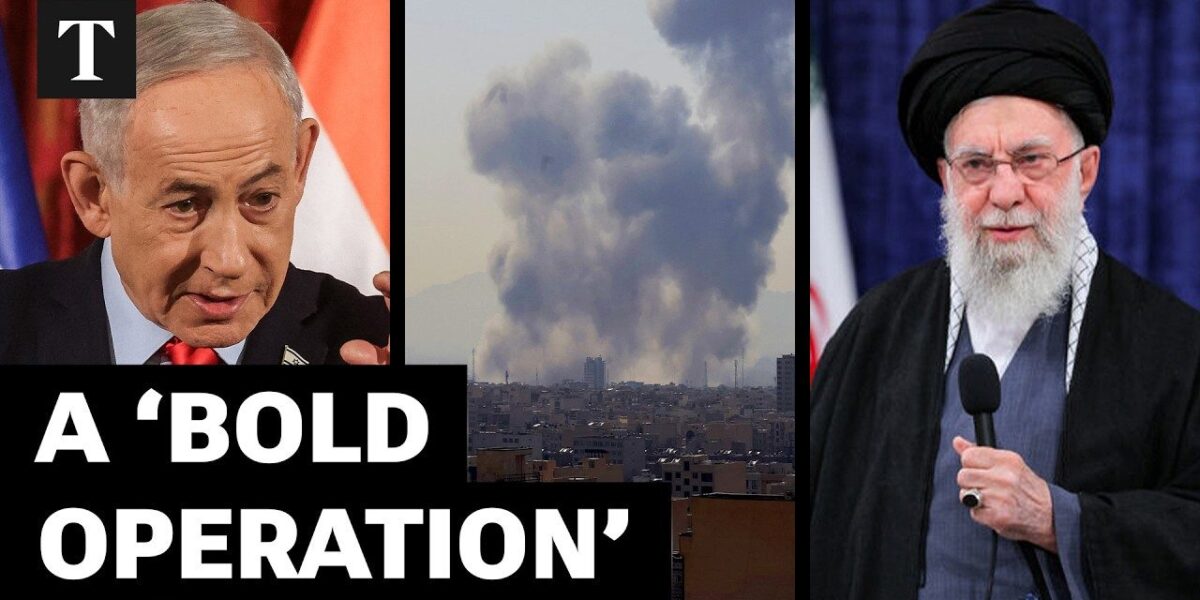
Ayatollah Ali Khamenei Dead, Israel Confirms Major Strategic Victory
In a development poised to reshape the Middle East, Iran’s Supreme Leader, Ayatollah Ali Khamenei, is dead. The news, initially confirmed by Israel’s military, marks a significant moment following a period of heightened regional tensions. Eylon Levy, a former spokesperson for the Israeli government, speaking from Tel Aviv amidst intermittent rocket sirens, described the day as “momentous” and a “truly historic day.” Khamenei, who led a regime described by Britain as “abhorrent,” was responsible for destabilizing the region, oppressing his own people, arming proxy forces, and pursuing nuclear weapons and a ballistic missile program. His death, facilitated by a joint operation by Israel and the United States, has been met with celebrations in parts of Iran, contrasting with official mourning by regime supporters.
Operation’s Goals: Beyond Regime Change
Levy clarified that the joint Israeli-American operation was not intended to directly install a new regime but rather to neutralize existential threats. The primary objectives were to address the imminent danger of an Iranian nuclear weapon, curb the nation’s ballistic missile program, and dismantle its network of regional proxy armies. However, there is a hope that this action will create conditions conducive to the Iranian people themselves replacing their current leadership. “This is not a war that is coming in to install a foreign leader,” Levy stated, “But they hope that the brave Iranian people who rose up against the regime just weeks ago and was slaughtered in their masses in the streets will now be able to retake their country with that American and Israeli firepower behind them.”
Prospects for Democratic Transition in Iran
The question of what comes next in Iran is complex. Levy expressed optimism about Iran’s potential for a successful democratic transition, distinguishing it from the situations in Iraq and Afghanistan. He highlighted Iran’s “millennia old sense of national and civilizational identity, limited experience of electoral politics, an educated middle class, a successful and wealthy diaspora.” He pointed to Reza Pahlavi, the exiled son of the former Shah, as a potential figurehead for such a transition. Pahlavi, Levy explained, aims to “steward a national transition towards democracy” and has worked with experts to develop a plan based on “Iran’s territorial integrity, individual liberty and civic equality, and a separation of religion and state.”
Divided Opposition and International Support
Despite Levy’s optimism, the path to democracy appears fraught with challenges, particularly concerning the unity of the Iranian opposition. When Pahlavi’s name was mentioned in discussions with an exiled member of the Iranian parliament, the response was reportedly dismissive, suggesting a lack of broad support for him as a unifying figure. Levy acknowledged that the opposition is “absolutely divided after years of the Islamic Republic crushing domestic free politics.” He stressed that Pahlavi is not seeking the presidency but aims to “lead be a figurehead who will shepherd a national transition that will bring together the different factions.” The crucial element, he emphasized, is that “the Iranian people must decide their future.”
Levy also critiqued the international community’s response, particularly Western nations. While many leaders express solidarity with the Iranian people, Levy questioned the practical application of this support. He argued that appealing to the United Nations Security Council for de-escalation, without actively supporting a democratic transition, risks allowing the Islamic Republic to rebuild its institutions of repression. “That’s not standing with the Iranian people, is it?” he questioned.
“Israel is deciding that this war is not something we want. It’s not something we’re doing for fun. But a nuclear Iran or an Iran with thousands of ballistic missiles is not something we can afford.”
Eylon Levy
Israel’s Calculated Risk and Strategic Re-evaluation
The operation against Khamenei was a calculated risk, undertaken with the knowledge of potential Iranian retaliation. Levy explained that Israel’s robust air defense systems, bolstered by American support, are designed to mitigate such threats. Despite the disruption caused by air raid sirens, including his own disrupted night, Levy asserted that Israel views this action as a necessity. “The Israeli people understand that sometimes you don’t pick the fight. And if there is an evil regime that is chanting death to Israel and has poured billions of dollars to pursue that, you don’t push that under the rug. You deal with it head on.”
The events of October 7th, 2023, are seen as a pivotal moment, marking a “catastrophic strategic blunder” by the Iranian axis. Levy highlighted the dramatic shift in Israel’s strategic position, moving from being surrounded by hostile proxy armies to controlling the skies over Iran. The elimination of key leaders of the Iranian axis, including Khamenei, Yahya Sinwar, Ismail Haniyeh, and Hassan Nasrallah, is viewed as a significant turnaround that enhances Israel’s security posture.
Conflicting Reactions and the Road Ahead
While state-run media report gatherings of regime supporters mourning Khamenei, videos circulating online show Iranians cheering and whistling from their balconies, indicating a divided public reaction. The legitimacy of Reza Pahlavi as a unifying figure remains a subject of debate, with critics pointing to his father’s controversial legacy and his perceived subservience to the United States. The future of Iran hinges on whether a unified opposition can emerge and whether the international community will provide meaningful support for a democratic transition, rather than merely calling for de-escalation. The coming months will be crucial in determining whether the death of Ayatollah Khamenei ushers in an era of freedom for Iran or a period of further instability.
Source: Israel Can’t Afford ‘A Nuclear Iran’ | Eylon Levy (YouTube)

Related Articles

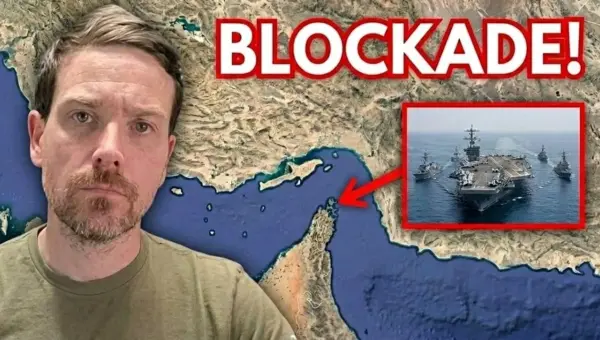
US Navy Blockade Tightens Grip on Iran’s Oil
The US Navy has imposed a strict blockade on Iranian ports, aiming to cripple the nation's oil exports and economy. With warships enforcing the closure, Iran faces significant financial pressure. The long-term effectiveness and potential for escalation remain key concerns.


Trump’s Iran Deal Talk: A Mirror of His Own Desires?
Donald Trump's repeated claims that Iran "wants a deal very badly" might be more about his own desire for an agreement than Iran's. This analysis explores his rhetoric and its potential implications for foreign policy.
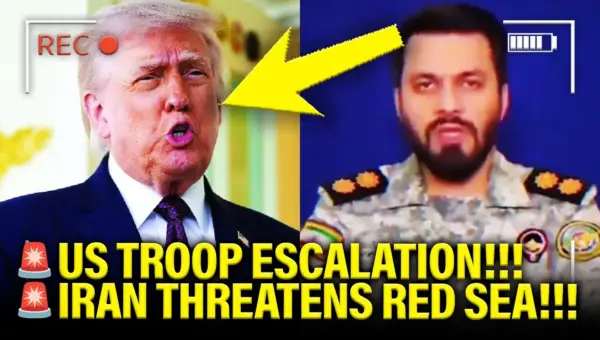
Trump’s Middle East Gambit: Escalation or Empty Threat?
The US is sending troops and imposing a blockade in the Middle East, signaling escalation. Yet, conflicting messages from Donald Trump suggest peace is near. This analysis explores the contradictory actions, Iran's defiant response, and the potential global economic and political fallout.