Trump Admits Iran War Could Last ‘Very Long Time’
Former President Donald Trump has indicated that the current conflict with Iran could be a prolonged engagement, stating it may take "a very, very long time." His social media pronouncements have sparked debate over strategic objectives and a perceived lack of direct public address during escalating regional tensions and economic repercussions.

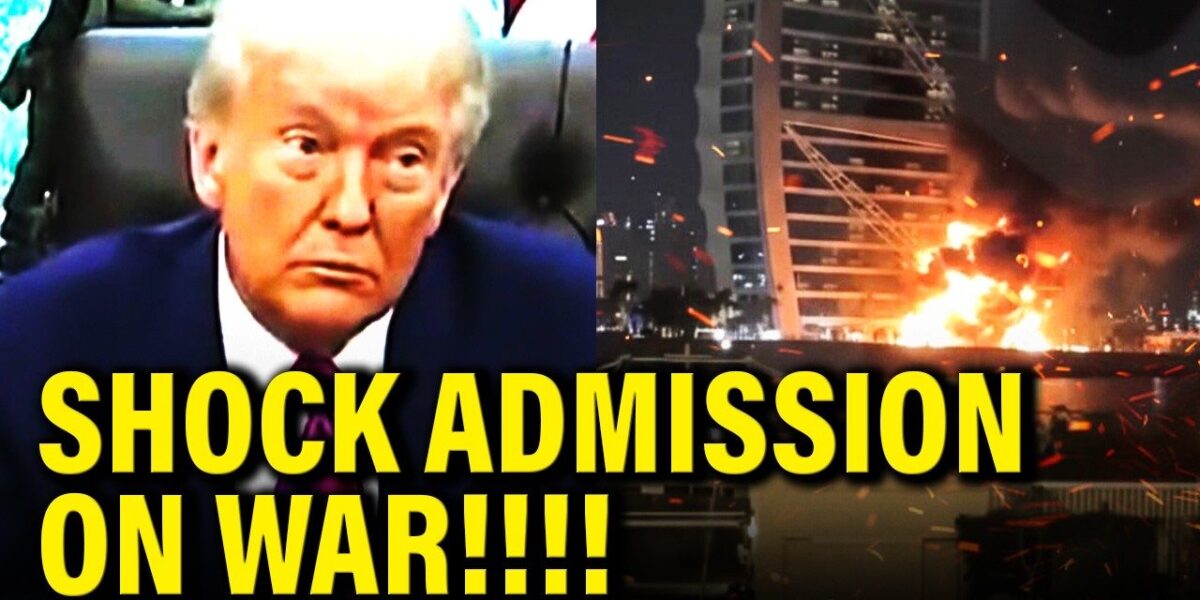
Trump Suggests Protracted Conflict Amid Escalating Tensions
Former President Donald Trump has signaled a potentially lengthy engagement in the Middle East, stating that the ongoing conflict with Iran is likely to be a protracted affair. In a series of social media posts, Trump conveyed a stark message to the American public: “Buckle up. This war is going to take a very, very long time.” This statement, delivered not through a formal address but via his social media platform, comes as the region faces heightened military activity and uncertainty.
Uncertainty Over Objectives and Strategy
The former president’s pronouncements have raised questions about the administration’s strategic objectives and exit strategy. Trump alluded to the death of Ayatollah Khamenei, referring to him as “one of the most evil people in history,” and expressed a hope that the Iranian Revolutionary Guard Corps (IRGC) and police would “peacefully merge with the Iranian Patriots.” He further suggested that the nation had been “very much destroyed and even obliterated” following Khamenei’s death, with “heavy and pinpoint bombing” set to continue “throughout the week or as long as necessary to achieve our objective of peace throughout the Middle East and indeed the world.”
“Peace through war, in other words, is Donald Trump’s plan. Even though he ran on no regime change wars.”
Critics point out the apparent contradiction between Trump’s current stance and his past campaign promises against initiating new regime change wars. The strategy, as described by Trump, appears to rely on a hopeful merger of Iranian security forces and patriots, a plan that has drawn skepticism. The duration, initially suggested to be “weeks,” aligns with sentiments expressed by some Republican lawmakers.
Congressional Concerns and Regional Impact
Senator Tom Cotton, Chairman of the Senate Intelligence Committee, echoed the sentiment of a prolonged conflict, stating, “We’re probably looking at weeks, not days of joint efforts by the United States, Israel, and our Arab partners.” However, details regarding the involvement of Arab partners remain unclear. The transcript highlights reports of U.S. military bases and tourist areas in surrounding countries, including Bahrain, the United Arab Emirates, and Kuwait, being targeted by Iranian ballistic missiles and drones.
The confirmation of Ayatollah Khamenei’s death by Iranian media has been noted, though intelligence services have long anticipated that the succession would likely bring a more hardline figure to power rather than a moderate faction. The effectiveness of military strikes in achieving regime change without ground forces remains a significant question.
Public Engagement and Political Fundraising
Notably, during this period of escalating tensions, former President Trump has been engaged in Republican fundraising events. Reports indicate that he was scheduled to attend a fundraiser at Mar-a-Lago, with White House press secretary Caroline Levit emphasizing the event’s importance. This focus on political fundraising has drawn criticism for a perceived lack of direct engagement with the American public regarding the war’s implications, national security interests, and the rationale behind the military actions.
“It is profoundly troubling that our peace president went to war with zero attempt to make the case to the country,” stated Greg Nunziata, former domestic policy advisor for Marco Rubio.
Democratic Senator Chris Murphy voiced similar concerns: “The idea that we just willy-nilly went to this war without any other plan… That’s not how you go to war. That’s not how you put our men and women in danger.” He questioned the rationale for engaging in such a conflict, especially if driven by the requests of other nations, and warned of potential echoes of the Iraq War.
Economic Repercussions and Diplomatic Criticism
The conflict has also precipitated economic consequences. Insurers are reportedly canceling policies and significantly raising prices for ships operating in the Persian Gulf and the Strait of Hormuz, with costs expected to increase by as much as 50%. This has led major oil and gas companies and traders to suspend shipments through the critical waterway.
Democratic Senator John Fetterman criticized the administration’s approach, stating, “Eight months ago, Donald Trump lied to the country when he claimed US air strikes had obliterated Iran’s nuclear program. Now, Trump says he’s taken America to war for regime change in Iran.” Fetterman argued that the war was launched “without presenting evidence of an imminent threat, without clear objectives, without having exhausted diplomacy, and without a plan for the aftermath, and without the consent of Congress.” He called for Congress to convene immediately to assert its constitutional authority over matters of war.
Congresswoman Jason Crow highlighted concerns about the human cost, noting, “How brave. Donald Trump not sending his family or the kids of billionaire donors off to fight. He’s sending working-class folks off to war.”
Differing Perspectives on Justification
Conversely, some Republican lawmakers, such as Senator Tim Scott, defended the administration’s actions. Scott argued that the president had no option but to act due to Iran’s missile program, threats to allies like Israel, and its perceived arrogance in nuclear enrichment negotiations. He asserted that presidents since Truman have exercised the right to military action without a formal declaration of war.
The transcript also touched upon controversial details, including the use of an Apple Watch during a classified briefing at Mar-a-Lago and reports of civilian casualties, including approximately 100 girls at an elementary school outside Tehran, resulting from U.S. and Israeli strikes.
Looking Ahead
As the situation evolves, attention will remain focused on the duration and ultimate objectives of the military engagement, the geopolitical ramifications for the Middle East, and the domestic political discourse surrounding the conflict. The lack of clear communication and strategic transparency from the former president’s camp continues to be a point of contention, while the economic and human costs of the escalating tensions are becoming increasingly apparent.
Source: Trump makes SHOCK ADMISSION as WAR INTENSIFIES!!! (YouTube)

Related Articles

Trump’s Wild Claims Fuel GOP Chaos and Public Doubt
Donald Trump's recent erratic statements and Republican figures' defense strategies are causing political turmoil. Concerns over economic misrepresentation and the handling of the Jeffrey Epstein case are mounting, leading to a public demanding more accountability and truth.

Trump’s Allies Stumble, Exposing MAGA Movement’s Weaknesses
Recent events reveal cracks in the MAGA movement, from JD Vance's failed support for Viktor Orban in Hungary to disappointing Turn Point USA rallies. Trump's attacks on Pope Leo also alienate allies and expose strategic missteps. These challenges suggest a weakening of the movement's influence.

Trump’s “Malignant Narcissism” and Vance’s “Dark Emptiness”
Gerard Baker and Katy Balls discuss Donald Trump's "malignant narcissism" and JD Vance's perceived "dark emptiness." The conversation covers the US blockade of Iran, Vance's evolving role, and Trump's controversial "Jesus Christ" post, exploring its political implications and the nature of faith and authenticity in politics.