The ‘American’ TikTok: A New Era of Control, Censorship, and Unprecedented Surveillance
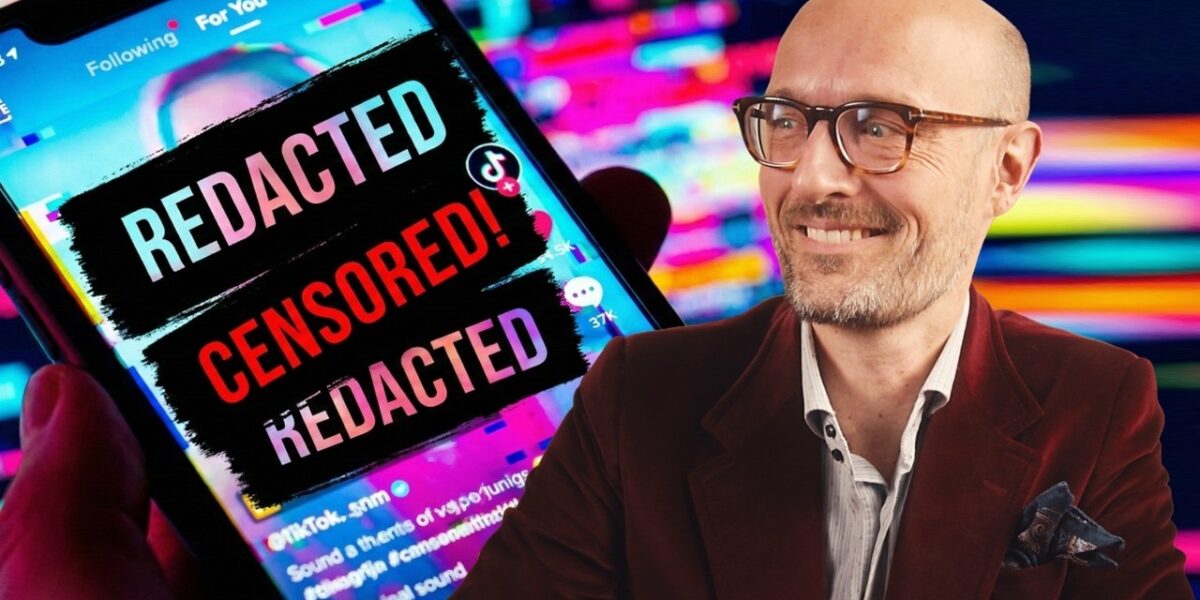
TikTok's recent transition to U.S. ownership has been met with immediate controversy, as users report widespread content censorship and shadowbanning, sparking concerns about algorithmic manipulation. While the deal was framed as a solution to foreign influence, new privacy policies reveal an alarming expansion of biometric and location tracking, alongside an aggressive AI data grab. Critics argue the shift has merely exchanged a foreign threat for a domestic one, consolidating immense power over public discourse in politically connected hands.

The ‘American’ TikTok: A New Era of Control, Censorship, and Unprecedented Surveillance
Last week, approximately 170 million Americans encountered a digital speed bump on their TikTok feeds. The usual stream of lifestyle content and viral trends was interrupted by a mandatory pop-up, requiring users to agree to new terms of service and an updated privacy policy. For most, it was a mere formality – a quick click of the ‘accept’ button to resume scrolling. Yet, beneath this seemingly innocuous interaction lay the official transition of TikTok’s U.S. operations to a new corporate identity: the TikTok USDS Joint Venture LLC. What followed was a swift and unsettling shift in the platform’s digital atmosphere, raising profound questions about censorship, data privacy, and the subtle yet potent influence of algorithmic control under its new American stewardship.
Within hours of the corporate handover, a flurry of reports began to surface, detailing a sudden and peculiar sensitivity to certain terms. Users found themselves unable to send the word ‘Epstein’ in direct messages, greeted instead by an error message proclaiming, “This text was blocked to protect our community.” This digital quirk, later confirmed by major news outlets like CNBC and NPR, underscored a nascent era of content moderation that felt both arbitrary and immediately impactful. For the estimated 13,000 Americans sharing that surname, it marked an unexpectedly challenging morning.
While TikTok subsequently attributed the ‘Epstein’ block to a “technical glitch” within its safety systems, the timing struck many as an extraordinary coincidence, given the platform’s recent, politically charged transformation. But the apparent suppression wasn’t confined to historical scandals. In Minneapolis, the fatal shooting of protesters by federal agents had ignited widespread demonstrations, mirroring a parallel wave of perceived content suppression on the app. High-profile creators reported that videos documenting critical events, such as ICE raids, were being ‘shadowbanned’ – rendered invisible to a wider audience – or failing to upload entirely. Comedian Megan Stalter recounted how a post on ICE raids thrived on other platforms but remained unseen on TikTok, prompting her to delete her account in protest. Freelance journalist David Levid shared a viral screenshot revealing his political videos flagged as “ineligible for recommendation,” resulting in stubbornly low view counts, often zero.
By the weekend’s close, the hashtag #TikTokCensorship was trending across rival social media platforms, as users attempted to document what felt like a coordinated purge of critical discourse. The outcry even spurred California regulators to question whether the platform was violating state laws by suppressing content critical of the current administration. As the first days of American majority ownership concluded, it was clear that the new TikTok was off to a rocky, and for its critics, alarmingly quiet start.
The Dawn of the ‘American’ TikTok: A Rocky Rollout and Shifting Realities
The tumultuous rollout was the inaugural public act of a corporate transformation finalized just days prior. On January 22nd, TikTok announced the establishment of TikTok USDS Joint Venture LLC, a new entity designed to satisfy a federal mandate for its Chinese parent company, ByteDance, to divest its American operations. The move was ostensibly aimed at addressing long-standing national security concerns regarding Chinese government access to American user data and potential influence over the platform’s content. However, any expectation of a clean break from Beijing was quickly dispelled by the intricate details of the deal.
Despite the ‘divestment’ label, ByteDance maintains a significant, albeit reduced, presence. It retains a 19.9% ownership stake in the new structure, the maximum allowed under a 2024 law. More importantly, the spin-off is far from a total separation. In an internal memo to employees, CEO Shiao Xi Chu clarified that while the joint venture would handle data security and content moderation – arguably the most sensitive functions – ByteDance would continue to operate TikTok’s primary money-making engines in America. This includes its advertising, marketing, and the rapidly expanding TikTok Shop, ensuring a continued, deep entanglement with the Chinese parent company’s commercial interests.
Control of the platform’s American operations has been consolidated within a consortium of investors whose media ambitions have become increasingly controversial. Oracle, co-founded by tech magnate Larry Ellison, and the private equity firm Silver Lake, each acquired a 15% stake, alongside the Emirati-backed MGX. Critically, the app’s most sensitive functions, including its recommendation algorithm and content moderation, were placed under Oracle’s oversight. This arrangement is particularly noteworthy given former President Donald Trump’s September 2025 executive order, which stipulated that “trusted security partners” might share information with other U.S. government officials, opening a potential conduit for state influence.
The Political Chessboard: From National Security Threat to Sweetheart Deal
To fully grasp how TikTok transitioned from a declared national security emergency to a seemingly sweetheart deal for politically connected insiders, one must revisit its tumultuous recent history. In August 2020, then-President Donald Trump issued an executive order declaring TikTok’s Chinese ownership a threat to national security, arguing that the app’s data collection could be weaponized by the Chinese Communist Party for blackmail and corporate espionage. While that order was ultimately blocked by the courts, the underlying fear of foreign influence and spying became a rare point of bipartisan consensus in Washington.
In April 2024, President Joe Biden signed a bipartisan law that delivered an ultimatum to ByteDance: sell the app’s U.S. operations within a year or face a total nationwide ban. For a moment, TikTok’s days in America appeared numbered. However, as the 2024 election cycle intensified, the political calculations underwent a remarkable shift. Trump, once the app’s most vocal adversary, performed a dramatic U-turn. He began publicly defending TikTok, contending that a ban would primarily benefit Meta, the parent company of Facebook, which he characterized as a greater threat to the country.
This sudden reversal coincided with a pivotal development: a major American investor in ByteDance, Jeff Yass, emerged as one of the most prolific donors in U.S. politics. Reports indicate that Yass played a crucial role in reversing Trump’s stance, contributing over $16 million to the Trump-aligned MAGA Inc. Super PAC. Concurrently, the Trump campaign recognized TikTok’s undeniable utility in reaching Gen Z voters, an increasingly critical demographic that predominantly consumes news and information through the platform’s passive feed. Trump himself credited the app for his newfound popularity among young voters, amassing over 16 million followers on his personal account.
The financial terms of the deal were equally striking. Financial analysts were quick to point out that the consortium acquired TikTok at a significant bargain. The $14 billion deal was announced not by a corporate CEO, but by Senator J.D. Vance, with Trump publicly crediting Vance for brokering the agreement. This valuation stood at a staggering discount from previous estimates of $35 billion to $50 billion. In a final piece of political theater, CNBC reported that no representatives from ByteDance were even present at the signing, and the deal was reportedly made with Chinese President Xi Jinping’s direct approval. At $14 billion, TikTok US is trading at a price-to-sales ratio of approximately 1.4 times, a valuation typically reserved for mature industrial businesses like ExxonMobil or General Mills, a stark contrast to Elon Musk’s $44 billion acquisition of Twitter, a platform with a quarter of TikTok’s daily users and significantly lower engagement times.
The Ellisons’ Expanding Media Empire and the Orchestration of Influence
The acquisition of TikTok by a consortium including Oracle is not an isolated event but rather one piece of a broader, politically charged expansion into the American media landscape by the Trump-aligned Ellison family. Larry Ellison, Oracle’s co-founder, and his son, David Ellison, have been actively consolidating media assets with a clear ideological bent. Following the merger of Skydance Media (David Ellison’s company) and Paramount Global, conservative figures were reportedly installed at CBS News. This move coincided with a controversial $16 million settlement paid to President Trump over an edited 60 Minutes interview, a payment made just prior to the FCC’s approval of the merger.
Currently, the Ellisons are engaged in a hostile bid to acquire Warner Bros. Discovery, the parent company of CNN. Larry Ellison has reportedly discussed the network’s future editorial direction and the potential firing of specific anchors with White House officials. David Ellison has allegedly promised sweeping changes to the network to appease the administration. These maneuvers suggest that the changes unfolding at TikTok might be part of a much larger, coordinated media strategy aimed at shaping public discourse and aligning it with specific political interests, raising alarms about media independence and the concentration of power.
Algorithmic Power: The New Frontier of Influence
The significance of a $14 billion price tag and a few initial “technical glitches” becomes clearer when examining the evolving architecture of the internet. In the early days of the web, and even early YouTube, users actively searched for content. This was a ‘pull’ model, where the user was the driver. If one wanted information about the Minneapolis protests or the contents of the ‘Epstein files,’ they had to actively seek it out.
TikTok, however, represents a fundamental shift to a ‘push’ model. On TikTok, the search bar is largely an ornamental relic. Users typically open the app not to search, but “to be shown something.” It’s a largely passive entertainment experience, a digital conveyor belt powered by a sophisticated, proprietary ‘black box’ algorithm designed to determine precisely what will keep a user engaged for hours. In this model, the user is no longer the driver but a passenger in a high-tech, self-driving car. The ride is comfortable, the views are accessible, but the destination is never explicitly chosen by the user; it’s dictated by the car’s programmer.
For a politician or a corporate owner, this represents the ultimate prize. Controlling a search engine only allows for hiding information from those who are already looking for it. But controlling a passive feed offers a far more subtle and powerful tool: the ability to set the ambient reality for 170 million users. One doesn’t need to ban a topic outright to effectively kill it; merely turning the dial down by a few percentage points can achieve the same effect. Researchers term this “algorithmic nudging.” If the algorithm subtly prioritizes content favorable to one political side over another, users have no way of knowing, as there’s no neutral feed for comparison. Every user’s feed is unique, and the algorithm is proprietary, hosted on private servers – in this case, Oracle’s. The “thumb on the scale” can be effectively invisible. In a world where people increasingly get their news by simply opening an app, the person who writes the code for that discovery algorithm wields a level of influence that would make a 20th-century media mogul blush.
From Foreign Spyware to Domestic Surveillance: The Privacy Paradox Deepens
For years, the American political establishment, across the ideological spectrum, characterized TikTok as a digital Trojan horse – a sophisticated piece of spyware allegedly funneling the private habits of millions of Americans directly into the hands of the Chinese Communist Party. While many users dismissed this as background noise, security researchers grew increasingly alarmed by what they uncovered beneath the app’s hood. Throughout 2022 and 2023, experts documented technical behaviors that led many to advise against installing the app on any device used for sensitive communications.
The privacy concerns weren’t merely theoretical. Researchers discovered that TikTok’s in-app browser was engineered to inject JavaScript into every external website a user visited, granting the app the technical capability to log every keystroke, including passwords and credit card numbers. The app was also caught probing the phone’s system clipboard every few seconds, potentially capturing private messages or any data copied from other applications. This was coupled with aggressive device fingerprinting, collecting everything from battery levels to Wi-Fi network names, ensuring a user could be tracked even if they attempted to remain anonymous. Despite these stark warnings, the average user often remained indifferent, seemingly content to trade privacy for an efficient dopamine hit. Even the 2022 admission that ByteDance employees had used the app to spy on Western reporters and monitor their physical locations to identify sources failed to become a breaking point for many users, becoming just another headline to be swiped away.
The profound irony of the 2026 American takeover is that the new management has not removed this extensive surveillance architecture; it has simply made it more explicit and, arguably, more domestically potent. While the permission to collect face prints and voice prints has been embedded in the U.S. policy since 2021, the new ownership has shifted the context from marketing to ‘compliance.’ According to a report by Secure Privacy, once a user grants camera permissions – often for a simple filter or a shopping feature – the app can use the front-facing camera at will to monitor involuntary physical responses in real-time. This biometric harvest includes the tracking of micro-expressions, facial movements lasting a fraction of a second, and even pupil dilation to gauge emotional engagement with a product in the shopping app or a post. The potential goal: to construct an emotional profile so detailed that the algorithm could predict a user’s reaction before they’ve even consciously processed what they’re seeing.
Furthermore, the 2026 update introduced several new red flags that have privacy advocates sounding the alarm. Most notably, the app has transitioned from tracking approximate location via IP address to precise GPS tracking. Experts at Epic warn that the new policy allows TikTok to track a user’s whereabouts down to the specific floor of an apartment building. This precise tracking is compounded by a more aggressive disclosure regarding sensitive personal data. The new terms explicitly state that TikTok may collect and process information about a user’s racial or ethnic origin, religious beliefs, sexual orientation, and citizenship or immigration status. In a political climate where ICE raids are daily headlines and protesters are increasingly labeled as “domestic terrorists,” the fact that a private company with close ties to the administration is building an inferred database of immigration status represents a staggering transformation for a platform originally built on dance trends.
Even unfinished thoughts aren’t safe. As highlighted by the YouTube channel Top Music Attorney, the new terms include a massive intellectual property and AI grab. Unlike Meta or X (formerly Twitter), which offer at least an opt-out for AI training, the new TikTok terms provide no such escape hatch. By clicking ‘agree,’ users grant the platform a worldwide, royalty-free, sublicensable, permanent license to use and remix their content. This includes their image and voice, which can be used to train TikTok’s generative AI models. Crucially, this doesn’t just encompass uploaded videos; it extends to pre-uploaded content, private drafts, and clips recorded but never posted. The original concern was foreign access to our data. The solution, it appears, was to construct a domestic surveillance and asset capture machine that is more detailed, more biometric, and thanks to its private ownership, largely beyond the reach of public oversight.
A Political Role Reversal: Shifting Censorship Concerns
The 2026 takeover of TikTok has completely inverted the roles in the American debate over social media censorship. For years, the primary complaints emanated from the political right. Republican lawmakers and conservative influencers frequently railed against ‘shadowbanning’ and expressed deep concern about perceived collusion between the White House and major social media companies. They viewed the recommendation algorithm as a political weapon, used to bury unapproved narratives and silence dissenting voices.
However, with the keys to TikTok now held by a consortium allied with the current administration, that script has been dramatically flipped. President Trump, on the morning of the January 22nd launch, took to Truth Social to hail the new venture as a victory for “great American patriots and investors.” He specifically extended thanks to Chinese President Xi Jinping for a “very dramatic final and beautiful conclusion to the negotiations.” It was a remarkable moment of political theater: the man who originally declared the app a national security emergency was now its most enthusiastic salesman. During an earlier signing of the “saving TikTok” executive order in September, Trump was asked if the new domestic algorithm would prioritize pro-administration content. He replied, with a laugh, “I always like MAGA related. If I could, I’d make it 100% MAGA related. It’s actually a good question, but I would. Yeah, if I could make it 100% MAGA, I would. But it’s not going to work out that way, unfortunately. No, everyone’s going to be treated fairly.” While his allies dismissed this as a joke, the comment signaled a clear awareness of the immense influence he had just helped consolidate.
This role reversal has created a hall of mirrors in Washington. The same Republican lawmakers who once rallied against ‘Big Tech collusion’ now praise TikTok’s commitment to “American values” and “national security.” Meanwhile, the anxiety over shadowbanning has migrated to the political left. Last week, California Governor Gavin Newsom announced a formal investigation into the joint venture following reports that content critical of the administration, particularly concerning labor strikes and immigration protests, was being systematically suppressed. The fear with TikTok used to be that a foreign adversary was pulling the strings; now, the fear is purely domestic.
The ‘Glitch’ Defense vs. Intentional Manipulation: A Lingering Question
The technical glitches and the blocking of terms like ‘Epstein’ suggest that the ‘thumb on the social media scale’ hasn’t necessarily been removed; it’s simply a different thumb. We didn’t eliminate the threat of algorithmic manipulation; we merely ensured that the people holding the remote control are the ones who helped broker the deal. The new owners were quick to insist that the timing of these issues was purely coincidental. In their first major communication since the takeover, a series of statements posted on Twitter (ironically, another platform), the TikTok USDS joint venture blamed the platform’s erratic behavior on a “major infrastructure issue caused by a power outage at one of Oracle’s U.S. data centers.” Oracle spokespeople later pointed to a severe winter storm as the ultimate culprit. To be fair, there was objective evidence of a broader system failure, with site tracking services like Down Detector showing a massive spike in outage reports, even affecting NFL posts with the same zero-view bug.
Reason Magazine recently published a compelling argument suggesting it’s unlikely TikTok has become a state-controlled propaganda machine. Their logic adheres to the “rational business actor” theory: TikTok is a for-profit enterprise, acquired for $14 billion, and engaging in overt, obvious suppression of half the country’s political views would be commercial suicide. They contend that a competent “supervillain” intent on brainwashing the masses would presumably tweak the algorithm slowly and subtly, gradually ‘boiling the frog’ rather than alienating users on day one. From this perspective, the zero-view videos and blocked search terms were precisely what the company claimed: technical growing pains from migrating massive amounts of data onto Oracle servers.
While one might hope this innocent explanation holds true, the “rational business actor” theory has taken quite a beating in recent years. If the new owners of TikTok made a ham-fisted, day-one adjustment to the algorithm, it wouldn’t be the first time a ‘tech bro’ put their thumb a bit too firmly on the scales. We’ve seen this movie before on Twitter, where the “technical glitch” excuse has been used to explain everything from Grok’s bizarre obsession with white South African farmers to periods where the AI would only provide gushingly positive answers about Elon Musk. The problem might be that when one attempts to re-engineer a complex ‘culture machine’ to suit a specific worldview over a weekend, the result isn’t always a subtle nudge; sometimes, it’s a robotic dictator.
The great strength of the ‘glitch defense’ is its near impossibility to disprove from the outside. The public is forced to choose between believing in a highly specific technical failure or a highly coordinated political action. The “national security” label, once used to force the sale, now acts as a permanent shield against transparency. We are left with a platform previously described as spyware, now American-owned and supposedly secure, yet somehow managing to fail in precisely the ways that benefit its new owners.
Conclusion: A Transfer of Custody, Not a Victory for Privacy
Ultimately, the TikTok deal was not a victory for data privacy in the United States. If it were, the new owners would not have doubled down on biometric tracking, precise GPS monitoring, and the harvesting of private drafts and keystroke logging. The data isn’t less stolen simply because it’s now stored in a data center in Texas. Instead, the deal represents a transfer of custody. We have traded the threat of a foreign adversary using an algorithm to influence our behavior for the threat of a domestic consortium doing the exact same thing.
We were told that TikTok was a weapon of mass distraction that had to be neutralized. Instead, it was captured, rebranded, and pointed back at the same 170 million users. Reports indicate that American users are already reacting, with deletions of the TikTok app jumping nearly 150% in the five days following the deal. While this hasn’t yet led to a major loss of U.S. users, this wave of uninstalls could be a harbinger of troubles to come for the new U.S. TikTok venture. The implications for free speech, individual privacy, and the very fabric of democratic discourse under this new, ‘Americanized’ regime remain profoundly unsettling.
Source: Don’t Say Epstein! (YouTube)

Related Articles
AI Buys Your Identity: The Hidden Cost of Data Training
Gig AI training offers cash for personal data like voice recordings and videos, but experts warn of significant risks. Companies use this data indefinitely, potentially leading to deepfakes and job replacement, while individuals are often unfairly compensated.
DOJ Admits State Dept. Silenced Speech, Settles Lawsuit
The Justice Department settled a lawsuit alleging the Biden State Department worked to silence disfavored speech online. The DOJ admitted the State Department promoted censorship tools, leading to suppression of protected speech. This settlement highlights concerns about government influence over online content.
TikTok Fights Back: Can States Sue Over Algorithms?
TikTok is fighting a lawsuit in New York that claims its app harms users' mental health. The core legal question is whether the app's algorithm is a product or protected speech. This case could set important precedents for social media regulation.