US and Israel Launch Major Strikes on Iran; Leader’s Death Claimed
The U.S. and Israel have launched significant airstrikes across Iran, targeting multiple sites. President Trump has claimed Iran's Supreme Leader is dead, a report unconfirmed by media. Experts question the operation's long-term efficacy and potential consequences.

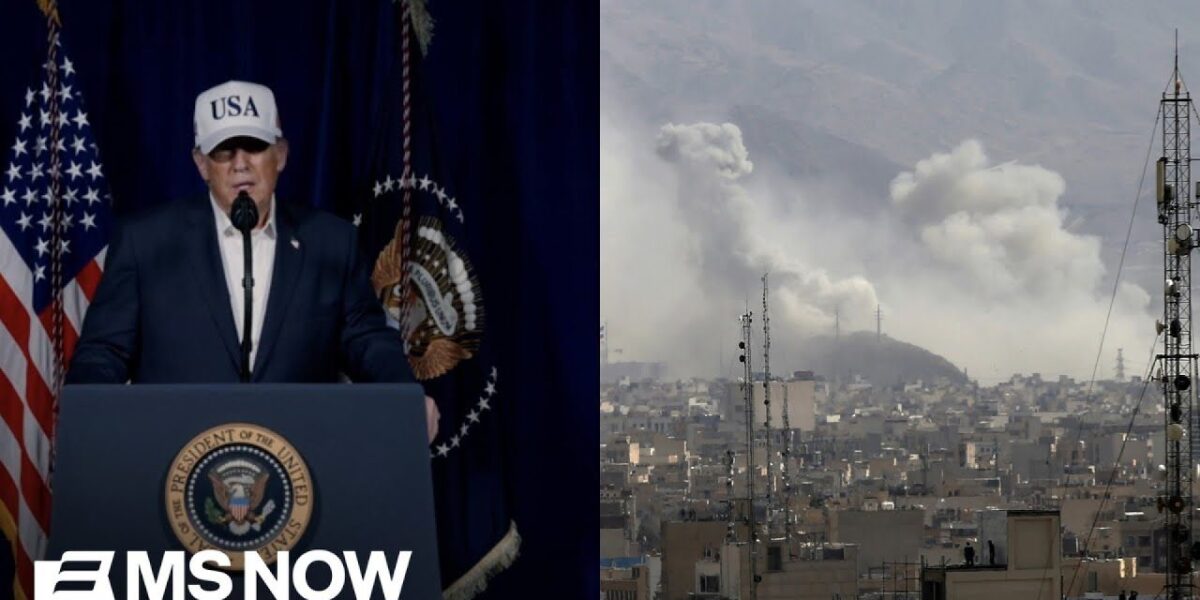
Massive Strikes Rock Iran Amid Unconfirmed Reports of Supreme Leader’s Death
In a significant escalation of Middle East tensions, the United States and Israel have launched a series of coordinated airstrikes targeting multiple sites across Iran. The operation, described as a massive surprise, began early this morning, with U.S. Central Command reporting strikes on command and control facilities, air defense systems, and missile and drone launch sites. Adding a dramatic and unconfirmed layer to the unfolding events, President Trump asserted via social media that Iran’s Supreme Leader, Ayatollah Khomeini, is dead. MSNBC has not independently verified this claim, which, if true, would represent a historic shift in the region’s political landscape.
Operation Details and Regional Retaliation
The joint U.S.-Israeli operation involved over 500 targets, leveraging significant air superiority over Iranian defenses, which a military analyst noted were weakened by a prior conflict. Videos emerging from Tehran showed smoke rising from impacted areas, providing visual confirmation of the strikes. In response to the initial assault, Iran retaliated with strikes in several Middle Eastern locations, including Dubai, Bahrain, Kuwait, and Qatar. As of this reporting, there have been no confirmed U.S. casualties resulting from Iran’s retaliatory actions.
“Tonight we are looking at major questions about this operation. It’s efficacy, whether the president’s claims are true, and that should be learned over time. It’s long-term planning, what comes next if indeed we’ve already taken out the leader of Iran and what the responses will be. Are there unintended consequences for a region that has many, many opponents and enemies of the Iranian regime?”
Ari Melber, MSNBC
Unprecedented Presidential Rhetoric and Policy Shift
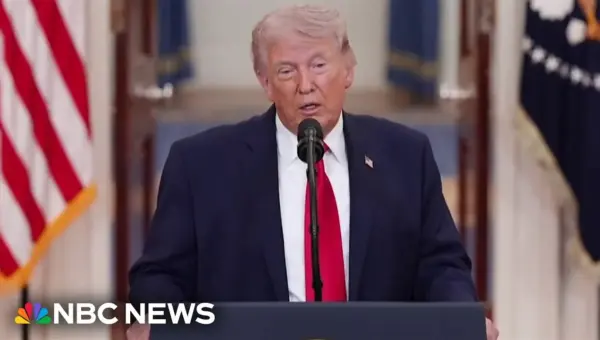
The communication from the United States leadership surrounding these strikes marks a notable departure from previous engagements with Iran. President Trump’s public statements, including a video explicitly discussing the context of war and advocating for regime change, signal an escalation in U.S. policy. He directly urged the Iranian people to take over their government, framing the strikes as an opportunity for the populace to rise up against their leadership. This approach contrasts with past U.S. policy, even as European allies express caution regarding the unilateral nature of the attack.
Expert Analysis: Objectives and Uncertainties
Retired four-star Army General Barry McCaffrey characterized the military assault as stunning and tactically surprising. He noted the fragility of the Iranian regime, citing its internal repression and widespread unpopularity. However, General McCaffrey raised concerns about the operational basis, stating the strikes were conducted by presidential decree without congressional consultation or broad public support, and in potential contradiction to allied views. He questioned the likelihood of regime change without a fracture in the Revolutionary Guard or a significant popular uprising.
Ambassador Dennis Ross, a seasoned Middle East expert, concurred with much of General McCaffrey’s assessment. He highlighted the uncertainty surrounding Iran’s current capabilities to resist further attacks, questioning whether the limited retaliation observed was a strategic conservation of resources or a sign of significantly degraded offensive capabilities. Ambassador Ross also addressed the stated objectives, suggesting that while regime change is a declared goal, forcing Iran back to the negotiating table for a solid nuclear non-proliferation agreement is a more probable, though still challenging, aim.
The Nuclear Question
A central point of discussion among experts is Iran’s persistent pursuit of nuclear weapons. General McCaffrey emphasized that airstrikes alone cannot halt nuclear proliferation, as they target production facilities that can be rebuilt. He stressed the necessity of international inspectors on the ground and robust diplomatic engagement, coupled with the potential for lifting economic sanctions, to permanently deter Iran’s nuclear ambitions. The absence of such diplomatic frameworks, he argued, makes a lasting cessation of nuclear weapon development unlikely.
Humanitarian Goals and Internal Repression
The narrative surrounding the strikes also includes a humanitarian dimension, with proponents suggesting the goal is to free the Iranian people from a despotic regime. However, experts cautioned that the Iranian Revolutionary Guard and militia are heavily armed and have a history of brutally suppressing dissent. The transcript referenced estimates of thousands of Iranians killed by their own government in recent years, underscoring the regime’s capacity for internal violence. The question remains whether the escalating conflict could put the regime itself at risk from those within who fear its ultimate collapse.
Looking Ahead: What’s Next for Iran and the Region?
The situation remains highly fluid, with significant questions about the long-term implications of these strikes. The efficacy of the operation, the veracity of President Trump’s claims regarding Ayatollah Khomeini’s death, and the potential for unintended consequences in an already volatile region are paramount concerns. The international community, including cautious European allies and regional neighbors, will be closely monitoring Iran’s next moves, the U.S. response, and the potential for a broader regional conflict. The path forward hinges on de-escalation, diplomatic engagement, and a clear understanding of the strategic objectives beyond immediate military action.
Source: Ari Melber on U.S., Israel strikes on Iran: 'Major questions about this operation' (YouTube)

Related Articles

Iran Faces Internal Unrest Amidst Escalating Global Tensions
Iran is facing internal unrest with assassinations targeting protest crackdown leaders, while also being accused of using Chinese spy satellites to aid attacks on U.S. troops. The U.S. is mobilizing thousands of troops and implementing a naval blockade.

Iran’s Ceasefire Violations Spark New Tensions
Iran has violated a ceasefire by striking targets in Iraq, raising concerns about peace talks. The U.S. is responding with a naval blockade of Iranian ports and increased military readiness. Mysterious explosions within Iran add to the growing instability.
Iran Can Outlast US Blockade, Ex-Diplomat Warns
The U.S. has imposed a naval blockade on Iran after peace talks collapsed, with President Trump warning of severe consequences for any ships approaching the blockade. Despite U.S. pressure, former Deputy Secretary of State Wendy Sherman warns Iran has the capacity to outlast the blockade, citing its history of resistance.