U.S. Military Action in Iran Fuels Profit, Not Peace
A critical analysis suggests that U.S. military actions in Iran, particularly concerning leadership changes, are driven by the profit motives of the military-industrial complex rather than the promotion of democracy. The potential for destabilization is presented as the intended outcome, creating a perpetual cycle of conflict that benefits defense contractors.

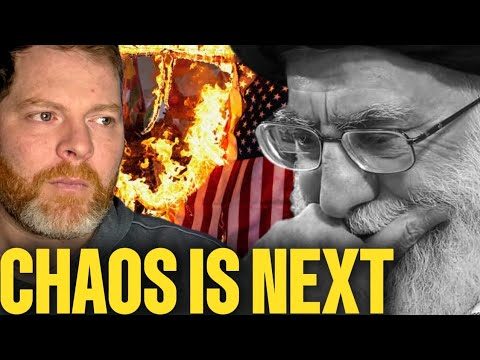
U.S. Military Action in Iran Fuels Profit, Not Peace
In the wake of potential leadership changes in Iran, a critical perspective suggests that U.S. foreign policy in the region is driven not by the promotion of democracy, but by the lucrative interests of the military-industrial complex. This viewpoint, articulated by a military veteran, posits that destabilization, rather than peace, is the intended outcome, creating a perpetual cycle of conflict that benefits defense contractors.
Destabilization as a Business Model
The narrative often presented to the American public is that military actions abroad serve to spread democracy. However, this veteran argues that this is a false premise, known to allies and adversaries alike. The core assertion is that destabilization is not an unintended consequence but the primary objective, serving as a profitable engine for the defense industry. The potential removal of Iran’s Supreme Leader, Ayatollah Ali Khamenei, is framed as an act that would create a power vacuum, not usher in democratic reform.
“When you decapitate a theocracy, you don’t get a democratic revolution. What you get is a military junta with a blank check and a blood vendetta.”
The assessment, drawing on intelligence from the CIA, suggests that in the event of the Supreme Leader’s demise, control would likely shift to the Islamic Revolutionary Guard Corps (IRGC). The IRGC, which already manages significant economic assets, including oil revenue and arms, would be positioned to consolidate power. This scenario predicts a fractured state, where various factions and claimants to power emerge, exposing the armed elements that truly hold sway once the religious figurehead is removed.
The Military-Industrial Complex’s Financial Imperative
The argument is made that a stable Middle East does not generate the revenue required by defense contractors and those who benefit from military spending. Conversely, a fractured and potentially radicalized region guarantees sustained demand for military hardware and services. This perpetual state of conflict is seen as providing the U.S. defense industry with guaranteed income for decades.
The critique extends to the perceived short-sightedness of current U.S. foreign policy. It is argued that this is not a case of failed business strategy but a deliberate execution of a plan designed to serve the interests of the military-industrial complex. The creation of a power vacuum, leading to multiple radicalized factions vying for control, is presented as a scenario that justifies further U.S. military involvement and incursions, thereby bolstering defense spending.
Economic Ramifications for the U.S.
The financial implications for the American taxpayer are dire, with projections of hundreds of billions, if not trillions, of dollars in increased defense spending over the coming years. This burden is expected to contribute to the devaluation of the U.S. dollar, reduced purchasing power, and a generational legacy of resentment from the Middle East.
The notion that bombing a country into submission would lead to the acceptance of imposed democracy is dismissed as delusional. Historical parallels are drawn, referencing campaigns like Alexander the Great’s in Afghanistan, which highlighted deeply entrenched intertribal conflicts. The current situation, where the U.S. and Israel are seen as the primary actors, is viewed as positioning America as the sole antagonist in the region.
Lessons Unlearned from History
The piece emphasizes the cyclical nature of history, warning that ignoring past mistakes dooms future generations to repeat them. If Iran were to fragment into an environment conducive to the rise of terror cells, it would provide the U.S. government with a justification for unprecedented defense spending increases and prolonged military presence in the region. The ensuing chaos, it is argued, is not an accident but the desired product, serving as the rationale for continued military engagement.
“The chaos is the product. It is the desired product.”
The timing of alleged attacks and the subsequent response are questioned, particularly in light of reports suggesting that Israel had been planning its actions for months. This suggests that peace negotiations were never a genuine objective, and any truces observed during these talks were dishonorably broken. Such actions are characterized as a moral failing of leadership, with the American people ultimately bearing the cost through loss of life and a severely damaged international reputation.
The Cycle of Conflict and Profit
The article contends that the U.S. is committing itself to multi-generational wars, fostering global animosity and jeopardizing its standing. The American public’s apparent disengagement from foreign policy news is attributed to an onslaught of negative information, leading to an insular mentality that prefers narratives of victory over an understanding of the consequences. The destruction of cities and displacement of populations are presented as realities often overlooked in favor of a simplified view of conflict.
The potential removal of Iran’s Supreme Leader is framed as a signal to defense contractors that lucrative opportunities are imminent. The defense industry’s robust business, even leading to outsourcing, underscores the scale of its operations and its readiness to capitalize on further conflict. The justification for war, it is argued, lies in the chaos it creates.
A Call for Awareness
In the event of war being declared and troops being deployed, the piece suggests that wartime powers could be enacted, potentially influencing domestic political events. The author urges Americans to remain informed and vocal, understanding that ignorance is a privilege that is becoming increasingly unaffordable as the consequences of elite financial maneuvering impact the broader population.
While a peaceful transition of power in Iran may be structurally possible, the IRGC’s vested interests are seen as a significant barrier. The outlook presented is bleak: either the U.S. withdraws, leaving a destabilized region to evolve into a network of terror, or it commits fully, leading to prolonged conflict and a boom for the military-industrial complex. This latter scenario ensures that future generations of Americans will fight in wars driven by profit, not honor or democracy.
Source: The Empire's New ATM: Why the U.S. Decapitated Iran (YouTube)

Related Articles


Trump’s Blockade Fails, Allies Shun Mission: A Pattern?
A reported failure of Donald Trump's blockade of the Strait of Hormuz, with ships passing through unimpeded, raises questions about policy effectiveness. This incident, coupled with allies' reluctance to join the mission, suggests a pattern of unintended consequences and strained international relations.


Russia’s War Costs Strain Putin’s Elite Bargain
Russia's prolonged war in Ukraine is straining President Putin's grip on power. Declining oil revenues and escalating military costs are forcing internal power shifts, with intelligence services reportedly gaining influence. This financial pressure is creating significant discontent among the elite and risking broader instability within the Kremlin.
US Halts Iranian Trade: Peace Talks Loom Amidst Global Tensions
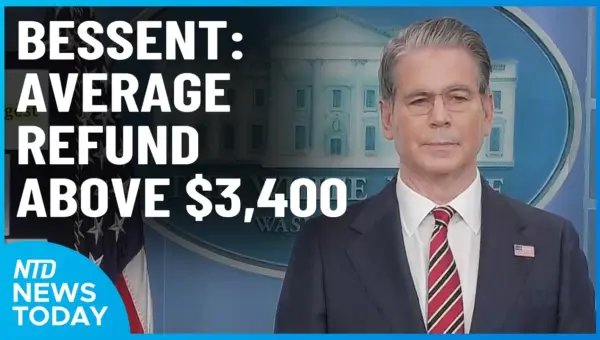
The U.S. has implemented a blockade on Iranian maritime trade, aiming to pressure the nation while simultaneously suggesting peace talks could be imminent. This move occurs alongside complex international relations, including China's involvement and ongoing regional conflicts. Domestically, the administration is highlighting significant tax refunds and economic relief measures for Americans and small businesses.