Epstein Files Fallout: Unmasking Six Powerful Figures and Exposing a Justice Department in Crisis
The recent release of millions of documents related to Jeffrey Epstein's criminal enterprise has ignited a political firestorm, exposing a troubling 'Epstein class' seemingly immune to accountability. Despite claims of transparency, a bipartisan congressional effort has revealed widespread redactions and identified at least six powerful individuals the Department of Justice and FBI allegedly tried to shield, deepening concerns about systemic cover-ups and a justice system operating under different rules for the elite.

A Veil Lifted, A System Exposed: The Enduring Shadow of Jeffrey Epstein
The recent deluge of documents related to the late financier and convicted sex offender Jeffrey Epstein has ignited a political firestorm, peeling back layers of secrecy and exposing a deeply unsettling narrative of power, privilege, and alleged systemic obstruction within the highest echelons of the U.S. justice system. While the Department of Justice (DOJ) touted the release of millions of pages as a testament to transparency, a bipartisan chorus of lawmakers has denounced the process as a “farce,” revealing that critical information remains hidden and key figures were deliberately shielded from public scrutiny. This ongoing saga has not only brought to light the contempt some powerful individuals held for ordinary citizens but has also underscored a stark divergence in accountability between the United States and its international partners.
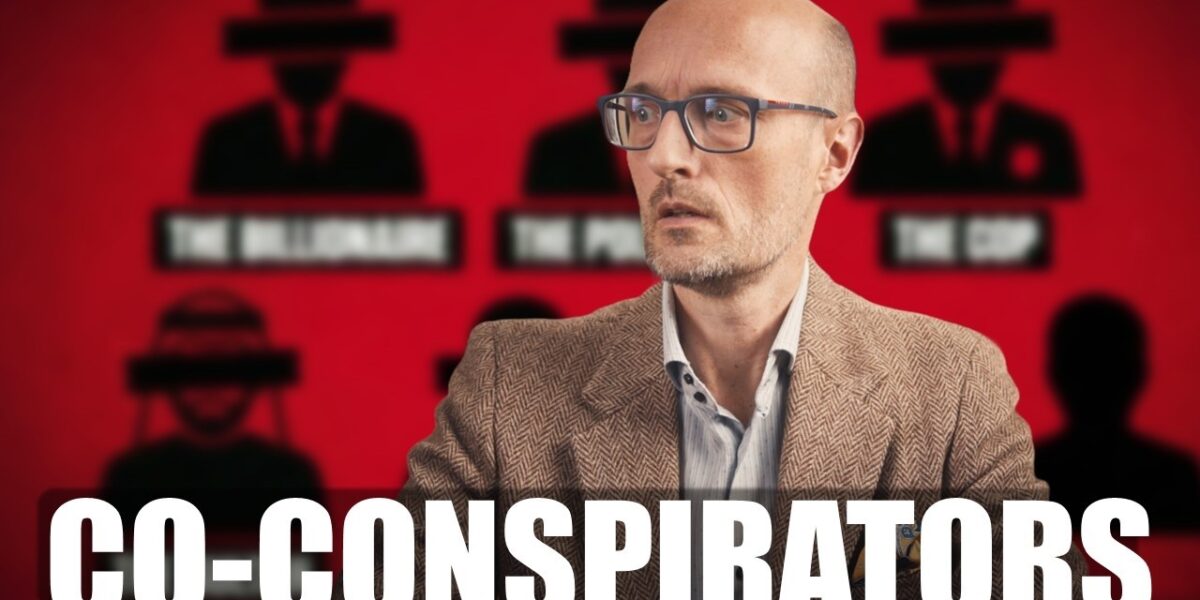
At the heart of the controversy lies the unmasking of at least six individuals whom the Federal Bureau of Investigation (FBI) and DOJ allegedly sought to protect, their names buried beneath layers of redaction in direct contravention of the Epstein Files Transparency Act. These revelations, brought forth by diligent congressional oversight, have transformed the document dump from a mere historical record into a live political explosion, raising profound questions about who knew what, when, and why the wheels of justice moved so selectively.
The ‘Epstein Class’: A Culture of Contempt and Immunity
The sheer arrogance and profound disdain for the general public among those orbiting Jeffrey Epstein’s world are starkly illustrated in the newly released files. One particularly chilling example is an email from February 2014, penned by Jess Staley, then CEO of Barclays, to Epstein himself. Sent amidst widespread riots in Brazil protesting the spiraling cost of living and exorbitant spending on the FIFA World Cup, Staley’s message offered a cynical analysis of societal control. He wrote, “You want to know why we’re not Sao Paulo? Watch the TV ads on the Super Bowl. It’s all about hip blacks in hip cars with white women. The group that should be in the streets has been bought off by Jay-Z.”
This candid admission perfectly encapsulates the “Epstein class” mindset – a protected tier of wealthy and influential individuals who apparently believed the masses could be easily distracted by televised entertainment, diverting their attention from the fact that this elite was busy treating the world as their personal playground. This perception of immunity was further echoed by Lady Victoria Hervey, a socialite and former girlfriend of Prince Andrew. In a recent radio interview, Hervey astonishingly suggested that not being named in the Epstein files should be considered an “insult,” implying that only “losers” would be absent from Epstein’s circle of powerful acquaintances. Her flippant confirmation, with a laugh, that her own name appeared in the documents – at least 20 times, often with prominent figures like a U.S. president and the head of the FBI – only served to underscore the breathtaking audacity of this group.
Such statements, revealing a profound disconnect from public sentiment and an apparent disregard for the gravity of Epstein’s crimes, have fueled public outrage and solidified the perception that a different set of rules applies to the ultra-rich and well-connected. This sentiment forms the backdrop against which the revelations of the unredacted files are now being absorbed by a skeptical public.
A Farce of Transparency: The DOJ’s Redaction Riddle
The Department of Justice’s handling of the Epstein files has been widely criticized as falling far short of genuine transparency. While the DOJ proudly announced the release of approximately 3.5 million documents, a closer look reveals a troubling discrepancy. Congress initially identified over 6 million documents as falling under the scope of the transparency act, meaning nearly half of the relevant material has yet to see the light of day. This numerical gap is just the tip of the iceberg.
Further investigation into the data volume paints an even more concerning picture. An FBI email from June 2020 indicated that investigators expected to collect between 20 and 40 terabytes of data. Yet, only about 300 gigabytes have been released so far – a mere 1.5% of the total collected. This missing data is not merely redundant paperwork; it is, by all accounts, central to understanding the full scope of Epstein’s network and the investigations (or lack thereof) into his activities.
Perhaps most crucial among the missing documents are the FBI FD302 victim interview statements. These detailed written summaries, compiled by FBI agents during interviews with witnesses, victims, and associates, offer an unvarnished glimpse into what the Justice Department knew early in the investigation, before plea deals, legal delays, or national media attention could shape narratives. Disturbingly, only one such FD302 statement has been released, and it is almost entirely blacked out. The files made available to the public largely lack basic investigative context: reports of criminal behavior are present, but there are no notes indicating follow-ups, interviews conducted, or reasons for leads being dismissed. This investigative vacuum extends to the earliest warnings about Epstein; the Farmer Sisters reportedly alerted the FBI to his activities 30 years ago, yet the records of the bureau’s response remain entirely concealed.
Congressional Scrutiny: Peering Behind the Black Ink
The mounting frustration over the DOJ’s selective transparency culminated in a direct confrontation by Congress. A small, bipartisan group of lawmakers, including the Epstein Files Transparency Act’s co-sponsors Ro Khanna and Thomas Massie, were granted access to a secure office to view purportedly unredacted versions of the files. The conditions for this access were telling: just four computers were allocated for 535 members of Congress, a logistical constraint that Representative Jamie Raskin calculated would take the legislative branch 7.5 years to review the entire archive. This immediately signaled the inadequacy of the DOJ’s commitment to genuine oversight.
Despite these limitations, what Khanna and Massie discovered in less than two hours was damning. They found that even these “unredacted” files were still riddled with black ink. Crucially, they learned that the FBI had already scrubbed many of the records before they even reached the DOJ lawyers, a move that directly violated the spirit and letter of the Epstein Files Transparency Act. In that short viewing window, the two congressmen identified at least six men whom the FBI had once considered potential co-conspirators, whose identities had been inappropriately hidden without any apparent legal justification.
As Khanna later observed, the absurdity of the situation was profound: if two members of Congress could uncover a cover-up involving six prominent men in just two hours, it raises a terrifying question about the extent of what remains hidden within the millions of pages they couldn’t examine. This discovery laid bare the institutional resistance to full disclosure and fueled the determination of lawmakers to force greater transparency.
A Contentious Defense: Attorney General Pam Bondi’s Testimony
The Justice Department’s handling of the Epstein files came under direct fire when U.S. Attorney General Pam Bondi appeared before the House of Representatives Judiciary Committee. Her testimony quickly devolved into a shouting match, but a revealing moment was captured by a Reuters photographer: an image of a page from Bondi’s prepared notes, which appeared to be a “book of insults” intended to counter questions from lawmakers. More disturbingly, the photo suggested that the DOJ had been monitoring members of Congress’s searches of the unredacted Epstein files. This implied a troubling prioritization: the DOJ seemed to be putting more effort into investigating the oversight activities of the legislative branch than into pursuing those suspected of child abuse within the files themselves.
The idea that the DOJ would secretly track the searches of lawmakers – who possess legitimate oversight authority – for the purpose of political point-scoring is a profound breach of trust and an affront to democratic principles. The most astonishing moment of Bondi’s testimony, however, came when she was pressed on why the DOJ was protecting potential co-conspirators. Instead of addressing the question, she pivoted to a bizarre and irrelevant rant about the surging stock market. “The Dow is over $50,000 right now. The S&P at almost $7,000. And the NASDAQ smashing records. Americans’ 401ks and retirement savings are booming. That’s what we should be talking about,” she declared.
This extraordinary deflection was widely seen as a cynical attempt to equate economic prosperity with judicial impunity. As critics quickly pointed out, such an answer might be appropriate for the head of a Department of the Market, but not for the Attorney General tasked with upholding justice. The implication – that a robust economy somehow justifies hiding sex traffickers – was a “bold strategy” that cemented public perception of a justice system willing to trade accountability for political convenience.
Unmasking the Architects: The Six Names Revealed
Following their secure room review, Congressmen Massie and Khanna emerged deeply disappointed by the extent of the redactions. They revealed their identification of at least half a dozen men who had been inappropriately shielded, individuals they believed were potentially incriminated and whose names should have been disclosed under the law. When the Justice Department remained evasive, Ro Khanna took a decisive step. Utilizing the “Speech or Debate Clause” of the Constitution, which grants lawmakers immunity for statements made on the House floor, he read the six names into the congressional record, thereby unmasking individuals the FBI and DOJ had apparently tried to keep hidden.
Leslie Wexner: The Financial Architect of Epstein’s Empire
The first name revealed was Leslie Wexner, the 88-year-old billionaire behind Victoria’s Secret. Wexner was far more than a mere associate of Epstein’s; he was the primary source of Epstein’s vast wealth, effectively building the entire Epstein operation. While their ties were previously known, the bombshell revelation was an internal FBI document, explicitly listing Wexner as a “potential co-conspirator” in a child sex trafficking investigation – a document the DOJ had improperly redacted.
For decades, Wexner was Epstein’s sole known major financial client. Starting in 1991, Wexner granted Epstein a full power of attorney, bestowing upon him complete control over his immense personal fortune. While a power of attorney is a standard financial tool, it is almost unheard of for a billionaire in full command of his faculties to grant such sweeping, unchecked authority to a financial advisor, especially one with whom he had a relatively short acquaintance. This arrangement allowed Epstein to act as Wexner’s legal alter ego with virtually no oversight. Epstein appears to have exploited this extensively, frequently acquiring properties on behalf of the Wexners and then selling them to himself at deeply discounted prices, including his infamous Manhattan townhouse and a private plane.
The long-standing narrative from the Wexner camp was that he was a victim, manipulated by Epstein and defrauded of hundreds of millions of dollars. However, the newly unredacted files introduce a significant complication: in 2008, the very year Epstein was jailed in Florida for soliciting sex from a minor, he reportedly paid Wexner a $100 million private settlement. This massive repayment, kept quiet at the Wexners’ request to avoid “unnecessary public attention,” raises serious questions about the true nature of their relationship and challenges the victim narrative. The internal FBI document from 2019, explicitly naming Wexner as a potential co-conspirator, directly contradicts the Wexner legal team’s long-held assertion that the DOJ viewed him only as a source of information, not a target. The department’s reasoning for redacting his name, given the law only allows redaction for victims, remains unexplained and has become a major point of contention.
Sultan Ahmed bin Sulayem: Global Power and Disturbing Connections
The second individual unmasked by Ro Khanna was Sultan Ahmed bin Sulayem, the 71-year-old CEO of DP World, a global logistics giant based in Dubai. The files reveal a disturbing series of explicit and unusually personal emails between Bin Sulayem and Epstein, continuing as late as 2019, the day of Epstein’s final arrest. These communications were far from professional; they involved the exchange of images of women and shared contact lists for escort and massage services across various cities. Most damningly, the files detailed Bin Sulayem assisting in arranging training for a masseuse from Epstein’s private spa.
In a September 2015 exchange, Bin Sulayem emailed Epstein, describing a renewed relationship with a foreign exchange student in Dubai in intimate and boastful terms. However, the most attention-grabbing revelation was an email chain where Epstein told the Sultan, “I loved the torture video.” The exact nature of this video remains unknown, but its consequences for Bin Sulayem were swift and severe. Within hours of this information surfacing, the Financial Times reported that Bin Sulayem had been replaced as Chairman and CEO of DP World, with the Dubai government issuing a press release that conspicuously omitted his name. This decisive action came after immense pressure from international partners like Canada’s EDC and the UK’s British International Investment, both of whom froze billions in future deals until “required actions” were taken. The contrast with the U.S. response could not be starker: in many parts of the world, being a “most trusted friend” of Jeffrey Epstein, especially with links to disturbing content, has become a terminal liability, leading to a stunning fall from grace for a man once credited with building modern Dubai.
The Other Names and Lingering Questions
While Ro Khanna read out four other names, their specific roles and connections to Epstein’s operation have not yet been definitively established by major news organizations. One name was Nicola Caputo. Congressman Thomas Massie has cautioned that the individual in the files is likely not the well-known Italian politician of the same name, citing a birth year discrepancy suggesting the person in the files is more than a decade older. The Italian politician has vehemently denied any involvement. The names Salvatore Noir, Zurich Michaela, and Leonic Leonv also appeared in the files, accompanied by photographs, but without further contextual information regarding their specific involvement.
It is crucial to reiterate, as Ro Khanna pointed out, that merely appearing in these files does not equate to criminal guilt. However, the real scandal, according to lawmakers, is not just the presence of these men’s names, but the government’s extraordinary efforts to ensure their identities remained undisclosed, despite a law explicitly requiring their release. This deliberate obfuscation fuels suspicions of an ongoing cover-up rather than a genuine pursuit of justice.
Global Accountability vs. American Exceptionalism
The disparate responses to the Epstein revelations across different nations highlight a troubling pattern of American exceptionalism when it comes to accountability. While the U.S. Department of Justice has been criticized for its inaction and obfuscation, other countries are moving decisively.
Lord Peter Mandelson: The UK Political Link
The files reveal that Lord Peter Mandelson, a former influential British government minister, appears to have shared sensitive, confidential government information with Epstein concerning the Eurozone crisis. Mandelson also reportedly offered advice on how JP Morgan Chase, one of Epstein’s key banking links, might lobby the British government. This raises critical questions: Did Epstein use this inside information for financial gain through trading? The answer remains elusive, as the FBI has released almost none of Epstein’s financial information, and there is no evidence they ever investigated Mandelson for these alleged leaks, leaving another significant investigative vacuum.
Prince Andrew: Royal Scrutiny vs. US Silence
The files also contain photographs and a short video clip of Prince Andrew, now stripped of his royal titles and known as “Andy the Nons,” with what appears to be a teenage girl. Yet, the released documents offer zero information on whether he was ever investigated by U.S. law enforcement. There are no notes, no interview transcripts, and no explanation for why these potentially damning leads were seemingly abandoned. In stark contrast, the silence in the U.S. is being met with a roar in the UK. King Charles III has officially announced his readiness to assist police investigations into his brother, after British authorities confirmed they are actively investigating Andrew’s links to Jeffrey Epstein. Once again, the world appears to be moving forward with investigations while the U.S. Department of Justice remains conspicuously frozen in time.
Howard Lutnick: The US Commerce Secretary’s Shifting Narrative
Perhaps one of the most glaring examples of a lack of accountability in the U.S. involves Howard Lutnick, the current U.S. Commerce Secretary. Until recently, Lutnick’s public narrative was one of moral outrage: he claimed that after a single tour of Epstein’s Manhattan home in 2005, he was so disgusted by the sight of a massage table that he vowed never to be in a room with Epstein again. However, the newly released files expose this story as a total fabrication.
The documents reveal that Lutnick and his family visited Epstein on his private island in 2012 – seven years after he claimed to have cut all ties and four years after Epstein’s Florida plea deal. During a recent Senate Commerce Committee hearing, Lutnick attempted to minimize this connection, stating he “had lunch with him as I was on a boat going across on a family vacation. My wife was with me as were my four children and nannies… for an hour and we left with all of my children.” This carefully worded admission still glosses over the extent of their relationship. The files further show that Lutnick and Epstein were in business together as recently as 2014, signing on behalf of limited liability companies to acquire stakes in an advertising technology company. Lutnick even invited Epstein to an intimate fundraising event for Hillary Clinton in 2015. Despite these clear misrepresentations to the public and to Congress, Lutnick remains in his post, and as one commentator noted, he is “frequently seen laughing and chuckling whenever the Epstein case is brought up in public, treating the entire scandal like a joke rather than a horrific criminal conspiracy.” In the U.S., it appears that lying about ties to a convicted sex trafficker is not a career-ender, but merely “another Tuesday in Washington.”
Institutional Walls: The FBI’s Role in Obfuscation
The lack of individual accountability in the U.S. is compounded by a profound institutional one. Congressman Thomas Massie’s discovery that the files the DOJ was supposed to review arrived already scrubbed by the FBI points to the bureau acting as a primary filter, removing names before the Transparency Act’s rules could even be applied by the DOJ. This suggests a deliberate effort to control the narrative and suppress information at the earliest stage.
This finger-pointing extends to the individual identified in the transcript as “FBI Director Cash Patel” (note: this name is given in the transcript, though a public figure by that name, Kash Patel, is not the current FBI Director, Christopher Wray). The individual referred to as “Patel” in the transcript reportedly told Congress that the FBI’s files contained “no information, none, that would warrant an investigation into anyone else.” This is an astonishing assertion, given the evidence now emerging: emails discussing torture videos, photos of a prince with a teenager, and internal documents labeling billionaires as co-conspirators. The insistence that the case is closed for everyone but Epstein and Maxwell represents an “ultimate institutional wall,” presenting Epstein as essentially a one-man conspiracy, trafficking girls to himself.
The most damning example of this institutional failure remains the Farmer Sisters, who reported Epstein to the FBI in 1996. For three decades, under five different presidents, the records of what the bureau actually did with that information have remained entirely hidden. The public is shown the crimes, but the “justice part of the Department of Justice remains redacted.” It is as if the FBI is stating, “We saw it. We wrote it down, and then we decided to do nothing.”
Conclusion: The Fading Ink and the Unanswered “Why”
The fallout from this massive, yet still partial, data dump is undeniable. The era where distractions like the Super Bowl halftime show could keep the public from scrutinizing the actions of the powerful is clearly over. We are now witnessing a “split-screen reality”: in the UK, Canada, and Dubai, billionaire CEOs are losing their positions within hours of their names being linked to Epstein, and royal families are opening their doors to investigators. Meanwhile, the response in the U.S. has often felt like a retreat into the absurd.
Adding to the disquiet, Ghislaine Maxwell, a convicted sex offender, recently declined to answer questions from House lawmakers in a deposition. However, she reportedly indicated a willingness to testify that neither former President Donald Trump nor former President Bill Clinton had done anything wrong in their connections with Epstein, if President Trump ended her prison sentence. This comes after Maxwell, despite her ineligibility, was transferred to a minimum-security federal prison camp where she reportedly receives custom-made meals and is allowed to have a puppy, with no explanation given for this upgrade. These events further erode public trust and suggest a transactional approach to justice for the well-connected.
While government officials have fought tooth and nail to keep the details of Epstein’s crimes and the names of his alleged accomplices private, the sheer volume of public outrage has meant that some of the black ink is beginning to fade. Some names have been released, and some data has been made public. However, the most profound question persists: why are there no comprehensive investigations into these newly revealed connections? We have the “what” in 3 million pages, but the Department of Justice has yet to provide the “why.” Until the actual FBI files, the FD302 statements, and proof of what was done with 30 years of investigation are released, alongside Epstein’s full financial data, the transparency that was promised will remain, as lawmakers have rightly called it, a “farce.” The pursuit of true justice in the Epstein saga is far from over; it has arguably just begun.
Source: Epstein Files: The 6 Names the DOJ Didn't Want You to See (YouTube)

Related Articles


DOJ’s Jan. 6 Move Sparks Outrage: ‘Reads Like The Onion’
The Department of Justice is facing backlash for reportedly seeking to erase convictions of Oath Keepers and Proud Boys leaders involved in the January 6th Capitol attack. Critics decry the move as undermining justice and acting as political theater. Simultaneously, the DOJ's continued investigation into Fed Chair Jerome Powell, despite judicial warnings, fuels concerns about the legal system being used for political aims.


FBI Docs Contradict Melania’s Epstein Introduction Claims
Newly surfaced FBI documents challenge Melania Trump's recent claims about not being introduced to Donald Trump by Jeffrey Epstein. Witness testimony suggests Epstein facilitated the introduction, contradicting Melania's public statements and raising questions about her associations and those of figures like Paulo Zampoli.

Epstein Files: Survivor Disputes DOJ Claims of Full Release
A survivor of Jeffrey Epstein's abuse, Danielle Bensky, disputes the Justice Department's claim that all relevant files have been released. Citing specific missing documents and contradictory official statements, Bensky believes more information is being withheld, potentially to protect powerful individuals. Despite frustrations, she notes progress in how sexual assault cases are generally handled.