US Strikes Iran: War Justifications Questioned, Coalition Divided
The United States has launched military strikes against Iran, sparking widespread uncertainty about the administration's objectives and justifications. The action has exposed deep divisions within the MAGA movement and raised questions about the credibility of the stated rationales, drawing parallels to past controversial interventions.

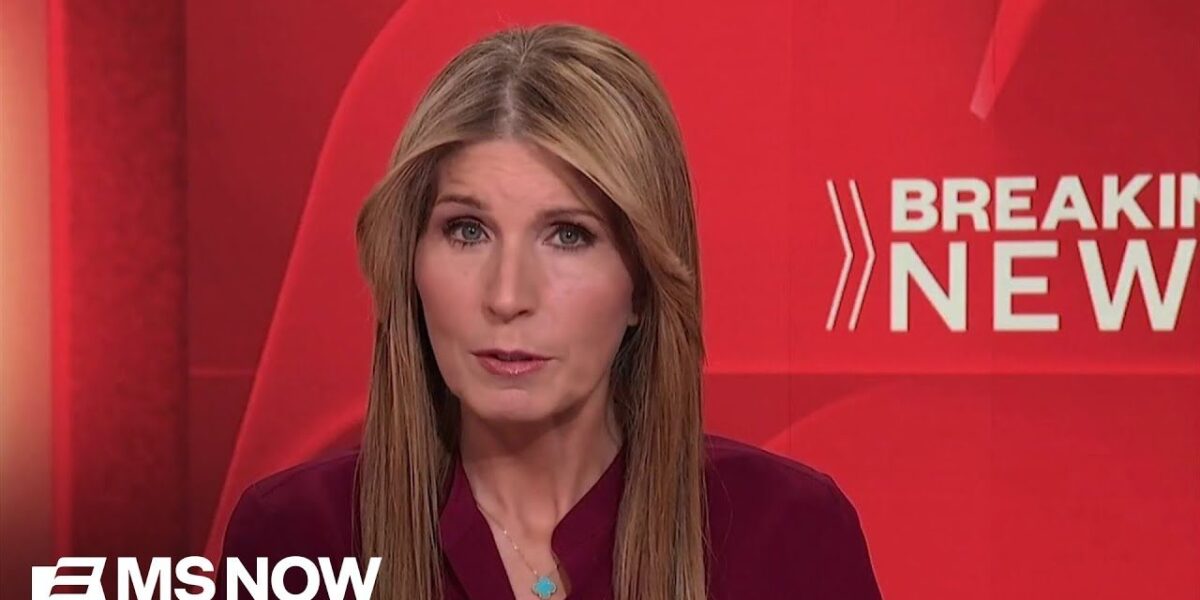
US Launches Military Action Against Iran Amidst Shifting Justifications and Internal Divisions
In a dramatic escalation of Middle Eastern tensions, the United States has launched military strikes against Iran, a move shrouded in uncertainty regarding its ultimate objectives and justifications. The decision, seemingly made with little congressional authorization or public consensus, has ignited fierce debate both domestically and internationally, exposing deep fissures within President Trump’s own political coalition.
Uncertainty Over Endgame and Justifications
Former White House official Ben Rhodes highlighted the profound ambiguity surrounding the potential fall of the Iranian regime. “I don’t think anyone can give you a simple answer as to what happens next in Iran if the supreme leader and the regime were to fall, other than the hope that there would be some ability to have somebody within their systems that you could work towards a similar transition,” Rhodes stated.
He criticized the lack of a clear strategy from the U.S., noting that Donald Trump’s only articulated plan for an endgame in Iran was a call for the Iranian people to rise up. This, Rhodes argued, is insufficient given the potential for widespread violence, refugee flows, global economic disruption, and unpredictable regional consequences.
The justifications provided by the Trump administration for the strikes have come under intense scrutiny. Reporting from The New York Times, cited by analysts, suggests that key claims about Iran restarting its nuclear program, possessing enough material for a bomb within days, and developing long-range missiles capable of hitting the U.S. Are either false or unproven. This lack of credible rationale raises serious questions about the necessity and legality of the military action.
“The only thing we heard in that speech from Trump about essentially a potential endgame inside of Iran is a call for the Iranian people to rise up. That literally was the only plan that could be identified in that speech for what happens after you decapitate the leadership of the Islamic Republic.” – Ben Rhodes
Congressional and Public Opposition
The absence of explicit congressional authorization for a war with Iran is a significant point of contention. General Hortland confirmed that no such authorization exists.
Polling data indicates substantial public opposition, with upwards of 70% of Americans reportedly against a war with Iran. This disconnect between public sentiment, government action, and the lack of a clear strategy, as outlined by Clausewitz’s “golden triangle” of popular support, government effectiveness, and military capability, suggests a potentially ill-fated military engagement.
Divisions Within the MAGA Movement
The potential for a “hot war” with Iran has exposed a significant rift within the MAGA movement. While some prominent figures like Mark Levin, Sean Hannity, and Brian Kilmeade have been vocal proponents of military action, others, including figures like Tucker Carlson and Megyn Kelly, have expressed skepticism or outright opposition. This internal dissent over a major foreign policy decision highlights a growing challenge for President Trump in maintaining coalition unity.
Nicoole Wallace noted the stark division, stating, “There is no issue that divides the MAGA movement more than a hot war with Iran.” The criticism leveled by some against dissenting voices, such as Mark Levin calling Tucker Carlson and Megyn Kelly “traitors,” highlights the intensity of the internal conflict.
Historical Precedents and Diplomatic Trust
Analysts drew parallels to past U.S. Military interventions, such as those in Iraq, Afghanistan, and Libya, warning of unforeseen and long-lasting consequences. The history of regime-change operations, often initiated with flawed intelligence or justifications, has repeatedly led to protracted instability.
The credibility of U.S. Diplomatic efforts is being questioned. Director Brennan suggested that the recent military actions, following what appeared to be diplomatic overtures facilitated by Oman, could lead the Iranians to feel “duped.” This could severely undermine any future trust or willingness to engage in negotiations, particularly given past claims about Iran’s nuclear program that have been disputed.
“I think it just underscores just how unnecessary and reckless this war is. And Also, I believe this war was hatched by Prime Minister Netanyahu of Israel. This is something that he has long wanted to happen, to have the United States engage in this type of regime change military operation.” – Director Brennan
The Role of Allies and Unproven Claims
The influence of allies, particularly Israel’s Prime Minister Netanyahu, was raised as a potential factor in the decision-making process. Brennan asserted that Netanyahu has long desired a U.S. Military operation against Iran and has made claims about Iran’s nuclear program that are also disputed.
The reliance on “false or unproven claims” as a basis for military action raises significant concerns about the administration’s adherence to established norms and the potential for international condemnation. The lack of clear communication regarding the endgame, coupled with the disputed rationales, leaves the U.S. In a precarious diplomatic and strategic position.
Looking Ahead: What’s Next for US-Iran Relations?
As the situation unfolds, key questions remain about the immediate aftermath of the strikes, the potential for Iranian retaliation through asymmetric means, and the long-term implications for regional stability. The U.S. Faces the challenge of navigating a complex geopolitical landscape with a divided domestic front and a potentially damaged international standing. The coming weeks and months will be critical in determining whether diplomacy can regain traction or if the region is headed for further escalation.
Source: Nicolle Wallace: ‘There is no issue that divides the MAGA movement more than a hot war with Iran’ (YouTube)

Related Articles

US Lifts 47-Year Ban on Iranian Oil
The U.S. has lifted a 47-year ban on Iranian oil sales, allowing it back into global markets for the first time since 1979. This emergency measure aims to address severe pressure on global energy supplies and soaring prices, which have surpassed $105 per barrel. The move comes amid escalating conflict in the Middle East and a shutdown of the Strait of Hormuz, raising concerns about a potential global recession in 2026.
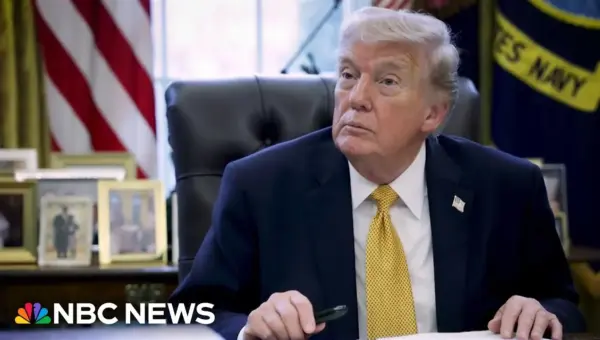
Federal Courts Act as Check on Trump’s Second-Term Agenda
Federal courts are increasingly acting as a check on President Trump's second-term agenda, blocking key policies on immigration, health, and tariffs. Despite Congress's limited oversight, judges have intervened in over 150 cases. The Supreme Court, while sometimes siding with the administration, has also placed limits on presidential emergency powers.
US Deploys Warships, Marines Amid Iran Tensions
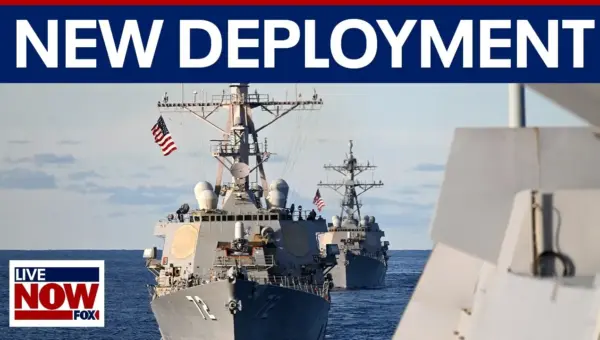
The U.S. is sending three warships and 2,500 Marines to the Middle East as Operation Epic Fury continues with strikes inside Iran. The Pentagon is also seeking $200 billion for war efforts amid rising regional tensions and new threats from Tehran.