US Attacks Iran: A High-Stakes Gamble Unfolds
The United States has launched a significant military operation against Iran, described as a "huge gamble" by foreign affairs expert Mark Urban. The conflict has already shifted regional dynamics, uniting Gulf states against Iran following missile attacks, while the potential for regime change and the strategic implications for the Strait of Hormuz loom large.

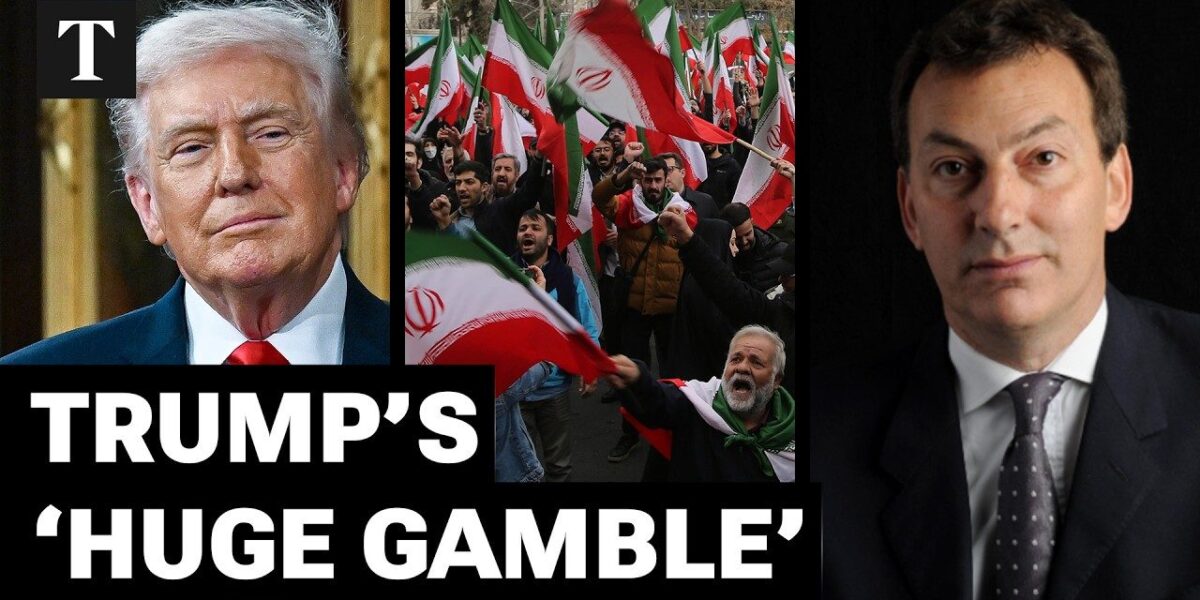
US Launches ‘Huge Gamble’ Against Iran Amid Escalating Tensions
In a dramatic escalation of Middle Eastern tensions, the United States has launched a significant military operation targeting Iran. This move, characterized by foreign affairs expert Mark Urban as a “huge gamble,” carries immense potential for unforeseen consequences, with far fewer resources deployed compared to past interventions like the 2003 invasion of Iraq.
Regional Dynamics Shift as Gulf States Unite Against Iran
Initially, key Gulf nations like Saudi Arabia and the United Arab Emirates expressed reservations about direct military action against Iran, even denying the use of their airspace for such purposes. However, a substantial wave of Iranian missile attacks targeting military bases across Bahrain, Kuwait, the UAE, and Saudi Arabia has seemingly altered this stance.
Eyewitness accounts from Qatar describe waves of Iranian missiles, with reports indicating around 100 missiles were launched throughout a single day. This unprovoked aggression has reportedly galvanized these Gulf states, pushing them to align more firmly against Iran, a development that could have significant political and military repercussions.
“The Iranian government, it would seem, has every incentive to try and make this last as long as possible, to hold out, to try and maintain its defenses, particularly against Israel, in the hope that this causes the Americans to exhaust their supplies of advanced munitions… And maybe think again.” – Mark Urban
The Complex Question of Regime Change in Iran
The stated objective of the US operation appears to lean towards regime change in Iran. However, the viability and potential outcomes of such an endeavor remain highly uncertain.
Unlike the invasion of Iraq, there are no large-scale troop deployments ready to occupy the country should an uprising occur. The Iranian regime, facing what it may perceive as an existential threat, is expected to resist fiercely and potentially seek to broaden the conflict.
The Iranian leadership may aim to prolong the conflict, depleting the US’s supply of advanced munitions and prompting a reconsideration of the strategy. The effectiveness of air power in engineering regime change, particularly one that culminates in a popular takeover, is also a subject of historical debate. While air superiority might degrade the capabilities of the Islamic Revolutionary Guard Corps (IRGC) and its paramilitary Basij forces by disrupting command centers and communications, empowering the populace to seize control remains a significant challenge, especially given the recent brutal suppression of protests.
Strait of Hormuz Threat and Global Economic Impact
Adding another layer of complexity, Iranian state news has reported potential closures of the Strait of Hormuz. While many large shipping operators have already halted passage due to perceived risks, a deliberate Iranian effort to obstruct this vital waterway could have severe global economic consequences.
Approximately a quarter of the world’s crude oil supply transits through the Strait. Iranian actions, such as planting sea mines or deploying miniature submarines, could be part of a pre-planned response to anticipated attacks.
The potential disruption to oil supplies and the subsequent impact on Western economies provide another incentive for the US to seek a swift resolution, while Iran might view prolonging the conflict as a strategic advantage.
Reza Pahlavi and the Organized Opposition
Reza Pahlavi, the son of Iran’s last Shah, has publicly supported the intervention, claiming the Iranian people are ready to act. Pahlavi, who has been living in exile, demonstrated influence by calling for protests in January, which saw significant public demonstrations and chants in favor of the royal family. Intelligence sources suggest that the US has been working to enhance the communication capabilities of the Iranian opposition, enabling better coordination even amidst internet shutdowns.
While there is evidence of support for Pahlavi and an organized opposition, the extent of their loyalty to the exiled royal family and their potential to coalesce effectively in the event of regime collapse remains open to question. The consolidation of power among various opposition factions, should the regime falter, is a scenario that remains distant.
The UN’s Diminished Role in a New World Order
The current conflict highlights a shifting geopolitical landscape where international consensus, particularly through the United Nations, plays a diminished role. The US and Israel appear to be acting with a coalition of willing partners, including Saudi Arabia and the UAE, rather than seeking broad UN Security Council authorization, which has historically been rare for military interventions. This situation underscores what Urban describes as the “harsh new world we’re in,” where major powers may bypass traditional international legal frameworks for military action.
Uncertainty Looms: What Lies Ahead?
The immediate future remains highly uncertain, with numerous variables at play. Rumors of the death of Supreme Leader Ayatollah Ali Khamenei and his son, if confirmed, would introduce a significant power struggle within the Iranian regime.
Even without such a development, the conflict is unlikely to be resolved quickly. The Iranian leadership, viewing this as a final existential battle, may employ all means necessary to prolong resistance and potentially spread the conflict.
Potential Iranian counter-strikes, targeting Israeli military assets or damaging American warships, could embolden regime loyalists and complicate US objectives. President Trump may face difficult decisions regarding de-escalation or further escalation, including targeting economic infrastructure, if Iran refuses diplomatic engagement. The coming weeks are anticipated to be challenging, with the possibility of prolonged hostilities.
Source: Why Is The US Attacking Iran? Trump’s ‘Huge Gamble’ Explained | Mark Urban (YouTube)

Related Articles

Strait of Hormuz Closure Threatens Global Energy Supply
The Strait of Hormuz faces a critical disruption following attacks on ships and a U.S. boarding of an Iranian tanker. The IEA warns energy output could take two years to restore, potentially impacting global markets.
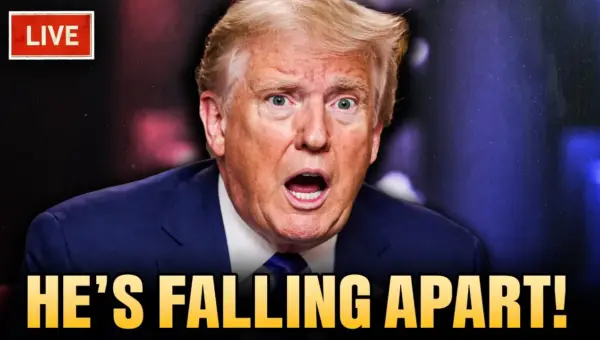
Trump’s Erratic Behavior Fuels Global Unease, Domestic Doubts
Donald Trump's recent public statements and actions are causing significant concern among world leaders and raising questions at home. His frequent outbursts on Truth Social, particularly regarding international affairs, suggest a leader under immense pressure. These displays often come across as desperate attempts to project strength while privately facing considerable challenges.

Trump Threatens Iran: “Blow Up Every Power Plant”
President Trump has issued a stark warning to Iran, threatening to "blow up every power plant and bridge" if a deal is not signed amid a naval blockade. This comes as U.S. forces intercepted an Iranian cargo ship, escalating regional tensions. Despite this, a strong earnings outlook for the oil sector provides a contrasting positive economic signal.