Beyond Capitulation: Bill Browder’s Urgent Call to Starve Putin’s War Machine Through Unprecedented Oil Sanctions
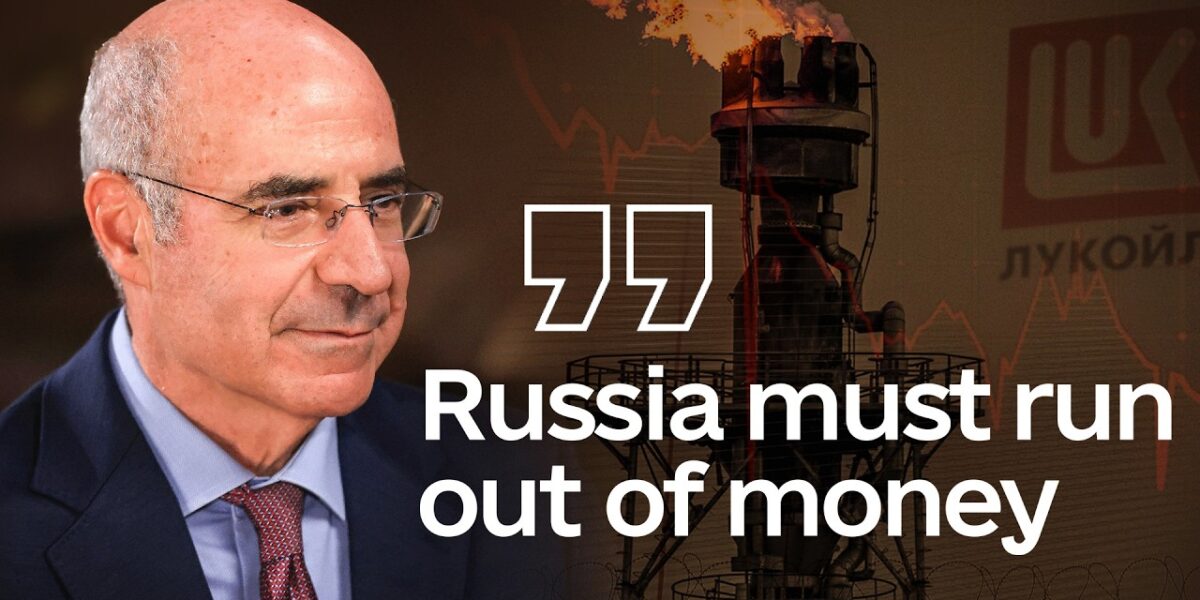
Financial magnate Bill Browder asserts that Vladimir Putin would rather starve his own people than end the war, urging the West to adopt a radical strategy: directly sanctioning the eight global oil refineries in China, India, and Turkey that purchase the majority of Russian crude. He contends that cutting off these vital revenue streams, alongside confiscating frozen Russian assets, is the only effective way to cripple Putin's war machine and force an end to the conflict.

Beyond Capitulation: Bill Browder’s Urgent Call to Starve Putin’s War Machine Through Unprecedented Oil Sanctions
In the grim calculus of modern warfare, where economic might often dictates battlefield outcomes, a stark and uncompromising assessment has emerged from one of Russia’s most vocal critics. Bill Browder, a financier once the largest foreign investor in Russia and now a leading human rights activist, contends that Vladimir Putin’s resolve to continue the war in Ukraine transcends any concern for his own populace. According to Browder, Putin would rather "starve his population" than relinquish his military ambitions, a chilling parallel he draws to the autocratic regime of North Korea. This assessment underpins Browder’s urgent and radical proposition: to cripple Russia’s war machine, the West must move beyond current sanctions and directly target the global buyers of Russian oil, cutting off the Kremlin’s primary source of funding.
Browder’s insights come at a critical juncture in the ongoing conflict, as Western nations grapple with the efficacy of existing sanctions and the strategic dilemmas of a protracted war. His perspective offers a deep dive into the financial levers that could, in his view, decisively alter the trajectory of the conflict, while also exposing the geopolitical complexities and moral quandaries inherent in such a high-stakes economic confrontation.
The Sanctions Landscape: Successes, Failures, and the ‘Gigantic Loophole’
Since Russia’s full-scale invasion of Ukraine in February 2022, the international community, led by the United States and its European allies, has unleashed an unprecedented barrage of sanctions against Moscow. Russia swiftly became the most heavily sanctioned country in the world, facing measures designed to isolate its economy, degrade its financial system, and impede its ability to fund the war. Browder acknowledges the significant, albeit imperfect, impact of these initial actions.
The early sanctions were indeed formidable. The freezing of Russia’s central bank reserves, estimated at over $300 billion held in Western jurisdictions, was designed to severely restrict the Kremlin’s access to foreign currency, essential for stabilizing the ruble and financing imports. Simultaneously, the exclusion of most major Russian banks from the SWIFT global messaging system aimed to disconnect Russia from the international financial network, making cross-border transactions exceedingly difficult. "The sanctions I think are probably more advanced than I could have ever imagined before the war started," Browder reflects, recalling his earlier lobbying efforts when such comprehensive measures seemed politically unfeasible. He notes that "freezing the Russian central bank reserves, cutting most Russian banks off of SWIFT, various other types of things have been quite effective and quite painful for the Russians."
However, despite these sweeping measures, Browder points to a "gigantic loophole" that has undermined the ultimate goal of suffocating Russia’s war funding: oil. Russia is one of the world’s largest producers and exporters of crude oil, and these sales constitute a major portion of the Russian government’s budget and a critical source of foreign exchange reserves. "Russia continues to be able to sell their crude oil and they continue to make hundreds of billions of dollars from that money, and that money effectively funds the war in Ukraine," Browder asserts. This continued flow of petrodollars, he argues, acts as a lifeline, allowing Putin to sustain his military operations despite other economic pressures.
The G7 price cap on Russian oil, introduced in December 2022, was an attempt to address this loophole by limiting the price at which Russian oil could be sold to third countries using Western maritime services. However, its effectiveness has been hampered by several factors, including Russia’s ability to develop a "shadow fleet" of tankers operating outside Western insurance and shipping regulations, and the willingness of major non-Western buyers to purchase oil above the cap, often at discounted prices. This intricate web of circumvention has allowed Russia to maintain significant revenue streams, highlighting the limitations of indirect pressure and the urgent need for a more direct approach.
Browder’s Radical Proposal: Targeting the Buyers
To truly "change Putin’s behavior" and force him to "run out of money," Browder proposes a radical shift in sanctions strategy: directly targeting the buyers of Russian oil, rather than solely focusing on the "shadow fleet" or other "ineffective" measures. His plan is surgically precise: "There are eight oil refineries that buy a majority of Russian oil. Two of them are located in China. Four of them are in India, two of them in Turkey."
Browder advocates for a clear ultimatum to these refineries: "If you say to those oil refineries that you’ll be under sanctions if you continue to buy Russian oil, give them 8 weeks or 12 weeks to find another source of oil… I think that would put Putin out of business." This direct approach, he contends, would bypass the complexities of tracking individual tankers or enforcing price caps, by striking at the very demand that sustains Russia’s oil exports.
The immediate concern raised by such a proposal is the potential to alienate key geopolitical players like India, China, and Turkey, potentially pushing them closer to Russia. Browder, however, dismisses this fear, arguing that their primary "closeness" to Russia is transactional, driven by the lucrative opportunity to purchase discounted oil. "If these countries are the ones effectively funding Putin’s war then we have to stop them funding Putin’s war and the way to do that is to target these oil refineries and it’s not a targeting India it’s targeting foreign Indian oil refineries." His argument posits that without the financial incentive of cheap oil, the strategic alignment between these nations and Russia would significantly diminish, as their core interests do not naturally align with Moscow’s.
Geopolitical Chess: India, China, Turkey, and the Global Energy Market
Browder’s proposal necessitates a deeper examination of the geopolitical landscape and the motivations of India, China, and Turkey. These nations, while maintaining varying degrees of diplomatic engagement with the West, have largely pursued independent foreign policy paths, often prioritizing national interests such as energy security and economic growth.
China, a strategic rival to the United States and a major energy consumer, has deepened its economic ties with Russia since the invasion, viewing Moscow as a crucial partner in its vision for a multipolar world. Beijing’s purchases of Russian oil, often at discounted rates, serve its long-term energy security goals and align with its broader geopolitical strategy of challenging Western hegemony.
India, the world’s third-largest oil importer, has also significantly increased its intake of Russian crude, taking advantage of steep discounts that have saved its economy billions of dollars. New Delhi maintains a policy of strategic autonomy, balancing its relationships with both the West and Russia, a long-standing defense partner. For India, cheap Russian oil is a pragmatic economic decision, crucial for managing inflation and supporting its vast industrial base. Sanctioning Indian refineries would undoubtedly trigger a strong response from New Delhi, potentially straining relations with the West and forcing India into a more explicit alignment, albeit one driven by economic necessity.
Turkey, a NATO member, has adopted a more complex posture, balancing its role as a mediator in the conflict with its own economic and strategic interests. Ankara has maintained trade relations with Russia, including energy imports, while also supplying Ukraine with critical military hardware. Turkey’s energy dependence on Russia, coupled with its desire to assert regional influence, makes its position particularly delicate. Sanctions targeting Turkish refineries would present a significant challenge to its dual-track foreign policy.
Implementing Browder’s plan would require immense diplomatic coordination and a willingness by Western powers to accept potential short-term geopolitical friction. The West would need to assure these nations of alternative, stable, and competitively priced oil supplies to mitigate the economic shock. The move would test the resolve of the international community to prioritize the cessation of the conflict over the intricate balance of existing global alliances and energy markets. It would also signal a significant escalation in economic warfare, potentially reshaping global trade patterns and accelerating the ongoing process of de-globalization along geopolitical lines.
Russia’s Economic Resilience vs. Putin’s Ruthlessness
Despite the initial shock of sanctions, the Russian economy has shown a surprising degree of resilience. The Kremlin has effectively redirected its energy exports to new markets, primarily in Asia, and implemented capital controls and import substitution policies. However, Browder acknowledges that Russia’s economy is facing "headwinds" going into 2026, including a budget deficit and the potential for falling oil prices and a recession. Yet, he remains deeply skeptical that these challenges alone will be sufficient to deter Putin.
His assessment is chilling: "I think that Russia, or I should say Putin, will behave like the North Koreans have. He will always have enough money for his war even if he has to starve his population." This stark warning underscores a fundamental aspect of authoritarian regimes: the leadership’s willingness to sacrifice civilian welfare for the sake of state power and military objectives. Browder’s point is that incremental economic pain, while affecting the Russian populace, may not be enough to sway a leader like Putin, who views the war as an existential struggle. Therefore, the only way to stop him is to "make sure that he just doesn’t have enough money for anything," a goal achievable only by "stopping the flow of oil that funds his war."
This perspective forces a difficult reckoning with the nature of the adversary. Unlike democratic leaders who are accountable to their electorates for economic performance and living standards, autocratic rulers can exert absolute control over resources, prioritizing military spending over social welfare. The historical precedents, from the Soviet Union’s command economy to North Korea’s ‘military-first’ policy, demonstrate the capacity of such regimes to absorb immense economic hardship while sustaining their armed forces. This resilience, however, often comes at the cost of widespread poverty, underdevelopment, and human suffering for the general population. Browder’s argument suggests that relying solely on the gradual attrition of the Russian economy through general sanctions is a miscalculation of Putin’s resolve and the regime’s capacity for internal suppression.
The Battle for Frozen Assets: A Moral Imperative and a Political Minefield
Beyond the immediate challenge of oil sales, another critical financial front in the war is the debate over the confiscation of frozen Russian sovereign assets held in Western countries. These assets, primarily the central bank reserves, represent a significant potential source of funding for Ukraine’s defense and eventual reconstruction, estimated at over $300 billion.
Browder notes that "almost everybody agreed that Russia’s frozen assets should be used for the defense of Ukraine." However, the path to confiscation has been fraught with legal and political obstacles. A major hurdle, according to Browder, emerged from Belgium, specifically concerning Euroclear, a financial services company where a substantial portion of these assets are held. "The Belgian authorities fought back," he explains, attributing this resistance to direct threats from Russian security services against the Belgian Prime Minister. This alleged intimidation highlights the shadowy tactics employed by the Kremlin to protect its financial interests abroad.
The legal complexities surrounding sovereign immunity and international law have also been a significant point of contention. Critics of confiscation warn of setting a dangerous precedent that could undermine the global financial system, deter foreign investment, and invite retaliatory measures. However, proponents, including Browder, argue that Russia’s actions in Ukraine constitute an unprecedented violation of international law, justifying extraordinary measures. They assert that the moral imperative to make the aggressor pay for the damage far outweighs the risks of setting a legal precedent, especially when the alternative is to burden European taxpayers with the immense cost of Ukraine’s recovery.
As a stopgap, the European Union has provided a loan of 90 billion euros to Ukraine. However, Browder predicts this is a temporary solution. "A year from now we’re going to be having the same conversation except that we’ll have burned through half of that loan," he states. He firmly believes that "eventually Putin should pay for this, not the European taxpayers," and that the conversation about asset confiscation will "rise to the surface" again out of necessity. This ongoing debate underscores the deep divisions and cautious approach within the EU, often influenced by powerful lobbying efforts from European banks and businesses concerned about the financial implications and potential legal challenges.
The Shadow War: Russian Lobbying and Disinformation
Browder also sheds light on the unseen battle being waged by Russia to protect its financial interests and undermine Western resolve. "The Russians are lobbying. The Russians are doing whatever they can. They’re paying politicians. They’re flooding social media. They’re threatening people," he describes. This multi-pronged influence campaign aims to achieve two critical objectives: prevent Ukraine from accessing the frozen assets needed for its defense, and ensure that China, India, and Turkey continue to buy Russian oil, thereby funding the war machine.
This "shadow war" of influence and disinformation is a crucial, yet often underestimated, component of the broader conflict. By sowing discord, spreading narratives that question the efficacy or fairness of sanctions, and directly intimidating decision-makers, Russia seeks to weaken the international coalition supporting Ukraine. This includes exploiting existing political divisions within Western democracies, amplifying anti-sanctions sentiment, and fostering a sense of fatigue regarding the conflict.
Understanding the pervasive nature of this Russian lobbying is essential for Western governments to develop robust countermeasures. It necessitates not only stronger counter-intelligence and cybersecurity measures but also a concerted effort to transparently communicate the rationale behind sanctions and asset confiscation, thereby countering Russian narratives and maintaining public support for decisive action.
The Peril of Appeasement: Deconstructing Trump’s "Peace Talks"
Browder offers a scathing critique of a particular approach to "peace talks" that he attributes to former US President Donald Trump, warning that it risks total appeasement. He frames the conflict unequivocally: "Putin launched an invasion of a neighboring country, Ukraine. Putin is the invader. Putin is the aggressor. Ukraine is the defender." Against this clear moral backdrop, Browder argues that Trump’s approach "is to try to put pressure on the defender to capitulate and not punish the invader."
This strategy, Browder contends, is "wholly ineffective and inappropriate way to get peace" because it removes any incentive for the aggressor to halt their invasion. Instead, it emboldens Putin, making him feel "good" and "that I’ve got the American president on my side." From Putin’s perspective, such "negotiations" are a strategic tool to "buy for time," rather than a genuine effort towards peace. During this period, Putin hopes for "government changes in Europe, some far-right government comes in in Germany, maybe with the AFD or France, the National Front," or a fracturing of American support for Ukraine.
Browder dismisses Russian proposals for economic cooperation, such as a "midrift package" worth trillions, as "nonsense." He argues that Russia has little to offer the US commercially, primarily selling natural resources that the US already produces in abundance. Instead, he views such offers as a cynical ploy by Putin, whom he describes as a "master intelligence officer," to exploit Trump’s "desire for deals" and "vanity." This aligns with a broader Russian strategy of leveraging perceived weaknesses and desires of foreign leaders to advance its own agenda.
The danger of tying sanctions relief to "progress in peace talks" while the war continues, as some US officials have suggested, is particularly alarming to Browder. He views it as "absurd" and a "terrible mistake, total appeasement to complete capitulation, weakness of a massive scale." For Browder, sanctions must remain in place, and indeed be intensified, until three non-negotiable conditions are met: Russia withdraws from Ukraine, the war ends, and Russia pays damages. Any premature talk of lifting sanctions, he warns, would be a disastrous concession to aggression.
Europe’s Opportunity: Reasserting Autonomy and Ending the War
In this complex geopolitical landscape, Browder sees a crucial role for Europe. Acknowledging that "Europe doesn’t want to talk to Vladimir Putin for the very simple reason that he’s an invader and he’s not stopped invading," he nevertheless emphasizes Europe’s capacity to act decisively. His solution is consistent: "Impose sanctions on the eight refineries that buy majority of the Russian oil and then Putin will run out of money in six months time and then he won’t be able to do this anymore."
This approach would allow Europe to reassert itself as an autonomous and independent actor, demonstrating a firm commitment to its values and security. By taking the lead on these critical oil sanctions, Europe could force a scenario where Putin either faces a de facto ceasefire due to a lack of resources or is compelled to offer a proper ceasefire on his own terms, driven by financial insolvency rather than diplomatic goodwill. This would empower Europe to directly influence the conflict’s outcome, rather than being caught in a geopolitical waiting game dictated by Moscow’s endurance or shifts in other major powers’ policies.
The Long Road to Post-War Russia
Looking beyond the immediate cessation of hostilities, Browder outlines a clear vision for a post-war future. He is unequivocal that there is "no chance that anyone’s going to come back to Russia anytime soon" for business. Any normalization of relations, he insists, must be predicated on Russia fulfilling specific conditions:
- Withdrawal from Ukraine: Complete and unconditional withdrawal of all Russian forces from Ukrainian territory.
- Payment of Damages: Russia must pay war reparations to Ukraine and its citizens for the immense destruction and suffering inflicted.
Only after these fundamental conditions are met, Browder argues, can there be a "reasonable conversation about, you know, what happens in, you know, post-war Russia. Do people come back? What are the rules going to look like?" He emphasizes that the world is "so far away from that it’s not even worth discussing" until Russia demonstrates a fundamental shift in its behavior and accepts accountability for its aggression.
This perspective suggests a long-term decoupling of Russia from Western economies and institutions, a fundamental reshaping of the geopolitical order. The immense task of rebuilding Ukraine, coupled with the need for international justice and accountability for war crimes, will dominate the post-conflict agenda. Browder’s vision underscores that the path to a stable and just peace is not merely the absence of fighting, but a comprehensive process of withdrawal, reparations, and a fundamental re-evaluation of Russia’s place in the international community.
Conclusion: A Defining Moment for Western Resolve
Bill Browder’s analysis presents a stark and challenging roadmap for ending the war in Ukraine. His central thesis – that Vladimir Putin will prioritize his war machine over the welfare of his own people – demands an equally uncompromising response from the international community. The "gigantic loophole" of oil sales, he argues, must be decisively closed by targeting the buyers in China, India, and Turkey, even if it entails significant diplomatic complexities.
His call to action is not merely about increasing pressure, but about applying it surgically and relentlessly where it will hurt Putin the most: his finances. Coupled with the eventual confiscation of frozen Russian assets, these measures, Browder believes, could lead to a scenario where Putin simply runs out of money to pay soldiers and buy ammunition, forcing a de facto or formal ceasefire. The alternative, he warns, is a dangerous path of appeasement and prolonged conflict, as Putin exploits Western divisions and delays to achieve his strategic goals.
The choices facing Western leaders are profound. They must weigh the risks of escalating economic confrontation against the moral imperative to defend Ukraine and uphold international law. Browder’s uncompromising vision serves as a powerful reminder that in the face of an aggressor willing to sacrifice his own population, decisive and financially crippling action may be the only path to a lasting, just peace.
Source: Putin would starve Russians before ending war, Browder says (YouTube)

Related Articles

EU Parliament Debates Mideast Conflicts, Iran Sanctions, and Ukraine Aid
EU Parliament members convened to address escalating global conflicts, focusing on the war in Iran, tensions at the Strait of Hormuz, and support for Ukraine. Discussions also covered European security concerns regarding Russia and the potential for enhanced cooperation with Gulf countries.

Global Oil Flow Shifts as War Disrupts Supply Chains
Global energy markets are facing a severe crisis as the war in Ukraine disrupts oil supplies. Asia and Europe are experiencing widespread rationing and shortages, while China's halt of fuel exports creates new problems for its trading partners. The lifting of sanctions on Russian and Iranian oil further complicates the situation, potentially undoing years of economic isolation efforts and reshaping global trade dynamics.
Iran Oil Blockade: A ‘Necessary Move’ to Squeeze Economy
The U.S. has implemented a strategy to block oil and funds from reaching Iran via the Strait of Hormuz, aiming to cripple its economy and force nuclear program talks. This move, described as a "necessary and brilliant ploy," targets Iran's financial lifeline. The discussion also touched on domestic economic policies and potential future legislation.