Trump Stays Silent in Key Texas Senate Primary
Donald Trump has notably withheld an endorsement in the key Texas Republican Senate primary between John Cornyn and Ken Paxton, sparking strategic analysis. Meanwhile, Democrats grapple with electability versus energy in their own contested primary, seeking lessons for the upcoming midterm elections.

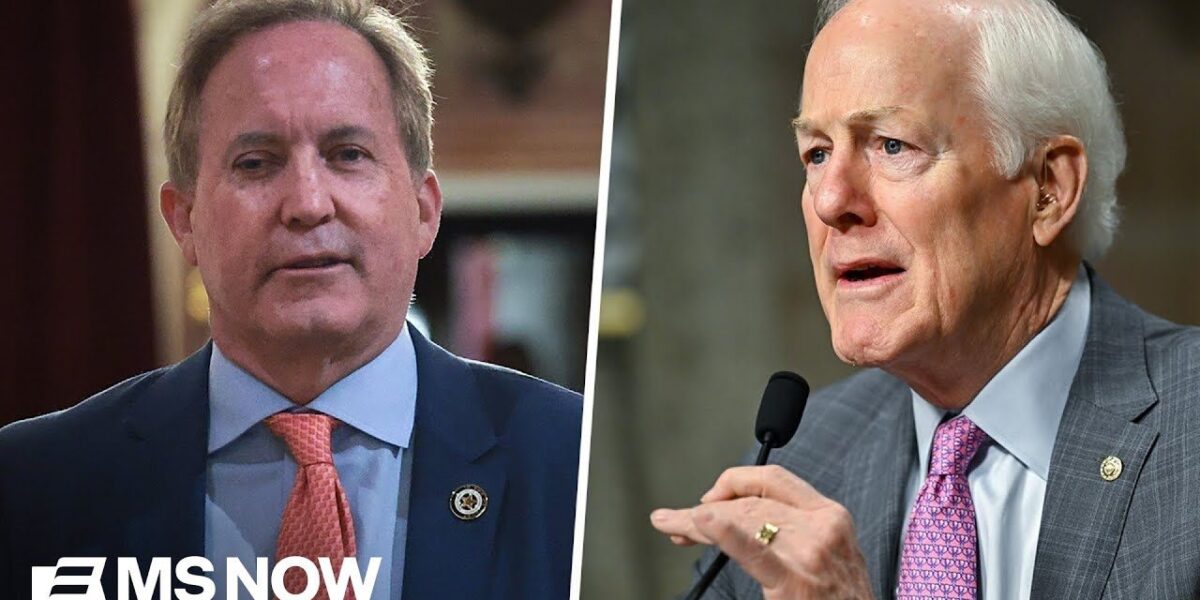
Trump’s Uncharacteristic Silence in Texas Senate Race
As primary elections loom, with Texas and North Carolina kicking off the crucial 2026 midterm season next Tuesday, the political landscape in the Lone Star State is particularly dynamic. Two high-profile Republican Senate primary races are drawing significant attention. Incumbent Senator John Cornyn faces a challenge from Texas Attorney General Ken Paxton, a race marked by Donald Trump’s notable absence of an endorsement, despite all three figures recently appearing together at a Trump event in Corpus Christi. Simultaneously, on the Democratic side, a University of Texas poll shows Congressman Jasmine Crockett leading State Representative James Tallarico by 12 points, a margin established before Tallarico gained national visibility following an interview with Stephen Colbert.
The Paxton-Cornyn Conundrum and Trump’s Calculation
The strategic silence from Donald Trump in the Republican Senate primary between John Cornyn and Ken Paxton has sparked considerable debate. Philip, a political analyst, observed that traditionally, a president would support a senator who has been a reliable vote-getter for their party. However, Ken Paxton, despite facing numerous scandals and impeachment by Republicans, retains a strong base within the MAGA movement. “Ken Paxton, though, definitely has the heart of the MAGA right,” Philip noted. “He’s a survivor.”
The decision not to endorse is seen as a complex calculation by Trump. While endorsing Paxton could galvanize his base, it might also alienate other voters or back a candidate perceived as potentially weaker in a general election. “I do think that Cornyn probably is a safer bet for Republicans, but it’s you know, the fact that Trump hasn’t weighed in may actually be, if he were to weigh in for Paxton, I think that could make a significant difference,” Philip added. “But I think whatever Trump does is probably not going to help whoever the Republican is in November.” This suggests Trump may be prioritizing his own political considerations over direct intervention, possibly to avoid alienating any faction or to maintain leverage.
Legal Baggage and Loyalty: The Paxton Factor
The extensive legal troubles surrounding Ken Paxton, including securities fraud charges and impeachment, have been a central theme. Christie, another commentator, questioned the extent to which such legal entanglements have become a badge of honor for some politicians. “For any Attorney General to be facing securities fraud charges, I mean that in itself like it should be end of story. His career is over and yet here he is,” she stated. This perception is amplified by Trump’s own history, where scandals have sometimes been viewed differently. “For Donald Trump I understand scandals about infidelity and fraud, those are badges of honor if you’re Donald Trump,” Christie remarked. “He’s not going to view those as a deal breaker by any means.”
Paxton’s loyalty to Trump, particularly in challenging the 2020 election results, is a significant factor. However, Christie cautioned that Trump’s demand for loyalty is often unilateral. “Loyalty for Donald Trump is always a one-way street, right? He demands loyalty but he never going to give it back.” The analysis suggests Trump’s non-endorsement stems from a desire to avoid backing a perceived loser and to prevent alienating any segment of the electorate. “He doesn’t want to back a loser and he doesn’t want to alienate any voters either, so I understand why he’s staying out of this because Donald Trump only cares about Donald Trump,” Christie concluded.
Democratic Strategy: Elevating a Perceived Weaker Opponent?
On the Democratic side, there are reports that Republicans are attempting to boost Jasmine Crockett’s chances, believing she might be an easier candidate to defeat in the general election. This tactic draws parallels to the 2016 presidential election when Democrats reportedly favored Donald Trump as an opponent. “Republicans are reportedly trying to boost Jasmine Crockett’s chances, I guess they think that she will be an easier candidate to run against in the general,” Anthony observed.
However, the effectiveness of such strategies is debatable. “I’m old enough to remember when Democrats wanted to elevate Donald Trump right because they thought that he would be the easier candidate to run against in the 2016 presidential election,” Anthony added, highlighting the unpredictable nature of political maneuvering. The broader question of Texas’s political leanings remains a point of discussion. While there have been indications of a slight shift towards the center or left in recent election cycles, these predictions have often not materialized. “The thing about Texas is we’ve heard this story quite a few times over the last few election cycles that the state might be tilting a little bit left or even a little bit center. And we’re always like it kind of doesn’t happen,” one analyst commented.
Texas Democrats: Electability vs. Ideology
The Democratic primary race between Jasmine Crockett and James Tallarico presents a strategic dilemma for the party. While some Democrats express concerns about electability, suggesting Tallarico might be a more viable general election candidate, others argue for supporting candidates who align with the party’s energy and message. Basil shared his perspective: “There are some that we’re supporting her that are saying, well, we care about electability so maybe we’re going to go in the other direction with Tahiriko. I don’t know if I buy that argument, but I hear it a lot and I understand the logic behind it, but I don’t think I don’t think it’s right.”
Basil believes that Democrats can succeed in Texas regardless of the candidate, referencing the state’s history of successful female leaders. “I think you can you can be successful as a Democrat in that state, whether you’re Tahiriko and running the race he is or Jasmine Crockett who’s run the race that she’s that she’s run.” The debate over electability versus ideological alignment is a recurring theme in Democratic politics, particularly in swing states like Texas.
Lessons for Democrats: Following the Energy
Political strategists are looking for lessons from recent elections to inform the Democratic approach to the midterms. Philip suggested that Democrats should focus on candidates who demonstrate a fighting spirit and connect with voters on an emotional level. “Democrats want to see their candidates start throwing punches. And that’s the thing we’ve seen over and over,” he stated. “They want a party that’s fighting for them. They want a party that feels like I’m a member of a group.”
The emphasis is on authenticity and energy, rather than solely on traditional polling or strategic calculations. “Follow the energy. And whoever the energy is with, follow that person because they’re bringing a lot of votes with them and they’re bringing a movement around their candidacy,” Philip advised. This approach suggests that candidates who can mobilize voters and inspire enthusiasm are more likely to succeed, even in traditionally challenging environments. The common thread in recent Democratic victories, whether in special elections or general races, has been the creation of a compelling vision for the future that resonates with voters.
The Broader Implications for November
The dynamics in Texas, particularly Trump’s calculated non-intervention and the strategic considerations within both parties, offer a preview of the broader midterm landscape. The Republican primary battle highlights the internal tensions within the party, balancing traditional Republicanism with the MAGA movement. For Democrats, the challenge lies in identifying candidates who can not only win primaries but also appeal to a broader electorate in November, while potentially capitalizing on any divisions or weaknesses within the GOP.
The upcoming elections will be a critical test of whether Democratic strategies focused on energy and authenticity can translate into victories in competitive states. The outcomes in Texas and other primary states will provide crucial indicators of the messages and candidates that will define the battle for control in Washington D.C. heading into the general election.
Source: 'He doesn't want to back a loser': No Trump endorsement in TX Senate race (YouTube)

Related Articles

Trump’s Jesus Image Backfires, Sparking Outrage
Donald Trump's AI-generated image of himself as Jesus Christ has backfired, drawing widespread criticism and accusations of blasphemy. His shifting explanations and ongoing feud with Pope Francis have further fueled the controversy, potentially alienating key voter groups.

Trump’s Legal Woes Mount as Courts Reject Defamation Claim
Donald Trump's defamation lawsuit against The Wall Street Journal was dismissed, with the court finding no evidence of "actual malice." This ruling, alongside discussions of Trump's attacks on the Federal Reserve chair and concerns about his mental fitness, underscores his ongoing legal and political challenges.

Trump’s Diet Soda Claim: A Joke or Dangerous Denial?
President Trump's alleged comment that diet soda kills grass and therefore cancer cells has sparked debate. While defended as a joke, critics worry about the normalization of health misinformation. This incident highlights the impact of public figures' words on health perceptions.