Congressman Questions U.S. Strikes on Iran, Cites War Powers
Lawmakers are raising constitutional concerns over recent U.S. strikes on Iran, questioning the President's authority to conduct acts of war without congressional approval. A proposed War Powers Resolution aims to limit military action against Iran unless explicitly authorized by Congress.


Congressman Questions U.S. Strikes on Iran, Cites War Powers
WASHINGTON D.C. – A member of the House Armed Services Committee has publicly questioned the legality and constitutional authority behind recent U.S. Strikes against Iran, asserting that such actions constitute “acts of war unauthorized by Congress.” The controversy centers on the executive branch’s assertion of power to deploy military force without explicit authorization from the legislative branch, a move that critics argue bypasses the constitutional mandate that only Congress can declare war.
Constitutional Concerns Raised by Lawmakers
Republican Congressman Thomas Massey of Kentucky was among the first to voice strong opposition, labeling the strikes as “acts of war unauthorized by Congress.” His sentiment was echoed by Senator Mark Warner, Vice Chairman of the Senate Intelligence Committee. Senator Warner stated that the President not only acted beyond his constitutional authority but also endangered American lives. In a released statement, Warner questioned the increased risk to American service members, emphasizing that such a grave decision should have “DEMANDED THE HIGHEST LEVEL OF SCRUTINY, DELIBERATION AND ACCOUNTABILITY.” He further highlighted the constitutional clarity that the decision to engage in large-scale military operations rests with Congress.
“The Constitution is clear. The decision to take this risk rests with Congress and launching large-scale military operations.” – Senator Mark Warner
While the President himself used the term “war” in his remarks, the transcript notes a historical precedent where both Republican and Democratic presidents have ordered military force without direct congressional authorization. This practice often relies on interpretations of existing authorizations for the use of military force (AUMFs), such as the landmark resolution passed in 2001 following the 9-11 attacks.
The 2001 AUMF and its Interpretation
The Trump administration, like previous administrations, has leaned on a broad interpretation of the 2001 AUMF to justify military actions. This resolution grants the President authority “to take action to deter and prevent acts of international terrorism against the United States.” However, the transcript clarifies that this AUMF was specifically intended for actions against Al-Qaeda and the Taliban and has been used against groups like ISIS. Crucially, it has not been interpreted to authorize military force against the Iranian regime, and Congress has not approved, nor has the President sought, a new authorization for the current military expedition against Iran.
Congresswoman Hulihan on Unilateral Action
Democratic Congresswoman Christy Hulihan of Pennsylvania, a member of the House Armed Services Committee and a veteran of the U.S. Air Force, joined the discussion to elaborate on these concerns. She emphasized that the debate is not solely about the justification for striking Iran, but fundamentally about “who gets to decide when the United States goes to war.” Congresswoman Hulihan argued that despite Iran’s negative role on the world stage, nothing has fundamentally changed to empower the President to unilaterally order an “act of war.”
She pointed out that previous administrations, when engaging in significant military actions, typically sought international cooperation through the UN Security Council, garnered support from coalitions, and crucially, requested authorization from Congress. “Instead, he’s thrown our country and this world into chaos,” Hulihan stated, asserting that such actions do not lead to a more secure nation or world.
Efforts to Reassert Congressional Authority
In response to the executive actions, Congressmen Ro Khanna and Thomas Massey have proposed a War Powers Resolution. This resolution directs the President to terminate the use of U.S. Armed Forces in hostilities against Iran unless explicitly authorized by a declaration of war or a specific AUMF against Iran. The resolution was introduced on January 17th, with a vote initially scheduled for Tuesday.
However, Congresswoman Hulihan expressed frustration with the current Speaker of the House, Mr. Johnson, alleging that he has actively prevented such votes from occurring. “He canceled votes on Friday.
He canceled votes on Tuesday. He canceled votes this coming Friday,” Hulihan stated, suggesting this is an attempt to “undermine the power of Congress.” She believes the Speaker is “absolutely complicit in this neutering of the United States Congress.” Hulihan expressed hope for a future vote, noting that past similar resolutions, such as those concerning Venezuela, have ended in ties, which she believes emboldens the President to continue with what she termed “lawlessness.” She urged her Republican colleagues to “do the right thing and vote for this resolution.”
Historical Parallels and Future Implications
Hulihan also addressed the potential for bipartisan support, expressing confidence that her Democratic colleagues understand the gravity of the situation. Drawing parallels to the lead-up to the Iraq War in 2003, she remarked, “History definitely is rhyming right now.” As a veteran, she stressed that military actions are not abstract or akin to video games, especially given the potential loss of American lives and the devastating consequences for other nations.
Reflecting on her seven years in Congress on intelligence and armed services committees, Hulihan reiterated that while Iran has consistently been a destabilizing force, there has been no recent development that would justify the President’s unilateral military actions. She also highlighted the significant power and influence of Iran compared to previously engaged nations like Iraq and Afghanistan, highlighting the potential for far-reaching, intergenerational consequences in the region and globally.
Looking Ahead
The ongoing debate over the President’s war powers and the recent strikes on Iran underscores a critical tension between the executive and legislative branches. The outcome of the proposed War Powers Resolution, should it eventually come to a vote, will be a significant indicator of Congress’s willingness and ability to reassert its constitutional authority in matters of war and peace. The broader implications for regional stability, international relations, and the balance of power within the U.S. government remain to be seen, with future actions likely to be closely scrutinized by lawmakers and the public alike.
Source: Member of House Armed Services Committee questions U.S. Strikes on Iran (YouTube)

Related Articles
Senator: Trump Starts Wars, Claims Credit for Peace
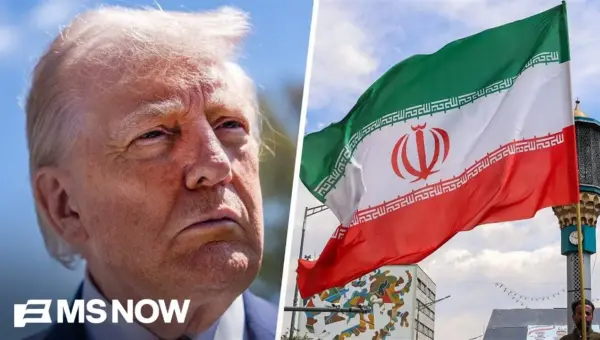
Senator Chris Van Hollen criticized President Trump's foreign policy, likening him to an arsonist who starts fires and then claims credit for putting them out. Van Hollen argued that recent conflicts, including the one involving Iran and the Strait of Hormuz, have cost lives and billions of dollars without a clear endgame or definition of success. He called for ending these "wars of choice" and highlighted the fragility of recent ceasefires.
Tax Cuts vs. High Prices: Voters Feel the Pinch
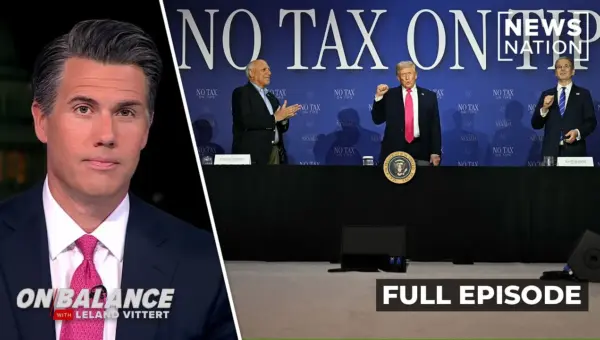
Americans are feeling the economic pinch, with rising prices overshadowing tax cuts. While some indicators look good on paper, public sentiment suggests a deep dissatisfaction with the economy. Meanwhile, scandals and perceived ineffectiveness continue to plague Congress, further eroding public trust.
Congress Extends FISA by 10 Days Amid Privacy Debates
Congress has granted a 10-day extension for FISA surveillance authority, pushing the deadline to April 30th amid ongoing privacy concerns. Lawmakers are also grappling with budget battles, particularly for the Department of Homeland Security, exploring reconciliation bills to secure funding. Discussions also highlighted the positive impact of recent tax relief measures on American consumers and small businesses.