Iran’s FM Claims ‘Full Control’ Amidst US-Israeli Strikes
Iran's Foreign Minister Abbas Araghchi claims "full control" amid alleged US-Israeli strikes, stating Iran retaliated in self-defense. He decried the timing of attacks during ongoing nuclear negotiations and rejected claims of seeking nuclear weapons or engaging in proxy warfare.

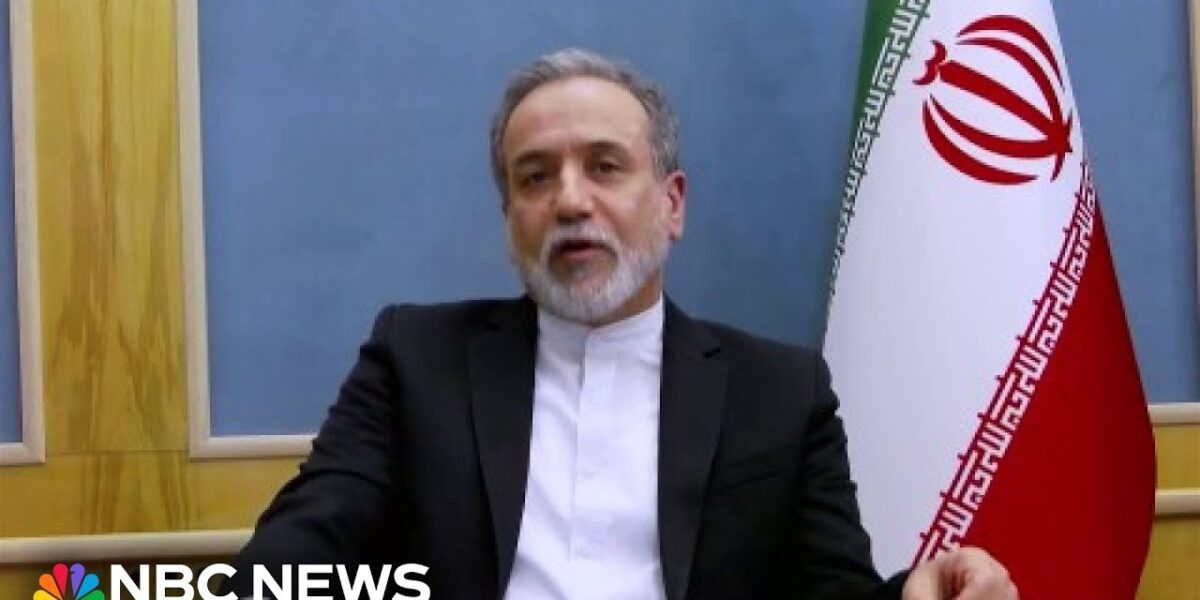
Iran’s Foreign Minister Denounces US and Israeli Attacks, Asserts Retaliation
Tehran, Iran – Iran’s Foreign Minister, speaking from the capital amidst a reported communications blackout, has asserted that the nation is “under control” following alleged strikes by the United States and Israel. The minister, identified as Abbas Araghchi, stated in an interview that while the situation is not “normal,” life is continuing and all officials, including the Ayatollah and the President, are safe and alive, though acknowledging the potential loss of one or two commanders.
Araghchi detailed Iran’s immediate response, claiming that within two hours of the alleged attacks, Iran retaliated by targeting American bases and unspecified locations in Israel with missiles. He emphasized that these actions were taken in “self-defense” due to the inability to “just sit and watch” while being attacked, particularly when retaliatory strikes might impact friendly neighboring countries hosting American bases.
Negotiations Undermined by Aggression, Claims FM
A significant point of contention raised by Minister Araghchi was the timing of the alleged strikes, which he described as occurring “in the middle of negotiation.” He highlighted recent positive developments in talks held in Geneva with U.S. officials, including Steve Witkoff and Jared Kushner, and a subsequent meeting with the IAEA in Vienna aimed at resolving technical issues related to Iran’s nuclear program. According to Araghchi, these negotiations had made “significant progress,” with both parties reportedly satisfied, a sentiment echoed by the Omani Foreign Minister, Badr Albusaidi, who was mediating the talks.
“I don’t know why. While we were progressing in our talks and we had made good, you know, achievements and a deal was at our reach. Why they decided to attack us?”
The Foreign Minister suggested that external forces might have “dragged the United States” into the conflict for their own benefit, calling the situation “very unfortunate.”
Denial of Nuclear Ambitions and Proxy Warfare
Addressing concerns about Iran’s nuclear program, Araghchi reiterated the nation’s long-standing assertion that its program is solely for peaceful, civilian use. He cited the 2015 nuclear deal as proof of Iran’s commitment and goodwill, noting that it was the U.S. that withdrew from the agreement, not Iran.
Regarding the presence of groups like Hezbollah, Hamas, and Houthi rebels, Araghchi rejected the term “proxies,” instead describing them as “independent groups” fighting for a “just cause” whom Iran supports. He maintained that Iran is capable of defending itself without external assistance and does not require nuclear weapons, citing religious convictions and the Supreme Leader’s edicts against such armaments, in addition to their lack of place in Iran’s security doctrine.
Self-Defense and Retaliation Capabilities
When questioned about the scope of Iran’s self-defense measures, Araghchi stated there are “no limits” to defending the nation. However, he clarified that Iran’s actions are directed at “American military bases in the region” and “military installations and facilities,” not American civilians on their homeland. He asserted that Iran is not the aggressor and that its retaliatory actions would cease once the “aggression is stopped.”
He expressed confidence in Iran’s preparedness, stating, “We are more prepared than previous times, the 12 Day War.” Araghchi also claimed that Iran’s missile capabilities, intentionally kept below a 2,000 km range, are purely defensive and for deterrence, and that Iran does not possess the capability or intention to strike the U.S. homeland.
Dismissal of Regime Change and Internal Unrest
Minister Araghchi strongly dismissed the notion of “regime change” in Iran as a “mission impossible,” citing the widespread public support for the Islamic Republic, evidenced by massive turnout during the 47th anniversary of the Islamic Revolution. He recounted Iran’s history of facing external pressures, including coups, sanctions, and wars, all of which he claimed have failed.
Addressing reports of a crackdown on civilian protesters, Araghchi corrected the narrative, stating that Iran “cracked down a terrorist operation.” He alleged that armed elements, instructed by foreign intelligence agencies like Mossad, infiltrated peaceful protests, firing upon police and civilians to inflate casualty figures and provoke external intervention. He stated that the total number of victims during that period was 3117, with approximately 2500 considered “martyrs” killed by these elements, alongside 200 police forces.
“They wanted to increase the number of killings, because the President of the United States had said that if there are killings, I would come, I will come to, to rescue. So in order to drag him into, you know, a war with Iran, they started shooting at people.”
He characterized these events as a “plot by Israelis and Americans” aimed at destabilizing the country, a plot that Iran was able to control.
Message to the Iranian People and International Community
Addressing the Iranian people, Araghchi acknowledged the reality of ongoing conflict and potential panic but urged them to remember Iran’s millennia-old civilization and its capacity to overcome adversity. “We are a great nation with a great civilization. We have lasted for thousands of years and we know how to defend ourselves,” he stated.
He characterized U.S. President’s calls for the Iranian people to rise up as “intervention in the internal affairs of another country,” asserting that no foreign leader has the right to dictate actions to the citizens of another sovereign nation.
De-escalation and Future Dialogue
On the prospect of de-escalation, Araghchi stated that while there is currently no direct communication, Iran is interested in de-escalation but stressed that “the aggression should be stopped first.” He indicated that if the attacks cease, the possibility of dialogue might emerge, though he cautioned that the Iranian public is “very angry right now.”
Regarding concessions in the nuclear program, Araghchi reiterated Iran’s willingness to provide assurances of its peaceful nature, including through robust verification and monitoring by the IAEA, and to build confidence. However, he firmly stated that Iran would not relinquish its rights, including enrichment, but would conduct it based on the nation’s needs, such as for the Tehran Research Reactor which produces vital medical isotopes. He expressed regret that the U.S. “missed that opportunity” to reach a deal that would have seen sanctions lifted and economic cooperation begin.
Looking Ahead: A Tense Standoff
The interview paints a picture of a nation under duress but defiant, asserting its right to self-defense while simultaneously seeking to de-escalate tensions. The coming days will be critical in determining whether diplomatic channels can be reopened or if the cycle of alleged attacks and retaliations will continue to escalate, with significant implications for regional and global stability. The international community will be closely watching Iran’s response and the diplomatic efforts to manage this volatile situation.
Source: Full interview: Iranian foreign minister reacts to U.S. and Israeli strikes in Iran (YouTube)

Related Articles

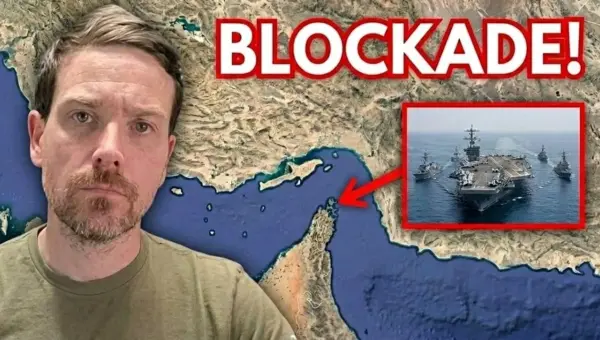
US Navy Blockade Tightens Grip on Iran’s Oil
The US Navy has imposed a strict blockade on Iranian ports, aiming to cripple the nation's oil exports and economy. With warships enforcing the closure, Iran faces significant financial pressure. The long-term effectiveness and potential for escalation remain key concerns.


Trump’s Iran Deal Talk: A Mirror of His Own Desires?
Donald Trump's repeated claims that Iran "wants a deal very badly" might be more about his own desire for an agreement than Iran's. This analysis explores his rhetoric and its potential implications for foreign policy.

China’s Iran Gambit: Deception or a New World Order?
President Trump claims China will stop sending weapons to Iran, but deep skepticism remains due to China's past support and use of spy satellites to aid Iran. This move could be a strategic ploy to weaken the US military.