US, Israel Launch “Epic Fury” Strikes on Iran
The United States and Israel have launched coordinated "Operation Epic Fury" strikes on Iran, targeting its defenses amidst rising regional tensions. Iran has retaliated with drone and missile attacks on Israeli and U.S. bases. Experts warn of catastrophic consequences and question the viability of achieving regime change through aerial campaigns.

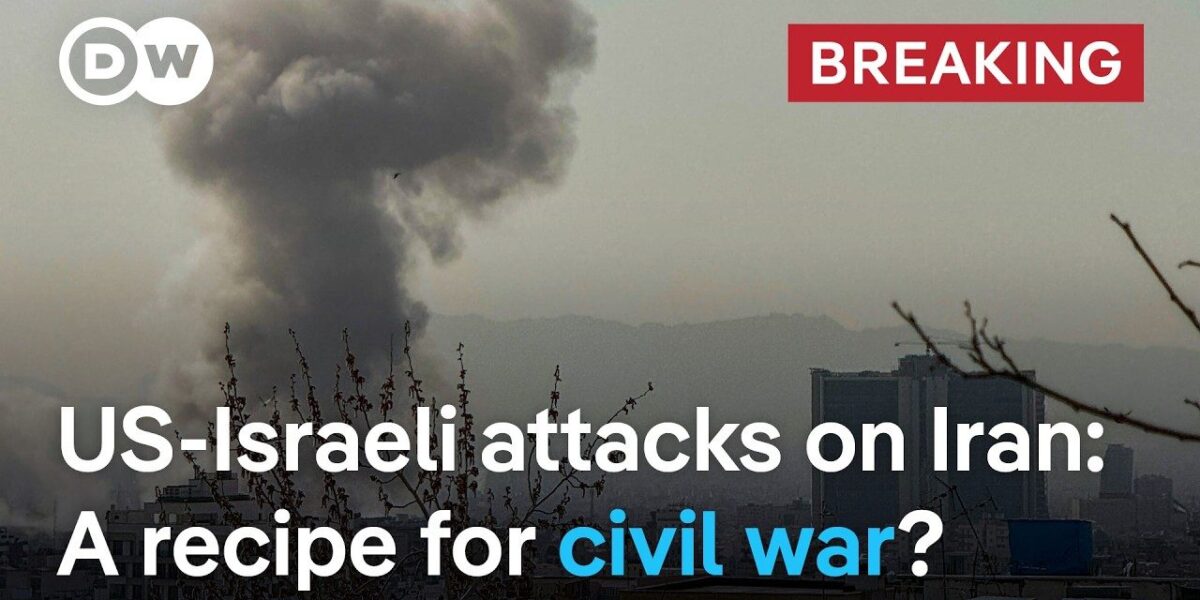
US and Israel Initiate Coordinated Attacks on Iran Amid Regional Tensions
In a dramatic escalation of regional conflict, the United States and Israel have launched a series of coordinated military strikes against Iran, dubbed “Operation Epic Fury” by President Donald Trump. The offensive, confirmed by the White House, aims to “annihilate the regime’s defenses” and eliminate perceived imminent threats. State media in Iran has broadcast images depicting destruction in the capital, Tehran, with witnesses reporting smoke rising near sensitive government buildings, including offices associated with Supreme Leader Ayatollah Ali Khamenei, who has not been seen publicly for several days.
Iran Responds with Drone and Missile Barrage
In response to the initial strikes, Iran’s Revolutionary Guard announced it has launched a wave of drones and missiles targeting Israeli and U.S. bases across the region. Explosions have been reported in multiple locations, including the United Arab Emirates, Jordan, Bahrain, and Kuwait, where significant U.S. military contingents are stationed. Sirens wailed across Israel as the nation braced for retaliatory attacks, with Israeli defense systems reportedly intercepting incoming missiles.
Israeli Justification: Preventing a Nuclear Iran
Israeli Prime Minister Benjamin Netanyahu swiftly justified the decision to strike, stating, “Challenging days await us. Every military action involves risk. But the risk of not acting is much greater.” He articulated concerns about a potential nuclear-armed Iran possessing advanced missile capabilities, asserting that inaction would leave the nation vulnerable to destruction. “As a people who want to live, we have no choice but to act,” Netanyahu declared.
Targets Extend to Regional U.S. Assets
The scope of Iran’s retaliatory actions has extended to key regional U.S. military installations. The Revolutionary Guard confirmed targeting the U.S. Fifth Fleet, based in Bahrain. Sirens were also heard in Kuwait, home to another U.S. Army base, and smoke was observed over Doha, Qatar. The unfolding events have led to widespread flight cancellations, with airspace over much of the Middle East becoming largely empty as fears of a broader conflict intensify.
Expert Analysis: Regime Change and Unforeseen Consequences
Faras Gz, a professor of international relations at the London School of Economics, expressed deep concern over the potential ramifications of the conflict. While acknowledging the coordinated nature of the U.S.-Israeli offensive and its likely objective of regime change, Gz cautioned against President Trump’s call for the Iranian people to rise against their government, describing it as potentially “suicidal” given the regime’s existing popular support base. He predicted a protracted conflict, stating, “The consequences for both the Iranian people and the region will be catastrophic.”
“The overarching strategic aim of Donald Trump and Benjamin Netanyahu is regime change in Iran. Do I really believe that Donald Trump could basically bring about the top of the Iranian government? No. I think it’s wishful thinking.”
Gz further elaborated that while U.S. and Israeli forces could inflict significant damage on Iran’s military and strategic infrastructure, achieving regime change through air power alone is unrealistic. He characterized the war as “illegal, unjust, and illegitimate,” a “war of choice” driven by naked power rather than international diplomacy.
Iran’s Limited Options and Long Game Strategy
Regarding Iran’s response, Gz suggested the country has limited options due to its vulnerable air defenses. He anticipates Iran will attempt to prolong the conflict, playing for time and focusing on resilience and resistance against initial shocks. The Iranian regime’s primary goal, he posits, is survival and continued resistance, positioning themselves for what they perceive as a long-term confrontation.
Regime Change: An Unlikely Outcome from the Air?
Ha Helier, a senior fellow in security studies at the Royal United Services Institute, echoed the sentiment that regime change appears to be the primary objective. However, he agreed with Gz that achieving this through aerial attacks is improbable. Helier argued that regime collapse historically requires either external ground forces or significant internal defections, neither of which appears imminent in Iran. He noted that even if top leadership were eliminated, the monopoly of force would likely remain within existing regime institutions.
Regional Pressure and International Condemnation
The Iranian retaliatory strikes on regional countries, Helier suggested, were an expected but potentially miscalculated move. While intended to pressure these nations into seeking a de-escalation, it could equally push them closer to the U.S. for protection against further attacks. Meanwhile, Russia and China have called for an urgent UN Security Council meeting, though Helier anticipates predominantly condemnations with little operational impact on the U.S.-Israeli campaign, which he believes is determined to proceed.
Domestic U.S. Political Landscape
The conflict’s longevity within the U.S. political context remains a question. Helier speculated that the war could become unpopular domestically, drawing parallels to the Iraq War, a conflict President Trump has often criticized. While strikes may continue for several days, the stated aim of regime change suggests a potentially prolonged engagement driven by a desire to see the current Iranian government removed.
Looking Ahead: A Protracted Conflict?
The immediate future points towards a potentially protracted and volatile period in the Middle East. The effectiveness of the U.S.-Israeli strategy in achieving regime change remains highly uncertain, with experts questioning the viability of air power as the sole instrument for such a drastic political shift. The response from Iran, its regional allies, and international bodies like the UN will be critical in shaping the trajectory of this escalating crisis. The potential for miscalculation and unintended consequences looms large as the region grapples with the unfolding “Operation Epic Fury.”
Source: 'The consequences for the Iranian people and the region will be catastrophic' – analyst | DW News (YouTube)

Related Articles

China’s Iran Gambit: Deception or a New World Order?
President Trump claims China will stop sending weapons to Iran, but deep skepticism remains due to China's past support and use of spy satellites to aid Iran. This move could be a strategic ploy to weaken the US military.
China Aids Iran Amid US Conflict Escalation
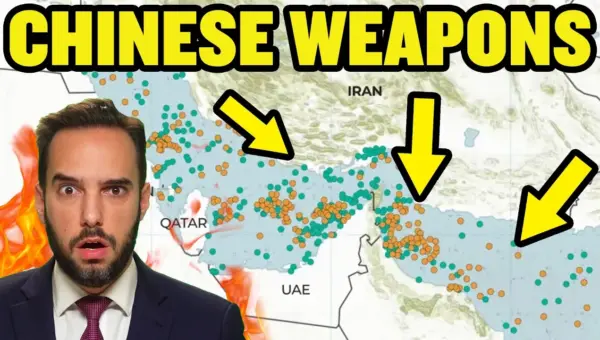
Recent intelligence suggests China is secretly supplying Iran with weapons like MANPADS and sharing critical intelligence, a significant escalation from its previous stance. This move, if confirmed, could deepen regional conflict and lead to severe US economic retaliation, while highlighting long-standing strategic ties between Beijing and Tehran.
China Backs Strait of Hormuz Blockade, Halts Iran Arms
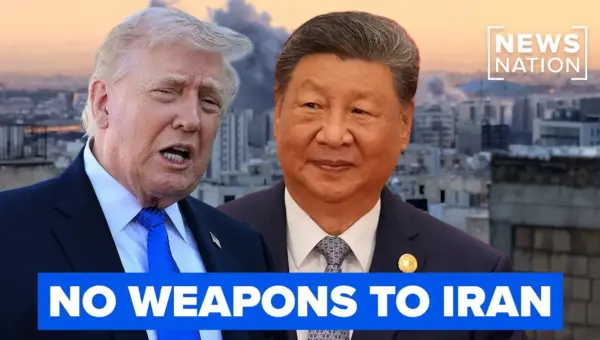
China has agreed not to supply weapons to Iran and is not opposing the U.S. naval blockade in the Strait of Hormuz. This significant development comes as President Trump prepares for a state visit to China and aims to pressure Iran by controlling vital shipping lanes. The move impacts global trade and reshapes regional power dynamics.