Supreme Court Reins In Presidential Tariff Power
The U.S. Supreme Court has ruled that the President cannot use emergency powers to impose tariffs, potentially requiring billions in collected revenue to be repaid to corporations. This decision limits executive authority in trade policy.


Supreme Court Curtails Presidential Tariff Authority, Threatens Revenue Repayment
In a significant ruling that redraws the lines of executive power, the U.S. Supreme Court has determined that the President cannot unilaterally impose tariffs using emergency powers. This landmark decision, stemming from actions initiated during the Trump administration, not only halts future executive-led tariff impositions but also raises questions about billions of dollars in collected revenue, potentially requiring repayment to affected corporations.
The Genesis of the Tariff Dispute
The controversy traces back to 2025 when the U.S. Government, under President Donald Trump, began implementing substantial tariffs on imports from key trading partners. A 25% tariff was levied on goods from Canada, a similar 25% tariff on imports from Mexico, and a 10% tariff on products originating from China. A tariff, in essence, is a tax imposed by a government on imported goods, designed to increase their cost and potentially protect domestic industries or generate revenue.
Market Reaction and Revenue Implications
The initial imposition of these tariffs sent ripples through the financial markets. Stock markets reacted with apprehension, as U.S. Corporations faced the prospect of absorbing these new tax burdens, which could impact their profitability and supply chains.
However, on the governmental side, these tariffs proved to be a significant revenue generator, bringing in billions of dollars for the U.S. Treasury. This revenue stream was seen as a fiscal positive, offsetting some of the market’s concerns.
The Supreme Court’s Intervention
The recent Supreme Court ruling has fundamentally altered this landscape. The Court concluded that the President overstepped constitutional boundaries by utilizing emergency powers to enact these tariffs.
This verdict effectively prevents the executive branch from employing similar measures in the future without explicit congressional authorization. The core of the ruling centers on the separation of powers, asserting that the authority to levy taxes, including tariffs, rests with Congress, not the President acting unilaterally.
The Unraveling of Collected Revenue
Perhaps the most immediate and impactful consequence of the ruling is the potential obligation to refund the collected tariff revenue. The billions of dollars that flowed into the U.S. Treasury as a result of these tariffs are now theoretically subject to repayment.
This means that corporations that initially paid the tariffs could be eligible to reclaim those funds. The practicalities of such a widespread repayment process, including the administrative challenges and the fiscal impact on the government, remain to be seen.
Market Impact and Investor Considerations
What Investors Should Know:
- Reduced Trade Policy Uncertainty: The ruling provides greater clarity on the limits of presidential power in trade policy, potentially reducing the risk of sudden, executive-driven tariff hikes that can disrupt markets.
- Fiscal Implications: The potential repayment of collected tariffs could have a short-term impact on government revenue. Investors will be monitoring how the Treasury handles this situation and its effect on the national debt or other fiscal programs.
- Sector-Specific Effects: Industries that were heavily impacted by the specific tariffs in question (e.g., automotive, steel, electronics, agriculture) may see a reversal of cost pressures if refunds are processed. However, the long-term strategic adjustments made by companies in response to the tariffs might not be easily undone.
- Congressional Role: The decision highlights the importance of congressional action in trade matters. Future tariff policies are more likely to be debated and enacted through legislative channels, which can be a slower but more predictable process.
Broader Economic Context
Tariffs have long been a tool of economic policy, used to influence international trade, protect domestic industries, and generate government revenue. However, their implementation is often contentious, sparking retaliatory measures from other countries and leading to price increases for consumers and businesses. The Supreme Court’s decision acts as a significant check on executive discretion in employing this powerful, and often disruptive, policy tool.
Looking Ahead
The ruling is likely to lead to increased scrutiny of executive actions related to trade and finance. While it may introduce complexity regarding the refund of past revenues, it reinforces the constitutional framework designed to balance power between the branches of government.
For investors, this means a potentially more stable, albeit slower, path for future trade policy, with a greater reliance on legislative processes. The focus will now shift to how the government manages the financial fallout from the decision and whether Congress will seek to codify or alter tariff-related powers in light of this judgment.
Source: Who Really Controls America’s Tariffs (YouTube)

Related Articles


Powell Stays Fed Chair If No Successor Named
Federal Reserve Chairman Jerome Powell confirmed he will continue leading the central bank as Chair pro tem if no successor is confirmed by May 15th. He also stated he will not leave the board until an ongoing investigation concludes with transparency. His remarks aim to ensure leadership stability at the Fed.
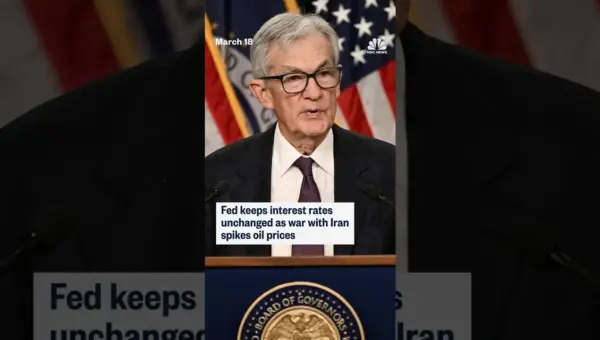
Fed Holds Rates Steady Amidst Oil Price Surge and Tariff Uncertainty
The Federal Reserve has held interest rates steady for a second consecutive meeting, citing economic uncertainty. Soaring oil prices due to the conflict with Iran and the recent Supreme Court ruling on tariffs are key factors influencing the decision. The Fed is carefully balancing inflation concerns with the need to support economic growth.

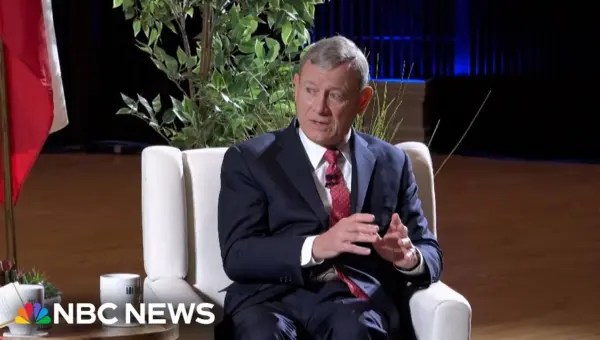
Roberts Decries ‘Dangerous’ Attacks on Judges
Chief Justice John Roberts has warned that personal attacks against judges have become "dangerous." While acknowledging that criticism of court opinions is healthy, Roberts drew a sharp distinction between debating legal analysis and directing hostility towards individual judges. He emphasized that this shift risks undermining the integrity and independence of the judiciary.