Nintendo 3DS: Still a Pocket Gem After 15 Years?
Fifteen years after its rocky launch, the Nintendo 3DS has proven its enduring value. With an unparalleled library of DS and 3DS games, unique hardware features, and a thriving homebrew scene, it remains a must-have for many gamers.

Nintendo 3DS: Still a Pocket Gem After 15 Years?
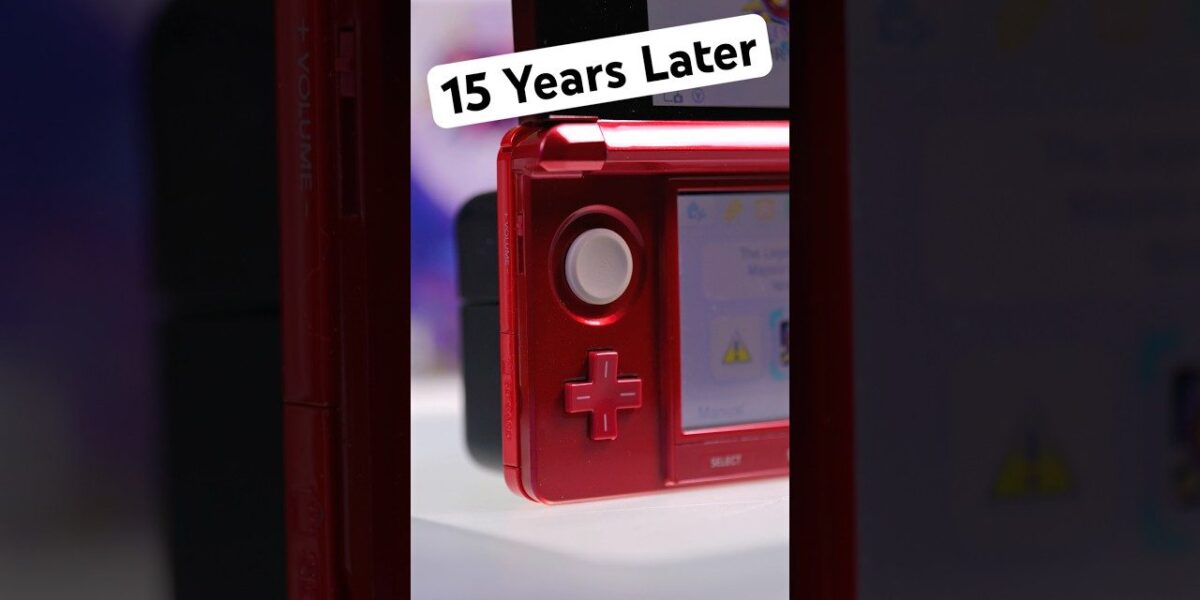
Fifteen years after its initial launch, the Nintendo 3DS, a console that once faced significant hurdles, has not only survived but thrived. Despite a rocky start that saw Nintendo implementing price cuts and offering free games to bolster sales, the 3DS evolved into a beloved and enduring platform. Its longevity is a testament to its robust library of games and a series of successful hardware revisions that catered to a wider audience.
The question on many retro gaming enthusiasts’ minds today is whether the Nintendo 3DS, in its various forms, remains a worthwhile investment. The resounding answer, even after all this time, is a definitive yes. For those seeking the definitive experience of playing Nintendo DS and, crucially, Nintendo 3DS titles, the original hardware remains unparalleled.
A Hardware Evolution
Nintendo didn’t rest on its laurels after the initial 3DS launch. Recognizing the need for accessibility and variety, the company introduced several hardware variations:
- Nintendo 2DS: A more affordable, clamshell-less design that removed the stereoscopic 3D functionality, making it a durable and budget-friendly option, particularly for younger players.
- New Nintendo 3DS XL: This iteration brought significant improvements, including a faster processor, enhanced controls (with an added C-stick and ZL/ZR buttons), improved battery life, and face-tracking 3D that reduced motion blur.
- New Nintendo 2DS XL: Combining the benefits of the New 3DS hardware with the more accessible, clamshell-free design of the 2DS, this model offered a powerful and portable gaming experience without the glasses-free 3D.
These revisions ensured that there was a 3DS family device for nearly every preference and budget, all while maintaining compatibility with the vast DS and 3DS software libraries.
The Unmatched DS and 3DS Experience
While emulation on other devices has become increasingly sophisticated, it often falls short of replicating the authentic feel of playing on original Nintendo hardware. The dual-screen setup, a hallmark of both the DS and 3DS, is particularly difficult to emulate effectively. The unique way games utilized both screens for gameplay, inventory management, or dual-view perspectives is integral to the experience. Trying to replicate this on a single screen, even with touch controls, simply doesn’t capture the same magic.
Furthermore, the 3DS hardware itself offers features that are hard to replicate. The stereoscopic 3D effect, while not universally loved, was a defining feature for many titles, adding a unique sense of depth. The portability, the tactile feel of the buttons, and the dedicated stylus all contribute to a gaming experience that feels complete and intentional.
The Thriving Homebrew Scene
Beyond its official capabilities, the Nintendo 3DS has fostered a vibrant and dedicated homebrew community. For those technically inclined, the 3DS can be modified to unlock a wealth of new possibilities. This includes:
- Running custom applications and emulators for other classic consoles.
- Accessing a wider range of media playback options.
- Playing backups of games you legally own.
- Exploring unique, fan-made games and modifications.
This active homebrew scene extends the lifespan and utility of the 3DS significantly, making it an even more compelling device for tinkerers and dedicated fans who want to get the absolute most out of their hardware.
Why the 3DS is Still Valuable Today
The enduring appeal of the Nintendo 3DS stems from a perfect storm of factors:
- An Incredible Game Library: The 3DS boasts an exceptional collection of first-party Nintendo titles like The Legend of Zelda: Ocarina of Time 3D, Super Mario 3D Land, Pokémon X/Y, and Fire Emblem: Awakening, alongside a wealth of excellent third-party games and DS classics.
- Nostalgia and Collectibility: As a beloved handheld that bridged the gap between the DS and the Switch era, the 3DS holds significant nostalgic value. Its increasing rarity has also made consoles and games more valuable to collectors.
- Unique Form Factor: The dual screens and the option for glasses-free 3D offer a distinct gaming experience that modern, single-screen devices can’t fully replicate.
- Affordability (Relatively): While prices have risen on the used market, particularly for special editions, many standard models can still be found at reasonable prices, offering a vast library of games for a relatively low cost of entry compared to other retro consoles.
- Homebrew Potential: As mentioned, the ability to customize and expand the system’s functionality through homebrew adds immense value for certain users.
Who Should Buy a 3DS in 2024?
The Nintendo 3DS is still a fantastic purchase for several groups:
- Dedicated Nintendo Fans: If you’re a fan of Nintendo’s franchises and missed out on the 3DS’s extensive library, it’s an essential addition.
- Retro Gaming Enthusiasts: For those who appreciate the tactile experience of physical games and want to play DS and 3DS titles as intended.
- Budget-Conscious Gamers: While prices fluctuate, a 3DS can offer hundreds of hours of high-quality gameplay for a fraction of the cost of a new console.
- Collectors: The 3DS is already becoming a sought-after item, and its value is likely to continue to appreciate.
- Modders and Tinkers: The homebrew community makes the 3DS a playground for those who love to customize and push the boundaries of their hardware.
Verdict
Fifteen years on, the Nintendo 3DS isn’t just a relic; it’s a vibrant, capable, and incredibly enjoyable gaming device. Its unique features, unparalleled library of dual-screen games, and the added dimension of the homebrew scene ensure its relevance for years to come. If you have any affection for Nintendo’s handheld legacy or a desire to explore one of the most diverse game libraries ever assembled, the Nintendo 3DS is unequivocally still worth it.
Specs & Key Features
- Screen: Dual LCD screens (top screen: 3.53-inch stereoscopic 3D, bottom screen: 3.02-inch touchscreen)
- Processor: Custom dual-core ARM11 MPCore CPU, single-core ARM9 CPU
- Connectivity: Wi-Fi (IEEE 802.11b/g), local wireless communication
- Input: D-pad, Circle Pad, A/B/X/Y buttons, L/R shoulder buttons, Start/Select buttons, Touchscreen, Microphone, Camera (internal and external)
- Backward Compatibility: Nintendo DS game support
- Dimensions: Approximately 5.3 x 2.9 x 0.8 inches (standard 3DS)
- Notable Hardware Revisions: 3DS XL, 2DS, New 3DS, New 3DS XL, New 2DS XL
Availability and Pricing
The Nintendo 3DS family of consoles is officially discontinued. Therefore, availability is limited to the used market (e.g., eBay, retro game stores, local marketplaces). Pricing varies significantly based on the model, condition, and included accessories, with standard models ranging from $100-$250, and rarer editions or bundles commanding higher prices.
Source: Is the Nintendo 3DS Still Worth It? (YouTube)

Related Articles


Mom’s Basement Gets a $5K Gaming Power-Up
A $5,000 AMD tech upgrade transformed a 'mom's basement' into a high-performance gaming haven. The upgrade features a powerful AMD Ryzen 7 9850X3D CPU, stunning 4K retro gaming capabilities with the RetroTink 4K Pro, and enhanced audio gear.

DualSense Dominates: PS5 Controller Crowned King
Sony's PlayStation 5 DualSense controller has been crowned the best of all time, surpassing even iconic predecessors. Its innovative haptic feedback and adaptive triggers offer unparalleled immersion, setting a new standard for gaming interaction. This advanced controller is a must-have for PS5 owners seeking a deeper connection to their games.


Lenovo’s Yoga 9i: The Future of Laptops is Here
Lenovo's Yoga 9i 2-in-1 Aura Edition arrives with Intel's Core Ultra Series 3 chips, boasting a 120Hz OLED display and zero pen latency. This versatile laptop seamlessly blends power and portability for students and creatives alike.