From Fiery Defender to Resigned Spokesperson: Karoline Leavitt’s Evolving Demeanor Signals Shifting Political Tides
Karoline Leavitt, a steadfast defender of Donald Trump, recently exhibited a 'resigned vibe' during a press briefing, sparking speculation about the immense pressures of her role. This shift, following the departure of another prominent spokesperson amid public opinion turns, highlights the psychological toll of defending controversial policies and the challenges of political communication in a highly scrutinized environment.

From Fiery Defender to Resigned Spokesperson: Karoline Leavitt’s Evolving Demeanor Signals Shifting Political Tides
In the relentless glare of the political spotlight, the demeanor of a press secretary can often serve as a subtle barometer for an administration’s internal pressures and external challenges. For years, Karoline Leavitt, a prominent voice for Donald Trump, has epitomized unwavering loyalty and a tenacious defense of his policies, navigating through some of the most contentious periods of his presidency and post-presidency. Known for her assertive communication style and steadfast commitment, Leavitt has been a constant presence, inversing reality, as some critics would argue, on issues ranging from controversial domestic policies to complex international affairs.
However, a recent press briefing appears to have unveiled a different facet of Leavitt’s public persona. A perceptible shift, described by observers as a “resigned vibe,” emerged during a late-stage exchange, prompting speculation about the immense pressures weighing on the young spokesperson and, by extension, the political ecosystem she inhabits. This apparent change in disposition, characterized by a direct admission of “no updates” rather than the usual rhetorical maneuvering, suggests a moment of candor that has captured the attention of political analysts and the public alike.
The Unyielding Role of a Political Spokesperson
The role of a political press secretary is arguably one of the most demanding and high-stakes positions in public service. Tasked with being the principal interface between an administration and the media, these individuals are expected to articulate policies, defend decisions, and manage narratives, often under intense scrutiny. For figures like Karoline Leavitt, who have served at the forefront of a highly scrutinized and often controversial administration, the pressure is magnified exponentially.
Leavitt’s journey into the political arena began early, marked by a rapid ascent through the ranks of conservative politics. A former assistant press secretary in the Trump White House, she later served as communications director for Representative Elise Stefanik and then for Congressman Mark Meadows.
Her trajectory underscores a deep immersion in the conservative movement and a commitment to its figureheads, particularly Donald Trump. Her communication style has often been described as direct, assertive, and combative when necessary, traits that have endeared her to supporters and positioned her as a formidable opponent in media skirmishes.
Throughout her tenure, Leavitt has consistently defended the Trump administration against a barrage of criticisms. The transcript alludes to a range of highly contentious issues she has championed, including controversies surrounding “the execution of US citizens,” “the stripping of USA ID, which will lead to 14 million deaths,” and “the cutting of Medicaid for tens of millions of Americans.” These references highlight the breadth and depth of the policy battles she has been expected to engage in, often requiring her to present the administration’s perspective in the face of widespread opposition and alarm.
Navigating Contentious Policies: A Look Back at Key Controversies
Federal Executions Under the Trump Administration
The reference to “the execution of US citizens” likely pertains to the Trump administration’s controversial decision to resume federal executions after a 17-year hiatus. Between July 2020 and January 2021, the federal government executed 13 individuals, a significant and unprecedented number in modern American history. This move sparked widespread condemnation from civil rights organizations, legal experts, and human rights advocates, who raised concerns about the fairness of the justice system, the methods of execution, and the moral implications of state-sanctioned killing.
Critics argued that the rush to carry out these executions, particularly during the lame-duck period of the presidency, was politically motivated and deeply troubling. Each execution generated intense media scrutiny and public debate, placing spokespersons like Leavitt in the difficult position of defending a policy that was deeply divisive and challenged on ethical and legal grounds. Her role would have been to articulate the administration’s stance on capital punishment, emphasizing justice for victims and the rule of law, even as legal challenges and protests mounted.
The “Stripping of USA ID” and Humanitarian Concerns
The claim within the transcript regarding “the stripping of USA ID, which will lead to 14 million deaths,” points to criticisms leveled against the Trump administration’s approach to foreign aid and international development, particularly concerning the U.S. Agency for International Development (USAID). While the specific figure of “14 million deaths” is a stark and alarming projection, it reflects the grave concerns expressed by humanitarian organizations, international bodies, and Democratic lawmakers about the potential catastrophic consequences of proposed cuts or reorientations of U.S. Foreign assistance.
Under the Trump administration’s “America First” policy, there were consistent efforts to significantly reduce foreign aid budgets and to tie aid more directly to U.S. National interests, sometimes at the expense of traditional humanitarian or development objectives. These proposals often met with strong resistance from development experts who warned that cuts to critical programs – encompassing food security, global health initiatives (like those combating HIV/AIDS, malaria, and tuberculosis), and disaster relief – could have devastating impacts on vulnerable populations worldwide.
While the most drastic cuts were often blocked by Congress, the persistent threat and actual reductions in certain areas led to fears of increased mortality rates, food insecurity, and health crises in regions heavily reliant on U.S. Support. Spokespersons were tasked with defending these budget proposals as fiscally responsible or aligned with national priorities, often clashing with those who viewed them as morally indefensible.
Medicaid Cuts and Healthcare Reform Efforts
The reference to “the cutting of Medicaid for tens of millions of Americans” speaks to one of the most significant and fiercely debated policy battles of the Trump era: the attempts to repeal and replace the Affordable Care Act (ACA). Central to these efforts were proposals to fundamentally restructure Medicaid, the federal-state program that provides health coverage to low-income Americans, including children, pregnant women, the elderly, and people with disabilities.
The various Republican-led healthcare bills, such as the American Health Care Act (AHCA) and the Graham-Cassidy Bill, aimed to transition Medicaid from an open-ended entitlement to a system of block grants or per capita caps. Non-partisan analyses, most notably by the Congressional Budget Office (CBO), projected that these changes would lead to substantial reductions in federal funding for Medicaid, potentially by hundreds of billions of dollars over a decade. These cuts, experts warned, would inevitably result in millions of Americans losing coverage or facing reduced benefits, particularly those who gained coverage through the ACA’s Medicaid expansion.
The political and public outcry against these proposals was immense, with patient advocacy groups, healthcare providers, and Democratic lawmakers vehemently opposing changes they argued would devastate the healthcare safety net. Leavitt and her colleagues would have been on the front lines, arguing for the necessity of these reforms to control costs and introduce market-based efficiencies, often against a tide of emotionally charged testimonials and dire predictions.
The “Resigned Vibe”: A Microcosm of Broader Political Strain?
Against this backdrop of continuous political combat and the defense of highly contentious policies, the “resigned vibe” observed in Karoline Leavitt takes on deeper significance. During the recent press briefing, when queried about a potential arms sale to Taiwan, Leavitt responded with a straightforward, “I don’t have any announcements or updates on that for you today.” This directness, devoid of the usual political “spin” or deflection, struck observers as uncharacteristic. “No updates, meaning she doesn’t have any spin. She doesn’t have any lies,” one commentator noted, highlighting the perceived departure from her typical approach.
The query itself, concerning an arms sale to Taiwan, is inherently sensitive. U.S. Arms sales to Taiwan are a critical component of its defense against potential aggression from mainland China, but they are also a consistent point of diplomatic friction between Washington and Beijing.
Such matters are often handled with extreme discretion, and a spokesperson might genuinely lack immediate updates or be instructed to maintain silence on ongoing negotiations. However, the manner of Leavitt’s delivery, rather than the content of her non-answer, is what resonated with observers.
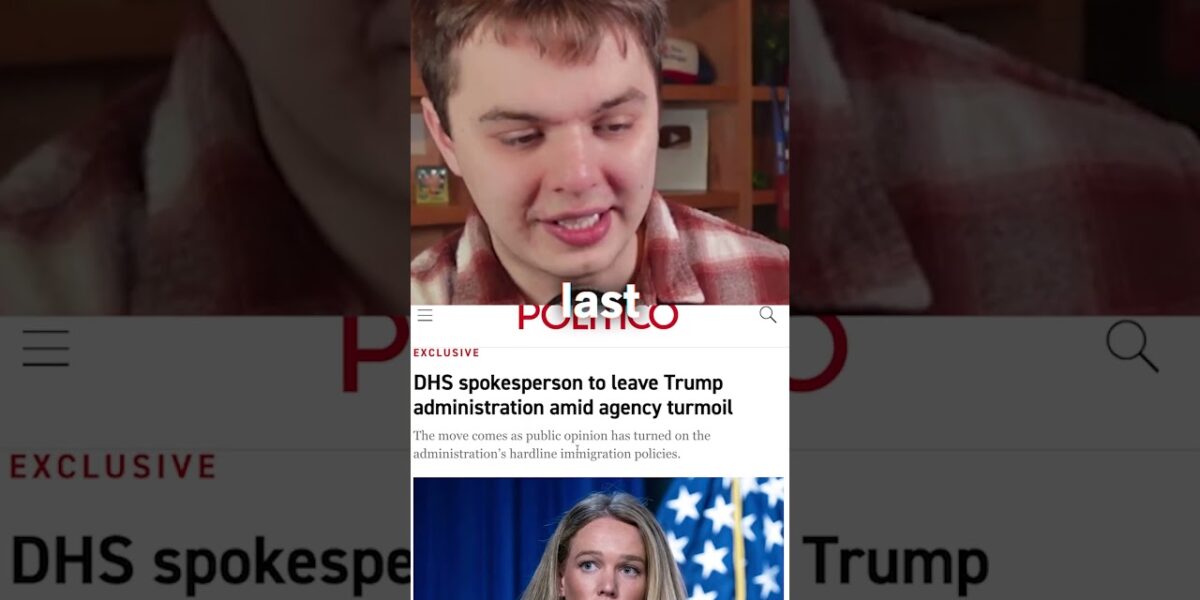
This shift in demeanor is further contextualized by a recent, related event: the departure of Trisha McLaughlin, the Department of Homeland Security (DHS) spokesperson. McLaughlin, described as a figure akin to Leavitt – a “young blonde woman who would be conventionally attractive in conservative spaces who could go out there and just inverse reality” – resigned just the night before Leavitt’s notable briefing.
McLaughlin had been a vocal defender of the Trump administration’s hardline immigration policies, which have faced significant public backlash and criticism over issues such as family separations at the border, detention conditions, and asylum restrictions. Her departure, coming “as public opinion has turned on the administration’s hardline immigration policy,” suggests that the relentless pressure and shifting public sentiment can take a toll on even the most steadfast communicators.
The Archetype of the “Young Blonde Woman” in Conservative Media
The transcript explicitly mentions a particular archetype: “a young blonde woman who would be conventionally attractive in conservative spaces who could go out there and just inverse reality.” This observation highlights a recurring phenomenon within conservative political communication and media. The strategic deployment of spokespersons who fit a certain demographic profile is not new, but its perceived effectiveness in “conservative spaces” is noteworthy.
This archetype often embodies a blend of youthful energy, perceived authenticity, and an ability to articulate conservative viewpoints with conviction, sometimes challenging conventional media narratives. While their communication skills and political acumen are undeniable, the emphasis on physical attractiveness and specific demographics can also raise questions about the criteria for selection and the potential for objectification. For individuals like Leavitt and McLaughlin, who operate within this framework, the pressure to maintain a certain image while simultaneously defending controversial policies can be immense, adding another layer of complexity to an already demanding role.
The Psychological Toll and Future Implications
The cumulative effect of constantly defending an administration, particularly one as frequently embroiled in controversy as Donald Trump’s, can lead to significant psychological strain. Spokespersons are expected to be indefatigable, articulate, and perpetually on message, often sacrificing personal opinions for the sake of institutional loyalty. The “resigned vibe” observed in Leavitt could be a symptom of burnout, disillusionment, or simply the immense exhaustion that comes from being at the epicenter of political battles day in and day out.
When public opinion begins to shift, as was noted with the “hardline immigration policy” defended by McLaughlin, the job of a spokesperson becomes even more arduous. The disconnect between an administration’s narrative and public sentiment can make “spinning” increasingly difficult, if not impossible, without sacrificing credibility. This can force a moment of reckoning, where the usual tactics of deflection or aggressive defense give way to a more subdued, perhaps even weary, honesty.
The departure of a colleague like Trisha McLaughlin, especially under circumstances where public opinion is cited as a factor, could also serve as a clear reminder of the transient and often unforgiving nature of political communication roles. It might prompt introspection among other spokespersons about their own sustainability in such demanding positions, leading to moments of vulnerability or a recalibration of their approach.
Conclusion: A Shifting Landscape for Political Communication
Karoline Leavitt’s perceived “resigned vibe” is more than just a fleeting moment in a press briefing; it could be a subtle indicator of the evolving landscape of political communication and the profound pressures faced by those at its forefront. Her past role as a fiery defender of Donald Trump, navigating criticisms over federal executions, foreign aid policies, and Medicaid cuts, highlights the immense challenges inherent in her position.
In a time of hyper-partisanship and constant media scrutiny, the ability to “inverse reality” or “spin” narratives is increasingly difficult to sustain indefinitely, especially when confronted with shifting public opinion or genuinely sensitive policy matters. The departure of a peer like Trisha McLaughlin highlights the personal and professional toll such roles can exact.
Ultimately, Leavitt’s moment of apparent resignation could be interpreted as a rare glimpse behind the curtain of political advocacy, revealing the human element amidst the often-impenetrable facade of official communication. It suggests that even the most stalwart defenders can reach a point where the relentless demands of the job, combined with the weight of controversial policies and a changing political climate, begin to show their strain, signaling a potential shift in how political narratives are crafted and conveyed in an increasingly complex public sphere.
Source: Karoline Leavitt Gives Up During Press Briefing #politics #fyp #new (YouTube)

Related Articles

Bolton Slams Trump’s Iran Policy as ‘Snake-Like’
John Bolton, former National Security Advisor, has strongly criticized former President Trump's Iran policy as "snake-like" and lacking a clear strategy. Bolton stated that Trump's decisions were often impulsive, undermining U.S. credibility and creating instability in the Middle East. He called for a more consistent and strategically grounded approach to foreign policy.

Trump Claims Presidential Call; Four Denials Emerge
Former President Donald Trump claimed he spoke with a past president who regretted not taking a certain action, implying approval of his own policies. However, aides for George W. Bush, Bill Clinton, Barack Obama, and sources close to Joe Biden have all denied any such conversations occurred. Trump has remained evasive when asked to identify the individual.
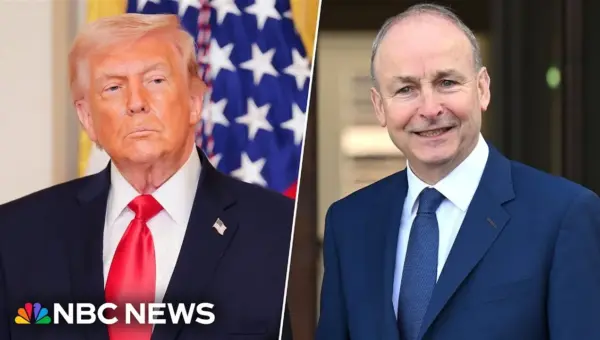
Trump Welcomes Irish Leader, Discusses Trade, Iran Tensions
President Trump welcomed Ireland's Taoiseach to the White House, discussing trade and the strong historical ties between the nations. The meeting also covered President Trump's views on Iran's military capabilities, his criticisms of NATO's support for U.S. initiatives, and upcoming foreign policy engagements.