US and Israel Launch ‘Operation Epic Fury’ Against Iran
The US and Israel have launched 'Operation Epic Fury,' a significant military campaign targeting Iran. The strikes, which began amidst stalled nuclear talks, aim to counter perceived threats from the Iranian regime but raise questions about the feasibility of achieving regime change through air power alone.

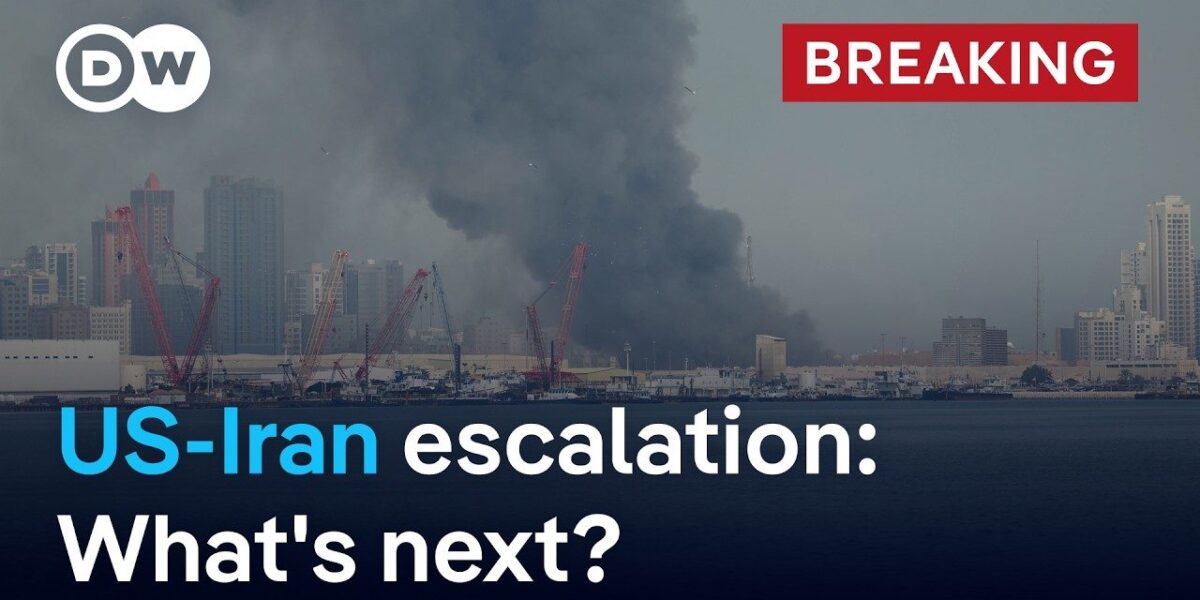
US Launches Major Military Strikes on Iran
The United States military has initiated major combat operations in Iran, marking a significant escalation in regional tensions. The joint US-Israeli campaign, codenamed ‘Operation Epic Fury,’ aims to counter what officials describe as ’eminent threats’ posed by the Iranian regime. The operation follows a series of escalating strikes with planned pauses to assess damage, according to sources cited by DW News. President Donald Trump announced the operation, stating its objective is to defend the American people against a regime he characterized as ‘vicious’ and responsible for decades of ‘bloodshed and mass murder’ targeting the US and its allies.
Context: Nuclear Talks and Strategic Goals
The strikes come just one day after indirect nuclear talks between Washington and Tehran, during which Iran’s foreign minister indicated a deal was within reach. However, President Trump expressed dissatisfaction with the progress of these negotiations, particularly regarding Iran’s nuclear ambitions. This military action represents a shift for an administration that has previously criticized prolonged US foreign entanglements.
The operation’s strategy appears to rely heavily on air power, a method experts question for its efficacy in achieving regime change. Unlike previous interventions, such as the 2003 Iraq War, the Trump administration has not sought United Nations Security Council backing or a vote in Congress, drawing criticism from both Democrats and some Republicans for a lack of prior briefing to legislators.
“The end of the largest state sponsor of terrorism as is upon us.”
– Republican Senator Lindsey Graham
Internal Reaction and Regional Concerns
While close Trump ally Senator Lindsey Graham hailed the operation as ‘necessary and long justified,’ other lawmakers expressed concern. Senator Jack Reed, the top Democrat on the Senate Armed Services Committee, and Representative Thomas Massie criticized the White House for failing to brief Congress adequately before launching the strikes. The Pentagon has been in close coordination with Israeli counterparts for months, preparing for this operation.
Reports indicate Iranian strikes have targeted US allies Bahrain, Qatar, and the United Arab Emirates, raising concerns about a wider regional conflict. The Pentagon’s level of concern regarding this escalation remains unclear.
Assessing the Possibility of Regime Change
Experts like Hansyakob Schindler from the Counter-Extremism Project express skepticism about achieving regime change solely through air strikes. He points out that the Iranian regime is a multi-polar system, unlike classic dictatorships, and that even the removal of the Supreme Leader might not dismantle the entire structure. Schindler suggests that sustained air strikes targeting both infrastructure and leadership, coupled with a hope for popular uprising, would be necessary.
However, a significant challenge remains the lack of a well-organized, unarmed opposition within Iran. The regime has demonstrated a capacity for ruthless suppression of dissent, with tens of thousands reportedly imprisoned. There is also a concern that air strikes could inadvertently strengthen the Revolutionary Guard, potentially leading to a military dictatorship rather than a democratic transition.
“It is unclear who is there to replace the current government in Tehran. The opposition remains unarmed.”
– Hansyakob Schindler, Counter-Extremism Project
Iran’s Nuclear Program and Ballistic Missile Ambitions
Schindler also addressed Iran’s nuclear program, noting that while no elements were entirely destroyed, some enriched uranium was retained, and recent efforts to rebuild aspects of the program, particularly ballistic missiles, have been observed. He emphasized that while centrifuges and stockpiles can be bombed, the knowledge of technicians and scientists cannot be erased, suggesting a cyclical rebuilding of the program is likely without addressing the underlying human expertise.
Timing and Future Outlook
The timing of the strikes, immediately following nuclear talks, suggests a breakdown in diplomatic efforts. The US had outlined three key demands: no nuclear enrichment, limitations on ballistic missiles, and an end to support for proxies. Iran’s strategy appeared to be delaying tactics to secure partial concessions, which the US deemed insufficient.
Middle East analyst Shani Rosanes noted that Iranian retaliation was expected, with the scale and nature of future responses depending on the perceived success of the initial strikes, particularly concerning any potential leadership casualties. She highlighted that the operation is still in its early hours, with expectations of continued exchanges over several days, potentially shorter than previous Israeli operations.
Israeli Prime Minister Benjamin Netanyahu reiterated his stance, accusing Iran of attempting to rebuild nuclear and ballistic capabilities and deceive international partners. He framed the operation as a necessary measure to prevent Iran from becoming immune to attacks.
The Question of Sustainability and Alternatives
The ongoing conflict raises questions about a potential new reality of annual attacks and exchanges. While the Israeli government views regime change as the only way to break the pattern, the effectiveness of air power alone in achieving this goal remains a critical question. The US hopes for a domino effect, where instability and economic hardship could empower the Iranian people to overthrow the regime, acknowledging that a purely military removal of the entire leadership structure is unlikely given the regime’s elaborate system of control and the large number of individuals connected to its security apparatus.
The Iranian leadership appears prepared for such scenarios, having reportedly established a succession plan. The core objective for the regime remains the preservation of its foundational principles and longevity, even in the face of leadership removal.
Public Sentiment in Israel
Recent polls indicate significant support among Israelis for initiating such attacks, with the involvement of the US potentially bolstering this support. However, concerns linger about Prime Minister Netanyahu’s motivations and the potential for a protracted conflict that could deplete Israel’s defense capabilities. The damage inflicted on Israel by previous exchanges underscores the high stakes involved.
Looking Ahead
The coming days will be crucial in determining the trajectory of ‘Operation Epic Fury.’ The response from Iran, the extent of regional spillover, and the internal dynamics within Iran will all be closely watched. The international community will be assessing whether this military intervention can achieve its stated goals or if it risks further destabilizing an already volatile region, potentially leading to a prolonged and unpredictable conflict.
Source: US, Israel strikes on Iran: Can a regime change be achieved by military force? | DW News (YouTube)

Related Articles

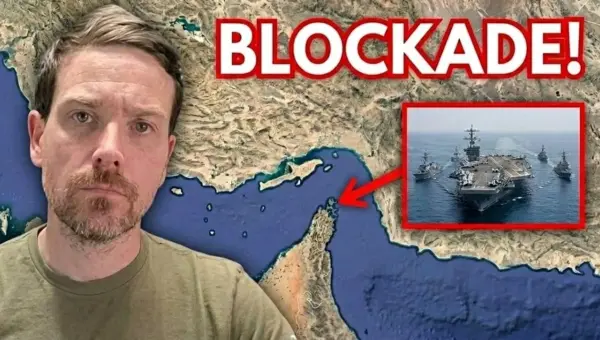
US Navy Blockade Tightens Grip on Iran’s Oil
The US Navy has imposed a strict blockade on Iranian ports, aiming to cripple the nation's oil exports and economy. With warships enforcing the closure, Iran faces significant financial pressure. The long-term effectiveness and potential for escalation remain key concerns.

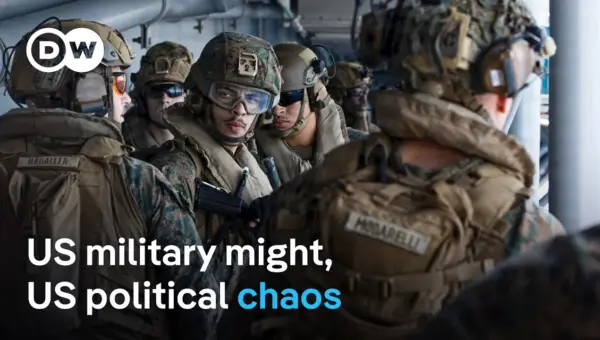
US Military Strength: Tactical Wins, Strategic Gaps?
The U.S. military demonstrates incredible tactical skill, capable of executing complex missions. However, this prowess is often undermined by unclear political goals and shifting strategies set by civilian leadership. Experts argue that holding elected officials accountable for these decisions is crucial, as the military cannot compensate for flawed governance.


Trump’s Iran Deal Talk: A Mirror of His Own Desires?
Donald Trump's repeated claims that Iran "wants a deal very badly" might be more about his own desire for an agreement than Iran's. This analysis explores his rhetoric and its potential implications for foreign policy.