The Hypothetical Hammer: Analyzing the Profound Implications of a Supreme Court Challenge to Presidential Tariff Powers
A recent online discussion speculates on a hypothetical Supreme Court ruling that dismantles a president's entire tariff regime, leading to a reported 'meltdown' and sparking debate over billions in potential refunds. While not a current event, this scenario offers a crucial lens to analyze presidential authority, judicial review, and the profound economic and political implications of such a legal challenge to trade policy.


The Hypothetical Hammer: Analyzing the Profound Implications of a Supreme Court Challenge to Presidential Tariff Powers
A recent online discussion, stemming from a video transcript, paints a vivid hypothetical scenario: a sitting president, reportedly Donald Trump, facing a significant legal setback as the Supreme Court delivers a ruling that dismantles his entire tariff regime. The transcript describes a dramatic scene where the president is said to be ‘melting down’ during a breakfast with governors, as news breaks of the high court’s decision. This hypothetical ruling, which declares the president’s use of ’emergency tariffs’ illegal, is characterized as the ‘most significant economic case to reach the high court in years,’ carrying ‘sweeping implications for the economy and of course for presidential power.’ While this specific scenario of a recent ruling against a ‘returned to power’ Trump is presented as a hypothetical for analysis, the claims within the transcript offer a compelling lens through which to examine the intricate interplay of presidential authority, judicial review, and the profound economic consequences of trade policy.
The transcript highlights several critical points: the illegality of the tariffs, the billions of dollars in collected revenue potentially at stake (reportedly $150 billion from American businesses), and the unprecedented nature of a conservative-majority Supreme Court ruling against the president in such a significant case. It further frames the outcome as a ‘liberation day’ for American consumers and businesses, contrasting it with an ‘awful day for Donald Trump and his tariff regime’ which allegedly operated with ‘zero precision, zero regard for the average American business or consumer,’ leading to ‘more inflation, more unemployment’ and choking businesses. The discussion also raises the complex question of whether the president might be compelled to refund the collected tariff money.
This hypothetical situation, though not a current factual event, serves as a powerful thought experiment, prompting a deeper dive into the constitutional foundations of presidential trade authority, the Supreme Court’s role as arbiter, and the far-reaching economic and political ramifications of such judicial intervention.
The Architecture of Presidential Tariff Authority: A Legal Tightrope
At the heart of the hypothetical Supreme Court challenge lies the complex framework of presidential power to impose tariffs. In the United States, the power to regulate commerce, including setting tariffs, is primarily vested in Congress under Article I, Section 8 of the Constitution. However, over time, Congress has delegated significant authority to the Executive Branch through various statutes, enabling presidents to impose tariffs under specific circumstances. The most prominent of these include Section 232 of the Trade Expansion Act of 1962 and Section 301 of the Trade Act of 1974.
Section 232 allows a president to impose tariffs on imports deemed to threaten national security. Historically, this power was used sparingly, primarily during the Cold War era. However, during the Trump administration, it was invoked to impose tariffs on steel and aluminum imports from numerous countries, including allies, sparking considerable controversy and legal challenges. Critics argued that these tariffs were not genuinely driven by national security concerns but rather by protectionist economic goals, stretching the legal intent of the statute.
Section 301, on the other hand, grants the president authority to take action, including imposing tariffs, against countries that engage in unfair trade practices that burden or restrict U.S. commerce. This provision was famously used to impose tariffs on hundreds of billions of dollars worth of Chinese goods, aiming to address issues like intellectual property theft and forced technology transfer. While Section 301 has a longer history of use, the scale and scope of its application during the Trump presidency were unprecedented, leading to a full-blown trade war with China.
The phrase ’emergency tariffs’ used in the transcript likely refers to the broad and arguably expansive interpretation of these statutory authorities. Presidents have often sought to frame their tariff actions as urgent responses to economic or national security threats, thereby justifying swift executive action without explicit, case-by-case congressional approval. This reliance on delegated authority, particularly when pushed to its perceived limits, inevitably invites scrutiny from both the legislative and judicial branches.
Judicial Review and the Limits of Executive Power: The Supreme Court’s Role
The Supreme Court serves as the ultimate arbiter of constitutional and statutory disputes in the U.S. legal system. Its role in reviewing executive actions, particularly those based on delegated authority, is critical for maintaining the balance of power among the three branches of government. In the hypothetical scenario described, the Court’s decision to ‘nuke’ the entire tariff regime would represent a monumental exercise of judicial review, signaling a significant check on presidential power.
When reviewing executive actions, the Court typically examines two main aspects: whether the president acted within the bounds of the statutory authority granted by Congress (statutory interpretation) and whether the underlying statute or the president’s action itself violates any constitutional provisions. Challenges to tariffs often involve arguments that the president exceeded the scope of the delegated power (e.g., misinterpreting ‘national security’ under Section 232) or that the delegation of power to the president was unconstitutionally broad (the ‘non-delegation doctrine’). The non-delegation doctrine, while rarely successfully invoked, posits that Congress cannot delegate its essential legislative powers to the Executive Branch without providing an ‘intelligible principle’ to guide executive action.
A ruling declaring ’emergency tariffs’ illegal would likely hinge on the Court finding that the president’s actions either strayed too far from the specific grants of power in Section 232 or 301, or that the administration’s justification for invoking these powers was arbitrary, capricious, or not in accordance with the law. Such a decision would not only invalidate the specific tariffs but could also set a powerful precedent, redefining the boundaries of presidential authority in trade policy for future administrations.
Economic Ripple Effects: Billions at Stake and the Consumer’s Pocketbook
The economic implications of such a hypothetical Supreme Court ruling would be profound and far-reaching, as highlighted by the transcript’s mention of ‘billions of dollars in revenue’ and the impact on the ‘American consumer’ and ‘pocketbook.’ Tariffs, at their core, are taxes on imported goods. While often framed as a tool to protect domestic industries, their costs are typically borne by domestic importers, who often pass these costs on to consumers in the form of higher prices. This can lead to increased inflation, reducing consumer purchasing power.
The transcript explicitly states that the tariff regime led to ‘more inflation, more unemployment’ and ‘choked businesses.’ This aligns with widely held economic views that broad-based tariffs, especially those imposed without careful calibration, can disrupt global supply chains, increase input costs for manufacturers, and reduce overall economic efficiency. Businesses that rely on imported components or goods face higher operational costs, which can erode profit margins, limit their ability to reinvest, innovate, and expand, and potentially lead to job losses or slower job growth.
The potential invalidation of tariffs, and the subsequent discussion of refunding ‘like 150 billion’ dollars to American businesses, would represent a massive economic recalculation. A refund of this magnitude, if deemed legally feasible and practically implementable, could inject significant capital back into the economy, potentially stimulating investment, reducing consumer prices, and boosting business confidence. For consumers, the removal of tariffs could translate into lower prices for a wide array of goods, from electronics to clothing, fulfilling the ‘liberation day’ sentiment expressed in the transcript.
However, the economic impact is not uniformly positive. Domestic industries that benefited from the tariff protection might face renewed competitive pressure, potentially leading to job losses in those sectors. Furthermore, the sudden unwinding of a major trade policy could create temporary market instability as businesses adjust to new pricing structures and supply chain dynamics.
The Political Crucible: A President’s Power Tested
Beyond the legal and economic dimensions, a Supreme Court ruling of this nature would carry immense political weight. For any president, such a defeat would represent a significant blow to their policy agenda and perceived authority. The transcript’s description of the president ‘melting down’ underscores the intense personal and political ramifications of having a cornerstone policy ‘nuked’ by the judiciary.
A ruling against a president’s tariff regime would inevitably spark a broader debate about the separation of powers and the appropriate role of the presidency in foreign trade. It could empower Congress to reassert its constitutional prerogatives over commerce, potentially leading to legislative efforts to limit future presidents’ ability to impose tariffs unilaterally. Such a decision might also influence public perception of the president’s competence and judgment, especially if the economic consequences of the tariffs were perceived as negative.
Moreover, the political implications extend to international relations. Trade partners who were subject to the tariffs would likely view the ruling as a vindication of their objections, potentially leading to a recalibration of trade relations and a softening of disputes. Conversely, it could complicate future trade negotiations, as foreign governments might question the long-term enforceability of U.S. trade policy if presidential actions are subject to such significant judicial challenge.
The ‘6-3 Conservative Court’ and Executive Authority: A Deeper Look
The transcript specifically notes that this hypothetical ruling would be the ‘first time that the 6-3 conservative court has ruled against President Trump in one of these major cases that have gone before the court since he returned to power in January.’ This observation is crucial, as the ideological makeup of the Supreme Court often influences its jurisprudence, particularly in politically charged cases involving executive power.
The current Supreme Court, with its 6-3 conservative majority, has generally been seen as sympathetic to claims of executive authority in certain areas, particularly when national security is invoked. However, the Court is also composed of justices who hold varying judicial philosophies regarding statutory interpretation, the non-delegation doctrine, and the proper balance between executive and legislative power. Some conservative justices, for instance, are known for their skepticism towards broad administrative agency power and extensive executive discretion, favoring strict adherence to statutory text and a robust role for Congress.
A hypothetical ruling against the president’s tariffs would indicate that even a conservative-leaning court found the executive’s actions to be beyond the pale of statutory or constitutional authority. It would suggest a consensus among at least some of the conservative justices that the specific application of tariff powers in this scenario overstepped legal boundaries, regardless of the president’s political affiliation. This would underscore the Court’s commitment to judicial independence and its role as a check on all branches of government, even when the president in question appointed many of its members.
Historical Precedents and Future Implications: Shaping Trade Policy
While the specific hypothetical ruling in the transcript is unprecedented, the broader themes of presidential trade power and judicial review have historical roots. Throughout U.S. history, there have been numerous instances of legal challenges to presidential trade actions, though few have reached the magnitude of invalidating an entire tariff regime.
For example, the Supreme Court has previously weighed in on cases concerning the scope of presidential authority in foreign affairs and trade, often deferring to the executive branch in matters of national security. However, this deference is not absolute. If the Court perceives a clear overreach or a misapplication of statutory authority, it can and does intervene. A ruling like the one described in the transcript would undoubtedly become a landmark decision, shaping the future landscape of U.S. trade policy. It would serve as a powerful cautionary tale for future presidents, signaling that there are firm limits to their ability to unilaterally impose trade restrictions, even under the guise of ’emergency’ powers.
Such a precedent could lead to greater congressional oversight of trade policy, potentially prompting legislative reforms to clarify or restrict presidential tariff-making authority. It might also encourage more legal challenges from businesses and trade partners, who would have stronger grounds to contest future executive actions. The long-term implication could be a more predictable and legally robust trade policy framework, albeit one that is potentially less responsive to immediate executive whims.
The Complexity of Refunds: A Logistical and Legal Maze
The transcript’s intriguing question, ‘Trump may now have to give all of this tariff money back,’ highlights one of the most complex aspects of such a hypothetical ruling: the refunding of collected duties. Refunding billions of dollars in tariffs to thousands of American businesses would be a logistical and legal undertaking of immense proportions.
First, there would be legal questions about the retroactivity of the ruling. Would the decision apply only to future tariffs, or would it invalidate all tariffs imposed under the regime from its inception? Most likely, a ruling deeming the tariffs illegal would necessitate refunds for duties already collected. However, the exact mechanisms and criteria for these refunds would need to be established. Businesses would have to file claims, proving they paid the tariffs. The government, specifically the U.S. Customs and Border Protection (CBP), would be tasked with processing these claims, a task for which it might not be adequately staffed or prepared.
Furthermore, there could be disputes over who is entitled to the refund. While importers initially pay the tariffs, they often pass these costs on to consumers or absorb them through reduced profits. Determining the ultimate economic burden and who should be compensated could be contentious. The process would likely involve a combination of administrative procedures, and potentially further litigation, to resolve disputes and ensure equitable distribution of refunds.
The sheer volume of transactions and the time elapsed since some tariffs were imposed would add layers of complexity. Record-keeping, verification, and disbursement would require significant resources and could take years to fully resolve, creating a prolonged period of uncertainty for both businesses and the government.
Conclusion: A Hypothetical Ruling with Real-World Echoes
The hypothetical scenario depicted in the video transcript—a Supreme Court striking down a president’s entire tariff regime—serves as a potent reminder of the checks and balances inherent in the American constitutional system. While the specific events described are presented as a hypothetical for analytical purposes rather than a current news report, the discussion illuminates fundamental principles of American governance: the boundaries of presidential power, the vital role of judicial review, and the profound economic consequences of trade policy decisions.
Such a ruling, if it were to occur, would represent a seismic shift in the balance of power, reasserting the judiciary’s authority over executive actions and potentially redefining the scope of presidential discretion in trade matters. It would have immediate and lasting impacts on the economy, consumers, and businesses, while also sending clear signals to future administrations about the limits of their authority. The complex interplay of constitutional law, economic realities, and political dynamics ensures that any challenge of this magnitude to presidential tariff powers will always be a matter of immense national significance, regardless of the specific political context.
Source: BREAKING: Supreme Court Strikes Down Trump Tariff Regime #politics #fyp #new (YouTube)

Related Articles
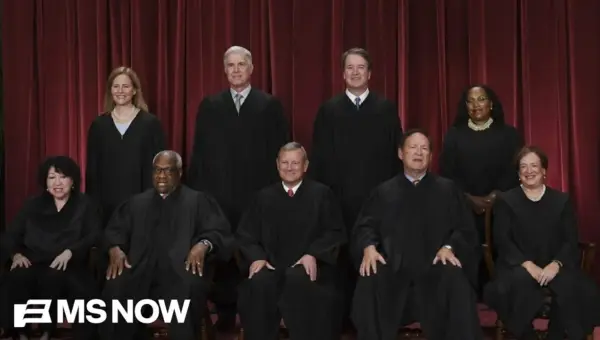
Supreme Court’s Legitimacy Tested: A Look Inside
The Supreme Court is increasingly seen as the "last branch standing" to resolve national disputes, a role that strains its legitimacy. Author Sarah Isker's new book, 'Last Branch Standing,' examines the court's internal dynamics and its complex relationship with public opinion and other branches of government.
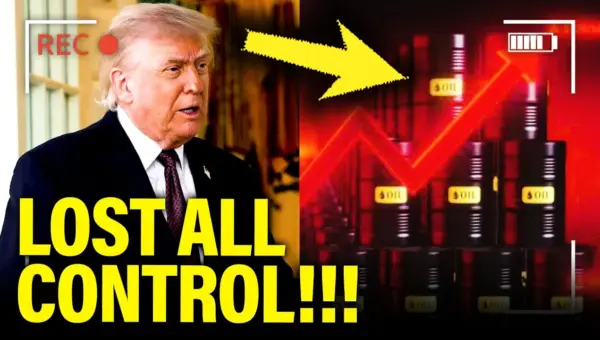
Trump’s Tariffs Ignite Inflation Crisis, Fed Stands Helpless
Inflation has surged to 3.3%, driven by a combination of energy shocks and self-inflicted tariffs. The Federal Reserve's tools are largely ineffective against this supply-driven crisis, leading to a potential for prolonged economic pain and a political opportunity to rethink economic policy.


US Beef Faces Global Strain, Seeks Domestic Boost
American cattle ranchers face rising costs and foreign competition, leading to a new voluntary labeling initiative for U.S. beef launching in 2026. This aims to empower domestic producers and inform consumers amidst complex global trade rules.