US Troops Could Die in Iran Conflict, Trump Warns
President Donald Trump has acknowledged the potential for American military casualties in a conflict with Iran, describing it as a "noble mission" to prevent a nuclear-armed nation. The stark warning highlights the human cost of geopolitical tensions and the administration's commitment to national security.

US Troops Could Die in Iran Conflict, Trump Warns
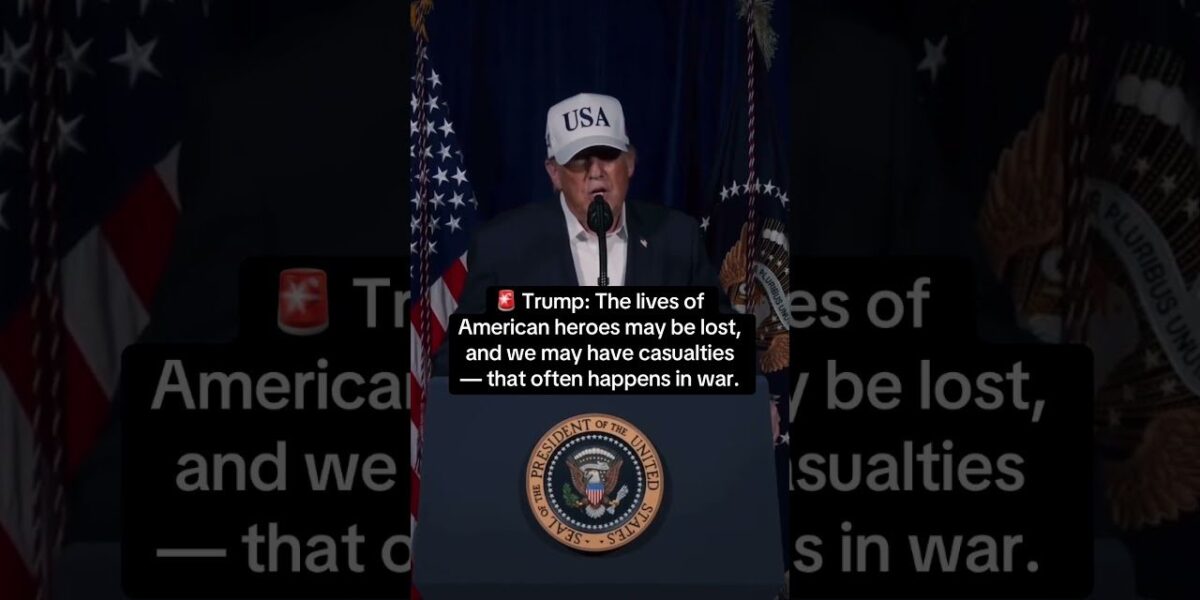
President Donald Trump has acknowledged the potential for American military casualties in a hypothetical conflict with Iran, stating that “lives of courageous American heroes may be lost and we may have casualties.” The stark warning, delivered in a context of escalating tensions and strategic posturing, underscores the gravity of the situation and the potential human cost of geopolitical friction in the Middle East. The President framed the potential military engagement not as an immediate necessity but as a measure for future security, describing it as a “noble mission” aimed at preventing a nuclear-armed Iran.
A Grim Prospect of War
In remarks that offered a somber glimpse into the potential consequences of a military confrontation, President Trump did not shy away from the grim realities of warfare. “That often happens in war,” he stated, directly addressing the possibility of American fatalities. This candid acknowledgment serves as a stark reminder of the risks inherent in international military engagements and the sacrifices expected of service members. The President’s words, while acknowledging the potential for loss, were coupled with a spiritual undercurrent: “We pray for every service member as they selflessly risk their lives to ensure that Americans and our children will never be threatened by a nuclear armed Iran.” This highlights a duality in the administration’s messaging – a recognition of potential sacrifice alongside a resolute commitment to national security objectives.
Strategic Rationale: A Nuclear Iran
The core justification presented for the administration’s stance on Iran, and implicitly for any potential military action, centers on the existential threat posed by a nuclear-armed Iran. The President articulated this concern clearly, stating the mission is to “ensure that Americans and our children will never be threatened by a nuclear armed Iran.” This positions the ongoing tensions not merely as a regional dispute but as a matter of global security, with the proliferation of nuclear weapons being the ultimate red line. The administration’s policy appears rooted in the belief that preventing Iran from acquiring nuclear weapons capability is a paramount national security interest, justifying significant diplomatic and potentially military pressure.
Broader Implications and Regional Instability
The rhetoric surrounding potential conflict with Iran carries significant weight in a region already marked by volatility. A direct military confrontation, even if limited in scope, could have far-reaching consequences, potentially drawing in regional allies and adversaries alike. The specter of war raises concerns about the stability of the broader Middle East, including the impact on global oil markets, humanitarian crises, and the ongoing fight against extremist groups. International observers have long warned that any escalation could lead to a wider conflict, with unpredictable outcomes. The administration’s stated objective of preventing a nuclear Iran, while a clear goal, is being pursued through a strategy that carries the inherent risk of triggering the very instability it seeks to mitigate.
De-escalation Efforts and Diplomatic Channels
While President Trump’s remarks highlight the potential for military action, they are part of a complex diplomatic landscape. The administration has also engaged in diplomatic overtures and maintained channels of communication, even amidst heightened tensions. The effectiveness of these dual approaches – the application of pressure coupled with the potential for dialogue – remains a subject of ongoing debate among foreign policy experts. The balance between deterrence and diplomacy is delicate, and miscalculations on either side could have severe repercussions. The international community largely advocates for de-escalation and a return to diplomatic solutions, emphasizing the catastrophic consequences of a full-scale conflict.
The Path Forward: Vigilance and Uncertainty
Looking ahead, the situation remains fraught with uncertainty. The President’s acknowledgment of potential casualties underscores the high stakes involved. The coming weeks and months will likely see continued diplomatic maneuvering, strategic posturing, and potentially further incidents that could test the resolve of all parties involved. The focus will remain on whether Iran’s nuclear ambitions can be curbed through international pressure and diplomacy, or if the current trajectory leads towards a more dangerous confrontation. The world watches closely, hoping for a peaceful resolution while bracing for the possibility of further escalation and its profound human cost.
Source: Trump: American Troops May Die in War with Iran (YouTube)

Related Articles


Russia’s War Costs Strain Putin’s Elite Bargain
Russia's prolonged war in Ukraine is straining President Putin's grip on power. Declining oil revenues and escalating military costs are forcing internal power shifts, with intelligence services reportedly gaining influence. This financial pressure is creating significant discontent among the elite and risking broader instability within the Kremlin.

Trump’s Wild Claims Fuel GOP Chaos and Public Doubt
Donald Trump's recent erratic statements and Republican figures' defense strategies are causing political turmoil. Concerns over economic misrepresentation and the handling of the Jeffrey Epstein case are mounting, leading to a public demanding more accountability and truth.


Trump’s Allies Stumble, Exposing MAGA Movement’s Weaknesses
Recent events reveal cracks in the MAGA movement, from JD Vance's failed support for Viktor Orban in Hungary to disappointing Turn Point USA rallies. Trump's attacks on Pope Leo also alienate allies and expose strategic missteps. These challenges suggest a weakening of the movement's influence.