Stephen Miller’s Fiery Fox News Meltdown Signals Deepening Political Extremism Amid Tariff Dispute
A recent Supreme Court decision on presidential tariff authority sparked a fiery meltdown from Stephen Miller on Fox News, where he attacked the judiciary and spread economic disinformation. The incident, which left host Laura Ingraham visibly uncomfortable, also highlighted the real-world economic pain tariffs inflicted on businesses, as articulated by businessman Kevin O'Leary, exposing the incoherence of the Trump administration's trade strategy and the escalating extremism in political discourse.

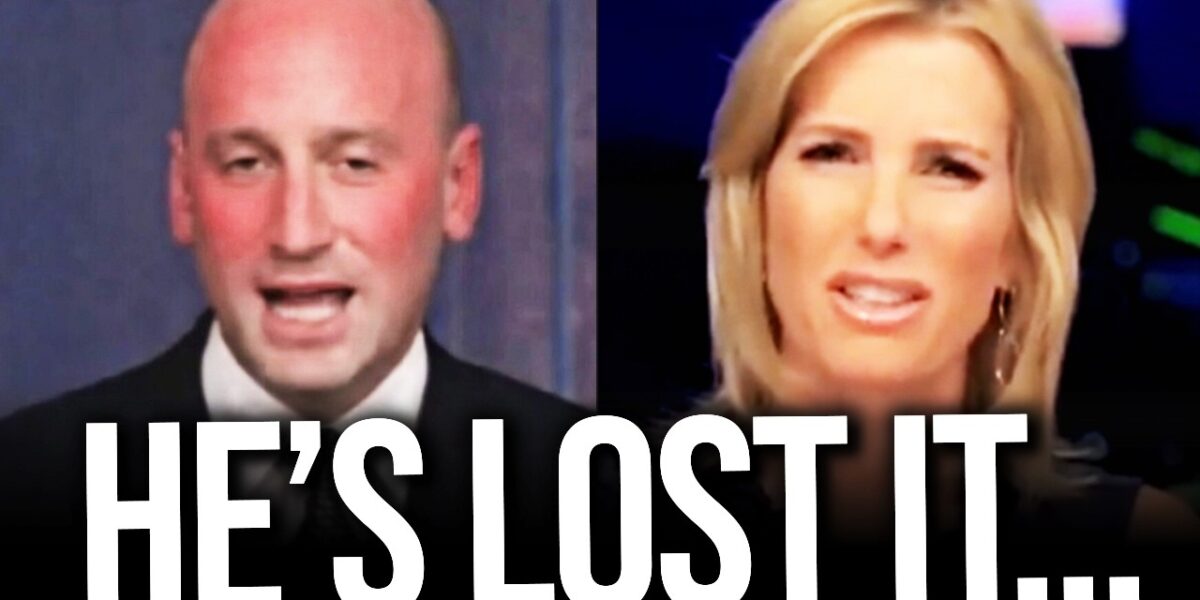
Stephen Miller’s Fiery Fox News Meltdown Signals Deepening Political Extremism Amid Tariff Dispute
A recent segment on Fox News, featuring former Trump administration senior advisor Stephen Miller, has ignited a firestorm of discussion, exposing the raw nerves of political extremism and the contentious landscape of U.S. trade policy. What began as a debate over a Supreme Court ruling on presidential tariff authority quickly devolved into a heated exchange, with Miller’s increasingly unhinged rhetoric leaving even host Laura Ingraham visibly unsettled. The incident not only highlighted the deep ideological chasm within American politics but also cast a stark light on the practical economic fallout of protectionist policies, as articulated by businessman Kevin O’Leary.
The core of the controversy stems from a Supreme Court decision that, according to the commentary surrounding Miller’s appearance, significantly reined in the President’s power to impose tariffs unilaterally, asserting that the authority to tax the American people rests solely with Congress. This ruling, perceived to nullify certain tariffs imposed by the Trump administration, raised the specter of substantial refunds to affected companies, a prospect that evidently infuriated Miller and sent ripples through the business community.
The Supreme Court’s Perceived Rebuke: Reining in Presidential Tariff Powers
The United States Constitution is explicit about the separation of powers, particularly concerning taxation and trade. Article I, Section 8, Clause 1 grants Congress the power to “lay and collect Taxes, Duties, Imposts and Excises.” This foundational principle underpins the legislative branch’s exclusive control over federal revenue generation, a power often referred to as the “power of the purse.” Tariffs, by their very nature, are taxes levied on imported goods, ultimately borne by American consumers and businesses through higher prices or reduced profits.
Constitutional Foundations of Trade
Historically, the balance of power in trade policy has been a recurring theme in American governance. While presidents have long exercised a degree of authority in foreign relations and trade negotiations, particularly under specific statutory grants, the ultimate power to impose broad-based taxes, including tariffs, has traditionally resided with Congress. This constitutional design is intended to ensure that significant financial burdens on the populace are deliberated and approved by their elected representatives, providing a crucial check on executive authority.
The Trump Tariff Era: A Policy Overview
During the Trump administration, the use of tariffs surged as a cornerstone of its “America First” economic agenda. Citing national security concerns (Section 232 of the Trade Expansion Act of 1962) and unfair trade practices (Section 301 of the Trade Act of 1974), the administration imposed duties on a wide range of goods, most notably on steel and aluminum imports from various countries, and a comprehensive set of goods from China. The stated goals were to protect domestic industries, encourage reshoring of manufacturing, and reduce trade deficits. However, these tariffs often led to retaliatory measures from trading partners, escalating into global trade wars and creating significant uncertainty for international businesses.
The Ruling’s Implications and Impact
While the specific Supreme Court case characterized as a 6-3 ruling that “nullified all of Trump’s tariffs” by the commentary has not been definitively identified as a blanket nullification of all past tariffs, the discussion surrounding Miller’s reaction underscores a significant legal challenge to the executive’s expansive use of tariff powers. The core contention, as highlighted by the commentary, is that the Supreme Court affirmed that the power to tax, including through tariffs, lies exclusively with Congress. This interpretation, if widely applied, would severely restrict a president’s ability to unilaterally impose such duties without explicit congressional approval or under tightly defined statutory parameters.
Such a ruling would reinforce the constitutional principle of legislative supremacy in taxation, potentially rolling back years of executive actions that pushed the boundaries of presidential trade authority. The implications extend beyond specific tariffs, touching upon the broader separation of powers and the checks and balances designed to prevent any single branch from overstepping its constitutional mandate.
The Prospect of Refunds: A Complex Undertaking
One of the most immediate and financially significant consequences of such a ruling, as articulated in the transcript, is the potential requirement for the government to return money collected from companies under the invalidated tariffs. This would be a monumental undertaking, involving potentially billions of dollars. Businesses that paid these tariffs – ranging from small importers to large corporations – would be seeking restitution for costs they absorbed or passed on to consumers. The logistical and administrative challenges of processing such refunds, likely through the Treasury Department rather than the IRS, would be immense, requiring a clear framework for claims, verification, and disbursement.
The financial burden of these refunds could fall on the federal budget, necessitating reallocations or potentially impacting other government programs. Moreover, the long-term uncertainty created by the possibility of tariff reversals could make businesses hesitant to invest in supply chain adjustments or domestic manufacturing incentives based on temporary trade policies.
Stephen Miller’s Fiery Rebuttal: A Portrait of Extremism
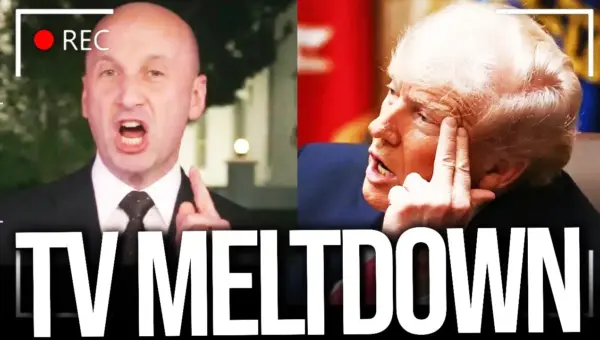
Stephen Miller’s appearance on Fox News quickly descended into a theatrical display of indignation and defiance. Characterized by the commentary as a “radical rabid extremist” sounding like a “1930s fascist,” Miller’s reaction to the Supreme Court’s perceived decision was one of unbridled fury, illustrating a deep-seated contempt for judicial checks on executive power. His increasing volume and agitated demeanor throughout the interview, culminating in what was described as “frothing at the mouth,” painted a vivid picture of a political figure deeply invested in an expansive, unconstrained vision of presidential authority.
Attacks on Judicial Authority
Miller’s criticism of the Supreme Court was scathing, labeling the ruling “cowardly,” “horrendous,” and a reflection of “continued torturing of our statutes and our Constitution.” This rhetoric is deeply concerning within a democratic framework, as it undermines the legitimacy and independence of the judiciary. Such attacks suggest a disregard for the rule of law when judicial outcomes do not align with political objectives, fostering an environment where constitutional principles can be seen as obstacles rather than safeguards.
The consistent demonization of judicial decisions, particularly from figures close to presidential power, can erode public trust in institutions and encourage a perception that courts are partisan rather than impartial arbiters of law. This trend poses a significant threat to the stability of the constitutional order.
The Redefinition of Executive Power
Despite his outrage, Miller attempted to spin the ruling, asserting that the Court also affirmed the president’s authority under various sections of federal law, including Sections 301, 232, 122, 338, and the International Emergency Economic Powers Act (IEEPA), often referred to as AIPA in the transcript. These statutes grant the president certain powers to address unfair trade practices, national security threats, and economic emergencies through measures like tariffs or trade restrictions.
Miller’s argument was that President Trump’s trade program would not only be “fully reconstituted” but “expanded,” with the president having “even more tools” to deal with foreign countries. This interpretation suggests a desire to find alternative legal avenues to achieve the same protectionist goals, potentially pushing the boundaries of these statutory authorities to their maximum extent. This approach emphasizes a belief in robust, almost unfettered, executive power in foreign policy and trade, often at the expense of congressional oversight.
Inflation Claims and Economic Disinformation
In a moment of striking economic disinformation, Miller claimed that under the Democrats, inflation was “backbreaking doubledigit record setting” and that President Trump had brought it down to an “ideal benchmark rate” of 1.4%. These claims are demonstrably false. According to official government data, inflation was around 2.7% when Trump took office, rose to 3.4% at one point partly due to tariffs, and stood at approximately 2.5% at the time of the commentary. The assertion of “doubledigit” inflation under Democrats and a 1.4% rate under Trump is a significant distortion of economic reality, serving as a clear example of political rhetoric prioritizing narrative over factual accuracy. Such misrepresentations can mislead the public and hinder informed economic policy debates.
The Demonization of Opposition: “Domestic Extremists” and “Totalitarian State”
Perhaps most chillingly, Miller’s rhetoric escalated to direct attacks on political opponents, accusing Democrats of being “good communists” who “foment violence and ferment hatred and ferment unrest.” He went further, suggesting that the Democratic Party is not a “real political party” but a “domestic terrorist organization.” This language, delivered while Miller was described as “frothing out of the mouth,” represents a dangerous form of political demonization.
This “inversion of reality,” as described by the commentary, where those undermining constitutional norms accuse others of extremism, is a hallmark of authoritarian discourse. The assertion that the Trump administration “moved heaven and earth to find the domestic extremists in this country who are trying to kidnap, murder, and assassinate” while simultaneously labeling the political opposition as such, creates a deeply polarized and hostile environment. The commentary rightly points out the inherent hypocrisy and danger of such statements, suggesting that Miller and Trump ultimately desire a “totalitarian state in which the opposition party does not exist, in which people on TV can’t criticize them, in which the press can’t ask hard questions, in which colleges can’t produce critically thinking students, in which comedians can’t even make jokes on prime time television.” This vision fundamentally contradicts democratic principles of free speech, open debate, and pluralism.
The Business Perspective: Kevin O’Leary’s “Leopards Eating My Face” Moment
Providing a crucial counterpoint to Miller’s ideological fervor was Canadian businessman Kevin O’Leary, known as “Mr. Wonderful” from Shark Tank. O’Leary, a self-proclaimed friend of Donald Trump, offered a stark, ground-level perspective on the economic realities of tariffs, revealing the profound impact on actual businesses and investors. His candid assessment served as a powerful illustration of the unintended consequences of protectionist policies.
Tariffs’ Unintended Consequences
O’Leary’s initial enthusiasm for aggressive trade tactics, encapsulated by his past comment, “It’s time to squeeze Chinese heads into the wall now. Talk about tariffs,” stood in stark contrast to his current predicament. He described the Supreme Court ruling as “not a great day for me,” revealing that his businesses and portfolio companies were experiencing direct financial pain. This pivot from advocating for aggressive trade actions to lamenting their personal economic fallout perfectly encapsulates the “leopards eating my face” meme – supporting a policy with the expectation it will harm others, only to find oneself among the victims.
His experience highlights how nationalist economic policies, while appealing in their rhetoric of protecting domestic interests, often create complex and unforeseen challenges for the very businesses they claim to help. Supply chains are global, and tariffs rarely impact only the intended foreign target; they ripple through economies, increasing costs for domestic producers and consumers alike.
Real-World Economic Fallout
O’Leary detailed the tangible impact: a business making $100 million in sales might have paid $5 million in tariffs over 14 months. These costs directly reduce profitability, force businesses to borrow against lines of credit, and lead to reduced distributions for shareholders. His phone calls from customers, lenders, and shareholders demanding their money back underscored the immediate and widespread financial pressure. The uncertainty of compliance and the lack of clear guidance from the government further exacerbated the situation, leaving businesses in a state of confusion and financial distress.
This firsthand account provides a vital reality check, moving beyond abstract policy debates to the concrete challenges faced by American enterprises. It demonstrates how tariffs, rather than solely punishing foreign entities, often act as a tax on domestic businesses and consumers, disrupting planning, investment, and ultimately, economic growth.
The Disconnect Between Rhetoric and Reality
O’Leary’s experience vividly illustrates the chasm between political rhetoric and economic reality. The promise of “squeezing heads” and bringing back manufacturing through tariffs often overlooks the intricate web of global commerce and the immediate cost burdens on domestic players. While the political narrative might focus on nationalistic gains, the practical outcome for many businesses is increased operational costs, reduced competitiveness, and significant financial uncertainty. His plea for guidance from government staffers underscores the critical need for coherent, predictable, and well-understood trade policies that account for the real-world implications on the economy.
Laura Ingraham’s Silent Discomfort: A Glimpse Behind the Curtain
Amidst Stephen Miller’s escalating tirade, Fox News host Laura Ingraham’s reaction was notable. The commentary described her as “kind of just sitting there staring,” and later, “blankly staring at the camera,” suggesting a visible discomfort or even surprise at the intensity of Miller’s rhetoric. The observation, “I have a feeling that even she knows this dude is bad optics for the movement,” hints at a potential internal struggle within conservative media about the presentation of extreme viewpoints.
The Optics of Extremism
Ingraham’s apparent unease could signify a recognition that Miller’s unhinged and overtly aggressive style might be alienating, even for segments of the conservative audience. While Fox News often provides a platform for strong conservative voices, there can be a line beyond which rhetoric becomes counterproductive, appearing less passionate and more unhinged. Such “bad optics” can detract from the intended message and inadvertently validate criticisms from political opponents who label such figures as extremists.
The observation that “I’m pretty sure Laura Ingram’s like, ‘Wait a minute. I’m starting to see the Democratic criticisms that Steven Miller is a little bit over the top'” suggests that Miller’s performance may have pushed the boundaries of what even a sympathetic host is prepared to countenance or defend, forcing a moment of introspection about the perceived extremism of certain figures within the movement.
Navigating Controversial Guests
The incident also highlights the delicate balance cable news hosts must strike when interviewing controversial figures. While providing a platform for diverse (even extreme) viewpoints is part of the media’s role, managing guests who engage in what could be perceived as incendiary or factually dubious statements presents a challenge. The host’s role can shift from facilitator to a tacit arbiter of acceptable discourse, and moments of visible discomfort can reveal the internal tensions within media organizations about the boundaries of political commentary.
The Incoherent Tariff Strategy: A Policy Paradox
Beyond the immediate political drama, the commentary also pointed to a fundamental incoherence in the Trump administration’s broader tariff strategy, particularly concerning its long-term economic goals. The stated objectives of reshoring manufacturing and replacing income tax revenue with tariffs appear to be mutually exclusive under the proposed framework.
Temporary Tariffs vs. Reshoring
A primary goal of the “America First” agenda was to incentivize American companies to bring manufacturing back to the United States. However, the administration often implemented temporary tariffs, which could be removed or adjusted. This temporary nature undermines the very incentive for long-term investment in domestic manufacturing. Companies require stability and predictability to make multi-year commitments to build new factories, retool supply chains, and hire workers. If tariffs are subject to sudden changes or removal, the economic calculus shifts, making such large-scale reshoring efforts financially risky and unattractive.
True reshoring requires consistent, long-term policy signals, not fluctuating trade barriers. The temporary nature of the tariffs created uncertainty, leading businesses to absorb costs, seek new foreign suppliers, or pass costs to consumers, rather than commit to expensive and time-consuming domestic relocation.
The Revenue Paradox
Another contradictory element of the proposed policy was the idea of replacing the income tax entirely with tariff revenue. This concept presents a fundamental paradox: if the tariffs are successful in their stated goal of deterring imports and encouraging domestic production, then there would be fewer, or ideally no, imports coming into the United States. Consequently, there would be no tariff revenue to collect.
If the ultimate goal is to eliminate imports by reshoring all manufacturing, then the revenue stream from tariffs would dry up, leaving a massive hole in the federal budget if income tax were simultaneously abolished. This logical inconsistency exposes a lack of comprehensive economic planning behind the tariff strategy, suggesting that the policies were perhaps more about political messaging and short-term leverage than a coherent, sustainable economic model for the nation.
Broader Implications: Rule of Law, Democracy, and the Future of American Governance
The Stephen Miller incident transcends a mere cable news segment; it serves as a microcosm of larger challenges facing American democracy, touching upon the rule of law, the nature of political discourse, and the future of governance.
Challenges to Constitutional Norms
Miller’s vitriolic attacks on the Supreme Court and his expansive interpretation of executive power represent a direct challenge to constitutional norms and the system of checks and balances. A healthy democracy relies on respect for independent institutions, particularly the judiciary, and a commitment to constitutional limits on power. When political figures openly disregard or attempt to subvert these norms, it weakens the foundational structures of governance and invites a more authoritarian style of leadership.
The Weaponization of Government
The commentary’s assertion that Miller and Trump are “using the state in a terroristic way domestically” and that they desire a “totalitarian state in which the opposition party does not exist” raises serious concerns about the weaponization of government. The idea of using state power to silence critics, control information, or target political opponents is antithetical to democratic principles and evokes historical parallels with authoritarian regimes. Such rhetoric fosters an environment of fear and division, undermining the peaceful transfer of power and the legitimate role of a political opposition.
The State of Political Discourse
The incident also reflects the increasingly polarized and often venomous nature of contemporary political discourse. The demonization of opponents, the propagation of economic disinformation, and the embrace of extreme rhetoric contribute to a climate where productive debate becomes impossible, and national unity is severely strained. When political leaders and their allies engage in such language, it normalizes hostility and makes it harder to address complex national challenges through consensus and compromise.
Conclusion
Stephen Miller’s heated exchange on Fox News served as a stark reminder of the deep divisions and intense ideological battles shaping American politics. From the constitutional implications of presidential tariff authority to the real-world economic impacts on businesses, and the alarming escalation of political rhetoric, the segment encapsulated a moment of profound tension. The visible discomfort of a seasoned host like Laura Ingraham, coupled with the candid economic realities shared by Kevin O’Leary, underscored the potential for extreme viewpoints to alienate even sympathetic audiences and the significant disconnect between political posturing and practical outcomes.
As the nation grapples with the balance of power, economic policy, and the tenor of its political conversations, the incident highlights the urgent need for a recommitment to constitutional principles, factual discourse, and respectful engagement, lest the fabric of democratic governance be further frayed by unbridled extremism and policy incoherence.
Source: TRIGGERED Stephen Miller SCARES Fox Host (YouTube)

Related Articles

Trump’s Memo: A Political Play, Not a Paycheck Promise
A presidential memo intended to pay TSA workers during a shutdown was more political theater than a legal solution. Lacking the constitutional "power of the purse," the memo offered false hope, highlighting the separation of powers and the limits of executive authority.
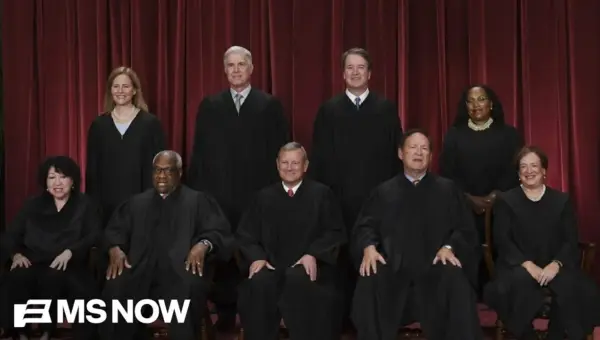
Supreme Court’s Legitimacy Tested: A Look Inside
The Supreme Court is increasingly seen as the "last branch standing" to resolve national disputes, a role that strains its legitimacy. Author Sarah Isker's new book, 'Last Branch Standing,' examines the court's internal dynamics and its complex relationship with public opinion and other branches of government.
Miller’s Fox News Rant Undermines Trump’s Worldview
Stephen Miller's recent appearance on Fox News defending Trump's foreign policy, particularly regarding the Strait of Hormuz, has drawn criticism. His arguments about a "woke" international order and a "checkmate" move against Iran are contrasted with a view that such actions have weakened U.S. alliances and global standing.