Trump’s Judicial Clash: A Threat to Constitutional Order?
Former President Trump's public criticism of Supreme Court rulings and perceived attempts to circumvent judicial authority have raised alarms about a potential constitutional crisis. Legal experts emphasize the judiciary's reliance on public trust and adherence to the rule of law, especially in the face of executive challenges.

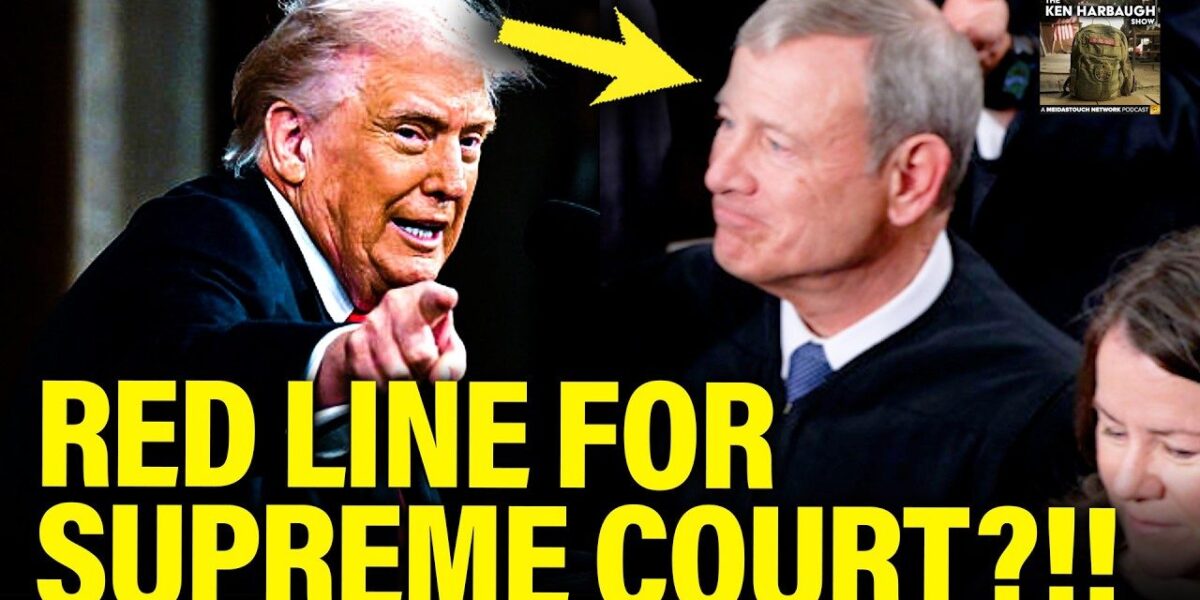
Trump’s Public Confrontation with the Judiciary Signals Constitutional Concerns
In a move that has drawn significant attention and concern from legal experts, former President Donald Trump has publicly challenged rulings made by the Supreme Court, raising alarms about a potential constitutional crisis. The confrontation, highlighted by Trump’s critical remarks following the Supreme Court’s decision to strike down his tariffs as unconstitutional, underscores a broader pattern of perceived disrespect for the separation of powers and the independence of the judiciary.
Judicial Independence Under Scrutiny
The recent actions and rhetoric surrounding Donald Trump’s stance on judicial rulings have ignited a critical discussion about the integrity of the U.S. judicial system. Following the Supreme Court’s decision to invalidate his administration’s tariffs, Trump publicly condemned the justices who voted in the majority, a move seen by many as a direct assault on the court’s authority. This public confrontation, coupled with attempts to find ways to circumvent the ruling, has been characterized as a “flashing red warning light of an impending constitutional crisis.”
“Donald Trump has zero respect for the separation of powers, which means he has zero regard for the Constitution itself.”
This sentiment, echoed by legal analysts, points to a fundamental disagreement over the role of the judiciary in a democratic society. The judiciary, often described as the “weakest branch” due to its lack of an army or control over public funds, relies heavily on public trust and adherence to its rulings for its efficacy. Retired federal judge Paul Grim, speaking in an interview with Kat Harbaugh of the Midas Touch Network, emphasized the critical importance of maintaining judicial independence and public trust.
The Fragility of the Judicial Branch
Judge Grim elaborated on the inherent challenges faced by the judiciary, particularly when executive branches exhibit a disregard for court orders. He cited instances of “illegal detentions by ICE” and “violations of court orders” as evidence of an executive branch potentially undermining the rule of law. While such actions are an “indictment of the executive branch,” Grim noted, they also expose the “fundamental weakness of the judicial branch” when its rulings are not consistently enforced.
Historically, the judiciary has faced pushback, including attempts to impeach judges for political reasons, as seen during the Jeffersonian era. However, a tradition of compliance with court orders has largely prevailed. Grim stressed that the system possesses self-protective mechanisms, such as appellate courts and ultimately the Supreme Court, designed to uphold its rulings. The absence of a clear instance where the Supreme Court’s final judgment has been conclusively disregarded offers a sliver of hope, but the potential for defiance remains a significant concern.
“It’s probably the most fragile aspect of our democracy and the most fragile arm of the separation of powers.”
The public’s understanding of the courts’ role is paramount. Grim argued that a public unaware of the value and function of the judiciary cannot provide the necessary support to uphold its authority. Educational initiatives, particularly those led by experienced jurists, are crucial to explaining why judicial independence is vital and why challenging court rulings without due process is detrimental to democratic principles.
The Executive’s Influence on Military Justice
The discussion also touched upon the implications of executive actions on the military justice system. Concerns were raised about the current Secretary of Defense’s decision to dismiss career Judge Advocates General (JAGs) and replace them with new personnel. This move has led to speculation that it might be a precursor to ordering the military to undertake actions that could be deemed illegal.
Judge Grim, drawing from his own experience as an Army JAG, highlighted the critical role of the JAG corps in providing legally sound advice to commanders. The JAGs are tasked with advising military leaders on the legality of potential actions, especially in complex or ethically challenging situations. The fear is that replacing experienced legal advisors with potentially more compliant individuals could lead to a situation where military personnel are pressured to follow unlawful orders, risking court-martial if they refuse.
“The hope that we can have – and it’s a challenge too – if you are a person who has spent your entire career to become you know to get elevated to the rank of colonel or general – and an order comes down and you turn to your JAG and say, ‘Can I do that?’ and the JAG says, ‘No.'”
Grim emphasized the importance of “good faith advice” from JAGs, suggesting that even if an initial order is deemed illegal, alternative legal parameters might exist to achieve the commander’s objective. The concern is that if the legal advice provided is not “legitimate” or if military personnel are forced to choose between following an order and their conscience, the integrity of military justice and the broader commitment to the rule of law could be compromised.
The Public’s Role in Upholding the Rule of Law
Ultimately, the strength of the judiciary and the U.S. constitutional system rests on public understanding and support. Grim underscored the need to better communicate how courts impact the lives of ordinary citizens, citing examples of successful legal interventions in foreclosure prevention, child support disputes, and personal injury cases. When the public understands what is at stake—such as the impartiality of judges who rule without fear or favor—they are more likely to defend the principles of judicial independence.
The challenge lies in translating abstract concepts like “judicial independence” into tangible benefits for citizens. Many perceive it as judges acting without accountability, rather than as a safeguard ensuring that rulings are based on facts and law, even against powerful interests. The article concludes by urging a renewed commitment to educating the public and reinforcing the norms that underpin a functioning democracy, where the rule of law, as interpreted by the courts, is respected by all branches of government.
Looking Ahead
As the nation navigates these complex legal and political waters, continued scrutiny of executive actions concerning judicial rulings and military justice will be crucial. The public’s engagement in understanding and advocating for the independence of the judiciary will be a determining factor in whether the U.S. can successfully avert a constitutional crisis and uphold the foundational principles of its democracy.
Source: Trump DECLARES WAR on His OWN Hand-Picked Court…in PUBLIC?! (YouTube)

Related Articles

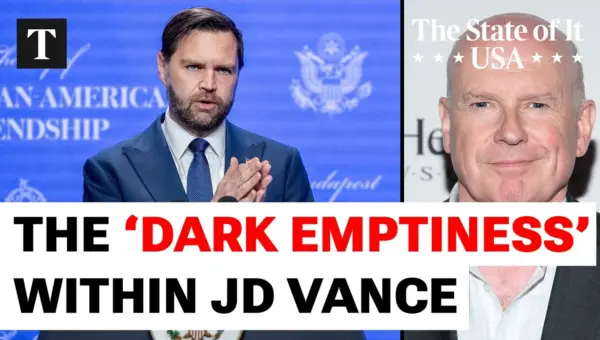
Trump’s “Malignant Narcissism” and Vance’s “Dark Emptiness”
Gerard Baker and Katy Balls discuss Donald Trump's "malignant narcissism" and JD Vance's perceived "dark emptiness." The conversation covers the US blockade of Iran, Vance's evolving role, and Trump's controversial "Jesus Christ" post, exploring its political implications and the nature of faith and authenticity in politics.


Trump Officials Dodge Key Questions on Economy, Gas Prices
Top Trump administration officials faced tough questions on rising gas prices and economic woes during a press briefing. Critics argue officials dodged key issues, offered vague promises, and deflected criticism by attacking opponents, all while serious economic concerns were met with lighthearted jokes.


China-US Tensions Flare: Blockade Risk Sparks Superpower War Fears
The U.S. blockade in the Strait of Hormuz has intensified tensions with China, raising fears of a potential superpower conflict. Expert Roger Boyes highlights China's use of a "shadow fleet" and military support for Iran, while President Trump attempts a delicate diplomatic approach ahead of a key meeting with President Xi Jinping.