Stephen Miller’s Fiery Rhetoric on Fox News Ignites Debate Over Democratic Norms and Political Extremism
A recent Fox News appearance by Stephen Miller, where he labeled the Democratic Party a "domestic terrorist organization," drew visible discomfort from host Laura Ingraham and ignited concerns over extreme political rhetoric. Miller's aggressive claims and the broader implications for democratic norms highlight a deepening political chasm and raise questions about the future of a pluralistic society.


Stephen Miller’s Fiery Rhetoric on Fox News Ignites Debate Over Democratic Norms and Political Extremism
A recent appearance by former senior White House advisor Stephen Miller on Fox News has once again thrust the contentious nature of contemporary American political discourse into the spotlight. During a heated exchange, Miller’s intensely charged accusations against the Democratic Party prompted visible discomfort from host Laura Ingraham, sparking widespread commentary and reigniting concerns about the erosion of democratic norms and the weaponization of political rhetoric. The incident, characterized by Miller’s vehement assertions and a noticeable physical reaction, underscores a deepening chasm in American politics, raising fundamental questions about the limits of partisan debate and the health of democratic institutions.
The Uncomfortable Exchange: A Glimpse into the Abyss of Polarization
The segment in question captured Stephen Miller in a characteristic display of impassioned, unyielding rhetoric. Addressing the current administration and its approach to domestic extremism, Miller launched into a series of sweeping condemnations.
He claimed, “This administration under President Trump has moved heaven and earth to fund the domestic extremists in this country who are trying to kidnap, murder, and assassinate and bring them to justice.” This initial statement, while aggressive, quickly escalated as Miller pivoted to an astonishing indictment of the political opposition. “While the left,” he declared, “being good communists, has done everything in their power to foment violence and foment hatred and foment unrest.”
The intensity of Miller’s delivery was such that it reportedly drew attention to his physical demeanor, with an observer noting, “Is he like spitting? Is there like spit coming out of his mouth down there? It looks like there’s spit on his chin.” This observation, while seemingly trivial, highlights the sheer force and apparent lack of restraint in Miller’s communication style.
He continued his sharp contrast, asserting, “You will never get a cleaner contrast. You want safe streets. You want criminals behind bars.
You want to support the police. You want to support law enforcement. That’s President Trump.”
The most striking and controversial claim, however, came as Miller doubled down on his accusations against Democrats, stating that the Democratic Party is not merely a political opposition but a “domestic terrorist organization.” This pronouncement, delivered with what was described as “frothing out of the mouth,” crosses a significant rhetorical line, transforming political disagreement into an existential battle against an alleged enemy of the state. It was this level of demonization that reportedly caused Laura Ingraham, a host not unaccustomed to robust conservative commentary, to appear visibly uncomfortable.
Stephen Miller: Architect of Hardline Ideology
To understand the gravity of Miller’s statements, it is crucial to consider his background and his key role in shaping the policies and rhetoric of the Trump administration. Stephen Miller rose to prominence as a senior advisor to President Donald Trump, becoming a central figure in the development and implementation of some of the administration’s most controversial and hardline policies, particularly in immigration. Known for his unwavering commitment to a nationalist, “America First” agenda, Miller quickly earned a reputation as a fierce ideologue and a master of aggressive communication.
Before joining the Trump campaign, Miller honed his political teeth working for conservative figures like Representative Michele Bachmann and Senator Jeff Sessions. In these roles, he distinguished himself through his sharp intellect and his uncompromising stance on issues such as immigration enforcement and national sovereignty.
His influence became most pronounced during Trump’s presidency, where he was instrumental in crafting policies like the travel ban targeting several Muslim-majority countries, the separation of families at the U.S.-Mexico border, and the reduction of refugee admissions. These policies, often met with widespread condemnation from human rights organizations and international bodies, were consistently defended by Miller with a fervent conviction that they were essential for national security and the protection of American interests.
Miller’s rhetorical style is characterized by its confrontational nature, its use of stark binaries, and its tendency to frame political debates in terms of existential threats. He frequently employs language that demonizes opponents, dismisses criticism as unpatriotic or subversive, and portrays his own side as the sole defender of American values.
This approach, while effective in mobilizing a certain base, has also drawn significant criticism for its divisiveness and its potential to inflame political tensions. His recent remarks on Fox News are not an isolated incident but rather a consistent manifestation of a deeply ingrained ideological framework that views political opposition not as a legitimate part of democratic discourse but as an inimical force to be neutralized.
The Peril of Demonizing Political Opposition
Miller’s assertion that the Democratic Party is a “domestic terrorist organization” represents a profound and dangerous escalation in political rhetoric. In a healthy democracy, the existence of an opposition party is not just tolerated but is considered essential.
It provides checks and balances, offers alternative perspectives, holds the ruling party accountable, and ensures a vibrant exchange of ideas. To label an entire political party, representing millions of voters, as a “terrorist organization” is to fundamentally deny its legitimacy and to suggest that its very existence is a threat to the nation.
This kind of language has several detrimental effects. Firstly, it dehumanizes political opponents, making it easier to justify extreme measures against them. If Democrats are “terrorists” or “communists,” then any action taken to suppress them, no matter how undemocratic, can be rationalized as a necessary defense of the state.
Secondly, it poisons the well of public discourse, making compromise and cooperation virtually impossible. When one side views the other as an enemy rather than an adversary, the common ground required for governance evaporates.
Thirdly, and perhaps most alarmingly, such rhetoric can incite real-world violence. History is replete with examples where the demonization of political or ethnic groups has preceded and facilitated acts of aggression and brutality.
The repeated accusations of Democrats “fomenting violence and hatred” are particularly ironic given the context of Miller’s own impassioned delivery. When one side accuses the other of inciting unrest while simultaneously using language that delegitimizes and denigrates them, it creates a dangerous feedback loop of escalating tension and mistrust. This pattern contributes to an environment where political disagreements are no longer about policy differences but about fundamental struggles for survival, where the stakes are perceived as existential.
The Specter of a Totalitarian State: An Examination of the Charges
The transcript highlights a deeper concern articulated by observers: that Stephen Miller, and by extension, Donald Trump, harbor aspirations for a “totalitarian state” where political opposition is eradicated. This is a grave accusation, one that warrants careful examination in the context of democratic principles.
A totalitarian state, by definition, is characterized by a government that maintains absolute control over all aspects of public and private life. It suppresses all forms of dissent, controls information, dictates thought, and eliminates any independent centers of power. The concerns raised by Miller’s rhetoric align disturbingly with several hallmarks of such a system:
- Suppression of Opposition: The explicit desire for an opposition party to “not exist” is a direct assault on the multi-party system fundamental to liberal democracies. In a totalitarian system, there is only one legitimate party, and all others are deemed subversive.
- Control of Media and Information: The idea that “people on TV can’t criticize them” and “the press can’t ask hard questions” speaks to a desire for a controlled media environment. A free and independent press is a cornerstone of democracy, acting as a watchdog against government overreach. Totalitarian regimes, conversely, use state-controlled media as a propaganda arm.
- Erosion of Academic Freedom: The notion that “colleges can’t produce critically thinking students” points to an assault on intellectual independence. Education in a free society encourages critical inquiry, debate, and the questioning of authority. Totalitarian systems, however, seek to indoctrinate citizens with approved ideologies, stifling independent thought.
- Suppression of Artistic Expression: The concern that “comedians can’t even make jokes on prime time television without the president weaponizing his FCC” illustrates a desire to control even cultural and artistic expression. Humor, satire, and artistic criticism are vital forms of free speech that often challenge power. Totalitarian states fear and suppress such expressions because they can expose hypocrisy and foster dissent.
Donald Trump’s presidency was marked by frequent attacks on these very institutions. He routinely labeled critical news outlets as “fake news” and the “enemy of the people,” threatened to change libel laws, and expressed frustration with independent judicial rulings.
His administration also sought to exert influence over various government agencies and bodies, sometimes appearing to challenge the traditional separation of powers. While these actions may not individually constitute a move towards totalitarianism, when viewed collectively and alongside rhetoric like Miller’s, they raise legitimate concerns among those who champion democratic resilience.
The Role of Cable News and the Echo Chamber Effect
Laura Ingraham’s reported discomfort is particularly noteworthy given her prominent position on Fox News, a network often associated with conservative viewpoints and a platform that frequently features guests with strong, sometimes inflammatory, opinions. Her reaction, however subtle, suggests that even within a media environment often criticized for its partisan leanings, there might be a threshold for rhetoric that crosses into the realm of extreme delegitimization.
Cable news, and indeed the broader digital media landscape, plays a significant role in shaping public perception and amplifying political messages. The phenomenon of the “echo chamber,” where individuals are primarily exposed to information that confirms their existing beliefs, is exacerbated by partisan media outlets.
While Fox News caters predominantly to a conservative audience, Miller’s specific claims — particularly the “domestic terrorist organization” label — appear to have struck a chord of unease that transcends typical partisan sparring. This incident raises questions about the responsibility of media platforms in moderating the tone and content of political discourse, especially when it veers into territory that could be construed as inciting or dangerously polarizing.
Safeguarding Democratic Institutions: A Collective Responsibility
The concerns highlighted by Stephen Miller’s recent remarks extend beyond mere political disagreement; they touch upon the fundamental health and stability of democratic institutions. The strength of a democracy lies not just in its electoral processes but also in its commitment to a shared set of norms, including:
- Respect for the Loyal Opposition: Recognizing the legitimacy of differing political views and the right of opposition parties to exist and compete for power.
- Freedom of Speech and Press: Protecting the ability of individuals and media organizations to express critical opinions without fear of reprisal or governmental suppression.
- Independent Judiciary: Upholding the rule of law and ensuring that courts can operate free from political interference.
- Academic Freedom: Fostering environments where critical thinking, research, and open debate are encouraged, even if they challenge prevailing narratives.
- Peaceful Transfer of Power: Adhering to the democratic process of accepting election results and facilitating a smooth transition of leadership.
When rhetoric actively seeks to undermine these norms – by delegitimizing opposition, attacking the press, or questioning the integrity of institutions – it erodes the very foundations upon which a democratic society is built. The language used by political figures has tangible consequences; it shapes public opinion, influences behavior, and can either reinforce or destabilize social cohesion. The casual dismissal of an entire political party as a “terrorist organization” is not just inflammatory; it is an assault on the principles of pluralism and mutual respect that are vital for democratic survival.
Conclusion: A Call for Vigilance in a Fractured Landscape
Stephen Miller’s latest televised outburst is a potent reminder of the precarious state of political discourse in America. His extreme characterizations of the Democratic Party, coupled with the underlying suggestion that political opposition should be eradicated, echo dangerous precedents from history where the demonization of “others” paved the way for authoritarianism. The visible discomfort of a seasoned cable news host further highlights the extent to which this rhetoric pushes the boundaries of acceptable political debate.
As the nation navigates an increasingly polarized landscape, the responsibility falls not only on political leaders to temper their language and uphold democratic norms but also on citizens to critically evaluate the information they consume and to reject narratives that seek to undermine the legitimacy of their fellow citizens. The future of American democracy hinges on a collective commitment to respectful disagreement, the protection of fundamental freedoms, and a steadfast rejection of any ideology that seeks to silence dissent and dismantle the essential checks and balances that define a free society. The incident with Stephen Miller on Fox News is not just a passing moment of political theater; it is a stark warning that the health of democracy demands constant vigilance and a renewed dedication to its core principles.
Source: Fox Host Looks Uncomfortable As Stephen Miller Loses It #politics #fyp #new (YouTube)

Related Articles
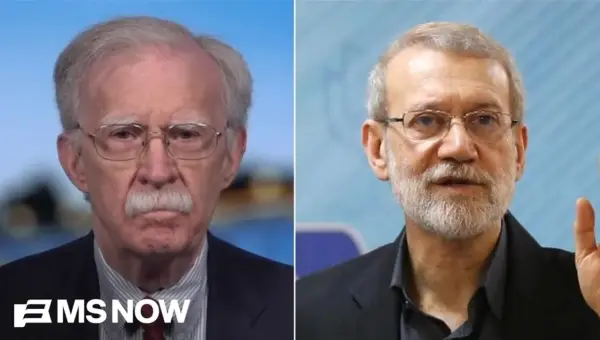
Bolton Slams Trump’s Iran Policy as ‘Snake-Like’
John Bolton, former National Security Advisor, has strongly criticized former President Trump's Iran policy as "snake-like" and lacking a clear strategy. Bolton stated that Trump's decisions were often impulsive, undermining U.S. credibility and creating instability in the Middle East. He called for a more consistent and strategically grounded approach to foreign policy.

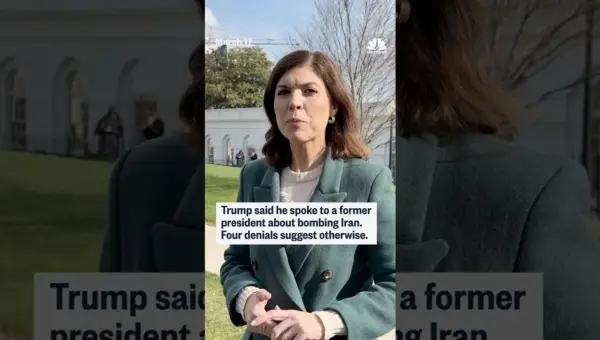
Trump Claims Presidential Call; Four Denials Emerge
Former President Donald Trump claimed he spoke with a past president who regretted not taking a certain action, implying approval of his own policies. However, aides for George W. Bush, Bill Clinton, Barack Obama, and sources close to Joe Biden have all denied any such conversations occurred. Trump has remained evasive when asked to identify the individual.
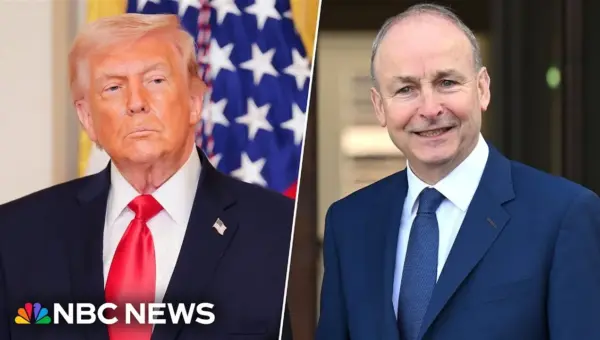
Trump Welcomes Irish Leader, Discusses Trade, Iran Tensions
President Trump welcomed Ireland's Taoiseach to the White House, discussing trade and the strong historical ties between the nations. The meeting also covered President Trump's views on Iran's military capabilities, his criticisms of NATO's support for U.S. initiatives, and upcoming foreign policy engagements.