Hungary Election: AI Fuels Orban’s War-Peace Narrative
Hungary's election campaign is increasingly dominated by AI-generated political ads, particularly from Prime Minister Viktor Orbán's party, which is using emotionally charged videos to promote a 'war vs. peace' narrative. Experts warn that AI significantly amplifies misinformation and poses a growing threat to democratic integrity, with regulatory challenges mounting.

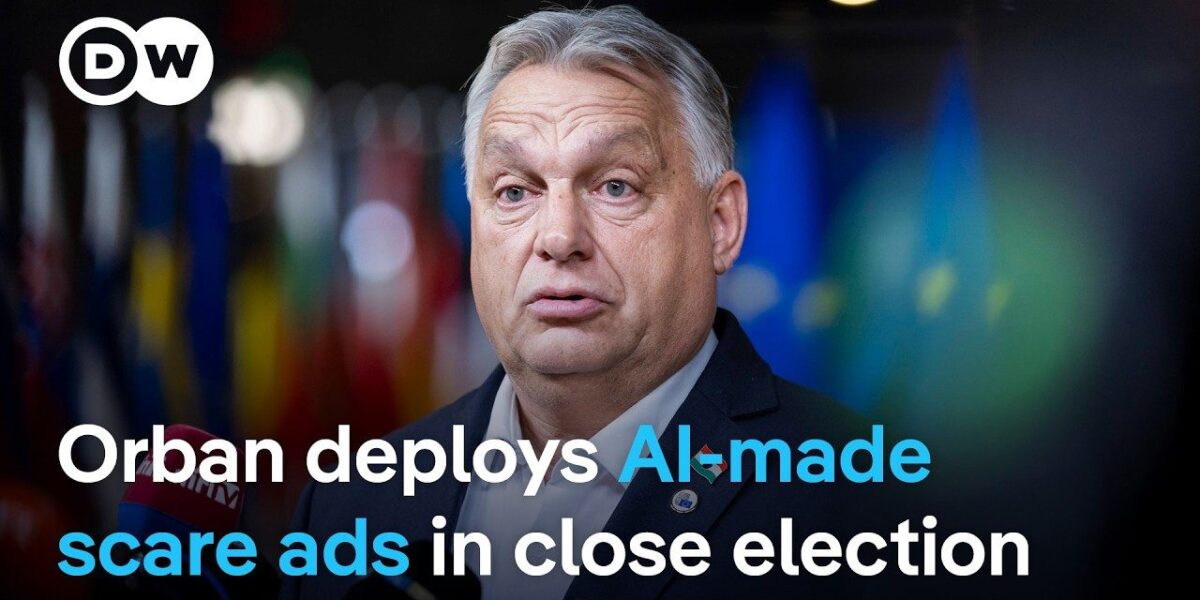
Hungary’s Election Campaign Gripped by AI-Driven Political Messaging
BUDAPEST, HUNGARY – As Hungary heads to the polls, the nation’s election campaign is increasingly becoming a battleground for artificial intelligence (AI), raising significant concerns about the integrity of democratic processes. Incumbent Prime Minister Viktor Orbán, facing his toughest electoral challenge in 16 years, is leveraging AI-generated content, including emotionally charged videos, to amplify his core message: that a change in government would drag Hungary into the war in Ukraine. This tactic highlights a growing global risk of AI being used to distort truth and manipulate public opinion during political contests.
Orbán’s ‘War vs. Peace’ Strategy and AI’s Role
Prime Minister Orbán, a vocal critic of the European Union, has framed the upcoming election as a stark choice between war and peace. He asserts that Brussels intends to involve Hungary in the conflict, a narrative he is powerfully reinforcing with AI-generated campaign materials. One particularly striking video depicts a weeping child followed by scenes of her father’s execution, culminating in a warning that Brussels could make such a “nightmare” a reality, urging voters to support Orbán’s ruling Fides party. This use of AI, often without clear disclaimers, aims to stoke fear and position Orbán as the sole protector of national sovereignty against perceived external threats.
In his opening campaign speech, Orbán emphasized the urgency of his message: “I want to tell you that the war can come a lot quicker than you think. We must stop it now. Once it’s out of the bag, it can’t be stopped. If you put your foot in, you can’t step back. You must keep out of the war from the very beginning.”
Domestic Challenges and Opposition’s Response
The campaign unfolds against a backdrop of domestic dissatisfaction. Recent polls indicate that nearly half of Hungarians desire a change in government, citing concerns over a stagnating economy and neglected public services, from healthcare to transportation. The opposition, led by challenger Péter Magyar, is attempting to counter Orbán’s war rhetoric by focusing on tangible improvements to everyday life. Magyar stated, “The reason why they are trying to attack us, to discredit us, is that they know that we have all it takes for victory. We have majority support. That’s the main thing. We have the credible candidates. We have our program. We have our experts. In one word, we are ready. Tissa is ready for governing.”
Despite the opposition’s efforts, Fides has frequently employed AI-generated images, sometimes with labels and sometimes without, contributing to a broader trend across Europe where far-right parties are increasingly utilizing generative AI to disseminate their messages.
Brussels Watches Closely, Treading Carefully
From Brussels, Orbán’s long tenure as one of the EU’s longest-serving leaders and his disruptive influence within the bloc are closely monitored. While the European Commission refrains from commenting on specific election campaigns, sources indicate a strategy to minimize direct confrontation with Orbán. This approach aims to avoid fueling his anti-EU narratives and prevent him from portraying himself as the sole defender of national sovereignty against “evil Brussels bureaucrats.” The hope in Brussels is that a change in government might lead to a more cooperative relationship with Hungary, though they remain largely detached from the campaign’s direct exchanges.
Ferenc Gal, a DW correspondent observing the elections, noted Orbán’s intensified anti-EU and anti-Ukraine rhetoric. “It is difficult to say [if it’s successful] because the polls are kind of showing a very consistent… fairly consistent lead for the opposition TISA party,” Gal reported. However, he added, “there was a recent poll, for example, showing that almost a quarter of Hungarians are actually worried that if the opposition party wins, Hungary might be dragged into this war and another 23% are at least unsure whether this could happen.” This indicates a potential for Fides to mobilize votes by playing on these fears and positioning itself as the party of peace.
Opposition’s Ambivalent Stance on EU and Russia
Orbán also characterizes his main opponent, Péter Magyar, as a pro-EU and pro-Ukrainian candidate. Magyar’s party platform, however, presents a more nuanced position. Their manifesto calls for strengthening Hungary’s role within the EU and NATO and pursuing Eurozone membership, signaling a more cooperative approach towards Brussels. Yet, they are carefully navigating their stance to avoid being labeled as “Brussels puppets.”
On Ukraine, Magyar’s party has stated they would recognize Moscow as the aggressor and support EU ceasefire efforts. However, they do not support an accelerated accession process for Ukraine and would not immediately sever ties with Russia. This balancing act aims to project a message of change and stability without causing excessive disruption, reflecting an “ambivalent” but strategic approach to foreign policy.
AI’s Growing Impact: A Global Concern
The effectiveness of AI-generated content in swaying voters remains difficult to quantify precisely, but its pervasive use is undeniable. Samuel Woolley, Chair of Disinformation Studies at the University of Pittsburgh, described AI-generated videos as “very effective at pulling on the emotions of viewers” and a “new form of propaganda.” He highlighted the lack of transparency when such content is not labeled as AI-generated, stating, “people in liberal democracies have the right to know when they are being shown falsified images or they have the right to know who is attempting to manipulate public opinion and why.”
Woolley elaborated on how AI has amplified misinformation: “AI has put political misinformation on steroids. Really what it’s done is it’s made it so that those that produce propaganda, misinformation, and disinformation… it allows them to massively amplify their efforts. It allows them to do so relatively cheaply and quickly and with content that can often times be very microtargeted to particular groups of users in ways that we’ve never seen before.”
Concerns are particularly high regarding deepfakes and the ability of generative AI to create content that is “very persuasive on a very granular level with specific subsections of the population.” Examples from recent elections, such as a fake video of an Irish candidate withdrawing from a race or AI-generated images depicting a nostalgic, fabricated version of Germany used by an AfD candidate, underscore the tangible electoral consequences of such technologies.
Regulatory Challenges and Future Implications
Regulators face significant hurdles in auditing AI-driven political content. The EU’s AI Act and Digital Services Act are attempts to establish frameworks, but enforcement and the exploitation of loopholes remain challenges. “AI is quite a big force at the moment. It’s speeding along and it’s difficult for legislators to know how to do things like watermark AI images in a way that can’t be circumvented,” Woolley explained, emphasizing the need for collaboration with technologists to develop effective safeguards.
Looking ahead, AI is expected to become an indispensable tool in political campaigning. The ethical deployment of these technologies will depend heavily on the “morals and ethics of the particular campaign.” The lack of clear regulation means that decisions about spreading potentially misleading or harmful content may rest solely with political parties. Identifying AI-generated content is becoming increasingly difficult for the average viewer, with subtle visual cues like unnatural blinking or misshapen appendages becoming harder to detect as technology advances. Until robust solutions like hardware-driven watermarking are implemented, vigilance and a critical approach to all media consumption will be paramount.
Source: Hungary election campaign shows risks of AI ads | DW News (YouTube)

Related Articles


Trump’s Allies Stumble, Exposing MAGA Movement’s Weaknesses
Recent events reveal cracks in the MAGA movement, from JD Vance's failed support for Viktor Orban in Hungary to disappointing Turn Point USA rallies. Trump's attacks on Pope Leo also alienate allies and expose strategic missteps. These challenges suggest a weakening of the movement's influence.

Hungary’s Shift May Herald Putin’s EU Isolation
Hungary's election results signal a major shift, potentially isolating Russia within the EU. Meanwhile, Ukraine continues to target Russian infrastructure, exposing Moscow's growing military and economic vulnerabilities. The conflict grinds on with no clear end in sight.

JD Vance Faces ‘Veep-like Week’ After Diplomatic Stumbles
Senator JD Vance experienced a difficult week marked by diplomatic failures in Hungary and Pakistan, and a public dispute with the Pope. Political commentators have likened his situation to that of a fictional Vice President facing a 'Veep-like' predicament. These events raise questions about Vance's effectiveness and strategic choices in his political career.