China’s Info War: Rumors, Ads Hint at Deep Political Strife
Unusual rumors of executions and a provocative game advertisement hint at a brewing information war within China. State media's own subtly critical reports further suggest deep political undercurrents and potential dissent.

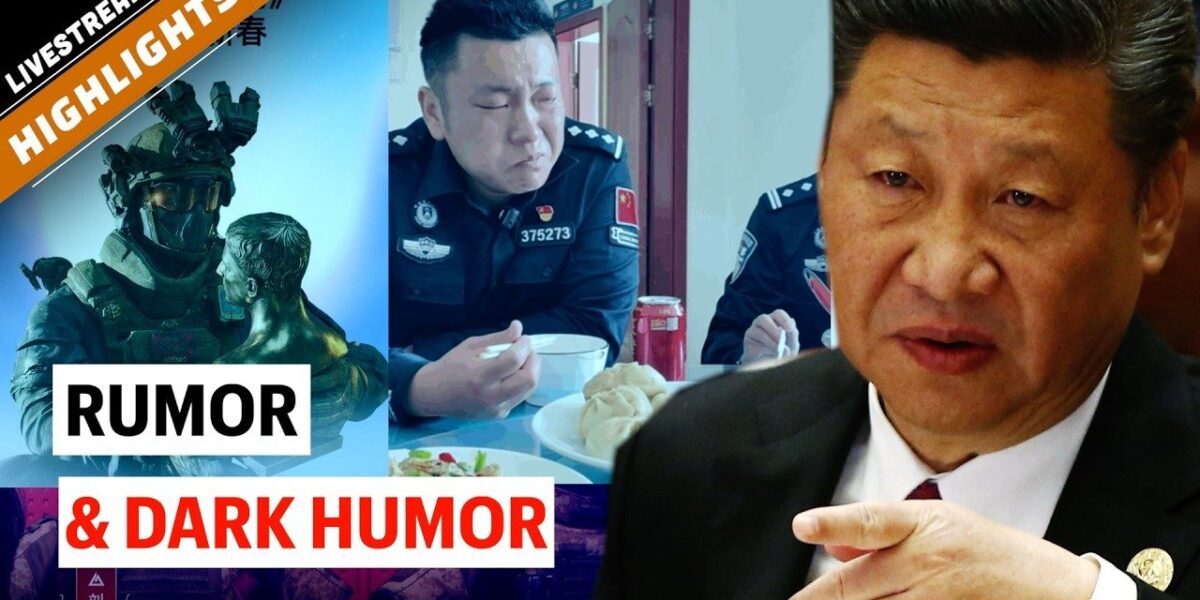
Recent days have seen a surge of unusual rumors and provocative advertisements circulating in China, suggesting a brewing information war and potential power struggles within the highest echelons of the Communist Party. The unusual occurrences, particularly around the Lunar New Year, point to a complex undercurrent of dissent and veiled communication designed to bypass strict censorship and signal discontent.
Rumors of Executions and Official Denials
Over a two-day period, a significant rumor spread alleging the death of two high-ranking officials, identified as Jango and Leo, while in detention. One version of the rumor claimed they were executed on January 20th, the same day they were taken from a party school. It was further alleged that their bodies were not returned to their families, nor were the families officially informed. The source of this leak reportedly warned of severe consequences if the authorities did not grant the generals proper burial rights.
However, an update from the same influencer who initially spread the rumor claimed that the widespread dissemination of these allegations prompted an urgent notice from the Central Military Commission (CMC). This notice, reportedly sent to theater commands and service branches, stated that the two generals were alive and cooperating with an investigation. The CMC ordered military personnel to disregard malicious rumors and maintain loyalty to the CMC chairman. This sequence of events highlights the volatile nature of information and the attempts to control narratives within the military apparatus.
‘Delta Action’: A Game Ad’s Ominous Message
Adding to the atmosphere of unease is the appearance of a highly unusual advertisement for a mobile game called ‘Delta Action: Red Hot for the New Year.’ The ad, which appeared across China around January 29th, shortly after the arrest of an official named Jango, features a special forces soldier holding a classical Roman-style bust. This imagery has sparked widespread speculation and unease among observers, both inside and outside China.
The term ‘Delta Force’ immediately evokes associations with elite US special operations units known for ‘decapitation missions’—operations aimed at eliminating or capturing key enemy leaders, such as Saddam Hussein and Nicolás Maduro. The Roman bust, a common symbol for heads of state, further amplifies this connection. The presence of ‘Delta’ and the imagery of decapitation in an advertisement displayed prominently in major Chinese cities, especially during a politically sensitive period, has led many to believe it is far from a coincidence.
Speculation is rife that the advertisement was deliberately placed as a subtle, yet pointed, message. Some theories suggest it is a warning directed at President Xi Jinping, with claims even pointing to the military as being behind the campaign. The ad was reportedly looped on giant street screens in at least ten southern cities, including Guangzhou and Shenzhen, during the Lunar New Year. The phrase ‘Delta Action’ effectively amplified anti-Communist Party and anti-Xi sentiment online, creating a situation where the authorities are hard-pressed to respond without acknowledging the underlying message.
Xinhua’s ‘Bite the Bun’ Report: Dark Humor or Subtle Rebellion?
Further contributing to the peculiar information landscape is a bizarre report from Xinhua News Agency, the official state news agency. On February 12th, Xinhua published a short video with the headline: “After biting into this bun, a Shandong border soldier who guarded the frontier for 15 years cried like a child.” The report ostensibly tells the story of a soldier named Yamri, from Shandong, whose wife and child visited him for Lunar New Year, bringing him steamed buns.
The subtext of this report is where the controversy lies. In Shandong, the traditional New Year food is dumplings, not buns. Buns do not carry the same symbolic meaning of crossing into the new year. More significantly, ‘steamed buns’ hold a loaded political connotation in China. President Xi Jinping is known to favor steamed buns and has been nicknamed ‘Baozi’ (bun) by some, a term that is widely understood in political slang.
The decision by Xinhua, the party’s primary propaganda outlet, to focus on a border soldier biting a bun—a symbol directly linked to the leader—has been interpreted by many as dark humor or even a subtle act of rebellion. While Xinhua attributed the soldier’s tears to homesickness, observers question how such a politically charged report could pass internal review. The narrative, featuring a stoic Shandong soldier, the loaded symbol of the bun, and the emotional acts of biting and crying, is seen as a carefully choreographed piece of symbolic theater.
Interpreted between the lines, the ‘bite’ could symbolize defiance against the source of suffering or the system that has caused hardship. The tears might represent not just homesickness but grief over the nation’s direction. The headline, in this view, effectively conveys anger and bitterness among those in uniform towards Xi Jinping, suggesting a desire to retaliate.
Nuances of Censorship and Coded Communication
The ‘Delta Action’ advertisement and the Xinhua report are examples of how individuals within China navigate pervasive censorship to express dissent. These coded messages, often lost on foreign media, are understood by those familiar with the nuances of Chinese society and its political landscape. Living under strict information control fosters a unique form of communication, where symbols and subtle hints carry significant weight.
The combination of these seemingly disparate events—rumors of executions, a provocative game advertisement, and a politically charged state media report—paints a picture of deep-seated discontent. The fact that resentment is reportedly seeping into the lower ranks of the system, with frontline soldiers potentially portrayed as symbolically challenging the leader, and advertisements openly referencing decapitation strikes, are seen as dire omens for the current regime.
Looking Ahead
As China navigates this period of perceived internal strife, the coming weeks and months will be crucial. The regime’s response to these subtle, yet widespread, expressions of dissent will be closely watched. The ability of the authorities to control the narrative, manage public perception, and quell any potential power struggles will determine the stability of Xi Jinping’s leadership and the future direction of the country. The ongoing information war, waged through rumors, coded advertisements, and even state media’s own subtle critiques, suggests that the challenges facing Beijing are significant and multifaceted.
Source: From Execution Rumors to Decapitation Humor: Beijing’s Information War (YouTube)

Related Articles
China-US Tensions Flare: Blockade Risk Sparks Superpower War Fears
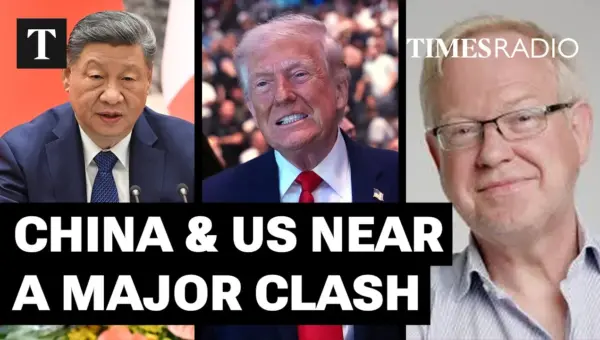
The U.S. blockade in the Strait of Hormuz has intensified tensions with China, raising fears of a potential superpower conflict. Expert Roger Boyes highlights China's use of a "shadow fleet" and military support for Iran, while President Trump attempts a delicate diplomatic approach ahead of a key meeting with President Xi Jinping.
China’s Iran Gambit: Deception or a New World Order?
President Trump claims China will stop sending weapons to Iran, but deep skepticism remains due to China's past support and use of spy satellites to aid Iran. This move could be a strategic ploy to weaken the US military.
China Aids Iran Amid US Conflict Escalation
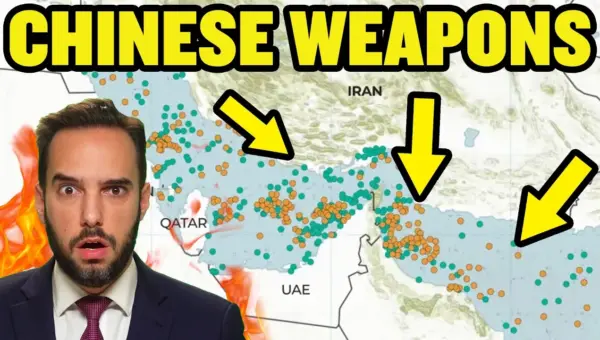
Recent intelligence suggests China is secretly supplying Iran with weapons like MANPADS and sharing critical intelligence, a significant escalation from its previous stance. This move, if confirmed, could deepen regional conflict and lead to severe US economic retaliation, while highlighting long-standing strategic ties between Beijing and Tehran.