Middle East on Edge: Russian Warships Race to Iran Amid Escalating Tensions and Covert Operations
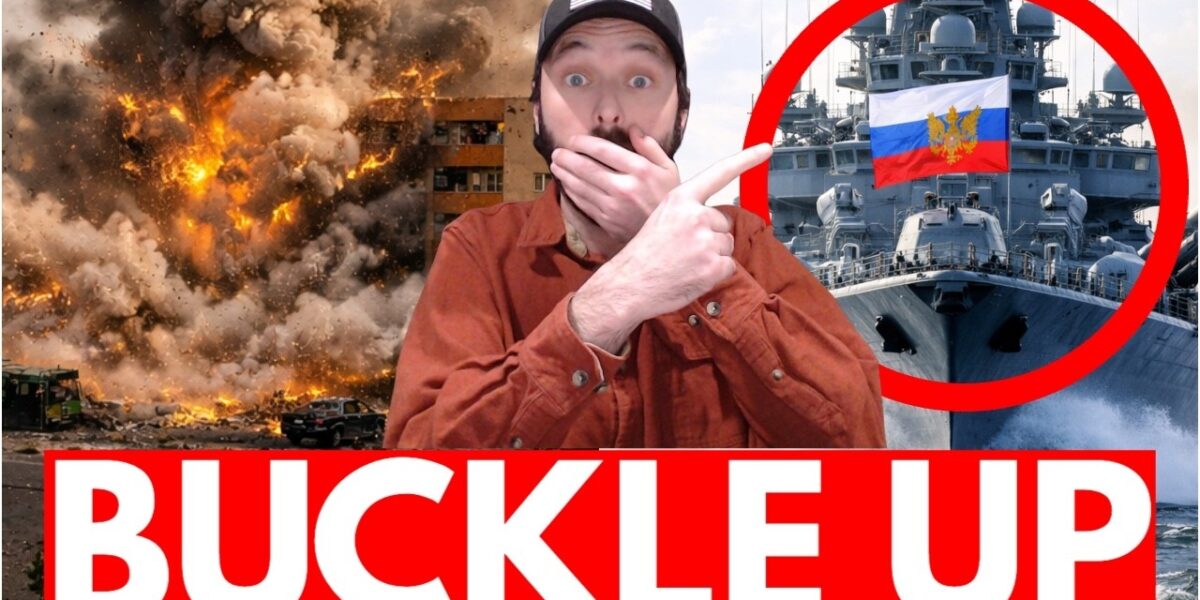
Amid escalating tensions on February 18th, Russian warships reportedly raced to the Gulf of Oman for joint exercises with Iran, including drills simulating attacks on U.S. ships. Concurrently, mysterious explosions rocked Iranian cities, while the U.S. deployed significant naval assets, including two carrier strike groups, to the region, and European embassies began evacuating non-essential staff, signaling a potential military confrontation.

Middle East on Edge: Russian Warships Race to Iran Amid Escalating Tensions and Covert Operations
The geopolitical landscape of the Middle East plunged into a state of heightened alert on February 18th, as reports emerged of rapid and alarming developments concerning Iran, Russia, and the United States. A confluence of factors – including the deployment of Russian warships for joint exercises with Iran, mysterious explosions across Iranian cities, and a significant show of force by the U.S. Navy – painted a picture of a region teetering on the brink of a major confrontation. Diplomatic sources further fueled concerns by revealing that multiple European embassies were reportedly evacuating non-essential staff from the Middle East, a move often seen as a precursor to military action.
The situation, described by observers as a “code red” and “high alert” scenario, involved a complex interplay of military posturing, alleged covert operations, and strategic messaging, leaving the international community to grapple with the potential for an unprecedented escalation.
Russian Naval Power Enters the Fray: Joint Drills with Iran
One of the most significant developments reported was the impending arrival of Russian warships in the Gulf of Oman and the northern Indian Ocean. According to Iranian state media outlet Fars, these vessels were slated to commence “massive war exercises” with the Iranian navy on February 19th. The timing and nature of these drills immediately raised eyebrows, particularly given the explicit mention of practicing scenarios that could involve “sinking U.S. ships.” This provocative detail, coming just days after Iran conducted its own naval exercises with similar objectives, underscored a deepening military alignment between Moscow and Tehran and a clear challenge to Western influence in the region.
The Gulf of Oman, strategically located at the mouth of the Strait of Hormuz, is a critical maritime chokepoint through which a significant portion of the world’s oil supply passes. The presence of Russian warships in these waters, alongside Iranian forces, represents a substantial projection of power and a direct message to the United States and its allies. For Russia, such drills are an opportunity to demonstrate its global naval reach, reinforce its strategic partnership with Iran, and potentially complicate any future U.S. military operations in the region. It also serves to underscore Moscow’s commitment to supporting its allies against perceived Western aggression, mirroring its broader geopolitical strategy of challenging the unipolar world order.
Historically, Russia has maintained a limited but growing naval presence in the Indian Ocean, often conducting joint exercises with countries like India and China. However, a joint exercise with Iran in such sensitive waters, explicitly simulating attacks on U.S. vessels, marks a distinct escalation. It suggests a coordinated effort to test the resolve of the U.S. and its partners, while also enhancing the interoperability and tactical capabilities of the Russian and Iranian navies. The potential for miscalculation during such high-stakes maneuvers, where one “stupid thing” or “miscalculation” could trigger an unintended confrontation, was a paramount concern among analysts.
Shadowy Skies: Secret Russian Flights to Iran
Compounding the naval maneuvers were reports of mysterious air traffic between Russia and Iran. A plane belonging to Russia’s “Special Flight Squadron” – a secretive military aviation wing often associated with transporting high-ranking officials or sensitive cargo – was tracked flying towards Iran. The flight, which reportedly took off from Geneva, initially “spoofed” its flight pattern to suggest a trajectory towards Moscow before turning southbound towards Iran, bypassing the Mediterranean. This was not an isolated incident; another flight from the same unit had reportedly flown into Iran from Moscow just a day or two prior, indicating a pattern of discreet and urgent communication or transfer of personnel/material.
The nature of these “secret flights” remained speculative, with possibilities ranging from the evacuation of Russian citizens or diplomatic staff to the deployment of military advisors, intelligence personnel, or even specialized equipment. The use of a “Special Flight Squadron” aircraft, known for its clandestine operations, further amplified the gravity of the situation. Such flights underscore the deep and complex nature of the Russia-Iran relationship, which has grown stronger in recent years, particularly in the face of Western sanctions and shared geopolitical interests. The clandestine nature suggests a sensitivity to the operations being conducted, whether they involve bolstering Iran’s defense capabilities, coordinating strategic responses, or preparing for contingencies in a rapidly deteriorating security environment.
The historical context of such flights often points to critical moments in international relations. During times of heightened tension, major powers frequently use discreet channels to transfer assets or personnel without publicly acknowledging their activities. The fact that these flights were reportedly “flooding in” to Iran suggested a level of urgency and importance that transcended routine diplomatic exchanges, indicating a significant, albeit unconfirmed, Russian involvement in the unfolding Iranian crisis.
Iran Under Siege: A Wave of Unclaimed Explosions
Adding another layer of complexity and instability to the crisis were numerous reports of explosions ripping through different cities across Iran. These incidents, occurring on the same day as the military buildups, were described as “absolute chaos,” with “massive smoke in the sky” visible in some areas. While the Iranian government officially attributed these explosions to “gas leaks,” many observers and analysts suspected a more sinister origin. The sheer number and widespread nature of the blasts, reportedly targeting “critical infrastructure, including military infrastructure,” bore the “fingerprints of black operations, covert operations, clandestine operations.”
Crucially, no entity claimed responsibility for these incidents, a hallmark of covert actions designed to sow confusion and deny attribution. The lack of claims, combined with the strategic importance of the presumed targets, pointed towards external actors or sophisticated internal opposition groups. In the past, Iran has been the target of numerous alleged covert operations, including cyberattacks (like Stuxnet), assassinations of nuclear scientists, and sabotage at key industrial and military sites. These incidents have often been attributed to adversaries such as Israel or the United States, aiming to disrupt Iran’s nuclear program, ballistic missile development, or internal stability.
The psychological impact of such widespread, unclaimed explosions on the Iranian populace and leadership cannot be overstated. It creates an atmosphere of vulnerability and uncertainty, potentially undermining public confidence and forcing the government to divert resources towards internal security. From a strategic perspective, if these were indeed covert operations, their goal would likely be to degrade Iran’s capabilities, deter further escalation, or perhaps even provoke a response that could justify broader military action. The fact that these explosions occurred concurrently with the military buildups suggests a multi-pronged approach to the crisis, combining overt military posturing with covert destabilization efforts.
Iran’s Defensive Measures: Fortifications Amidst Tension
Amidst the internal turmoil and external pressure, satellite images reportedly showed Iran “repairing and fortifying sites” across the country. According to a Reuters report by Phil Stewart, these fortifications were being erected at “nuke sites and ballistic missile sites,” indicating Iran’s anticipation of a potential “massive U.S. strike.” This defensive posture suggested that despite any public pronouncements about ongoing negotiations, the Iranian leadership was preparing for the worst-case scenario, implying a deep skepticism about the efficacy of diplomatic solutions.
The decision to fortify critical military and nuclear infrastructure reflects Iran’s understanding of the devastating capabilities of modern precision weaponry. While no fortification can render a site impervious to a determined aerial assault, measures such as underground bunkers, hardened shelters, and enhanced air defenses are designed to increase the survivability of assets and complicate enemy targeting. This move also serves as a symbolic act of defiance, signaling Iran’s resolve to protect its strategic assets even under immense pressure.
However, military analysts often argue that such fortifications, while offering some protection, are unlikely to fundamentally alter the outcome of a large-scale, technologically advanced air campaign. Modern conventional munitions, including bunker-buster bombs and stealth aircraft, are designed to penetrate even deeply buried and hardened targets. Thus, while Iran’s actions demonstrate a clear defensive strategy, they also inadvertently highlight the perceived imminence of a potential conflict and the significant threat it faces.
U.S. Power Projection: Carrier Strike Groups Race to Position
In response to the escalating situation, the United States deployed a formidable show of military force, signaling its readiness to counter any threat. The USS Gerald R. Ford, one of the U.S. Navy’s most advanced aircraft carriers, was reportedly “hauling ass at full speed” from the Caribbean, already positioned off the coast of Morocco and rapidly approaching the Mediterranean Sea. The carrier strike group was expected to be in a “strike position certainly within the next 48 hours,” if not sooner.
Notably, the U.S. Navy was “purposely broadcasting the position of this ship,” a deliberate strategic communication aimed at conveying resolve and deterring adversaries. This transparency was intended to send an unequivocal message to Iran and Russia about the U.S.’s capabilities and its willingness to act. The rapid deployment of the Ford, a symbol of American power projection, underscored the urgency with which the Pentagon viewed the situation.
Furthermore, the USS Abraham Lincoln, another U.S. aircraft carrier, was already reported to be in “strike position,” meaning that the U.S. would soon have two carrier strike groups within striking distance of Iran. This dual carrier presence, a rare and significant deployment, dramatically increases the U.S.’s air power, surveillance capabilities, and overall strike options. Beyond the carriers, reports indicated that “one-third of the U.S. Navy that is deployed is currently in strike position of Iran,” complemented by “most of our refueling tankers [and] fighter jets that are forward deployed in the region.”
This massive concentration of military assets – including naval vessels, air wings, and logistical support – represented an overwhelming force designed to “crush whatever we need to crush.” It was a clear demonstration of the U.S.’s ability to project power globally and its readiness to execute large-scale military operations if deemed necessary. The strategic objective behind such a deployment is multifaceted: to deter aggression, reassure allies, and provide credible options for military intervention should diplomatic efforts fail.
The Diplomatic Retreat: Embassies Evacuate
Perhaps the most sobering indicator of the gravity of the situation was the reported evacuation of embassy staff from multiple European countries across the Middle East. Diplomatic sources indicated that only “essential personnel” remained, a move widely interpreted as a precursor to potential military conflict. “When embassies start evacuating, when countries start pulling their people out, they do that because they believe negotiations have failed and the only option left on the table is to drop bombs,” a diplomatic source reportedly stated.
Historically, embassy evacuations have often preceded significant military actions or a complete breakdown of diplomatic relations. Such decisions are not made lightly, as they involve considerable logistical challenges, political signaling, and a direct acknowledgment of severe risk to personnel. The fact that “multiple European countries” were engaging in these evacuations suggested a broad consensus among key international players regarding the heightened risk of conflict. It implied that private intelligence assessments and diplomatic channels had concluded that the situation was too volatile to guarantee the safety of non-essential personnel.
This development served as a stark warning to the international community, indicating that the crisis had moved beyond mere posturing and into a phase where military intervention was considered a distinct and growing possibility. It underscored the profound failure of diplomatic efforts to de-escalate tensions and highlighted the immediate humanitarian and political implications of a potential war.
A Region on the Brink: Broader Implications
The rapid escalation of tensions involving Iran, Russia, and the United States carries profound implications for regional and global stability. The Middle East, already a volatile region prone to proxy conflicts and humanitarian crises, stands to be further destabilized by any direct military confrontation. The immediate consequences could include disruptions to global oil markets, a surge in refugee flows, and the potential involvement of other regional actors, such as Israel and Saudi Arabia, who have their own complex relationships with Iran.
For the United States, a conflict with Iran, potentially involving Russia, would represent a significant military undertaking with unpredictable outcomes. While the U.S. military possesses overwhelming conventional superiority, the complexities of urban warfare, potential asymmetric responses from Iran, and the risk of collateral damage would pose immense challenges. Furthermore, direct engagement with Russian forces, even inadvertently, would dramatically raise the stakes, potentially leading to a broader conflict between major global powers, a scenario reminiscent of Cold War anxieties.
For Russia, its deepening alliance with Iran serves multiple purposes: challenging U.S. hegemony, securing strategic influence in the Middle East, and potentially gaining leverage in other geopolitical arenas. However, direct military involvement in a conflict with the U.S. would carry significant risks, including economic repercussions and the potential for direct military losses. The assertion that the “Russian Navy will get obliterated” in such a scenario, while a strong claim, reflects the perceived disparity in naval power between the U.S. and Russia.
Iran, facing internal instability and external military pressure, finds itself in an increasingly precarious position. Its defensive fortifications and joint drills with Russia are attempts to bolster its security and deter aggression, but they also risk further provoking its adversaries. The long-standing grievances between Iran and the U.S., rooted in historical events, the nuclear program, and regional proxy conflicts, continue to fuel the animosity.
Conclusion: A Critical Juncture
As of February 18th, the situation in the Middle East remained acutely volatile, characterized by a dangerous convergence of military buildups, suspected covert operations, and a clear breakdown in diplomatic trust. The racing of Russian warships to join exercises with Iran, the mysterious explosions across Iranian territory, the rapid deployment of U.S. carrier strike groups, and the unsettling reports of embassy evacuations collectively painted a grim picture.
The potential for miscalculation, unintended escalation, or a deliberate act of aggression loomed large over the region. While the exact timing and nature of any potential conflict remained uncertain, the indicators pointed towards a critical juncture in the ongoing crisis. The world watched with bated breath, hoping that cooler heads might yet prevail and avert a catastrophic confrontation with far-reaching global consequences.
Source: Russia Warships RACE To Iran – More Explosions UNLEASHED (YouTube)

Related Articles


China-US Tensions Flare: Blockade Risk Sparks Superpower War Fears
The U.S. blockade in the Strait of Hormuz has intensified tensions with China, raising fears of a potential superpower conflict. Expert Roger Boyes highlights China's use of a "shadow fleet" and military support for Iran, while President Trump attempts a delicate diplomatic approach ahead of a key meeting with President Xi Jinping.

Trump Sees Iran Conflict Near End, Analysts Urge Caution
President Trump believes the conflict in Iran is "very close to over," but former advisor Keith Kellogg urges a cautious approach. The potential de-escalation could impact global markets, particularly oil prices. Investors should monitor the specifics of any resolution and its long-term implications for regional stability.


Trump’s Iran Deal Talk: A Mirror of His Own Desires?
Donald Trump's repeated claims that Iran "wants a deal very badly" might be more about his own desire for an agreement than Iran's. This analysis explores his rhetoric and its potential implications for foreign policy.