Judge Threatens Trump Administration with Criminal Contempt
A Minnesota federal judge has threatened the Trump administration's ICE agency with criminal contempt for repeatedly violating court orders. This action is part of a growing trend of federal judges asserting their authority against perceived defiance from the administration.


Federal Judge Issues Stark Warning to ICE Over Non-Compliance
In a significant legal development, U.S. District Judge Nancy E. Schultz of Minnesota has issued a stern order threatening the Department of Homeland Security’s Immigration and Customs Enforcement (ICE) with criminal contempt for its persistent failure to comply with court orders. The order, handed down in the last 24 hours, signifies a growing trend of federal judges asserting their authority against what is described as the Trump administration’s “lawless” approach to judicial directives.
Escalating Violations and Judicial Response
The core of Judge Schultz’s order stems from ICE’s repeated violations of court mandates. According to the transcript, the number of violated orders in Minnesota alone has reached staggering figures. Initially, a survey conducted by the court identified 96 violated orders in January. However, in a response to an email from the newly appointed U.S. Attorney for Minnesota, Dan Rosen, which accused the judge of distorting the record, the court discovered an even higher number of non-compliance instances. Rosen’s email, which was placed on the public docket, prompted the court to re-examine its findings. Remarkably, the updated count revealed that ICE had violated not 96, but 97 court orders in January. Furthermore, the court uncovered an additional 113 violations in 77 cases since January, bringing the total to an alarming number.
“If anything is beyond the pale, it is ICE’s continued violation of the orders of this court. Increasingly, this court has had to resort to using the threat of civil contempt to force ICE to comply with orders. The court is not aware of another occasion in the history of the United States in which a federal court has had to threaten contempt again and again and again to force the United States government, not a random party, to comply with court orders. This court will continue to do whatever is required to protect the rule of law, including, if necessary, moving to the use of criminal contempt. One way or the other, ICE will comply with this court’s orders.”
A Growing Movement Among Federal Judges
The transcript highlights that Judge Schultz’s action is not an isolated incident but part of a broader movement among federal judges across the country. Judges in states including West Virginia, Texas, New Jersey, and Massachusetts, even including some Trump appointees, are reportedly pointing out “open defiance” by the Trump administration as a “regular routine, not an accident.” This coordinated stance aims to curb what is perceived as a systemic disregard for judicial authority.
Several other recent contempt proceedings and findings have been noted:
- Judge Tashid in Minnesota issued a contempt order.
- Judge Sterns in Massachusetts found the Trump administration in contempt.
- Judge Brian in Minnesota is scheduled to hold a hearing next week regarding contempt in five to six separate cases.
- Judge Karashi in New Jersey addressed violations of the writ of habeas corpus, stating, “it ends now.”
- Judge Murphy in Massachusetts found the administration’s practice of removing individuals to third countries unconstitutional, rejecting the administration’s argument that compliance is met as long as the individual is not immediately harmed upon arrival.
The Distinction Between Civil and Criminal Contempt
The article emphasizes the significance of Judge Schultz’s threat of criminal contempt. Civil contempt is typically used to compel compliance with a court order, often involving fines or sanctions that can be purged by meeting the court’s demands. Criminal contempt, however, is punitive. It is employed to punish willful disobedience of a court’s authority and can result in jail time for individuals found in contempt after an evidentiary hearing. The transcript suggests that the administration’s continued defiance may lead to individuals within ICE or Homeland Security facing incarceration.
Unprecedented Language and Judicial Frustration
The language used by federal judges in these recent orders is described as unprecedented, reflecting a deep level of frustration. Judges are reportedly resorting to citing historical figures like George Washington and Alexander Hamilton, referencing George Orwell, and quoting Bob Dylan, alongside strong legal arguments. This indicates a departure from typical judicial rhetoric, signaling the severity of the situation and the judges’ determination to uphold the rule of law.
One judge noted the Trump administration’s justification for removals, stating their position is “as long as the person when they get off the plane isn’t immediately shot, it’s fine.” The judge firmly rejected this, declaring it “not fine and it’s illegal and unconstitutional.” This highlights the stark contrast between the administration’s actions and the constitutional principles judges are sworn to uphold.
A Call to Action for the Judiciary
The transcript suggests that in the second year of the Trump administration, federal judges are beginning to “remind themselves of the awesome power that they hold.” This includes inherent authority and statutory authority to use contempt proceedings. The article advocates for judges to utilize these powers, which can include imposing fines, dismissing indictments or complaints, or striking defenses, as a means to ensure compliance and protect the integrity of the judicial process.
The author, drawing from over 35 years of experience as an officer of the court, expresses that they would never consider willfully violating a court order due to the severe consequences, both professionally and legally. The piece underscores that federal judges possess immense power and are crucial in defending the Constitution and upholding the rule of law.
Looking Ahead: The Fight for Judicial Authority
The ongoing defiance of court orders by the Trump administration and its agencies, particularly ICE, presents a critical challenge to the separation of powers and the rule of law in the United States. The assertive stance taken by Judge Schultz and a growing number of her federal colleagues signals a potential turning point. The coming weeks and months will be crucial in observing whether this judicial pushback effectively compels compliance or if further escalation, including criminal contempt proceedings, becomes necessary to ensure that court orders are respected. The appellate courts’ responses to these challenges will also be closely watched.
Source: FED UP Judge THREATENS Trump Regime with CRIMINAL CONTEMPT (YouTube)

Related Articles

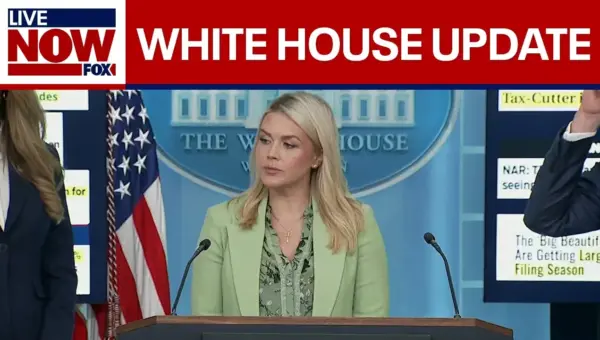
Trump Tax Cuts Deliver Billions Back to Americans
White House officials detailed the success of President Trump's "working families tax cuts" on Tax Day, reporting that over 53 million Americans have claimed significant tax savings and historic refunds. Treasury Secretary Scott Bessant and Small Business Administrator Kelly Leler highlighted benefits for individuals and small businesses, while also addressing economic outlook and international matters.


AG’s Shocking Defense: Trump’s DOJ is a ‘Good Thing’!
Acting Attorney General Todd Blanch's comments suggest the Department of Justice should openly serve the president's political agenda. This radical departure from tradition raises alarms about the politicization of justice and its impact on democracy.


Trump’s Economy Faces Recession Warnings Amid Global Fears
Global recession fears are intensifying as the IMF issues stark warnings, while a Harvard academic predicts a trillion-dollar taxpayer burden for the U.S. The Trump administration, however, continues to project optimism, creating a notable contrast with expert analyses. This divergence highlights critical questions about economic preparedness and the potential impact of global instability on American taxpayers.