NATO Seizes ‘Secret’ Iranian Ship Amidst Soaring Middle East Tensions and Trump’s Ultimatum

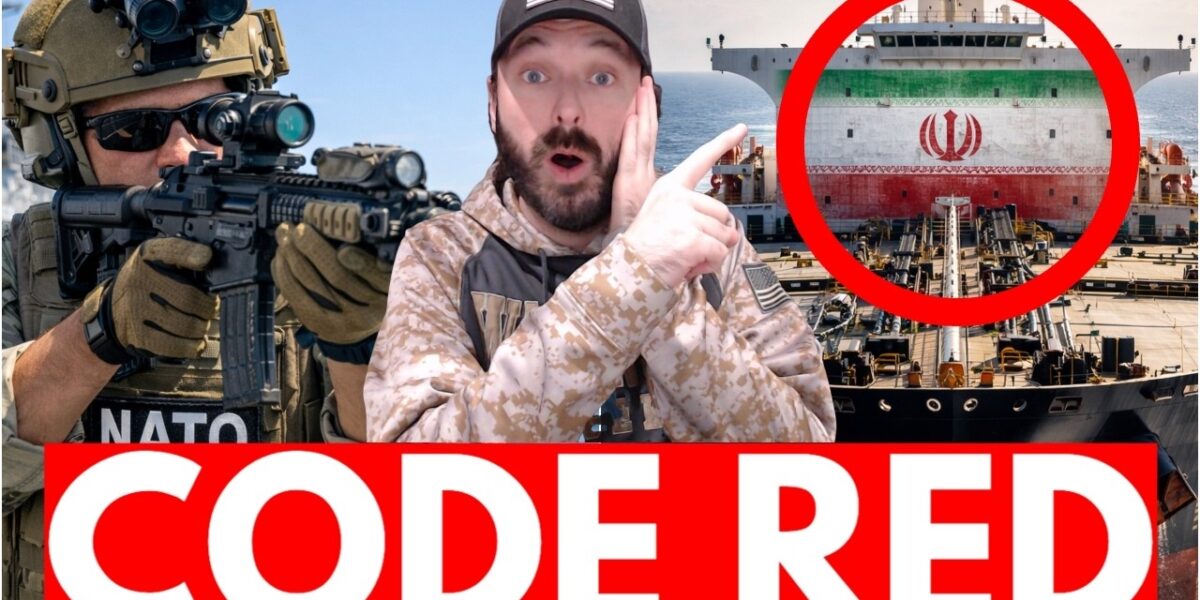
NATO Seizes ‘Secret’ Iranian Ship Amidst Soaring Middle East Tensions and Trump’s Ultimatum
In a dramatic escalation of geopolitical tensions, NATO forces, spearheaded by Danish authorities, have seized a clandestine Iranian container ship, the *Nora*, in international waters off the coast of Denmark. The seizure, confirmed on February 19th, marks a significant enforcement action against Iran’s illicit maritime activities and comes amidst a palpable increase in military readiness across the Middle East, fueled by a massive U.S. military buildup and an explicit ultimatum from former President Donald Trump regarding Iran’s nuclear ambitions.
The incident has sent ripples through international diplomatic and security circles, underscoring a hardening stance against Iran’s ‘shadow fleet’ operations and raising urgent questions about the immediate future of a region already on edge. With the ‘drums of war’ reportedly beating louder, the situation is described by observers as ‘incredibly fluid, dangerous, and hostile,’ suggesting that the window for a peaceful resolution may be rapidly closing.
The Seizure of the *Nora*: A Bold Move in European Waters
The operation targeting the 226-meter container ship *Nora*, formerly known as *Saras*, was executed by Danish authorities who confirmed the vessel’s detention. The ship, which had been flying an Iranian flag, attracted immediate suspicion due to its sudden change in registration from a Comorian flag state and its failure to be properly registered with its claimed new flag state. This lack of transparent registration is a hallmark of vessels engaged in covert activities, often linked to sanctions evasion.
According to tracking data, the *Nora*’s movements prior to its seizure were highly irregular and indicative of deliberate attempts to evade monitoring. The vessel was observed sailing north of Skagen, Denmark, before entering Russian waters off St. Petersburg. Crucially, its Automatic Identification System (AIS) tracking was systematically turned off between January 13th and 16th, causing it to disappear from international monitoring systems. After resurfacing and moving back through the Baltic Sea, it stalled in international waters between Denmark and Norway, eventually anchoring east of Albæk. During this period, it had received a brief inspection from a Danish patrol ship and was under surveillance by Danish naval drones, suggesting a pre-planned and intelligence-driven operation.
U.S. authorities had previously flagged the *Nora* as part of Iran’s notorious ‘shadow fleet,’ a clandestine network of vessels allegedly used for covert shipments, including those aimed at circumventing international sanctions. The ship is reportedly operated by Iranian businessman Muhammad Hussein Shamani, identified as the son of a senior Iranian regime official, further linking the vessel’s activities directly to the Iranian state apparatus. The seizure of the *Nora* in European waters by a NATO member represents a significant escalation, signaling a ‘zero tolerance policy’ for such illicit operations and demonstrating the alliance’s growing resolve to disrupt Iran’s economic lifelines outside its immediate territorial waters.
Unmasking the ‘Shadow Fleet’
The concept of Iran’s ‘shadow fleet’ is central to understanding the significance of the *Nora*’s seizure. Faced with crippling international sanctions, particularly those targeting its oil exports and financial sector, Iran has developed an elaborate network of vessels designed to bypass these restrictions. This fleet consists of older tankers and cargo ships that frequently change their names, flags, and ownership, often operating under obscure or shell companies to obscure their true origins and destinations.
The primary purpose of the shadow fleet is to facilitate the covert export of Iranian oil, allowing the regime to generate revenue despite sanctions. These ships often engage in ship-to-ship transfers in open waters, turn off their AIS transponders to disappear from tracking systems, and falsify their documentation to disguise the origin of their cargo. Beyond oil, the fleet is suspected of transporting other illicit goods, including components for Iran’s missile and nuclear programs, as well as weapons destined for proxy groups across the Middle East.
The operation of such a fleet is a sophisticated endeavor, requiring coordination among various state-backed entities, shipping companies, and financial intermediaries. The alleged involvement of Muhammad Hussein Shamani, the son of a high-ranking Iranian official, underscores the deep connections between these clandestine operations and the upper echelons of the Iranian regime. Disrupting this network is a critical component of the international ‘maximum pressure’ campaign against Iran, as it directly targets the financial resources that fuel its regional ambitions and controversial programs. Each seizure, like that of the *Nora*, represents a direct blow to Iran’s ability to fund its activities, cutting off vital revenue streams and disrupting supply chains for prohibited goods.
Escalating Tensions: A Broader Geopolitical Chessboard
The seizure of the *Nora* is not an isolated incident but rather a symptom of a much larger and rapidly escalating geopolitical standoff between Iran and Western powers, particularly the United States. The Middle East has been a crucible of conflict and instability for decades, but recent events have pushed the region closer to a direct confrontation than at any point in recent memory.
The US ‘maximum pressure’ campaign, re-imposed after the withdrawal from the Joint Comprehensive Plan of Action (JCPOA) nuclear deal in 2018, has aimed to choke off Iran’s economic lifelines and force it to renegotiate a more restrictive agreement. However, instead of leading to compliance, it has often resulted in an intensification of Iran’s regional proxy activities, its nuclear program advancements, and its defiance of international norms.
Adding to the volatility is the ongoing conflict in Gaza and the subsequent Red Sea crisis, where Iran-backed Houthi rebels in Yemen have launched persistent attacks on international shipping. These attacks have prompted retaliatory strikes from a U.S.-led coalition, further militarizing vital shipping lanes and drawing more international forces into direct engagement with Iranian-aligned groups. The U.S. has also significantly bolstered its military presence in the region, deploying additional naval assets, airpower, and ground forces, creating a massive buildup that observers interpret as preparation for potential wider contingencies. This backdrop of heightened military activity and direct engagement significantly amplifies the stakes of any direct confrontation with Iran.
The speaker’s assessment of the situation as ‘incredibly fluid, dangerous, and hostile’ accurately captures the prevailing sentiment among security analysts. The repeated use of phrases like ‘drums of war’ and the warning that ‘strikes could start at any point in time’ reflect a widespread concern that the intricate web of proxy conflicts, economic warfare, and strategic posturing is nearing a breaking point, where miscalculation or an unintended incident could trigger a full-scale military conflict.
Precedent Set: A “Zero Tolerance Policy”
The Danish-led seizure of the *Nora* underscores a clear and unequivocal message from NATO and its allies: there will be a ‘zero tolerance policy’ for Iran’s clandestine maritime operations. This action, taking place in European waters rather than the more distant Indian Ocean or Arabian Sea, signifies a broadening of the operational theater for interdiction efforts against Iran’s shadow fleet.
This seizure follows a pattern of increasingly aggressive interdictions. Just four days prior to the *Nora* incident, on February 15th, the U.S. military conducted a dramatic seizure of the MT *Veronica 3* in the Indian Ocean. This operation involved ‘unknown commandos’ – likely U.S. Navy SEAL Team Six or Coast Guard tactical teams – using helicopters to board and secure the vessel, which had attempted to flee from the Caribbean all the way to the Indian Ocean. Footage of such operations, featuring helicopters hovering, door gunners at the ready, and assault forces fast-roping onto the decks of moving tankers, has become a stark visual representation of this determined enforcement.
The success of these operations highlights a critical vulnerability for the Iranian regime: its inability to effectively defend its vessels outside its immediate territorial waters. As the speaker noted, ‘The Iranians can’t defend their ships outside of their immediate waters.’ This strategic disadvantage means that Iran’s shadow fleet, vital for its economic survival and covert operations, remains susceptible to interdiction by technologically superior and internationally coordinated forces. Each successful seizure not only deprives Iran of revenue and resources but also reinforces the deterrent message that its illicit maritime activities will be met with decisive action, wherever they occur.
Trump’s Ultimatum: A “Deal or Disaster” Scenario
Adding another layer of urgency and potential volatility to the situation are the recent comments made by former President Donald Trump regarding Iran. When questioned about the latest updates on Iran, Trump issued a stark warning, stating that ‘bad things will happen’ if Iran does not comply. He further emphasized, ‘We’re either make a deal or we’re gonna get a deal one way or the other.’ While he refrained from explicitly discussing military strikes to wipe out Iran’s nuclear program, his tone conveyed an unmistakable threat: ‘We’re either going to get a deal or it’s going to be unfortunate for them.’
Most significantly, Trump reportedly gave Iran a narrow window of ’10 to 15 days’ to reach a deal with the United States to avoid an ‘all-out war in the Middle East.’ This ultimatum, delivered with a sense of finality, has been widely interpreted as a non-negotiable deadline. Analysts, including the speaker, immediately cast doubt on the feasibility of such a deal being struck within this incredibly short timeframe, given the deep-seated mistrust and diametrically opposed positions of Washington and Tehran. ‘There is no way the Iranians agree to what the Americans want in the next 10 to 15 days. That simply is just not going to happen,’ the speaker asserted, concluding that ‘war is imminent.’
The implications of such a deadline are profound. If Iran fails to meet the demands, the former President’s rhetoric suggests a willingness to resort to military force. Such an intervention could target a range of Iranian assets, including its nuclear facilities, military infrastructure, Revolutionary Guard Corps (IRGC) bases, and naval capabilities. The prospect of ‘the Islamic regime getting rocked by American air power’ is a chilling one, carrying immense risks for regional stability and potentially drawing in other global powers. Trump’s ‘not playing games, not messing around’ approach signals a readiness to undertake decisive action, reminiscent of his previous ‘maximum pressure’ strategy, but now with an explicit military ultimatum attached.
The Military Buildup: Signs of Readiness
The intensifying rhetoric from Washington is underscored by concrete evidence of a significant military buildup. Flight tracking data from services like FlightRadar24 has shown a dramatic increase in U.S. military flights, which have ‘dominated our most tracked flights list this week,’ according to the platform. These flights are reportedly ‘flooding into Europe,’ indicating a major logistical effort to position assets closer to potential operational theaters in the Middle East.
A ‘massive buildup’ of U.S. military forces in the region would typically involve the deployment of additional aircraft carrier strike groups, stealth bombers, advanced fighter jets, air defense systems, and potentially ground forces. Such deployments serve multiple purposes: they project power, enhance deterrence, provide a range of response options, and demonstrate a commitment to regional allies. The sheer scale and sustained nature of these flight movements suggest a strategic preparation, ensuring that the necessary logistical and operational capabilities are in place should military action become unavoidable.
The continuous flow of military aircraft into the region is a clear signal of readiness. It indicates that the U.S. military is not only preparing for potential contingencies but also actively positioning itself to execute a wide range of operations, from targeted strikes to a more comprehensive campaign, if political decisions dictate. This visible display of military strength is intended to exert pressure on Iran, but it also elevates the risk of miscalculation and accidental escalation in an already volatile environment.
International Law and Sovereignty: Navigating the Legal Minefield
The seizure of the *Nora* raises important questions regarding international maritime law and the sovereignty of nations. Under the United Nations Convention on the Law of the Sea (UNCLOS), every ship must be registered with a flag state, which then exercises jurisdiction and control over the vessel. Changing a ship’s flag without proper notification and registration, as was the case with the *Nora*, immediately raises red flags and can lead to a loss of protection under international law.
The Danish maritime authority’s detention of the *Nora* was based on its finding that the vessel was ‘not properly registered with its claimed flag state.’ This legal technicality, coupled with the U.S. authorities’ flagging of the ship as part of the ‘shadow fleet’ used for sanctions evasion, provided the legal basis for the seizure. International sanctions regimes, often backed by UN Security Council resolutions or multilateral agreements, empower states to take action against entities and vessels involved in their circumvention.
However, Iran will undoubtedly view such seizures as acts of aggression and violations of its sovereignty, regardless of the legal justifications presented by NATO members. This could lead to diplomatic protests, retaliatory measures, or even attempts to challenge the seizures in international courts. The ongoing cat-and-mouse game between Iran’s shadow fleet and international enforcement agencies highlights the complex interplay of international law, national security interests, and the enforcement of sanctions in the global maritime domain. The use of advanced intelligence gathering, including AIS tracking and naval drones, is crucial for identifying and interdicting these elusive vessels, operating within the bounds of international law while asserting the collective will to enforce sanctions.
The Path Forward: Diplomacy, Deterrence, or Direct Conflict?
The current situation presents a perilous crossroads for the Middle East and the broader international community. The seizure of the *Nora*, combined with the U.S. military buildup and former President Trump’s ultimatum, paints a picture of rapidly diminishing diplomatic space and an increasing likelihood of direct confrontation.
One path forward involves a last-ditch diplomatic effort to de-escalate tensions and negotiate a new agreement with Iran. However, the short timeframe proposed by Trump and the entrenched positions of both sides make this extremely challenging. Iran’s leadership has consistently resisted external pressure to dismantle its nuclear program or curb its regional influence, viewing such demands as infringements on its sovereignty.
Another path is continued deterrence, where military pressure and sanctions enforcement are maintained to prevent Iran from further escalating its activities, without resorting to outright war. This strategy relies on the belief that a credible threat of force can compel Iran to exercise restraint. However, the risk of miscalculation or an unintended incident triggering a wider conflict remains high under such a scenario.
The most concerning path is that of direct military conflict. If Trump’s ultimatum is indeed a hard deadline and no deal is reached, the prospect of U.S. and allied military action against Iran becomes very real. Such a conflict would have devastating consequences for the region, potentially disrupting global energy markets, creating a massive humanitarian crisis, and drawing in other regional and international actors. The economic repercussions alone would be immense, impacting global trade and stability.
The international community faces the urgent challenge of navigating this crisis, seeking avenues for de-escalation while simultaneously preparing for the potentially severe consequences of a failure to do so. The coming weeks, shaped by Iran’s response to the ultimatum and ongoing enforcement actions, will be crucial in determining the trajectory of this highly volatile situation.
Conclusion
The seizure of the Iranian container ship *Nora* by NATO forces, particularly Danish authorities, underscores a resolute international effort to curb Iran’s illicit maritime activities and enforce sanctions. This action, set against a backdrop of a significant U.S. military buildup and a stark ultimatum from former President Trump, signals a dangerous escalation of tensions in the Middle East. With a narrow window for diplomacy and the ‘drums of war’ sounding louder, the region stands on the precipice of a potentially devastating conflict, the consequences of which would reverberate globally.
Source: BREAKING: NATO Forces STORM Secret Iran Ship – World On ALERT (YouTube)

Related Articles

Trump Welcomes Irish Leader, Discusses Trade, Iran Tensions
President Trump welcomed Ireland's Taoiseach to the White House, discussing trade and the strong historical ties between the nations. The meeting also covered President Trump's views on Iran's military capabilities, his criticisms of NATO's support for U.S. initiatives, and upcoming foreign policy engagements.


Beirut Airport Stays Open Amid Nearby Strikes
Beirut's international airport remains open and operational despite nearby Israeli airstrikes targeting the city's southern suburbs. Passengers arriving at the airport reported hearing and seeing the effects of attacks close to the grounds, though many expressed they are "used to it." The airport's continued function highlights its critical role as Lebanon's main gateway.


US Hit by Snow Blizzards and Tornado Threats
Record-breaking snow has buried the Midwest, with one town receiving three feet and Green Bay experiencing its largest March snowstorm since 1888. Meanwhile, the East Coast faced severe storms and tornado threats, leading to over 4,000 flight cancellations nationwide. The South also saw unusual frigid temperatures and snowfall.