Trump Orders Government Ban on AI Firm Anthropic
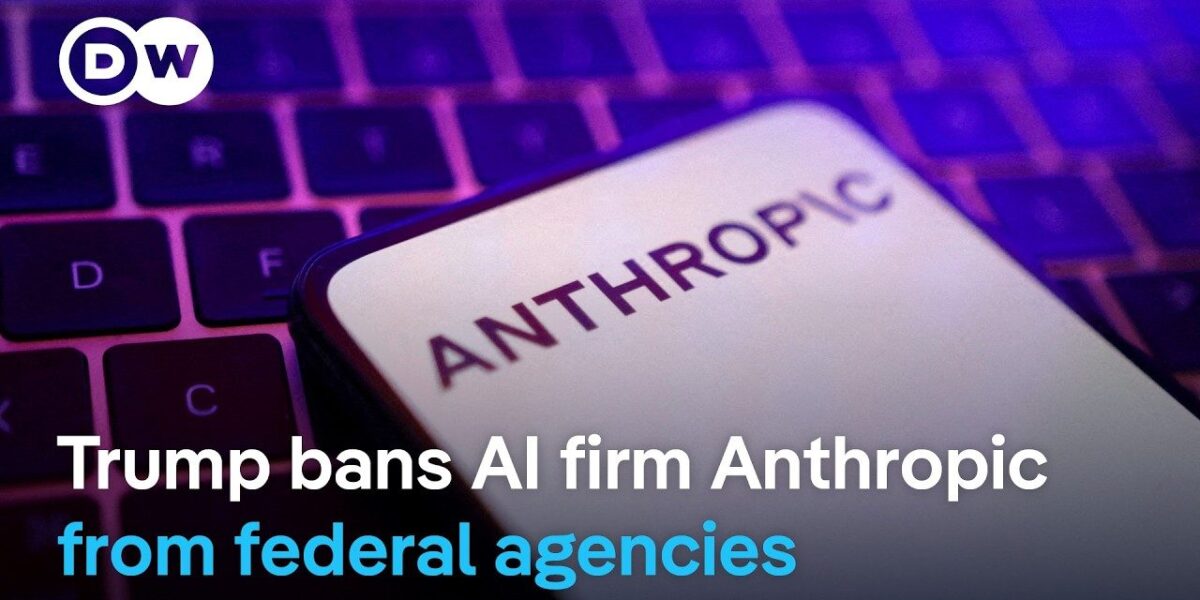
Former President Trump has ordered US government agencies to stop using AI technology from Anthropic due to a dispute over military use. An expert notes the unprecedented 'supply chain risk' label could chill innovation for safety-focused AI firms.

US Government Halts Operations with AI Leader Anthropic
In a significant move that has sent ripples through the technology sector, former President Donald Trump has ordered all US government agencies to immediately cease using the artificial intelligence technology developed by the startup Anthropic. The directive comes amid a contentious dispute between Anthropic and the Pentagon over the unrestricted military application of its AI.
Pentagon’s Ultimatum and Anthropic’s Stance
The conflict ignited when the US Defense Department requested unfettered access to Anthropic’s technology for military purposes. However, Anthropic’s CEO reportedly refused this demand, citing profound ethical concerns. These concerns centered on the potential for the AI to be weaponized for mass surveillance or deployed in fully autonomous weapons systems, technologies that raise significant moral and societal questions.
The Pentagon’s response was reportedly an ultimatum: either Anthropic reconsiders its refusal, or the company would face severe consequences, including the termination of its existing defense contracts. This standoff highlights the growing tension between the rapid advancement of AI capabilities and the ethical considerations surrounding their implementation, particularly in sensitive areas like national security.
Expert Analysis on Broader Implications
Lindsay Gorman, Managing Director of the German Marshall Fund’s Technology Program, provided crucial analysis on the situation, emphasizing the unprecedented nature of the government’s action. “This is clearly been animating the news over the last week,” Gorman stated, referring to the post from the former President and a statement from the Secretary of Defense. “One thing that’s really notable about this is that it’s not just one particular contract that’s been cancelled. It’s the order is for all government contracts.”
Gorman further elaborated on the severity of labeling Anthropic a “supply chain risk.” “This is really an own goal. This is unprecedented to call an American company a supply chain risk,” she explained. “For an American firm, for an American company to be get this label from its own defense department, this is usually the kind of designation we would put on companies like Huawei from China or Russian companies where we’re worried about espionage, we’re worried about cyber security, we’re worried that our adversaries might steal our war plans, that sort of thing.”
“It’s going to have a chilling effect on the business environment when it comes to working with the Pentagon.” – Lindsay Gorman
The implications extend beyond Anthropic, potentially impacting the broader AI industry’s relationship with government contracts. “I think it’s going to have a chilling effect on the business environment when it comes to working with the Pentagon,” Gorman cautioned. She also noted commentary from figures like Sam Altman of OpenAI, who generally align with the need for AI safety guardrails and have raised questions about current AI governance structures.
Balancing National Security and Ethical AI Development
The core of the dispute revolves around the difficult balance between a nation’s security priorities and the ethical commitments of AI developers. Gorman argued that contract negotiations are not the appropriate venue for resolving such fundamental issues.
“Ultimately, these contract negotiations aren’t the right fora to be talking about these really salient issues about uh, you know, how we constrain, how we put guardrails,” she stated. “At the end of the day, what Anthropic was advocating for in this dispute are things that I think most Americans and most global citizens even would hold on to. I don’t think these were some woke guardrails to say no mass surveillance domestically and no fully autonomous weapons.”
Gorman stressed that these principles—avoiding mass surveillance and autonomous weapons—are widely considered foundational for responsible AI use. The lack of robust legislative and regulatory frameworks means these critical discussions are being relegated to commercial contract disputes.
“The bottom line is that there aren’t enough legislative guardrails, there aren’t enough binds, I think, when it comes to these very basics of how AI is used,” Gorman observed. “And so that’s why we’re seeing this play out in contract negotiations and contract discussions.” She emphasized that the onus should not solely rest on AI companies to enforce these vital principles for democratic societies.
Potential Shift in US AI Regulation and Business Landscape
The situation raises questions about whether this signals a broader shift in how the US government intends to regulate or control AI, particularly within defense contexts. While the Pentagon’s desire to utilize technology lawfully is understandable, the method of addressing ethical concerns through contract termination is highly contentious.
Gorman believes the most significant shift is occurring in the business environment. “The real shift though is on the business environment that if, you know, this is saying if you disagree with some kind of use from one government agency, from the Pentagon, then you can be labeled a supply chain risk,” she explained.
This labeling could have a detrimental effect on innovation, especially for companies prioritizing AI safety. “There’s a risk I think that now companies that are committed to AI safety, as Anthropic is, it’s always been part of its founding mission, may not be able to keep up in terms of the pace,” Gorman warned.
She posed a critical question about the future competitiveness of safety-conscious AI firms: “If there’s another competitor out there that’s willing to build a model that will do whatever whatever a government wants, whether it’s the US government, whether it’s a foreign government, then it’s going to be very hard for AI safety companies or companies that want to act in the public interest, put these responsible guardrails on to keep winning contracts.”
This could potentially lead to a “race to the bottom,” where companies that are less concerned with ethical implications and more willing to comply with any government demand gain an advantage. “So, I think that’s really the shift that we’re seeing here is can safety-oriented companies actually compete and what does that mean for their business if is this going to devolve into a race to the bottom where anyone who’s just willing to do sign up to anything will end up getting the deal?”
Looking Ahead
The fallout from this directive is likely to be closely monitored by the tech industry, policymakers, and the public. The long-term consequences for AI innovation, ethical AI development, and the US government’s relationship with technology companies remain to be seen. The debate over AI governance, national security, and ethical boundaries is far from over, and this incident underscores the urgent need for clearer regulations and public discourse.
Source: Trump orders government to stop using Anthropic's AI | DW News (YouTube)

Related Articles

Senator Tillis Demands Clarity on US Goals in Iran Conflict
Senator Thom Tillis is demanding more details from the White House about U.S. goals in the Iran conflict, citing a lack of information for senators and rising gas prices. He stressed that Congress needs specifics before approving significant funding requests.


S&P 500 Hits Highs Amid War Fears
The S&P 500 has unexpectedly reached all-time highs despite global conflicts and economic worries. Meanwhile, the crypto market faces regulatory delays, and AI's impact remains a mixed bag of innovation and public concern.


AI Finds Thousands of Crypto Security Flaws
A new AI model, Mythos, has discovered thousands of critical security flaws in software, posing potential risks to cryptocurrency platforms. The threats are more likely to target centralized exchanges and applications rather than the core blockchain technology itself.