Newsom Slams Trump, Elites Over Epstein Lies and Lack of Accountability on Spirited Red State Tour
California Governor Gavin Newsom, on a red state book tour, offered a raw look into his memoir and critiqued the lack of moral clarity in politics. He slammed Trump and elites over the Jeffrey Epstein scandal, advocating for accountability. Newsom also detailed California's progressive agenda, emphasizing healthcare innovation, pluralism, and fighting special interests.

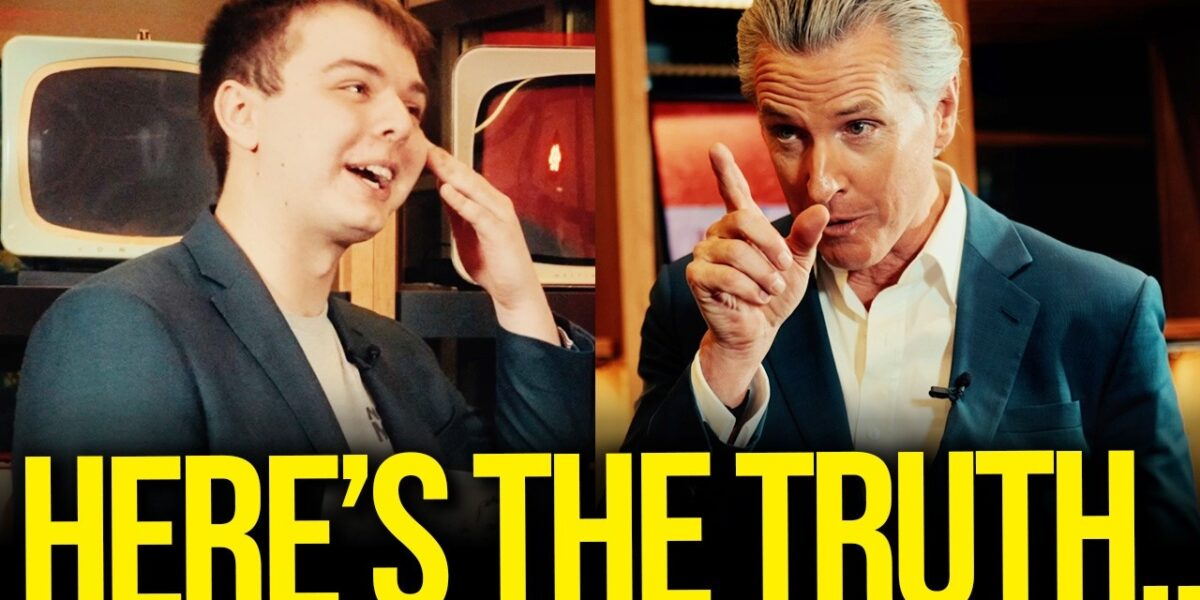
Governor Gavin Newsom Unveils Raw Memoir, Challenges ‘Bro Culture,’ and Demands Accountability for Elite Misconduct on Ambitious Book Tour
NASHVILLE, TN – California Governor Gavin Newsom recently embarked on an unconventional “red state book tour,” making his inaugural stop in Nashville, Tennessee. Fresh off stage, the governor offered a candid glimpse into his new memoir, Young Man in a Hurry, and engaged in a wide-ranging discussion that touched upon the moral vacuum in modern politics, the Jeffrey Epstein scandal’s lingering shadows, and California’s progressive blueprint for a future defined by innovation, pluralism, and robust public services.
Newsom’s tour marks a significant moment, not merely for promoting a book, but for a prominent Democratic figure to directly engage with audiences in states traditionally seen as political adversaries. This strategic outreach underscores a broader effort by some Democrats to articulate an affirmative vision for the nation, moving beyond mere opposition to former President Donald Trump.
A Candid Look Within: The Genesis of ‘Young Man in a Hurry’
The memoir, Newsom insists, is anything but a sanitized political autobiography. “It’s not a political book,” he asserted, drawing a stark contrast with the often-guarded narratives penned by elected officials. Instead, Young Man in a Hurry is described as a “memoir of discovery,” a deeply personal exploration of Newsom’s life, choices, and the profound influences of his family history.
Newsom spoke with raw honesty about the struggles that shaped him, including alcoholism, suicides within his family, and divorces. “I just broke everything open and really scrutinized myself, tried to take an objective look at my life, my life’s choices, not only my life but life of my mother, my grandfather, how that influenced me,” he explained. The book’s title, he noted, reflects not just the impetuousness of youth but also a journey toward accountability and responsibility – for his family, their welfare, and his own decisions. This vulnerability resonated deeply with the Nashville audience, with the interviewer noting the emotional impact of Newsom’s on-stage reflections.
The decision by a sitting governor, particularly one often discussed as a potential future presidential candidate, to offer such an unvarnished self-portrait is notable. In an era where political figures often meticulously curate their public image, Newsom’s approach suggests a strategic move towards authenticity, perhaps recognizing a public hunger for genuine human connection amidst the performative nature of contemporary politics. By delving into personal pain and growth, Newsom aims to connect with readers on a universal level, demonstrating that even those in positions of power grapple with profound human experiences.
Navigating a Moral Maze: Advice for a New Generation
The conversation quickly pivoted to the pressing issue of moral leadership in America, particularly for young people grappling with a complex and often contradictory political landscape. The interviewer expressed concern over the perceived lack of moral clarity from figures at the highest echelons of power, citing instances like former President Trump’s use of “racist AI videos” and his calls for the arrest of Democratic governors. This sentiment highlights a broader societal anxiety about the erosion of ethical standards in public life and the impact on impressionable youth.
Newsom’s advice to a “young man in a hurry” was both simple and profound: “Learn from, don’t follow others.” He emphasized the importance of self-discovery and embracing one’s unique expression, warning against the pitfalls of comparison. “Comparison’s the thief of all happiness,” he quoted, advocating for a present-focused existence where individuals are free to explore their authentic selves without the burden of emulation or societal masks. “Deep breath. We’re all trying to be in a hurry. We’re all trying to be something, be like somebody. But really, the whole point of the journey, man, is discover yourself.”
This philosophy stands in stark contrast to what Newsom characterized as the “bro stuff” culture prevalent among certain online influencers and figures, which he linked to “Trump adjacent stuff.” He specifically mentioned figures like Jordan Peterson and Andrew Tate, describing their ethos as focused on “power, dominance, and aggression.” Newsom passionately argued against this paradigm, asserting that the true “superpowers” for men lie in “empathy, compassion, and collaboration care.” These values, he contended, are where men can truly thrive and find abundance in their lives, offering a counter-narrative to the often-toxic masculinity promoted by some online personalities.
The governor’s critique of the “bro culture” taps into a significant cultural debate about masculinity in the 21st century. The rise of figures like Tate, who advocate for traditional, often aggressive, and misogynistic views of manhood, has garnered a substantial following, particularly among young men. Newsom’s intervention provides a high-profile counterpoint, aligning with progressive efforts to redefine masculinity around emotional intelligence, social responsibility, and collaborative leadership. He implicitly suggests that the algorithms of social media, which often “incentivize the outrage,” amplify these divisive messages, making it harder for young people to discern genuine moral guidance.
The Lingering Stain of Epstein: A Call for Elite Accountability
Perhaps the most potent moment of the discussion came when Newsom addressed the pervasive issue of elite accountability, particularly in the wake of the Jeffrey Epstein scandal. The interviewer highlighted a pattern of prominent figures, including those associated with Donald Trump’s orbit and Elon Musk, being accused of lying about their involvement or proximity to Epstein. The focus, however, landed squarely on Howard Lutnick, CEO of Cantor Fitzgerald, who initially claimed to have cut ties with Epstein in 2005 due to “the heebie-jeebies,” only for subsequent revelations to indicate he had visited Epstein Island with his family.
Newsom’s response was unequivocal. “There’s been no accountability across the spectrum when the irony is we’re seeing there’s been accountability around the globe, but not in the United States of America. And Lutnick says exhibit A.” The governor emphasized that while there’s no suggestion Lutnick was a perpetrator of criminal acts, his actions constituted enablement, especially given his professed knowledge of accusations against Epstein. “He himself claimed knowledge and said, ‘He disgusted me. I had the heebie-jeebies.’ And then we find out, well, that didn’t stop him from going to the island and who knows how many times.”
Newsom condemned the ongoing opacity surrounding the Epstein case, stating, “This cover-up continues.” He characterized the entire affair as a stark illustration of “the elites protecting the elites,” reinforcing public cynicism about a two-tiered justice system. “It just goes [to] the worst of what our instincts were, that there’s certain set of roles for the [elites] and then the rest of us,” he observed. He directly linked Trump to this dynamic, calling him “the manifestation of that,” with Lutnick fitting “nicely knitted into that as well.” Newsom concluded by demanding that Lutnick “come clean and he needs to explain himself a hell of a lot more than he has.”
The Epstein scandal continues to be a raw nerve in American society, symbolizing the perceived impunity of the wealthy and powerful. Newsom’s willingness to forcefully articulate this frustration, particularly in linking it to prominent figures and the broader political climate, serves as a powerful critique of systemic failures. His comments resonate with a public increasingly wary of corruption and cover-ups, and his call for accountability, even from those not directly involved in the gravest offenses, underscores a demand for moral leadership from all who operate in elite circles. The ongoing redactions and lack of full transparency only fuel the public’s distrust, making Newsom’s “Epstein bomb” a potent reminder of unresolved injustices.
California’s Progressive Blueprint: Beyond Opposition
Shifting focus from critique to construction, the conversation explored what Democrats should champion beyond their opposition to Donald Trump. The interviewer noted the party’s historical unity in opposing Trump and the need for affirmative goals. Newsom proudly presented California as a living laboratory for progressive policy, highlighting initiatives that offer concrete solutions to everyday challenges.
A flagship example is California’s CalRx initiative, aimed at dramatically lowering healthcare costs. Newsom detailed the state’s move to produce its own branded insulin, reducing the price to a mere $1 per pen. This innovative approach, he explained, leverages “free enterprise capitalist tendencies as a government and compete against the private sector,” rather than merely subsidizing an inefficient system. This model is now being expanded to other essential goods, with the state planning to manufacture its own brand of diapers, addressing a critical need given that “half the births in our Medicaid system… can’t afford the cost of diapers.”
California, Newsom underscored, is the first universal healthcare state in the nation, providing coverage regardless of pre-existing conditions, ability to pay, or immigration status. This has resulted in a remarkably low uninsured rate of 6.4%. The state’s obsession, he declared, has now shifted from coverage to cost, demonstrating a commitment to making healthcare truly accessible and affordable.
Beyond healthcare, Newsom positioned California as a “sanctuary state” for a range of progressive values. After the overturning of Roe v. Wade, California established a robust “firewall” to protect reproductive rights. Similarly, Senate Bill 107 transformed the state into a sanctuary for transgender individuals, offering legal protections against out-of-state anti-trans laws. These policies reflect California’s commitment to protecting vulnerable populations and serving as a counter-narrative to conservative legislative trends across the country.
Pluralism, Innovation, and the American Dream
Newsom articulated a broader vision for America rooted in California’s diverse and innovative spirit. He highlighted the state’s unique demographic makeup – 27% foreign-born, a majority-minority state, and the world’s most diverse democracy. This diversity, he argued, is not just tolerated but actively celebrated through the practice of “pluralism,” a concept he believes is often overlooked today. “It’s the reason Silicon Valley is Silicon Valley,” he stated, connecting diversity directly to economic dynamism and technological advancement.
California, with its $62.1 billion (likely GSP, though not explicitly stated) economy, dominates in cutting-edge fields like quantum computing, artificial intelligence, robotics, and space technology. It stands as the third-largest capital in the world for Research & Development (R&D), constantly pushing the boundaries of discovery and entrepreneurialism. These achievements, Newsom contended, are a direct outcome of the state’s values, which he sees as uniquely American.
He invoked Ronald Reagan’s last speech, which spoke of “Lady Liberty’s torch” and the “life force of newcomers” to the United States, to underscore a bipartisan historical appreciation for immigration and innovation. This vision positions America as a magnet for “the first round draft choices around the rest of the world,” fostering a continuous cycle of talent, research, innovation, and economic growth.
Looking ahead, Newsom predicted that the 2028 and even 2026 elections would be defined by artificial intelligence, emphasizing the urgent need for a progressive vision that embraces technological advancement while ensuring inclusivity. The goal, he stated, is to “paint a picture of a journey where everyone feels included and we can go on the journey together,” echoing the vernacular of the 1960s to solve for “ignorance and poverty and disease.” This vision aims to “knit back that fabric of what defines the best of America that Trump and Daily is trying to vandalize,” championing values of racial justice, social justice, economic justice, and boundless opportunity.
Confronting Special Interests and Reforming Democracy
The discussion concluded with a firm commitment to combating the undue influence of special interest groups in politics. When asked if he would accept money from specific industries, Newsom’s responses were unequivocal:
- Big Oil: “Not a chance in hell… they are the polluted heart of this crime climate crisis.”
- Big Tobacco: “No damn way.”
- APAC: “Never have and will never will.”
These strong declarations reinforce his long-standing stance against corporate influence and his commitment to environmental and public health advocacy.
Newsom outlined a broader agenda for democratic reform, emphasizing the principle of “follow the money” when something goes wrong. He expressed support for public financing and “clean money campaigns,” acknowledging the ongoing struggle but stressing the necessity for greater effort. Other reform proposals included addressing the “revolving door” between government and lobbying, curbing self-dealing with stock portfolios by elected officials, and considering “some version of term limits for Congress.”
He argued that the Democratic Party must be a “reform-oriented party,” not one that defends the status quo, a posture he believes Trump capitalized on. California, he noted, is leading in these efforts, but he humbly acknowledged that “we still… have a lot more work to do.” This commitment to weeding out corruption and aggressively confronting corporate special interests forms a core pillar of the progressive agenda Newsom advocates, aligning with the interviewer’s “Project 2029” anti-corruption platform.
Governor Newsom’s appearance in Nashville was more than a book promotion; it was a robust articulation of a progressive vision for America. From demanding accountability from elites implicated in the Epstein scandal to showcasing California’s innovative governance in healthcare and social policy, Newsom presented a comprehensive argument for a nation defined by empathy, opportunity, and a steadfast commitment to democratic reform. His candid reflections and forceful critiques underscore a determination to shape a future that transcends partisan divides and addresses the fundamental challenges facing a “young man in a hurry” nation.
Source: Newsom Drops Epstein Bomb on Trump (YouTube)

Related Articles

Vance Defends Trump: Epstein Friendship Claim Is A Hoax
Senator JD Vance asserts that claims of Donald Trump being close friends with Jeffrey Epstein are a "hoax." Vance cited emails suggesting a mutual dislike and even Trump reporting Epstein to authorities, arguing this refutes the "best friend" narrative pushed by Democrats.

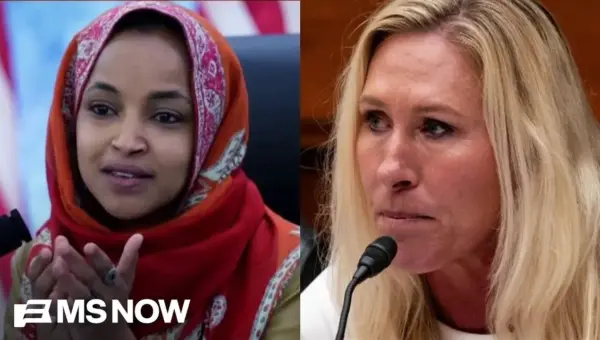
Omar Urges Democrats to Welcome Ex-MAGA Figures
Rep. Ilhan Omar is urging Democrats to embrace former Trump allies like Marjorie Taylor Greene who are now breaking with the former president. Omar believes these individuals deserve credit for their "wake-up call" and should be welcomed to help save the country. This call comes as Democrats explore strategies to broaden their coalition and appeal to disillusioned Republicans.


Iran Tensions Rise as US Blockades Ports
The US has imposed a naval blockade on Iran to cut off its funding, a move supported by most Americans in principle but not in practice due to economic costs. Meanwhile, internal Democratic Party struggles and a major scandal in California's gubernatorial race add to the political turbulence.