Trump’s Election Rigging Scheme Under Fire
Donald Trump is aggressively promoting the "SAVE Act," which critics decry as a sweeping voter suppression bill designed to make it harder to vote and easier for Republicans to win elections. Legal experts like Mark Elias are fighting these measures in court, particularly concerning access to sensitive voter data, while warning that the act represents a significant threat to democratic processes.

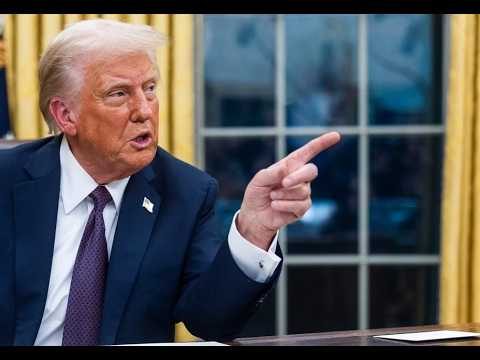
Trump Pushes Controversial “SAVE Act” for Election Control
Donald Trump has intensified his push for the “SAVE Act,” a legislative proposal critics argue is designed to suppress voter turnout and secure Republican electoral victories. Speaking from a teleprompter at the State of the Union, Trump vociferously advocated for voter ID laws, stating, “Why would anybody not want voter ID? One reason because they want to cheat. There’s only one reason.” He further asserted, “They want to cheat. They have cheated. And their policy is so bad that the only way they can get elected is to cheat. And we’re gonna stop it. We have to stop it.”
Legal experts and voting rights advocates, including Mark Elias, founder of Democracy Docket, have sounded alarms, characterizing the SAVE Act as potentially the “largest voter suppression bill in American history.” Elias explained during a recent “Democracy Watch” segment that Trump’s teleprompter-delivered remarks signal a deliberate strategy, not an off-the-cuff comment. “When he said these things, you can’t dismiss this like we always get from the right-wing, ‘Oh, that was just Donald Trump riffing,'” Elias noted.
Key Provisions and Concerns of the SAVE Act
The SAVE Act, as described by Elias, aims to make it significantly harder for individuals to register and cast ballots, particularly targeting Democratic voters. Key provisions include:
- Restricting Mail-In Voting: The bill seeks to ban mail-in voting, with exceptions only for military members and those with specific excuses.
- Narrow Voter ID Requirements: While framed as a voter ID measure, the act proposes a very restrictive definition of acceptable identification, potentially disenfranchising students and residents of assisted living facilities. Elias highlighted that the bill specifically excludes IDs from state schools and does not allow for caregiver affidavits, contrasting it with broader identification measures.
- Aggressive Voter Purges: The legislation mandates that states purge voter rolls monthly, a process critics argue will disproportionately remove eligible voters, especially women who have changed their names.
- Proof of Citizenship Requirements: The bill includes provisions for proof of citizenship, which Elias warned could lead to the removal of “tens of millions of voters.”
Elias expressed strong opposition, stating, “This is Donald Trump’s wish list for how he wants to steal the 2026 election and we can’t let him do it.” He further elaborated on the restrictive nature of the proposed voter ID, differentiating it from good-faith discussions on the topic. “If Republicans want to have a good faith discussion of ID, fine, let’s have that good faith discussion of ID. But that’s not this bill. This bill is not a good faith discussion of ID.”
The Fight Over Voter Rolls and Federal Data Access
A critical aspect of the Trump administration’s efforts, according to Elias, involves attempting to gain access to state voter rolls. This data, which can include Social Security numbers, is seen by critics as a tool for targeted voter suppression. “The best way to know how to suppress the votes is knowing whose votes need to be suppressed. That’s what information you get from the voter roles,” Elias explained.
Elias and his firm are actively litigating against these efforts, involved in 85 cases across 40 states, with 25 of those cases specifically concerning access to voter rolls. He described the legal battles as “hand-to-hand combat” fought on a state-by-state basis. “We have prevailed in four states” against attempts by individuals like Pam Bondi and Cash Patel, who are allegedly spearheading this data grab within the Department of Justice, Elias reported.
“Republicans are attacking democracy from all different directions. So, you’ve got, you know, the members of the Congress, the Republicans trying to pass this law. You’ve got state legislators and state governors and Republican states passing their own bad laws. And then, as you point out, you’ve got the Department of Justice, Donald Trump’s Department of Justice. Pam Bondi and Cash Patel are behind the largest power grab to undermine free and fair elections in history.”
Broader Political Landscape and Republican Alignment
The push for the SAVE Act and related measures occurs within a broader context of Republican efforts to reshape election laws. Elias criticized the lack of moderation within the Republican party, citing instances where senators like Susan Collins, previously viewed as a moderate, have been seen embracing Trump-aligned symbols, such as a MAGA hat. “He’s there saying we need to you know we Republicans need to over the elections. Susan Collins is there holding a MAGA hat. Like tell me that there are any moderates in the caucus,” Elias remarked.
He also addressed the debate among some on the left about potentially eliminating the filibuster to pass protective voting legislation, cautioning against such a trade. Trump has reportedly claimed that passing the SAVE Act would ensure Republicans “will not lose another election for 50 years.” Elias warned, “Giving up the right to vote, giving up your ability to elect candidates of choice this November for some wish list down the road… That is a terrible trade.”
The Battle Ahead: Legislative and Legal Fronts
Looking forward, the legislative fate of the SAVE Act remains uncertain, particularly in the Senate, where it faces potential obstruction. Elias anticipates that Senate Republicans, despite initial posturing, will likely fold under pressure from Donald Trump. “Bet against any Republican standing up against Donald Trump. I think that what’s going to happen here is that Senate Republicans will pretend that they have an independent will and then they will all fold,” he predicted.
The legal challenges, however, are expected to continue unabated. Elias emphasized his firm’s commitment: “They’ll never give up and neither will we.” The fight is framed as a crucial battle for the integrity of American elections, with Democracy Docket positioned as a key resource for monitoring these developments, especially given Elias’s view that legacy media inadequately covers these attacks on democracy.
Source: Trump scheme to RIG election SURGES into spotlight (YouTube)

Related Articles

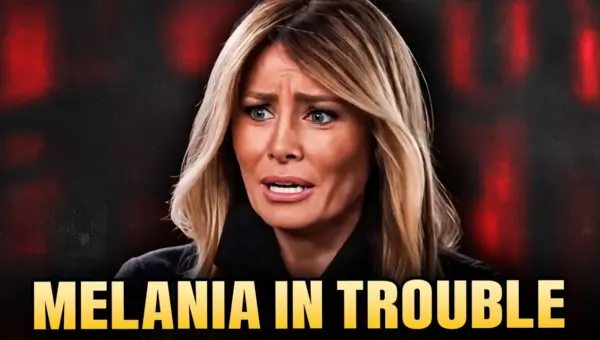
FBI Docs Contradict Melania’s Epstein Introduction Claims
Newly surfaced FBI documents challenge Melania Trump's recent claims about not being introduced to Donald Trump by Jeffrey Epstein. Witness testimony suggests Epstein facilitated the introduction, contradicting Melania's public statements and raising questions about her associations and those of figures like Paulo Zampoli.
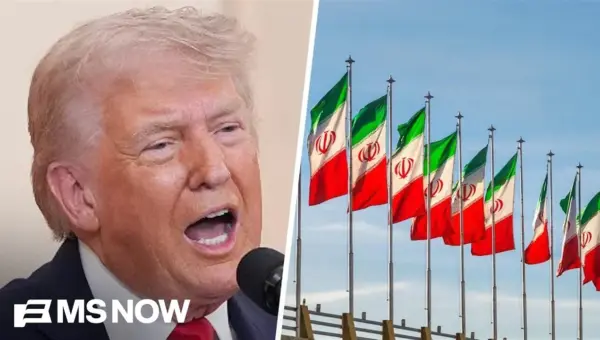
Iran War Disliked, But Public Outrage Muted: Analysts Weigh In
Despite widespread disapproval of the Iran war, public protests remain muted in the US. Analysts cite fear of reprisal, the prolonged nature of anti-war movements, and America's energy independence as key factors. The conflict's economic impact and the lack of clear objectives continue to fuel public skepticism, though widespread suffering is not yet felt domestically.


Trump’s Blockade Fails, Allies Shun Mission: A Pattern?
A reported failure of Donald Trump's blockade of the Strait of Hormuz, with ships passing through unimpeded, raises questions about policy effectiveness. This incident, coupled with allies' reluctance to join the mission, suggests a pattern of unintended consequences and strained international relations.