Middle East on Edge: Iranian Drone Buzzes US Carrier Amid Escalating Tensions and Covert Operations
The Middle East is teetering on the brink of significant conflict following an Iranian drone's provocative surveillance of the USS Abraham Lincoln and a confirmed strike on an alleged Iranian nuclear site. These incidents, coupled with a massive US military buildup and covert operations, underscore rapidly escalating tensions. With diplomatic avenues appearing to fail, observers fear that military action could be imminent, signaling a dramatic turning point for the region.

Middle East on Edge: Iranian Drone Buzzes US Carrier Amid Escalating Tensions and Covert Operations
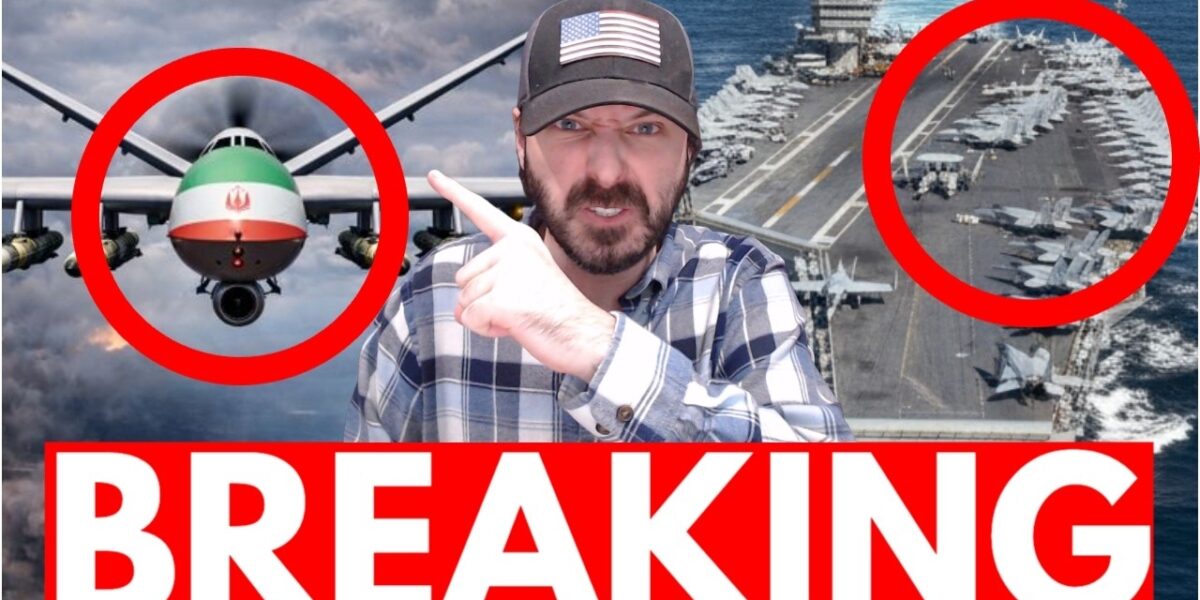
February 19th – The Middle East finds itself on a knife-edge, gripped by an alarming surge in military activities and covert actions that strongly suggest a region preparing for potential large-scale conflict. On February 19th, reports emerged of an Iranian drone actively “buzzing” and “hunting” the USS Abraham Lincoln aircraft carrier in the Arabian Sea, an incident that, unlike a similar encounter just a week prior, saw the drone remain unengaged. This provocative act is unfolding against a backdrop of confirmed strikes on an alleged Iranian nuclear site, a significant build-up of advanced US air defense systems across key regional allies, and the discrete deployment of US special operations assets.
The confluence of these events – from aerial provocations to suspected clandestine sabotage and overt military posturing – paints a stark picture of rapidly deteriorating relations between the United States and Iran. The rhetoric from Washington, notably strong warnings from former President Donald Trump, further underscores the gravity of the situation, indicating that diplomatic avenues may be nearing exhaustion. As military and intelligence assets flood the region, observers and analysts are increasingly pointing to the possibility of imminent military action, raising profound concerns about the stability of one of the world’s most critical geopolitical theaters.
Iranian Drone Encounters: A Dangerous Game of Cat and Mouse
The presence of an Iranian drone actively surveilling the USS Abraham Lincoln carrier strike group in the Arabian Sea, reportedly “hiding behind the mountains of Oman,” represents a significant escalation in a long-standing pattern of aerial reconnaissance and probing by Iranian forces. This incident, occurring on February 19th, is particularly notable because, unlike a previous encounter approximately a week prior, the drone was not engaged or shot down by US forces. In that earlier incident, an F-35 fighter jet was scrambled in response to an Iranian drone and successfully neutralized the threat by blowing it “out of the sky.” The current drone, however, remained airborne as of the reporting.
The decision not to engage the current drone raises critical questions about the US rules of engagement and the strategic calculations at play. From a military perspective, allowing an adversary’s drone to “buzz” or “hunt” a high-value asset like an aircraft carrier could be seen as a significant intelligence and security breach. Unmanned aerial vehicles (UAVs) can gather vital information on a carrier group’s composition, movement patterns, electronic signatures, and defensive postures. Such intelligence could be invaluable for future targeting or strategic planning by potential adversaries, enabling them to “know where it is” or potentially “launch attack drones at our carriers.”
The US Navy’s standard operating procedures typically dictate a robust response to any perceived threat or intelligence-gathering attempt against its capital ships, especially in international waters or airspace where freedom of navigation and the right to self-defense are paramount. The previous F-35 interception demonstrated a clear willingness to defend assets and deter such close-range surveillance. The current inaction, therefore, could be interpreted in several ways: perhaps the drone remained outside a specific engagement zone, or there was a deliberate decision at a higher command level to avoid further escalation at that precise moment, or the drone was operating in a manner that did not meet the immediate threshold for kinetic action. Regardless, the incident highlights the precarious nature of military interactions in the Persian Gulf and Arabian Sea, where miscalculations can have severe consequences. The sentiment expressed by some observers, “Any drone that gets close to our Navy ships must be engaged and must be destroyed without mercy,” reflects the perceived necessity of maintaining a strong deterrent posture.
For Iran, these drone operations serve multiple purposes. They are a means of asserting presence, testing US resolve, and gathering intelligence. They also contribute to a narrative of defiance and capability for domestic and regional audiences. However, such close encounters carry inherent risks of accidental or intentional engagement, which could quickly spiral into a broader conflict. The US military doctrine generally holds that any platform posing a threat to its naval assets must be dealt with decisively, emphasizing the need to prevent adversaries from gaining tactical advantages or demonstrating impunity. The repeated nature of these incidents underscores a calculated willingness by Iran to challenge US naval dominance in the region.
Mysterious Blasts and Nuclear Ambitions: Iran’s Covert Front
Adding another layer of complexity and tension to the unfolding crisis are reports of “mysterious explosions” across Iran, culminating in the confirmation that an alleged Iranian nuclear site in Parin has been hit. While Iranian authorities have predictably attributed these incidents to gas leaks or industrial accidents – a narrative widely dismissed by international observers as “literally nobody other than maybe a couple people in Iran believe that this is clearly covert clandestine black ops” – the nature and location of the blast strongly suggest a sophisticated act of sabotage. Specifically, the site in Parin is suspected by the International Atomic Energy Agency (IAEA) of being a nuclear test site, with its geography aligning with known blast chamber locations from satellite imagery and video analysis.
This incident is not isolated. Iran has a history of experiencing unexplained explosions and fires at sensitive military, industrial, and nuclear facilities. These events are often attributed to covert operations by foreign intelligence agencies, primarily Israel’s Mossad and, at times, with alleged US involvement. Past examples include the Stuxnet cyberattack on Iran’s Natanz uranium enrichment facility in the early 2010s, which significantly set back its nuclear program, and numerous other explosions at missile development sites, power plants, and chemical factories over the years. These “black ops,” as they are frequently termed, aim to disrupt Iran’s military and nuclear advancements without resorting to overt military confrontation, thereby maintaining a degree of plausible deniability.
The targeting of a suspected nuclear test site, particularly one potentially housing a “blast chamber,” sends a powerful message. It underscores international concerns about Iran’s nuclear weapons aspirations, despite Tehran’s consistent claims that its nuclear program is solely for peaceful purposes. The Joint Comprehensive Plan of Action (JCPOA), or Iran nuclear deal, aimed to curb these ambitions, but its effectiveness has been severely undermined since the US withdrawal in 2018. Since then, Iran has progressively increased its uranium enrichment levels and restricted international inspections, raising fears that it is moving closer to developing a nuclear weapon.
The lack of official claims of responsibility for the Parin explosion – neither the US nor Israel has publicly taken credit – is typical of such covert operations. However, the timing and target suggest a deliberate effort to “set the table for massive military action,” as one analyst described. It indicates a willingness by certain actors to take decisive, albeit clandestine, steps to counter perceived Iranian threats, potentially paving the way for more overt actions if these covert measures fail to achieve their strategic objectives. The ongoing mystery surrounding these blasts only serves to heighten the atmosphere of apprehension and suspicion in the region, adding a layer of uncertainty to an already volatile situation and fueling speculation about the true perpetrators and their ultimate objectives.
Trump’s Warning: “Bad Things Will Happen”
Against this backdrop of escalating military and covert activities, the rhetoric from Washington has grown increasingly stark. Former President Donald Trump’s comments at what was referred to as the “Board of Peace summit” (likely referring to a major international forum such as the Munich Security Conference, where he frequently addressed global leaders) delivered a chilling warning to Iran. “Now is the time for Iran to join us on a path that will complete what we’re doing,” Trump stated. “And if they join us, that’ll be great. If they don’t join us, that’ll be great, too. But it’ll be a very different path. They cannot continue to threaten the stability of the entire region. And they must make a deal or if that doesn’t happen, I maybe can understand if it doesn’t happen, it doesn’t happen. But bad things will happen if it doesn’t with the commitments announced today.”
This statement, delivered with characteristic bluntness, was widely interpreted as a direct threat of “massive military action” should diplomatic efforts fail. Trump’s administration had previously pursued a “maximum pressure” campaign against Iran, withdrawing from the JCPOA in 2018 and reimposing crippling sanctions. This policy was aimed at forcing Iran back to the negotiating table to agree on a more comprehensive deal that would address its ballistic missile program and regional proxy activities, in addition to its nuclear ambitions. The phrase “bad things will happen” in this context serves as a clear indication of a military option being considered.
The “bad things will happen” warning, coupled with the ongoing military build-up and covert operations, suggests a deepening conviction within certain US policy circles that peaceful resolutions are increasingly out of reach. The sentiment expressed, that “all signs point to negotiations failing and military action being the last resort,” reflects a growing frustration with Iran’s refusal to capitulate to US demands or significantly alter its regional behavior. The implication is clear: if economic sanctions and clandestine efforts do not yield the desired results, the next step on the escalatory ladder is direct military intervention.
Such rhetoric carries significant weight, especially when backed by observable military deployments. It serves as both a public warning to Iran and a signal to regional allies and adversaries about US resolve. However, it also carries the risk of painting the US into a corner, limiting diplomatic off-ramps and potentially accelerating a confrontation that many in the international community would prefer to avoid. The history of US-Iran relations is replete with moments of high tension and near-misses, but the current convergence of factors suggests a particularly volatile period, where the failure of diplomacy could have immediate and severe repercussions.
Fortress Middle East: US Air Defense Buildup
The most tangible evidence of the region’s heightened state of alert comes in the form of a substantial deployment of advanced US air defense systems. According to reports from Fetux news, the Pentagon has positioned THAAD (Terminal High Altitude Area Defense) and Patriot air defense batteries at approximately 20 bases across vital US allies: Jordan, Kuwait, Bahrain, Saudi Arabia, and Qatar. This extensive deployment of two of the world’s most sophisticated missile defense systems is a clear indicator of preparations for potential conflict.
THAAD is specifically designed to intercept and destroy short, medium, and intermediate-range ballistic missiles in their terminal phase (descent). Its high-altitude capability makes it exceptionally effective against sophisticated ballistic missile threats, a primary concern given Iran’s extensive arsenal of such weapons. The Patriot system, while also capable of intercepting ballistic missiles, is more versatile, able to engage cruise missiles, aircraft, and other aerial threats at lower altitudes. The combined deployment of these systems provides a multi-layered defense shield, designed to protect US forces and allied assets from a comprehensive range of Iranian aerial threats. The statement, “If they fire their ballistic missiles at the US, we will be locked, cocked, and ready to rock with THAAD and Patriot batteries ready to shoot those missiles down,” encapsulates the readiness and defensive posture.
The strategic locations of these deployments – across the Gulf states and Jordan – form a protective arc around key US interests and regional partners, all of whom are within range of Iranian missiles. This move is not merely defensive; it sends a strong deterrent message to Iran, signaling that any offensive missile launch would face a formidable defensive response. The scale of the deployment – 20 bases – is unprecedented in recent times and strongly suggests that the US is preparing for the possibility of a widespread missile barrage should hostilities erupt.
Furthermore, the reports indicate that US forces have also been “positioned at strategic points on the Iran-Turkmenistan border and in Armenia.” This is a particularly intriguing and potentially significant development. Deploying conventional forces to these areas would be highly unusual, suggesting that these “US forces” might refer to special operations troops, Tier One operators, or CIA assets. Such deployments would typically be for intelligence gathering, reconnaissance, or to facilitate covert actions, potentially disrupting Iranian supply lines, monitoring military movements, or even preparing for direct action operations. The presence in Armenia, a nation traditionally aligned with Russia and bordering Iran, is especially noteworthy and could signal a broadening of the potential operational theater or intelligence gathering efforts beyond the immediate Gulf region.
The consensus among military analysts is clear: “you don’t move this much air defense unless you plan on using it.” This massive military build-up, both overt and covert, speaks volumes about the perceived threat level and the seriousness with which the US and its allies are approaching the current standoff with Iran, indicating a profound shift in strategic readiness.
Covert Operations and Intelligence Gathering: The Unseen Hand
Beyond the visible deployments, a significant portion of the current escalation is playing out in the shadows, characterized by intense intelligence gathering and the movement of highly specialized assets. A key indicator of this covert activity was the touchdown of an unmarked US Special Operations Command C-32B aircraft in Israel on February 19th. Operating under the call sign RCH 616, this modified Boeing 757 is known for its use in “discrete contingency missions.” The C-32B fleet is typically associated with high-level military and government officials, as well as special operations forces, for rapid deployment to sensitive locations. The unknown manifest and passengers suggest a mission of critical importance, likely involving top-tier operators or crucial equipment for impending operations, further underscoring that “something big is coming.”
Simultaneously, the skies above the Persian Gulf and off the coast of Iran are buzzing with US intelligence, surveillance, and reconnaissance (ISR) aircraft. A P-8 Poseidon spy plane, a formidable maritime patrol and reconnaissance aircraft, was reported to be in the air off the coast of Iran. The P-8 is equipped with advanced signals intelligence (SIGINT) capabilities, allowing it to “soak up all the information” from Iranian communications and radar emissions. It is also a highly capable sub-hunter, indicating concerns about potential Iranian naval activities, including submarine movements in the strategically vital Strait of Hormuz and the wider Gulf.
Complementing the P-8, an American Triton drone, a high-altitude, long-endurance (HALE) unmanned aerial vehicle, took off from the UAE and flew a reconnaissance route up the Gulf, past Bahrain, and into Saudi Arabia. The Triton is specifically designed for persistent maritime surveillance and intelligence gathering over vast areas, capable of providing real-time intelligence on surface vessels, coastal activities, and electronic emissions. Both the P-8 and Triton are instrumental in “soaking up all the Iranian information they can, figuring out where the Iranians are, and then using that information to build a battle map, build battle plans.” This comprehensive intelligence picture is crucial for any potential military operation, allowing for precision targeting, risk mitigation, and strategic advantage.
The continuous presence of these advanced ISR assets underscores the meticulous preparation for any eventuality. In modern warfare, intelligence superiority is often the decisive factor, and the US appears to be leaving no stone unturned in its efforts to understand and counter Iranian capabilities and intentions. The combination of overt military posturing, covert operations, and relentless intelligence gathering paints a picture of a carefully orchestrated strategy designed to exert maximum pressure and prepare for potential conflict, operating on multiple fronts simultaneously to gain a decisive advantage.
The Precipice of Conflict: What Lies Ahead?
The convergence of these events – a direct aerial provocation against a US aircraft carrier, the confirmed sabotage of an alleged Iranian nuclear site, explicit warnings of “bad things” from a former US President, a massive regional deployment of advanced air defense systems, and highly suggestive special operations movements and intense intelligence gathering – indicates that the Middle East is teetering on the brink of significant conflict. The situation, described as “very hot” and “very serious,” suggests that the traditional avenues of diplomacy and de-escalation may be failing, leading to a conclusion that “war could be imminent.”
The implications of an actual military confrontation between the US and Iran are profound, not only for the two nations but for the entire global community. Such a conflict could destabilize global oil markets, trigger a humanitarian crisis, and draw in various regional actors, including Israel, Saudi Arabia, and other Gulf states, each with their own security interests and alliances. The potential for a wider regional war, with unpredictable consequences, is a grave concern that policymakers worldwide are undoubtedly monitoring with extreme vigilance.
While the immediate trigger for any potential conflict remains unclear, the current trajectory suggests a deliberate and calculated build-up of pressure. The strategy appears to be multi-faceted: weakening Iran’s capabilities through covert means, deterring its aggression through overwhelming military presence, and preparing for direct action if all other options are exhausted. The question is no longer if tensions are high, but whether a threshold will be crossed that makes military engagement unavoidable, transforming a prolonged standoff into active hostilities.
As the world watches, the critical challenge for policymakers will be to navigate this treacherous landscape, seeking to de-escalate without appearing weak, and to deter without inadvertently triggering the very conflict they seek to avoid. The events of February 19th serve as a stark reminder of how close the region may be to a dramatic and potentially devastating turning point, with all signs pointing to a future where military action, once a distant threat, now looms as a distinct and unsettling possibility, demanding urgent attention and careful consideration from all international stakeholders.
Source: Iran Aircraft BUZZES U.S. Navy Carrier – Secret Plane RUSHING In (YouTube)

Related Articles


Greenland’s Leader: Trump’s Threats Make Citizens Unsafe
Greenland's Prime Minister revealed that citizens felt unsafe and angry after then-President Trump's 'threats' to buy the island. The comments highlight the human impact of geopolitical discussions on national sovereignty.

Iran Shuns Trump’s Deal Demands, Escalating Global Tensions
Iran has rejected President Trump's demands in ongoing negotiations, leading to heightened global tensions. Pakistan has stepped in as a mediator amid fears of escalating conflict. Meanwhile, the White House press briefings presented mixed messages on the economy and policy, facing scrutiny over strategy and communication.


GOP Senators Show Weariness With Trump’s Iran Stance
Republican lawmakers are showing signs of frustration with President Trump's prolonged engagement in Iran. Diplomatic talks continue, with a potential ceasefire extension being considered, while the U.S. bolsters its military presence. Meanwhile, domestic economic pressures and battles with the Federal Reserve chair add to the political complexities.