Missing Epstein Files: Trump Allegations Spark Cover-Up Fears
Newly released Epstein files reveal that key FBI interview records concerning allegations against Donald Trump are missing, sparking fears of a deliberate cover-up. Congressman Roana is demanding transparency and exploring legal and legislative avenues to recover the documents, while also criticizing the political circus surrounding the depositions of figures like Hillary Clinton.

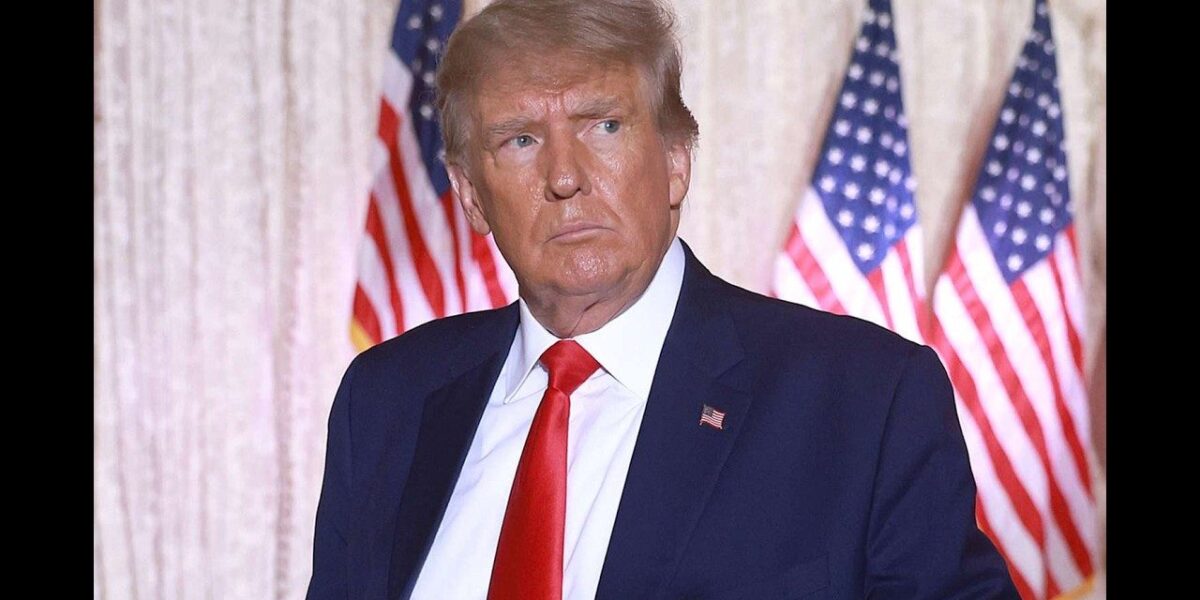
Missing Epstein Files Ignite Controversy Amid Trump Allegations
In a startling development surrounding the ongoing Epstein files release, a significant portion of FBI interview records pertaining to allegations against former President Donald Trump has reportedly gone missing. This has fueled concerns of a deliberate cover-up and sparked renewed calls for transparency and accountability.
The controversy centers on four FBI interviews with a woman who has accused Trump of sexual abuse during her minor years. While one interview has been made public, three crucial records remain unaccounted for, raising serious questions about the Department of Justice’s (DOJ) handling of the sensitive documents.
Discovery of Missing Documents Triggers Legal and Political Scrutiny
The existence of the missing interview memoranda was brought to light by journalists Roger Shelonburgger and NPR, who discovered a document indicating that these records were produced during the discovery phase for Ghislaine Maxwell’s trial. However, they have not been publicly released.
Congressman Roana, a vocal advocate for the Epstein files’ transparency, expressed deep concern over this development. “This is the most disturbing development since Thomas Massie and I started the pursuit of the Epstein files issue,” Roana stated, emphasizing the gravity of the situation when allegations involve a former U.S. President.
“The question is why the coverup, why what’s in those three FBI interviews, what did this woman allegedly say about Donald Trump and why do we not have those documents?”
Calls for Action: Public Pressure, Legal Recourse, and Legislative Efforts
The congressman outlined a multi-pronged approach to retrieve the missing documents. “First of all, they’re in clear violation of the law,” he asserted, pointing to public pressure as a proven catalyst for file releases in the past.
If legal avenues fail, Roana suggested that lawsuits could be filed to compel the production of the documents. He also raised concerns about potential tampering or redaction of the records, noting that their existence in multiple places, including Maxwell’s discovery, could help verify their authenticity.
Legislative action is also on the table. Congressman Roana indicated that efforts are underway to introduce an “Epstein Transparency Act 2.0,” building upon previous legislation spearheaded by himself and Thomas Massie.
This act aims to force the release of not only the missing Trump-related documents but also survivor statements to the FBI more broadly. A recent CNN analysis revealed that approximately 90 survivor statements are unaccounted for, highlighting a systemic issue with document retention and release within the FBI.
Special Master Proposal: A Path to Greater Transparency?
Echoing earlier proposals, the congressman revisited the idea of appointing a special master to oversee the entire Epstein case. This approach, previously championed by Roana and Massie, would involve an independent entity reviewing the documents and determining what can be released. “That is the ideal solution,” Roana stated, arguing that such a process would foster greater public trust and protect survivors, unlike the current piecemeal approach that can lead to compromised information and public speculation.
Broader Implications: The Clinton Deposition and Precedent Setting
The discussion also touched upon the recent deposition of Hillary Clinton, which Congressman Roana characterized as a politically motivated spectacle. He criticized the Republican efforts to create a media circus around the deposition, arguing that Clinton had little direct connection to Epstein’s activities. “To drag Hillary Clinton into this was totally political,” he remarked, contrasting it with his belief that Bill Clinton should answer questions regarding his relationship with Epstein.
However, Roana acknowledged that the depositions of the Clintons, regardless of their political motivations, have set a precedent. “Bill Clinton and Hillary Clinton have set a new precedent and that is that former presidents and families testify,” he explained. This, he suggested, could pave the way for future subpoenas, including potentially one for Donald Trump once he is no longer in office.
Accountability Beyond the Clintons: Lutnick, Kushner, and Trump’s Orbit
The conversation extended to other prominent figures linked to Epstein, including Howard Lutnick, the CEO of Cantor Fitzgerald, who has been photographed on Epstein’s island. Roana criticized Lutnick’s continued role as America’s ambassador for business, calling for his resignation and appearance before Congress. He also highlighted Kevin Warsh, a former Fed governor and Trump’s pick for Fed chair, and Elon Musk, whose name appears in the files, as individuals who warrant scrutiny.
Roana expressed frustration with the apparent reluctance of some Republican colleagues to pursue subpoenas against individuals connected to the Trump administration, suggesting a fear of offending the former president. “They may say that publicly, but when it comes to the vote of subpoenaing, they are very very hesitant to do anything that’s going to offend Donald Trump,” he observed. He noted that even some MAGA voters are growing disillusioned with figures like Pam Bondi and Cash Patel, viewing them as part of the “swamp” Trump promised to drain.
The Path Forward: Select Committee, Legal Action, and International Contrast
Looking ahead, Congressman Roana affirmed his commitment to continuing the pursuit of accountability. Plans include calling for a select committee to hold Epstein hearings and pursuing legal avenues in the Southern District of New York to obtain the remaining files. He emphasized that the story is far from over, with new revelations emerging daily as individuals scrutinize the released documents.
The congressman also drew a stark contrast between the lack of accountability within the U.S. Government and the actions taken internationally. He pointed to resignations and prosecutions of high-profile figures in Europe and elsewhere, questioning why similar consequences have not materialized in the United States, even for individuals with documented ties to Epstein.
“The irony is that there were two American Congress people, Thomas Massie and I, who got these files released… And yet in the United States of America, even though there were members of Congress, American members of Congress who started this, we have no accountability,” Roana lamented.
He concluded by stressing the urgency of the situation, calling the hidden files and the alleged cover-up surrounding allegations against a former president a “major shift.” Roana urged continued public pressure and advocacy for justice for the survivors, framing the ongoing efforts as a defining moment for the nation.
Source: BOMBSHELL: Hidden Epstein files IMPLICATE TRUMP (YouTube)

Related Articles

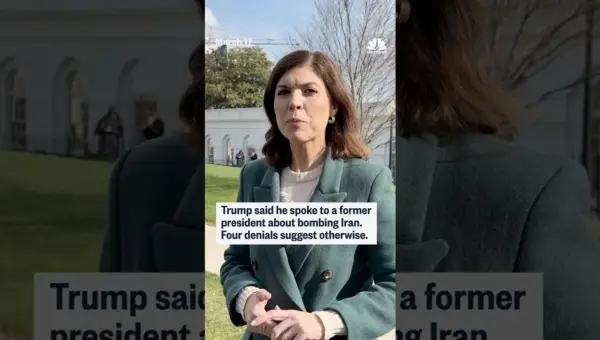
Trump Claims Presidential Call; Four Denials Emerge
Former President Donald Trump claimed he spoke with a past president who regretted not taking a certain action, implying approval of his own policies. However, aides for George W. Bush, Bill Clinton, Barack Obama, and sources close to Joe Biden have all denied any such conversations occurred. Trump has remained evasive when asked to identify the individual.
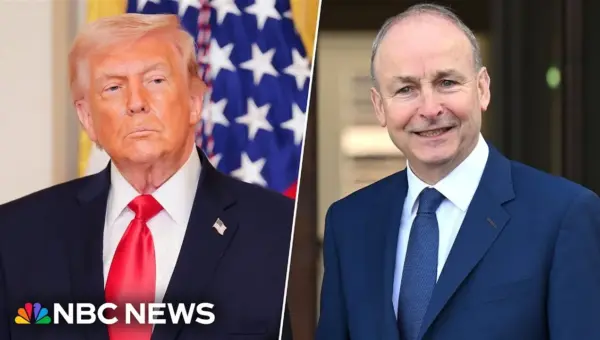
Trump Welcomes Irish Leader, Discusses Trade, Iran Tensions
President Trump welcomed Ireland's Taoiseach to the White House, discussing trade and the strong historical ties between the nations. The meeting also covered President Trump's views on Iran's military capabilities, his criticisms of NATO's support for U.S. initiatives, and upcoming foreign policy engagements.
Trump Reveals Congressman’s Terminal Diagnosis Amid Health Plea
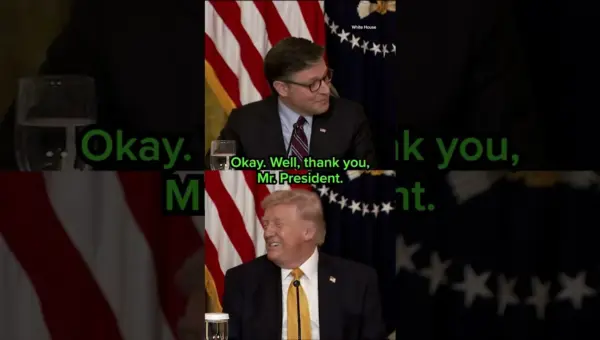
Former President Donald Trump revealed that U.S. Representative Neal Dunn has a "terminal" heart condition. Trump stated he and Speaker Mike Johnson urged Dunn to stay in Congress despite the diagnosis. Dunn had previously announced he would not seek re-election, without specifying his health issues.