Beyond the Shadows: India’s Naval Action Threatens Sanctioned Oil Trade, Sparks Global Repercussions
India's recent crackdown on the 'shadow fleet' of oil tankers, which illicitly transport crude for sanctioned nations, signals a monumental shift in its foreign policy and global maritime enforcement. This move, which could dismantle Russia's primary source of income and reshape energy dynamics for China, portends a significant geopolitical realignment and a potential domino effect of international enforcement against illicit trade.

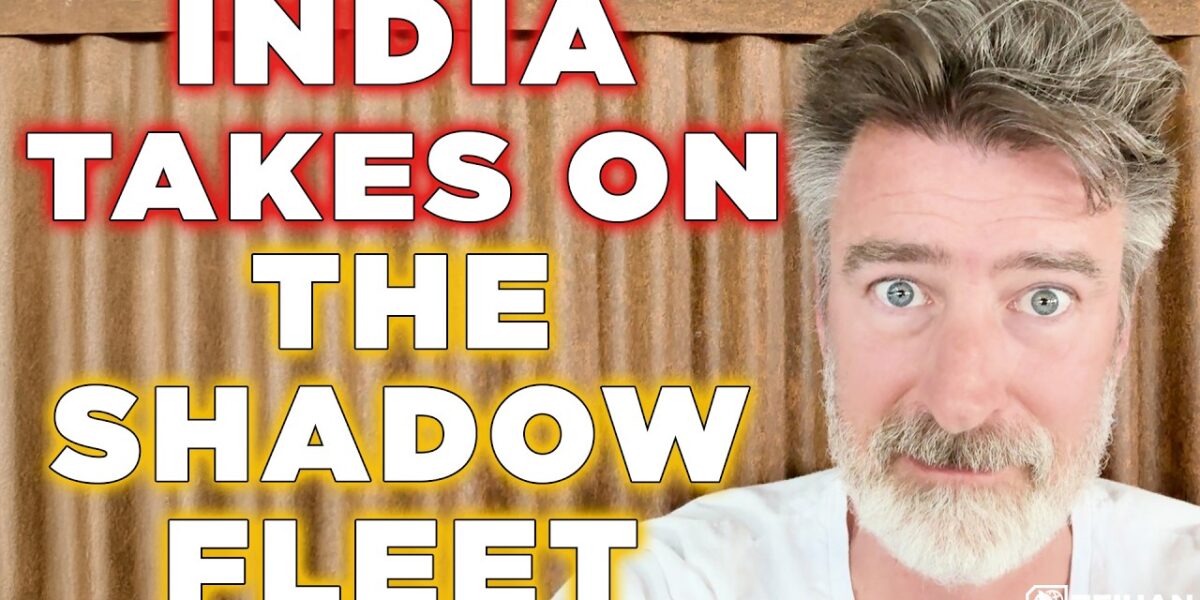
Beyond the Shadows: India’s Naval Action Threatens Sanctioned Oil Trade, Sparks Global Repercussions
A recent, albeit initially clandestine, series of naval operations by India against the illicit ‘shadow fleet’ of oil tankers has sent ripples through international geopolitical and economic circles. What began with a deleted social media post from the Indian Navy has been confirmed by reputable sources, signaling a potentially monumental shift in India’s foreign policy and global maritime enforcement. This crackdown, targeting vessels that covertly transport crude oil for sanctioned nations, could fundamentally alter the economics of illicit trade, reshape global alliances, and profoundly impact the ongoing conflict in Ukraine, according to geopolitical strategist Peter Zeihan.
The implications are vast, touching upon Russia’s war funding, China’s energy security, and a potential realignment of power dynamics in South Asia. India, long a significant beneficiary of the discounted crude offered by these shadow operations, has seemingly pivoted from a passive observer to an active enforcer, a move that Zeihan suggests could trigger a cascade of similar actions from other nations.
The Raid Unveiled: India Targets Illicit Tankers
The initial reports emerged from a now-deleted post on the Indian Navy’s official Twitter account, detailing raids and the capture of ‘shadow vessels’ within India’s Exclusive Economic Zone (EEZ). This information, which surfaced around February 17th, indicated that operations had commenced nearly two weeks prior, on February 5th. While the swift deletion of the original post suggested a desire for discretion, the Wall Street Journal later corroborated the reports, confirming the Indian Navy’s proactive stance against these clandestine maritime activities.
The ‘shadow fleet’ itself is a sprawling network, estimated to comprise approximately 1,000 oil tankers. These vessels are primarily engaged in circumventing international sanctions by transporting crude oil for nations such as Venezuela, Iran, and most notably, Russia. The ships seized by the Indian Navy are believed to be linked to a combination of these states, with strong indications of Russian involvement. This marks a significant escalation, as the United States had previously been the primary actor in targeting segments of this fleet, particularly those associated with Venezuelan crude, capturing around eight vessels in the past.
The concept of an Exclusive Economic Zone (EEZ) is crucial here. An EEZ extends 200 nautical miles from a country’s coastline, granting the coastal state sovereign rights for exploring and exploiting, conserving, and managing natural resources, both living and non-living, of the waters, seabed, and subsoil. While it allows for freedom of navigation and overflight, it also empowers the coastal state to enforce its laws and regulations regarding the exploitation of resources and other economic activities. India’s decision to act within its EEZ underscores a sovereign assertion of its right to police its waters against activities it deems illicit, even if those activities serve to benefit its own economy indirectly.
A Global Challenge: The Shadow Fleet’s Modus Operandi
The shadow fleet’s operational model is a sophisticated and often dangerous exercise in evading international scrutiny and sanctions. These operations typically begin with individuals or entities affiliated with sanctioned countries acquiring decommissioned oil tankers, often older vessels that may not meet contemporary safety and environmental standards. These ships are then outfitted with fake insurance policies and fly ‘flags of convenience’ from jurisdictions with lax oversight, obscuring their true ownership and origin.
Once prepared, these vessels embark on their clandestine journeys to pick up crude oil from sanctioned nations. To further muddy the waters and break the chain of custody, a critical step in their process involves ship-to-ship (STS) transfers on the high seas. This maneuver involves two vessels mooring alongside each other, often in remote or unregulated waters, to transfer crude oil from one tanker to another. STS transfers are inherently risky, posing significant environmental hazards due to the potential for spills, especially with older, less maintained vessels and crews operating outside standard safety protocols. For the shadow fleet, however, the primary concern is not safety but anonymity and the obfuscation of the oil’s origin.
This transfer process can occur multiple times, with crude potentially being mixed from various sources or transferred between several shadow vessels. Eventually, the oil reaches a ‘disgracing country,’ typically India or China, where it is offloaded. The receiving nations often claim ignorance regarding the oil’s true origin, operating under a ‘convenient fiction’ that allows them to benefit from discounted crude without directly acknowledging their role in circumventing sanctions. This long-standing arrangement has been a cornerstone of the shadow fleet’s success, enabling sanctioned oil to reach global markets.
The financial incentives for participating in this illicit trade are substantial. Sanctioned countries, desperate to sell their oil, offer significant discounts, making it attractive for buyers like India and China. The operators of the shadow fleet, in turn, profit from the high-risk, high-reward nature of their business. However, India’s recent actions directly challenge this established system, introducing a new layer of risk and potentially dismantling the economic viability of these operations by confiscating vessels and their valuable cargo.
India’s Pivotal Shift: From Beneficiary to Enforcer
India’s decision to actively target the shadow fleet is particularly striking given its historical and economic ties. For years, India has been the second-largest beneficiary of discounted crude transported by these vessels, especially since the onset of the Ukraine war in early 2022. This access to cheaper energy has been crucial for India’s rapidly growing economy, helping to mitigate inflationary pressures and support industrial expansion.
Historically, India has maintained a complex and often non-aligned foreign policy, frequently leaning towards Russia due to its long-standing strategic partnership with the Soviet Union during the Cold War. This legacy has fostered a pro-Russian sentiment in certain Indian policy circles, even as modern Russia bears little resemblance to its Soviet predecessor. The current crackdown on Russian-linked shadow vessels, therefore, represents a significant ideological and strategic departure from this entrenched alignment.
By confiscating ships engaged in illicit STS transfers within its EEZ, India is not merely enforcing maritime law; it is directly challenging the ‘convenient fiction’ that has allowed it to benefit from sanctioned oil. This policy reversal carries profound economic and political implications for India. Economically, it signifies a willingness to forgo the substantial discounts offered by sanctioned crude, potentially impacting its energy costs and trade balances. Politically, it signals a recalibration of its geopolitical allegiances, moving away from its traditional pro-Russian stance and potentially aligning more closely with Western efforts to enforce sanctions.
The bold nature of this move, particularly against Russian vessels, is highly notable. It suggests a calculated decision by the Indian government to prioritize other strategic objectives over the immediate economic benefits of discounted oil and its historical ties to Russia. This shift could be driven by a confluence of factors, including growing pressure from international partners, a desire to enhance its standing as a responsible global power, or a strategic reassessment of its long-term interests in a rapidly changing world order.
The Domino Effect: A Coordinated Crackdown?
The potential for India’s actions to trigger a broader international crackdown on the shadow fleet is one of the most significant implications of this development. As Peter Zeihan posits, once a major non-Western power like India joins the United States in targeting these illicit operations, it could be a matter of days or weeks before a multitude of other nations follow suit. Many countries, particularly in Europe, harbor strong reservations about the regimes in Venezuela, Iran, and Russia, and have been keen to enforce sanctions more rigorously.
The entry of India into this enforcement arena could provide the necessary impetus for a coordinated global effort. Historically, the United States, as the world’s preeminent naval superpower, has demonstrated its capability to interdict shadow vessels on the high seas, as evidenced by its capture of eight Venezuelan-linked tankers. However, a multilateral approach involving several maritime powers would exponentially increase the pressure on the shadow fleet, making its operations far riskier and less economically viable.
Such a coordinated crackdown could rapidly dismantle the shadow fleet’s capacity. With an estimated 4 to 5 million barrels per day (bpd) currently transported through these illicit channels, the removal of this supply from the global market would have significant economic and political ramifications. A sudden reduction in crude supply could lead to price volatility, impacting energy-importing nations and potentially exacerbating existing inflationary pressures. Conversely, it would also tighten the noose around sanctioned regimes, limiting their ability to fund their operations and exert influence on the international stage.
The economic impact would extend beyond crude prices. The entire infrastructure supporting the shadow fleet – from the ship owners and captains to the insurers and logistics providers – would face severe disruptions. The loss of capital investment through vessel confiscations would make the illicit trade increasingly unattractive, potentially forcing many operators to abandon their activities. This domino effect, if realized, could fundamentally alter the landscape of global energy trade and sanctions enforcement within a remarkably short timeframe.
Russia’s Economic Lifeline Under Threat
Perhaps no country stands to lose more from a widespread crackdown on the shadow fleet than Russia. Since the imposition of Western sanctions following its full-scale invasion of Ukraine, Russia has become heavily reliant on these illicit channels to export between 3 and 4 million barrels of crude oil per day. This revenue stream is the single largest source of income for the Russian state, directly funding its war efforts and sustaining its economy under unprecedented international pressure.
The potential loss of this primary income source would have devastating consequences for Russia, particularly concerning the ongoing conflict in Ukraine. While China has been a crucial supplier of goods and technology to Russia, this support is fundamentally transactional – Russia must pay for what it receives. If Russia’s ability to generate revenue from oil exports is severely curtailed, its capacity to procure essential military hardware, from drones to advanced communication systems, would diminish dramatically.
Evidence from the battlefield already suggests a direct correlation between Russia’s logistical and financial capabilities and its operational effectiveness. Recent reports indicate that when Russian forces experience disruptions in communication equipment, their coherence on the front lines falters, leading to a loss of strategic momentum and territorial gains. A systemic financial shock, resulting from the collapse of its shadow oil trade, would be far more profound, potentially forcing Russia into a defensive posture and accelerating its losses on the battlefield.
Beyond the immediate military implications, the long-term economic stability of Russia would be severely compromised. Without a reliable mechanism to export its vast oil reserves, Russia’s fiscal health would deteriorate, leading to potential internal instability and further isolation on the global stage. India’s actions, therefore, directly threaten the very foundation of Russia’s resilience in the face of Western sanctions.
Geopolitical Reshaping: US-India Alignment and Beyond
The Indian Navy’s aggressive stance against the shadow fleet also points to a significant realignment in international relations, particularly between the United States and India. For decades, the US has viewed India as a crucial strategic partner in the Indo-Pacific, especially in the context of balancing China’s growing influence. However, India’s historical ties to Russia and its pragmatic approach to energy procurement have often complicated this relationship.
According to Zeihan’s analysis, this development follows a reported summit involving former US President Donald Trump and Indian Prime Minister Narendra Modi approximately three weeks prior to the raids. Zeihan speculates that during this meeting, a potential deal was discussed: the US would significantly reduce tariffs on Indian products, allowing greater market access, in exchange for India ceasing its reliance on Russian crude. While Indian officials publicly acknowledged the tariff reduction, they remained silent on any commitment regarding Russian oil – until now. The timing of India’s naval operations, less than two weeks after this speculated summit, suggests that a covert agreement might have indeed been reached, with India now making its move.
This potential convergence of US and Indian strategic interests on Russia carries immense implications for South Asia. A strong US-India alignment, particularly on matters of strategic importance, could fundamentally alter the regional power balance. It might lead to a re-evaluation of US relations with Pakistan, historically a key ally, and could further diminish Russia’s already waning influence in the region. If India truly purges Russian influence from its strategic calculus, it would usher in a fundamentally new era of South Asian geopolitics.
Furthermore, India’s actions against Russian crude are unlikely to be confined to its own consumption. If India is willing to stop receiving Russian oil, it is highly probable that it would also seek to prevent its passage to China, which remains the largest importer of Russian crude transported via the shadow fleet. Such a move would effectively gouge the entirety of the 3 to 4 million barrels per day from the Chinese economy. While China possesses significant strategic oil reserves and diverse supply chains, a sudden and substantial reduction in discounted crude would undoubtedly place immense strain on its energy security and economic stability, forcing Beijing to seek alternative, potentially more expensive, sources.
The Road Ahead: A New Global Order?
While many of these potential outcomes are still a few steps removed from the confirmed facts, the initial actions by the Indian Navy represent a critical inflection point. The removal of such a significant volume of crude oil from the global system, especially from key economies like Russia and potentially China, would inevitably send shockwaves across the entire international energy market and geopolitical landscape. The magnitude of this shift could trigger a broad structural rearrangement of dynamics in Russia, Ukraine, India, and China, all occurring in rapid succession.
The ability of foreign policy teams in Washington and other capitals to manage such a complex and rapidly evolving situation will be severely tested. The current international environment is characterized by significant geopolitical flux, and the capacity for coordinated, decisive action will be paramount. However, if these trends continue to unfold as predicted, the world could be witnessing the single biggest shift in international politics in at least the last four years, with profound and lasting consequences for global trade, security, and alliances.
The coming months will reveal the full extent of India’s commitment to this new policy, the reactions from Moscow and Beijing, and the willingness of other nations to join a concerted effort to dismantle the shadow fleet. What is clear, however, is that India’s bold move has set in motion a chain of events that could redraw the global map, ushering in an era of unprecedented geopolitical recalibration.
Source: India Takes on the Shadow Fleet (Bonus Video) (YouTube)

Related Articles

China Backs US Blockade, Squeezing Iran’s Oil Lifeline
China's backing of a U.S. naval blockade is effectively cutting off Iran's oil exports. This move aims to pressure Iran into negotiations but carries significant political risks for the U.S. president, especially with high gas prices impacting voters.

US Actions Abroad Questioned: Rogue State Behavior Alleged
Harvard professor Stephen Walt argues the U.S. is acting like a "rogue state" due to impulsive foreign policy, questionable war planning, and a disregard for international norms. The conflict with Iran highlights limitations in American power, leading allies to question U.S. judgment and seek more stable global partners.
US-Iran Peace Talks Stall; Gap ‘Wider Than Strait of Hormuz’
Peace talks between the U.S. and Iran remain stalled, with a significant gap described as 'wider than the Strait of Hormuz.' Despite White House optimism about ending the conflict and lowering gas prices, public opinion shows weariness and concern over the war's economic toll. International diplomatic efforts continue, but major hurdles persist in resolving key issues.