Danish PM Calls Snap Election After Greenland Standoff
Danish Prime Minister Mette Frederiksen has called a snap election for March 24th, aiming to capitalize on a surge in popularity following her government's firm stance against former U.S. President Donald Trump's bid to purchase Greenland. The move is seen as a tactical play to leverage a "Greenland bounce" in public support, positioning the government as strong international actors.

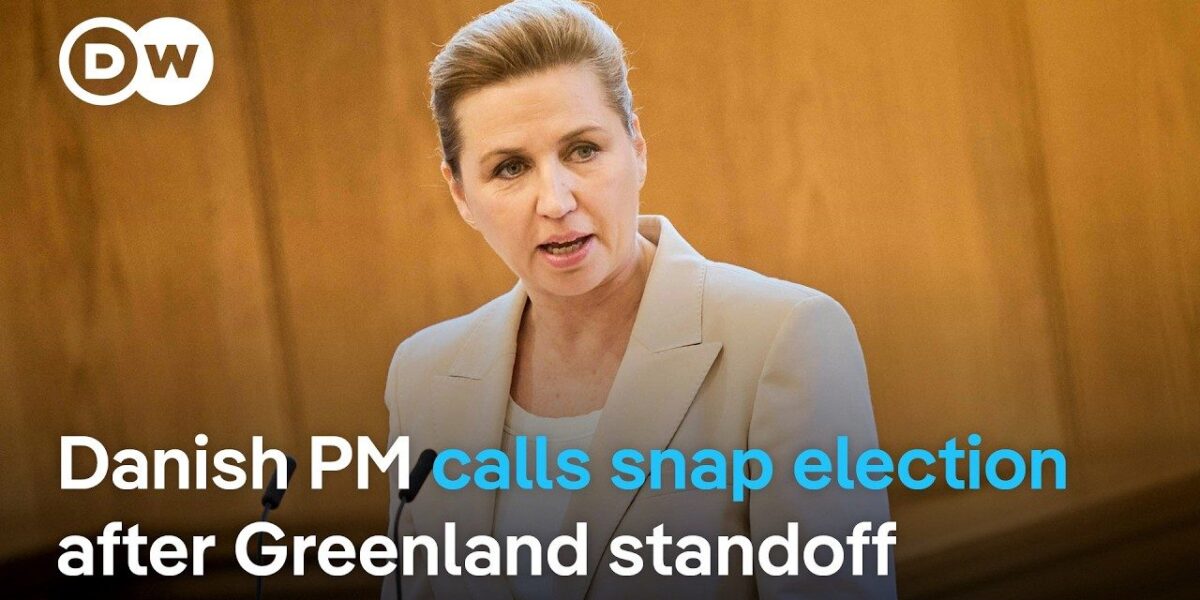
Danish Prime Minister Calls Early Election Amidst Greenland Crisis “Bounce”
Copenhagen, Denmark – Danish Prime Minister Mette Frederiksen has announced an early parliamentary election for March 24th, a strategic move designed to capitalize on a surge in public support following her government’s firm response to former U.S. President Donald Trump’s controversial proposal to purchase Greenland. The decision to seek a renewed mandate comes after a period of significant geopolitical tension, which analysts suggest has bolstered Frederiksen’s standing and provided a tactical advantage for the upcoming vote.
The Greenland Crisis: A Geopolitical Standoff
The unusual diplomatic situation unfolded in recent months when former President Trump publicly expressed interest in acquiring Greenland, a mineral-rich, self-governing territory that is part of the Kingdom of Denmark. Trump argued that Greenland’s strategic location between Canada and Northern Europe was vital for U.S. and NATO security interests, particularly in the context of competition with Russia and China. However, his overtures were met with strong resistance from the Danish government.
Prime Minister Frederiksen unequivocally rejected the notion, famously stating that such a proposal was “absurd” and would effectively amount to the “end of NATO,” a sentiment that resonated widely within Denmark and across Europe. This defiant stance against pressure from a close ally, the United States, is widely seen as the catalyst for the “Greenland bounce” in her government’s approval ratings.
“This will be an important election. Yes, it will also be a decisive election because in the next four years, we as Danes and we as Europeans will really have to stand on our own two feet. We must define our relationship with the United States. We must rearm ourselves to ensure peace on our continent. We must keep Europe together. And as everyone knows, the conflict over Greenland, for example, is not over yet.”
Mette Frederiksen, Prime Minister of Denmark
Tactical Election Timing: Capitalizing on Support
Jakob Ibenborg, a journalist based in Copenhagen, explained the strategic rationale behind the snap election. “It’s clearly a tactical move,” Ibenborg stated. “Before the Greenland crisis, the Danish government was in crisis on its own, so was the prime minister. But the ratings have shot up dramatically after its handling of the Greenland crisis in terms of the US.”
Ibenborg elaborated that despite the election not being constitutionally due for another eight months, Frederiksen felt the timing was optimal. “She’s clearly felt that now was the time to make hay, if you will. This was the time when she could win, and the opinion polls seem to suggest that she may be right. So, this is all about tactics. It’s about using the win she got, or the government got, from the standoff with the US.”
The “Greenland Bounce” and U.S. Relations
The “Greenland bounce” refers to the significant increase in public support for Frederiksen’s Social Democrats following the handling of the Greenland situation. “It’s been a dramatic bounce, quite outstanding,” observed Ibenborg. “This was, in Danish terms, an outstandingly crazy crisis, if you will, so unexpected to be under so much pressure from what we consider our closest ally, the United States, and the United States president.”
Interestingly, it was the Danish Foreign Minister, not the Prime Minister, who was initially dispatched to Washington to manage the situation, a move attributed to Trump’s perceived personal animosity towards Frederiksen. However, the government’s coordinated response proved effective, bolstering their public image.
Lingering Uncertainty and Future Implications
Despite former President Trump’s apparent backing down from immediate threats, the Danish perspective, and indeed that of Greenland, suggests the issue is far from resolved. “No, is the short answer,” Ibenborg replied when asked if the Greenland situation was over. “I think everybody is expecting that anything could happen from the American side.” He cited a recent instance where a U.S. hospital ship’s offer to anchor in Greenland was politely declined by the Greenlandic government, indicating a continued wariness.
The prevailing sentiment in Denmark is that the government demonstrated crucial leadership during an unprecedented security crisis. “The feeling is that the government really did well,” Ibenborg noted. “We are a small country; we were up against the might of the United States. The feeling is that even if there were things they were not very happy about with the prime minister and the current coalition government before, this kind of supersedes that.” This successful navigation of what is considered the biggest security crisis since World War II has, for many voters, overshadowed previous policy disagreements.
Beyond Greenland: Domestic Agendas
While the Greenland crisis has provided a significant boost, the election campaign will also address other critical domestic issues. Prime Minister Frederiksen has indicated a potential push for a wealth tax, targeting the wealthiest 1% of the Danish population. This proposal aligns with her vision of maintaining Denmark’s egalitarian system, which she argues is fundamental to the nation’s strength and stability.
The wealth tax proposal is expected to be a point of contention, challenging more right-leaning and libertarian viewpoints that advocate for lower taxes and less government intervention. This domestic policy debate, coupled with the government’s demonstrated strength on the international stage, will shape the choices Danish voters face in the upcoming election.
Looking Ahead
The early election in Denmark presents a unique political juncture, where a leader is leveraging a national security triumph to seek a mandate for future governance. As the campaign unfolds, voters will weigh the government’s handling of the Greenland crisis and its implications for Denmark’s international standing against pressing domestic policy debates, particularly the proposed wealth tax. The outcome will not only determine the next government of Denmark but also signal the nation’s approach to its relationship with the United States and its role in an increasingly complex global security landscape.
Source: Danish Prime Minister Mette Frederiksen calls snap election after Greenland boost | DW News (YouTube)

Related Articles

Iran Shuns Trump’s Deal Demands, Escalating Global Tensions
Iran has rejected President Trump's demands in ongoing negotiations, leading to heightened global tensions. Pakistan has stepped in as a mediator amid fears of escalating conflict. Meanwhile, the White House press briefings presented mixed messages on the economy and policy, facing scrutiny over strategy and communication.

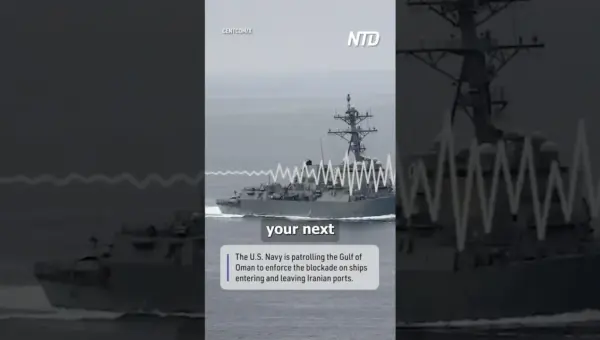
Navy Tightens Grip: US Enforces Strict Blockade on Iran
The US Navy has formally declared a blockade on Iranian ports, warning all vessels to turn back or face boarding and seizure. This significant move aims to exert economic and political pressure on Iran, with explicit threats of force for non-compliance.
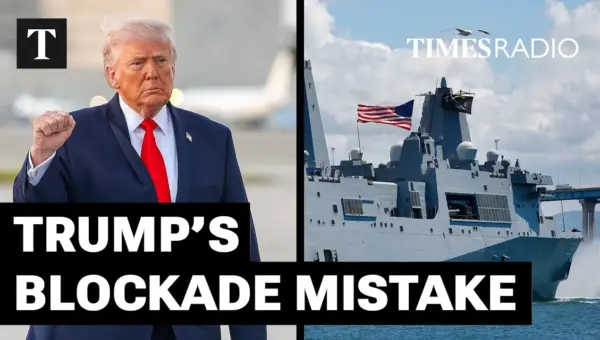
Iran Blockade Sparks War Concerns, Backfires on US, Expert Warns
The U.S. blockade on Iranian ports, aimed at crippling its economy, is sparking concerns of an "act of war" and may backfire, according to former diplomat Barbara Leaf. While the U.S. and Iran prepare for potential peace talks, hardline rhetoric and the blockade's global economic impact complicate diplomatic efforts. A key concern is a potential confrontation with China if U.S. forces intercept Chinese vessels.