Trump’s Tariff Turmoil and Epstein Shadow Deepen MAGA Mike Johnson’s Crisis as Midterms Loom
House Speaker Mike Johnson faces mounting pressure as former President Trump's tariff policies are challenged by the Supreme Court and the Epstein files cast a long shadow, exposing deep political vulnerabilities. This turmoil, coupled with Trump's declining popularity and human rights concerns, is fueling a progressive surge. Candidates like Shy Bothra advocate for a transformative vision, addressing systemic inequality, AI's impact, and global oligarchy to redefine American democracy beyond mere opposition to authoritarianism.

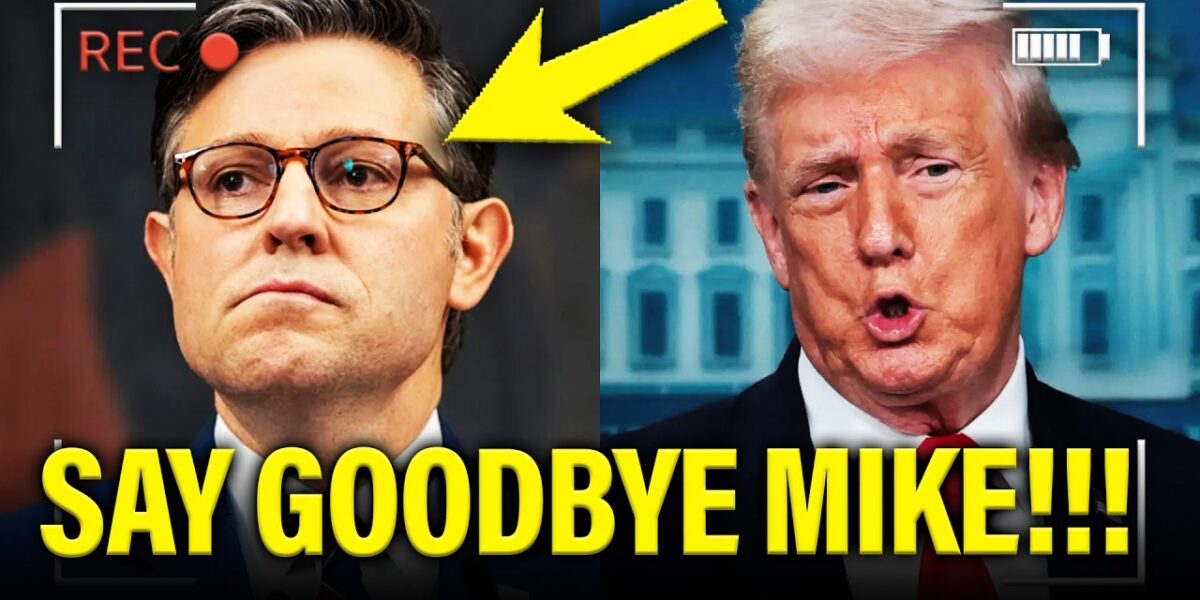
Trump’s Tariff Turmoil and Epstein Shadow Deepen MAGA Mike Johnson’s Crisis as Midterms Loom
The political landscape is fraught with tension as House Speaker Mike Johnson, often derisively labeled “MAGA Mike” and a “Trump sycophant,” faces intensifying pressure amidst a series of damaging developments for the Republican Party. With midterm elections approaching, a sense of panic is reportedly gripping MAGA leadership in both the House and Senate, fueled by a looming Supreme Court decision, the persistent shadow of the Epstein files, and a growing public discontent that threatens to unseat incumbents and reshape the American political future.
Critics contend that Johnson’s tenure as Speaker has been largely defined by his unwavering loyalty to former President Donald Trump, rather than an assertive defense of congressional prerogatives. This perception has led to accusations that he operates as a “speaker of the house in name only,” effectively ceding legislative authority to the executive branch in a manner reminiscent of a rubber-stamp parliament. As the political temperature rises, the confluence of legal setbacks for Trump and the deepening public scrutiny of his past associations are placing Johnson and his allies in an increasingly perilous position.
Speaker Johnson’s Precarious Position: A Crisis of Authority
House Speaker Mike Johnson finds himself at the epicenter of a political maelstrom, with his leadership under fire from various quarters. Described by some as the “worst speaker of the house in American history” and a mere “Trump sycophant,” Johnson’s perceived subservience to Donald Trump is seen as undermining the very foundations of congressional power. The core of this criticism lies in the constitutional division of powers, specifically Article I, Section 8, which explicitly grants Congress the power of taxation. This fundamental principle, designed to ensure legislative oversight and prevent executive overreach, appears to be at odds with Johnson’s public stance and actions.
When the Supreme Court struck down former President Trump’s sweeping tariff policies, Johnson’s response further highlighted this constitutional tension. Instead of zealously guarding Congress’s taxing authority, Johnson released a statement defending Trump’s use of tariffs, claiming they “brought in billions of dollars and created immense leverage for America’s trade strategy.” He concluded, “Congress and the administration will determine the best path forward in the coming weeks.” Critics quickly pounced on this, arguing that Johnson’s statement not only ignored the Supreme Court’s ruling but also sidestepped Congress’s inherent power, suggesting an alarming willingness to defer to the executive, akin to a “Duma in Russia for Vladimir Putin.” This perceived dereliction of duty, coupled with a string of other controversies, is fueling predictions that Johnson and other MAGA Republicans are at severe risk of losing their positions in the upcoming midterms.
Trump’s Tariff Troubles: A Legal and Economic Quagmire
The Supreme Court’s recent decision to strike down Donald Trump’s broad tariff policies marked a significant legal defeat for the former president and a victory for constitutional checks and balances. The ruling affirmed that the power to impose taxes, including tariffs, rests squarely with the legislative branch, not the executive. This decision was widely celebrated by those who advocate for a strict interpretation of the Constitution and by small business owners who had borne the brunt of Trump’s protectionist trade measures.
The jubilation, however, was short-lived. In a move that immediately drew accusations of vindictiveness and disregard for judicial authority, Trump swiftly announced new tariffs, invoking Section 122 of the Trade Act of 1974. This obscure provision, typically used for targeted trade actions in specific circumstances, was unilaterally applied to impose a blanket 10% tariff on goods from “the entire world.” Furthermore, Trump revoked the “de minimis” exemption, which had previously allowed duty-free entry for imported goods valued at $800 or less, a policy change that would disproportionately affect everyday consumers and small online businesses. This aggressive maneuver was slammed as “unlawful,” “vindictive, horrible, despicable,” and a clear attempt to circumvent both the Supreme Court’s ruling and congressional authority.
Tariffs, while sometimes used as a tool in international trade negotiations, carry significant economic risks. They can lead to higher prices for consumers, retaliatory tariffs from other countries, and disruptions to global supply chains. Historically, broad tariff impositions have often resulted in trade wars, harming domestic industries that rely on imported components and making exports less competitive. The public reaction to Trump’s tariff escapades has been notably negative. A Republican caller on C-SPAN, identified as Paul from Egg Harbor Township, New Jersey, expressed delight at the Supreme Court’s decision, stating, “I think it’s about time that President Trump was told that he just can’t arbitrarily say that there’s an emergency and I have to be the one to cure it.” Another small business owner, nearly in tears, described the ruling as a “relief,” highlighting the tangible impact these policies have on livelihoods.
The Lingering Shadow of the Epstein Files: A Political Albatross
Perhaps the most politically damaging issue for Donald Trump and the MAGA movement is the ongoing fallout from the Epstein files. The release of documents related to Jeffrey Epstein’s sex trafficking network has unleashed a torrent of public outrage and renewed scrutiny of those associated with the deceased financier. Despite efforts by “MAGA Mike and Donald Trump and the MAGA Republicans” to downplay or deflect, the sheer volume and disturbing nature of the revelations are proving impossible to suppress. Reports suggest that “50 terabytes or so of documents” may still be hidden, but what has already emerged is described as “utterly grotesque and horrific.”
Crucially, the files contain statements about Donald Trump that are characterized as “utterly disgusting and grotesque and horrible,” directly contradicting any claims of vindication. Instead, they paint a picture that, in the opinion of some, points to a “peddo protection racket” shielding an “Epstein class.” The public’s fascination and horror are reflected in search trends; Google searches for “Epstein” reportedly surged by “900% versus a month ago” in February, with Donald Trump identified as the “top name associated with googling for Epstein.”
This issue is not merely a sensational news story; it is a significant political liability. Polling data, as cited by analyst Harry Enten, indicates that the Epstein case is Trump’s “worst issue,” registering a staggering “negative 39 points” and placing it “on another planet” compared to other negative perceptions on immigration, foreign policy, the economy, and tariffs. For the Trump administration and Republicans at large, the Epstein case is unequivocally “not the story they wanted in the news because it is a big political loser.” The public’s demand for accountability, particularly concerning powerful individuals implicated in such heinous crimes, is intense and unwavering, posing an existential threat to the credibility of any political figure or party perceived as attempting to shield them.
Trump’s Underwater Polling and Human Rights Concerns
Beyond the tariffs and the Epstein scandal, Donald Trump’s overall public image appears to be significantly underwater. Polling data suggests he is viewed negatively on “every single issue,” including inflation, foreign policy, and the economy, with approval ratings consistently in the negative range (e.g., negative 60, negative 20, negative 25, negative 39). This broad unpopularity across key policy areas signals a deep-seated dissatisfaction among a significant portion of the electorate, further eroding the prospects of MAGA Republicans in upcoming elections.
Adding to the mounting criticisms are grave human rights concerns linked to actions taken under Trump’s previous administration. A recent Newsweek report, uncovered on March 15, 2025, revealed “a third American death linked to ICE crackdown.” This tragic incident, involving the alleged murder of an American citizen by what critics term “Donald Trump’s Gestapo,” and subsequent cover-ups, paints a disturbing picture of an administration willing to disregard due process and human dignity. The report of authorities attempting to conceal the killing of a San Antonio man last year further exacerbates these concerns, leading to accusations that the “Trump regime… cover[s] up more killings, more murders of Americans, migrants.” Such allegations of brutality and lack of transparency are not only morally reprehensible but also politically damaging, alienating voters who value justice and human rights.
A Midterm Opportunity: Beyond Standing Against, Towards Standing For
Amidst this backdrop of political turmoil and public discontent, a significant opportunity is emerging for the Democratic Party. While the prospect of a “blue wave” or “blue tsunami” in the midterms is often discussed, many believe there is a deeper potential for the party to redefine its purpose. The call is for Democrats to move beyond merely “stand[ing] against Donald Trump and his despicable regime” – though that remains a forceful necessity – and instead to “stand for something” concrete and visionary. This means actively fighting “for people, for workers, for equal rights and dignity and fair wages and and housing,” and articulating a clear vision for a more equitable society.
This push for a bold, progressive agenda is embodied by candidates like Shy Bothra, running in California’s 11th Congressional District, a seat previously held by Nancy Pelosi. Bothra represents a new wave of progressive leadership that seeks not just to gain control of the House, but to leverage that control to enact meaningful change. As he articulates, “what does control mean if you don’t do things with your control like Magga Mike Johnson is the speaker of the house but he doesn’t do anything he doesn’t have control other than destroy things and answer to Donald Trump.” Bothra and others like him believe that the current moment demands a fundamental re-evaluation of societal priorities, echoing a “New Deal moment” where bold, sweeping changes are not just desirable but essential.
The Progressive Vision: Addressing Systemic Failures
The emerging progressive movement, championed by figures like Shy Bothra, argues that merely returning to a “pre-Trump status quo” is insufficient, as that very status quo contributed to Trump’s rise. The economy, they contend, was already “not working,” with “working people… working longer and longer hours to afford less and less.” This systemic failure created fertile ground for populist anger and a desire for radical change, whether constructive or destructive.
Bothra highlights a confluence of crises that necessitate a bold response:
- The Epstein Class and Global Oligarchy: The Epstein files are viewed not just as a sex trafficking scandal but as evidence of a “cabal of wealthy elite pedophiles running the world.” This “Epstein class” is seen as a global network of powerful individuals “puppeteering behind the scenes,” influencing international events from the rise of Jair Bolsonaro in Brazil to Brexit in the UK, and even engaging in insider trading and proposing crypto strategies to Vladimir Putin. This points to a broader struggle against an entrenched, unaccountable elite, rather than just conventional political divisions.
- AI and Tech Oligarchs: The rapid advancement of artificial intelligence and the concentration of wealth among “tech oligarchs and cryptobillionaires” are creating fears of a “permanent underclass” and a “Mad Max dystopian future.” The question arises: why should a “handful of tech CEOs get to determine that future” when AI is fundamentally trained on the product of human labor? Progressives advocate for collective ownership stakes and democratic control over these powerful technologies.
- Economic Inequality: The fundamental brokenness of an economy where only a select few “hit the startup lottery” while the majority struggle is a central concern. Bothra, drawing from his own experience as an early engineer at Stripe, emphasizes that his wealth was a result of being “in the right place at the right time,” not necessarily harder work than a teacher or nurse. This highlights the need for systemic changes, including “way higher taxes on the billionaires and the richest in our society,” to ensure that “40 honest hours of work a week” can afford a decent life.
For these progressives, the Democratic Party’s traditional approach of “triangulat[ing] and say[ing] the exact right thing to different populations” is no longer effective. People are craving “ideas that are as big as the problems” they face, whether it’s the existential threat of AI or the pervasive influence of a global elite. The party, they argue, must overcome its “scared” approach to presenting “big ideas, bold ideas” and engage with the “larger philosophical questions” about the country’s purpose and values.
Reimagining Government: From Terror to Transformation
A central tenet of this progressive vision is a radical reimagining of government priorities and resource allocation. Instead of a federal apparatus dedicated to “terroriz[ing] people through ICE,” the argument is made for harnessing those same resources to “actually develop things, build things people want.” This includes redirecting funds from punitive measures to constructive solutions, such as building housing and providing services for unhoused individuals. The concept of “imagine a world where” resources currently used for “ICE and Border Patrol masked agents going around torturing and terrorizing individuals” are instead channeled into “new houses developing and services being provided to homeless people” resonates deeply with a public tired of adversarial governance.
This extends to foreign policy and defense spending. With a recent “$900 billion defense budget” passed with the votes of “115 Democrats,” the progressive critique points to a misalignment with public sentiment. Polling data suggests that “only about 3% of Democrats and only 16% of Republicans want a larger defense budget.” The argument is simple: why spend vast sums on “dropping bombs in other countries and doing these endless wars” when those resources could be invested domestically to “develop our own means of making a living”? The bipartisan concern over issues like AI and the energy consumption of data centers further underscores a shared desire for a government that serves its citizens’ needs rather than perceived external threats or corporate interests.
Shy Bothra: A New Voice for Accountability and Change
Shy Bothra’s journey into politics is emblematic of this new progressive wave. As a former campaign manager and chief of staff for Alexandria Ocasio-Cortez and an early engineer at Stripe, Bothra possesses a unique blend of tech-world insight and grassroots political experience. His personal narrative – growing up middle-class, with parents who immigrated from India and experienced extreme poverty – informs his critique of wealth inequality. His radicalizing experience in Silicon Valley, witnessing firsthand how the wealthy can accumulate vast fortunes “without ever lifting a finger” while others struggle, solidified his commitment to systemic change.
Bothra explicitly rejects the path of “tech bros who have used their wealth and their resources to destroy and harm,” choosing instead to advocate for policies that benefit working people. He champions “way higher taxes on the billionaires and the richest in our society” and believes that the current system is “fundamentally broken” if it cannot guarantee a decent life for those who work honest hours. His campaign, built on a “massive volunteer grassroots army” of over 2,000 people, is a testament to the surging “appetite for change” that he has observed over a decade of insurgent campaigns.
Bothra’s message is one of hope and empowerment: “I believe we can have a movement that completely sweeps in and changes the entire course of the Democratic party and the entire course of this nation. In fact, that’s the only way we get out of this. That’s the only way to actually defeat authoritarianism is if we can prove that democracy can work to improve people’s lives.” His campaign, and others like it, are positioning themselves as crucial in a pivotal moment where the very definition of democracy and accountability is being tested.
Conclusion: A Defining Moment for American Politics
The current political climate is a crucible, melting down old certainties and forging new demands. House Speaker Mike Johnson’s struggles, exacerbated by Donald Trump’s legal setbacks on tariffs and the relentless exposure of the Epstein files, underscore a profound crisis of leadership within the Republican Party. These issues, coupled with Trump’s broad unpopularity and disturbing allegations of human rights abuses, are creating a potent cocktail of discontent that could dramatically reshape the upcoming midterm elections.
Simultaneously, the progressive wing of the Democratic Party, represented by candidates like Shy Bothra, is seizing this moment to articulate a bold, transformative vision. They argue that merely opposing authoritarianism is not enough; a compelling alternative must be offered – one that tackles systemic economic inequality, democratizes control over emerging technologies like AI, and reallocates governmental resources towards building a more equitable and humane society. The demand for accountability for the powerful, particularly in the wake of the Epstein revelations, is becoming a defining question of our time, challenging the very rule of law and the future of American democracy. As the nation hurtles towards the midterms, the choice before voters appears increasingly stark: a continuation of a contentious status quo or a fundamental reorientation towards a more just and imaginative future.
Source: MAGA Mike IN TERROR as Trump TAKES AWAY his JOB!! (YouTube)

Related Articles

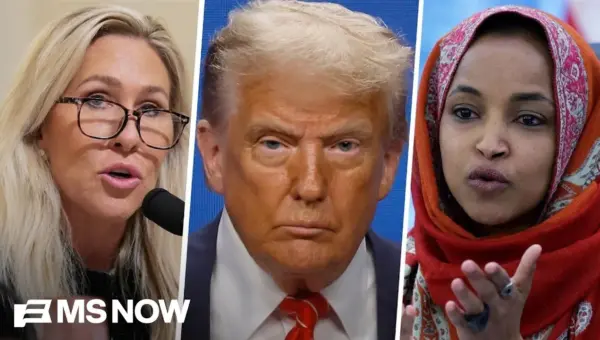
Dems Weigh Embracing MAGA Voters: Omar Says Yes, Data Mixed
Democrats are debating whether to welcome voters who previously supported the MAGA movement. Strategists weigh the potential benefits of appealing to these voters against the risks of association with polarizing figures. Data shows shifts in the electorate, with some voters crossing party lines.

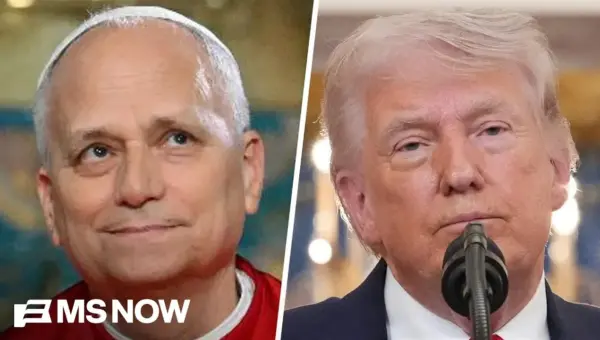
Trump’s Jesus Meme Sparks Outrage Among Religious Supporters
Donald Trump's sharing of a meme depicting him as Jesus Christ has ignited backlash from religious supporters, who also cite his feud with Pope Francis. This has led some to feel "duped," questioning his motives and fitness for leadership.


FBI Docs Contradict Melania’s Epstein Introduction Claims
Newly surfaced FBI documents challenge Melania Trump's recent claims about not being introduced to Donald Trump by Jeffrey Epstein. Witness testimony suggests Epstein facilitated the introduction, contradicting Melania's public statements and raising questions about her associations and those of figures like Paulo Zampoli.