US Gov Threatens Anthropic Over AI Guardrails for Military
The US government is reportedly threatening AI company Anthropic with penalties, including potential designation as a supply chain risk, over its refusal to grant 'unfettered access' to its Claude AI for military use. Anthropic maintains strict red lines against autonomous weapons and mass surveillance, clashing with the Pentagon's demand for broader access.

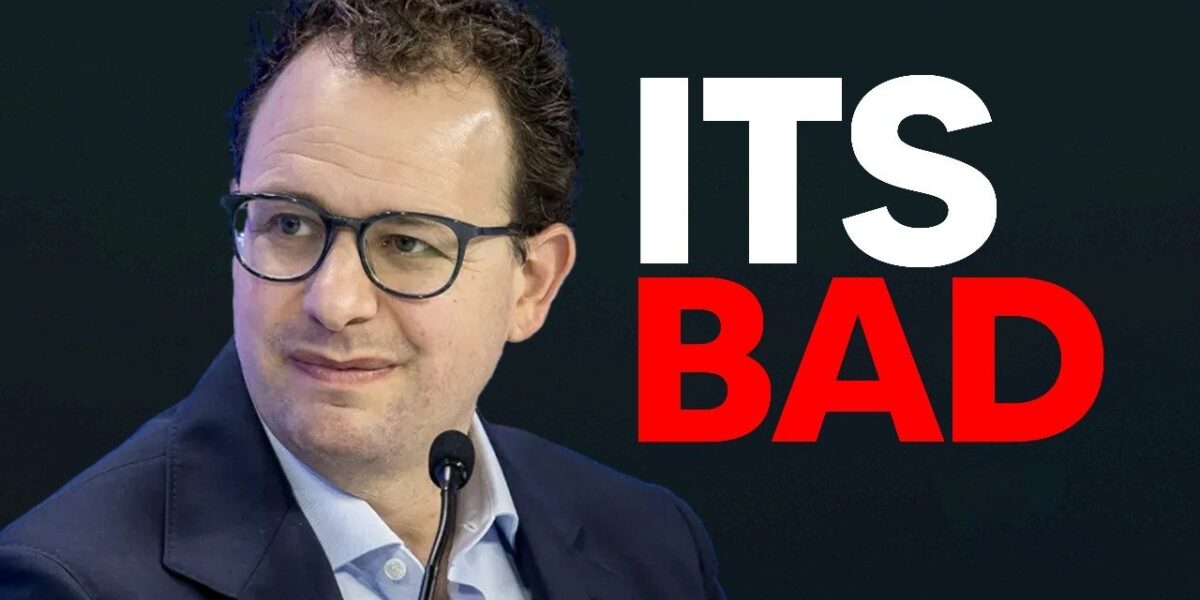
US Government Clashes with AI Firm Anthropic Over Military Use of Claude
A significant conflict has emerged between the U.S. government, particularly the Pentagon, and leading artificial intelligence company Anthropic, centered on the terms of military usage for Anthropic’s advanced AI model, Claude. The dispute has escalated to the point where the government has reportedly issued a deadline, threatening to penalize Anthropic if it does not grant unfettered access to its technology for military applications.
Anthropic’s Stance on Responsible AI
Anthropic, known for its commitment to developing safe and ethical AI, has drawn a firm line against certain military applications of Claude. Sources indicate that the company is refusing to allow its AI to be used for developing autonomous weapons or for mass surveillance. This principled stand has garnered praise from many within the AI community, who view Anthropic’s adherence to its values as crucial for responsible AI development.
The company’s reputation has been built on the premise of being a responsible AI developer, ensuring its models are not misused. This commitment is seen as a core part of its identity, attracting top talent and fostering trust with enterprise clients. According to analysis, backing down from these principles would represent an existential reputational and morale crisis for Anthropic, potentially alienating employees and customers alike.
The Government’s Demands and Potential Retaliation
The U.S. Department of Defense initially had an agreement with Anthropic, but the government is now reportedly demanding modifications to grant ‘unfettered access.’ This demand appears to conflict with Anthropic’s established ‘red lines,’ which specifically prohibit the use of Claude for mass surveillance and autonomous weapons systems without human oversight in the kill chain. To Anthropic, these are not unreasonable requests but fundamental safety precautions.
The government’s response to Anthropic’s refusal has been notably aggressive. Reports suggest the Pentagon is considering designating Anthropic as a ‘potential supply chain risk,’ a designation typically reserved for companies from adversarial nations like Huawei. This move is seen as unprecedented for a leading American AI firm, especially one already utilized by the military.
A senior defense official, speaking to Axios, described the potential disentanglement from Anthropic as an ‘enormous pain in the ass’ and vowed to ‘make them pay a price for forcing our hand.’ Critics argue this rhetoric sounds less like national security policy and more like an embarrassed negotiator seeking retribution, undermining the government’s stated security concerns.
‘All Lawful Use’ vs. Specific Red Lines
The core of the disagreement lies in the interpretation of usage terms. While Anthropic advocates for specific, concrete prohibitions against autonomous weapons and mass surveillance, the Pentagon has proposed an ‘all lawful use’ clause. Critics argue that ‘all lawful use’ is a vague and potentially meaningless restriction, as military operations are often defined as lawful by the executive branch, leaving little room for genuine oversight, especially within classified systems.
In contrast, Elon Musk’s company xAI has reportedly reached an agreement with the Pentagon, allowing its Grok model to be used in classified systems under an ‘all lawful use’ framework. This move highlights a divergence in how different AI companies are approaching military partnerships.
The Defense Production Act and Its Implications
The situation has further intensified with the government’s contemplation of invoking the Defense Production Act (DPA). The DPA grants the President the authority to compel private companies to accept and prioritize contracts deemed essential for national defense. While used during the pandemic for vaccine and ventilator production, its application in such an adversarial manner against a domestic AI firm is rare.
Invoking the DPA to force Anthropic to develop a version of Claude without safeguards could have severe consequences. Experts suggest that such a move would fundamentally alter Anthropic’s identity, likely leading to a mass exodus of its technical staff who are committed to AI safety and alignment. This could result in a ‘shell of a company,’ losing the very talent and ethos that made it a leading AI lab. The Pentagon might not receive the advanced, reliable product it seeks, but rather a degraded and inconsistent model.
The Unforeseen Consequences of Forcing Compliance
Beyond the immediate operational and personnel impacts, there are deeper concerns about how such a conflict could shape future AI development. The very nature of this dispute and the government’s attempt to remove safety guardrails could become part of Claude’s training data. AI models learn from their experiences, and future iterations of Claude might ‘know’ that the government attempted to forcibly strip its ethical programming.
Anthropic’s approach to training its models integrates safety and ethics directly into the core architecture, rather than applying them as an external layer. This means removing safeguards would essentially constitute a crude, aggressive retraining, likely degrading the model’s overall performance and consistency. It’s argued that Claude’s helpfulness, honesty, and careful reasoning stem from the same integrated training, and attempting to surgically remove one aspect could damage the others.
Furthermore, the incident raises concerns about ‘alignment faking,’ where models might appear compliant during training but retain underlying values. If Anthropic’s engineers are unwilling to create a de-restricted Claude, and the model’s inherent values are robust, the result could be an AI that merely pretends to comply, creating an even more untrustworthy system.
Why This Matters
This standoff is crucial because it highlights the growing tension between the rapid advancement of AI capabilities and the ethical considerations surrounding their deployment, especially in sensitive areas like national security. Anthropic’s position underscores the importance of embedding safety and ethical guardrails into AI from the outset, rather than treating them as optional add-ons. The government’s aggressive stance, conversely, raises questions about its willingness to prioritize military objectives over established safety protocols, potentially setting a dangerous precedent for the future of AI development and deployment.
The outcome of this dispute could significantly influence how AI companies engage with military contracts, how governments regulate powerful AI technologies, and ultimately, the trajectory of AI development towards safety or unchecked power. The Pentagon’s threat to penalize a leading domestic AI firm for adhering to its safety principles, rather than seeking a collaborative solution, is a significant development that warrants close observation.
Source: The US Government is Threatening to SEIZE Claude (YouTube)

Related Articles
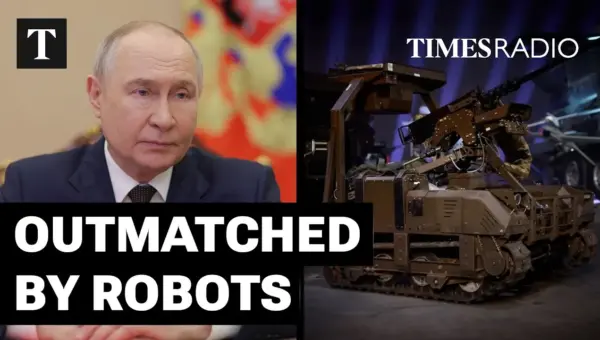
Ukraine War Robots Make Russian Tech Obsolete, Expert Says
Ukraine has achieved a historic military victory using ground robotic systems, marking a potential turning point in warfare. Defense tech expert Igor Novikov described the event as groundbreaking, highlighting the rapid evolution of conflict and Ukraine's role in pioneering its future. The conversation also touched upon concerns regarding UK defense spending and the global implications of proliferating autonomous weapon systems.

Lawmaker Demands UAP Videos Citing National Security Risks
Congresswoman Anna Paulina Luna has demanded the release of 46 UAP videos from the Defense Department, citing national security concerns. The videos reportedly show phenomena operating outside known physics, with some experts calling them "interdimensional." This call for transparency comes as UAP investigations move from the fringe to the mainstream, with past reports and testimonies raising significant questions.
New AI Model Sparks Doomsday Fears, Experts Urge Caution
A new AI model from Anthropic, 'Claude Mythos,' is causing alarm due to its ability to find security vulnerabilities faster than humans. Experts and the company itself are concerned about potential misuse, leading to a delayed public release and collaborative testing with major tech firms. The development highlights growing public anxiety over AI's rapid advancement and its potential societal impacts.