The Dawn of a Dangerous New Era: Nuclear Arms Control Collapses, Global Proliferation Looms
The expiration of the New START treaty marks the end of an era, leaving the world without active nuclear arms control agreements for the first time in decades. Primarily driven by Russia's strategic recalibration and the Ukraine war, this collapse is poised to unleash unprecedented global nuclear proliferation. Nations worldwide, from China to Japan and Germany, are now incentivized to develop or expand their nuclear arsenals, dramatically increasing global insecurity.


The Dawn of a Dangerous New Era: Nuclear Arms Control Collapses, Global Proliferation Looms
February 4th marked a watershed moment in international security, quietly ushering in an unprecedented era devoid of any active nuclear disarmament or arms control agreements. The expiration of the New START treaty, the last remaining accord governing the world’s two largest nuclear arsenals, has left a gaping void, dismantling a framework that has, for decades, served as a critical bulwark against unchecked nuclear expansion. With no immediate prospects for a successor agreement, the world now faces the stark reality of a future defined by the potential for widespread nuclear proliferation, a scenario not witnessed since the early days of the atomic age.
For the first time in over half a century, the United States and the Russian Federation, custodians of more than 90% of the world’s nuclear weapons, are no longer bound by legal restrictions on the size and scope of their strategic arsenals. Each nation currently possesses an estimated 1,000 to 2,000 operational warheads, a figure that, in the absence of a treaty, could now expand unfettered. This development, while seemingly sudden, is the culmination of years of eroding trust, geopolitical tensions, and a fundamental shift in Russia’s strategic calculus, signaling the definitive end of an arms control paradigm that has largely shaped global security since the height of the Cold War.
The Unraveling of a Decades-Long Framework
The collapse of nuclear arms control did not occur in a vacuum. It is the result of a protracted and multifaceted decline in the diplomatic relationship between Washington and Moscow, compounded by Russia’s assertive foreign policy and its ongoing conflict in Ukraine. While some may point to the Trump administration’s skepticism towards multilateral treaties as a contributing factor, the deeper roots of this unraveling, as highlighted by geopolitical strategist Peter Zeihan, lie predominantly with Russia’s evolving strategic mindset.
Historically, arms control agreements were born out of a perceived necessity for both superpowers to manage the existential threat posed by their nuclear arsenals. The Soviet Union, in particular, often found itself in a strategically inferior position compared to the United States, which boasted superior technology, a broader reach, and a robust alliance structure. The Soviets recognized that in a conventional conflict, their capabilities were outmatched, and even their missile fleet might not guarantee a survivable second strike after a potential American first strike. This strategic imbalance spurred the initial rounds of arms control negotiations in the late 1970s and early 1980s, serving as a mechanism to de-escalate tensions and foster a degree of détente.
The momentum for disarmament truly accelerated in the mid-1980s under Mikhail Gorbachev, who, as the only economist to lead the Soviet Union, acutely understood the systemic economic fragility of the Soviet state. He recognized that the arms race was an unsustainable burden and that cooperation with the West was essential for the Soviet Union’s survival. This led to landmark agreements like the Intermediate-Range Nuclear Forces (INF) Treaty and, eventually, the Strategic Arms Reduction Treaty (START I), which drastically reduced the number of deployed strategic nuclear warheads.
Following the collapse of the Soviet Union, the spirit of cooperation continued under Russian President Boris Yeltsin. With the Cold War officially over, the perceived need for thousands of nuclear weapons diminished significantly, leading to further reductions and an era of unprecedented trust and transparency. The New START treaty, signed in 2010 and extended in 2021, was the last vestige of this post-Cold War optimism, limiting both sides to 1,550 deployed strategic warheads and 700 deployed intercontinental ballistic missiles (ICBMs), submarine-launched ballistic missiles (SLBMs), and heavy bombers.
Putin’s Russia: A Narrative of Betrayal and Strategic Recalibration
The optimism of the 1990s, however, gradually eroded with the rise of Vladimir Putin. Over two decades, a narrative of betrayal and grievance has taken root within the Russian leadership. Moscow perceives the West, particularly the United States and NATO, as having repeatedly reneged on promises, expanded its influence eastward, and undermined Russia’s legitimate security interests. Events such as NATO expansion, the withdrawal of the U.S. from the Anti-Ballistic Missile (ABM) Treaty in 2002, and the development of missile defense systems near Russian borders have fueled a deep-seated conviction in Moscow that the only way to command respect and ensure its security is through the projection of overwhelming military power, particularly its nuclear arsenal.
This mindset has manifested in a systematic dismantling of the arms control architecture. According to Zeihan, Russia has, ‘bit by bit, abrogated or cheated on every single one of the treaties in order to prompt the Americans to be the ones to cancel them.’ This pattern of behavior includes testing and fielding new weapons systems explicitly barred by existing agreements, while simultaneously claiming adherence to their terms. The 2019 collapse of the INF Treaty, after years of U.S. accusations that Russia was violating it by developing the Novator 9M729 cruise missile, is a prime example of this deliberate strategy to undermine and eventually discard arms control agreements that Russia no longer deemed advantageous.
Russia’s reasoning for this recalibration is rooted in its perception of strategic inferiority in a conventional conflict. While the Soviet Union once faced overwhelming American technological superiority, contemporary Russia, despite its military modernization efforts, still views its conventional forces as insufficient to confront NATO or other major powers without relying on its nuclear deterrent. The explicit and implicit nuclear threats issued by Moscow, particularly in the context of the Ukraine war, underscore this belief: nuclear weapons are seen not just as a deterrent of last resort, but as a primary tool to ensure Russia is ‘treated seriously.’
The Ukraine War: A Catalyst for Collapse
The ongoing full-scale invasion of Ukraine has served as the ultimate catalyst, accelerating the demise of any remaining arms control prospects. As Russia engages in a ‘hot war,’ the notion of engaging in good-faith negotiations to limit its strategic weapons becomes, as Zeihan puts it, ‘a bit rich.’ The historical precedent is clear: when Russia feels it cannot achieve its objectives on the conventional battlefield, its reliance on nuclear leverage increases, and its willingness to constrain that leverage diminishes.
Furthermore, any meaningful arms control agreement inherently requires robust, invasive inspection regimes to verify compliance – a degree of transparency and trust that is utterly absent in the current geopolitical climate. The idea of American military and civilian personnel conducting on-site inspections within Russia’s nuclear complex, particularly while Moscow is engaged in a brutal war, is simply not feasible. The trust deficit is profound, and Russia’s track record of abrogating or cheating on past conventional and nuclear treaties further exacerbates this challenge. Without verifiable inspections, any new agreement would be merely a paper tiger, unable to provide genuine security or confidence.
The Looming Specter of Global Proliferation
The immediate consequence of the end of U.S.-Russia arms control is not just an unconstrained arms race between the two former superpowers, but a far more dangerous phenomenon: global nuclear proliferation. For decades, the bilateral arms control regime between Washington and Moscow acted as a de facto cap on the nuclear ambitions of other nations. The implicit understanding was that while the two giants managed their arsenals, other countries had less incentive to pursue their own, relying instead on the stability provided by the existing framework, or on the extended deterrence offered by a nuclear-armed ally.
That stabilizing structure has now vanished. With no ceiling in place for the world’s two largest nuclear powers, other nations now face a compelling incentive to develop or expand their own nuclear capabilities. This is driven by several factors:
- Security Imperative: In a more volatile and unpredictable world, nuclear weapons are increasingly seen as the ultimate guarantor of national sovereignty and survival. For countries that have historically relied on the U.S. nuclear umbrella or the broader stability of the international order, the perceived erosion of these safeguards creates an urgent imperative for self-reliance.
- Geopolitical Leverage: Possessing nuclear weapons grants a nation a seat at a different, more powerful diplomatic table. It elevates their status and influence in international affairs, allowing them to project power and deter aggression more effectively.
- Pacing Conventional Buildup: Developing a robust conventional military force is a time-consuming and incredibly expensive endeavor. Building or expanding a nuclear arsenal, while also costly, can be a faster route to achieving a credible deterrent capability, particularly for nations feeling an immediate security threat.
The list of countries now facing these heightened incentives is extensive and alarming:
China: Ascending Nuclear Ambitions
China, already a significant nuclear power, is rapidly modernizing and expanding its arsenal. While its current inventory is not on par with the U.S. or Russia, the absence of bilateral limits removes any external pressure to cap its growth. Beijing’s strategic goal of becoming a global superpower, coupled with increasing tensions with the U.S. and its allies, will likely accelerate this expansion, aiming for a more robust second-strike capability and greater geopolitical clout.
India and Pakistan: Entrenched Rivalry
The nuclear arsenals of India and Pakistan are intrinsically linked to their decades-long rivalry and territorial disputes. The removal of the global arms control framework could embolden both nations to further enhance their capabilities, potentially leading to a more dangerous and unstable regional arms race in South Asia.
Israel: The Undisclosed Arsenal
Israel’s policy of nuclear ambiguity, often referred to as its ‘bomb in the basement,’ is a cornerstone of its national security strategy in a volatile region. In an environment of increased global instability and the perceived weakening of international norms, Israel might feel compelled to further develop or even acknowledge its nuclear capabilities to deter existential threats.
North Korea: An Established Threat
North Korea has already defied international norms to develop its nuclear weapons program. With the major powers disengaging from arms control, Pyongyang will likely see this as further justification to continue its expansion, potentially pushing the boundaries of its missile and warhead technology, increasing regional tensions and the risk of miscalculation.
New Nuclear Aspirations: Japan, South Korea, Poland, Germany, Sweden, Finland
Perhaps most concerning is the potential for new nuclear aspirations among non-nuclear weapons states, particularly those in strategically vulnerable regions. The transcript specifically mentions a range of countries that could now reconsider their nuclear postures:
- Japan and South Korea: Both nations rely heavily on the U.S. nuclear umbrella to deter North Korea and, increasingly, China. However, a perception of U.S. disengagement or a weakening of its commitment could push these technologically advanced nations, both of whom have the technical capabilities, to develop their own deterrent.
- Poland, Germany, Sweden, and Finland: In Europe, Russia’s aggressive actions in Ukraine have fundamentally altered the security landscape. Countries bordering or in close proximity to Russia, traditionally relying on NATO’s collective defense (and by extension, the U.S. nuclear deterrent), might now feel a heightened need for sovereign nuclear capabilities. The prospect of Germany, a staunch proponent of non-proliferation, contemplating nuclear weapons would represent a seismic shift in global security. Sweden and Finland, having recently joined NATO, are still adapting to a new security paradigm, but the broader collapse of arms control could force even these traditionally neutral or non-nuclear states to re-evaluate.
The logic is simple: if the bilateral system between Russia and the U.S. can no longer ‘keep a lid on things,’ and if building conventional forces takes too long, then developing a nuclear force becomes the ‘fastest way to get to a degree of security where you actually hold some cards.’ This sentiment is poised to drive nuclear decision-making in country after country for at least the next 15 years, according to Zeihan.
The Perilous Path Ahead
The cessation of nuclear arms control is more than just a diplomatic setback; it represents a fundamental shift in the global strategic environment. The era of managing nuclear arsenals through negotiated treaties, which successfully reduced tens of thousands of weapons from circulation, is definitively over. In its place, the world is entering a perilous new chapter, characterized by:
- Increased Risk of Conflict: More nuclear-armed states, especially those with nascent or less secure command and control systems, increase the risk of accidental launch, miscalculation, or even intentional use in regional conflicts.
- Destabilization of the Non-Proliferation Treaty (NPT): The NPT, the cornerstone of the global non-proliferation regime, relies on the commitment of nuclear-weapon states to disarm and non-nuclear-weapon states to forgo nuclear weapons. The failure of the major powers to uphold their disarmament obligations severely weakens the NPT’s legitimacy and effectiveness, potentially leading to its further erosion.
- Escalated Arms Races: Without limits, the U.S. and Russia could embark on a new arms race, developing novel and more destructive weapons. This, in turn, would spur other nuclear powers to follow suit, creating a dangerous cycle of escalation.
- Regional Instability: The emergence of new nuclear powers or the expansion of existing arsenals in volatile regions could trigger localized arms races and heighten the risk of conventional conflicts escalating to nuclear exchanges.
The path forward is fraught with challenges. Until there is a substantial shift in mindset in Moscow, a return to good-faith negotiations seems unlikely. Rebuilding the trust necessary for invasive verification regimes will require a fundamental transformation in Russia’s geopolitical orientation and its relationship with the West. In the interim, the international community must grapple with the profound implications of a world unconstrained by nuclear arms control, where the pursuit of atomic security by many nations could paradoxically lead to greater global insecurity for all.
The hope for a world free from the threat of nuclear annihilation now seems more distant than ever. The end of arms control is not merely the close of a chapter; it is the opening of a new, potentially far more dangerous one, demanding urgent and innovative diplomatic efforts to mitigate the looming specter of widespread nuclear proliferation.
Source: The End of Nuclear Arms Control || Peter Zeihan (YouTube)

Related Articles


Oil Prices Surge to $91 Amid Geopolitical Tensions
Oil prices have surged to $91 a barrel, driven by disruptions in the Strait of Hormuz. This is leading to higher gas prices across the U.S., with California facing particularly steep costs. The situation is fueling debate on energy policy, exports, and the transition to renewable fuels.

China’s Iran Gambit: Deception or a New World Order?
President Trump claims China will stop sending weapons to Iran, but deep skepticism remains due to China's past support and use of spy satellites to aid Iran. This move could be a strategic ploy to weaken the US military.

China Aids Iran Amid US Conflict Escalation
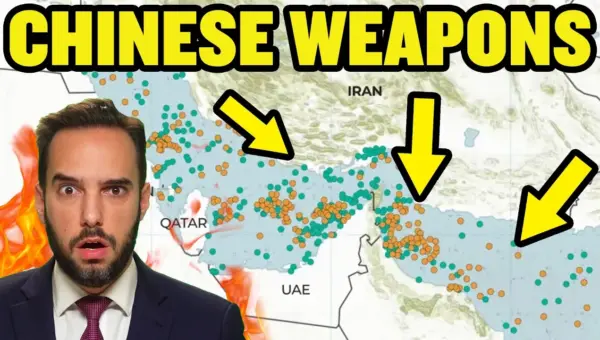
Recent intelligence suggests China is secretly supplying Iran with weapons like MANPADS and sharing critical intelligence, a significant escalation from its previous stance. This move, if confirmed, could deepen regional conflict and lead to severe US economic retaliation, while highlighting long-standing strategic ties between Beijing and Tehran.