Germany Navigates US-China Dilemma: Economic Crossroads
Germany faces a critical strategic dilemma navigating its economic and geopolitical relationships with the US and China. Faced with trade imbalances and increasing competition, Berlin is exploring strategies to bolster its industrial base and assert greater European autonomy.

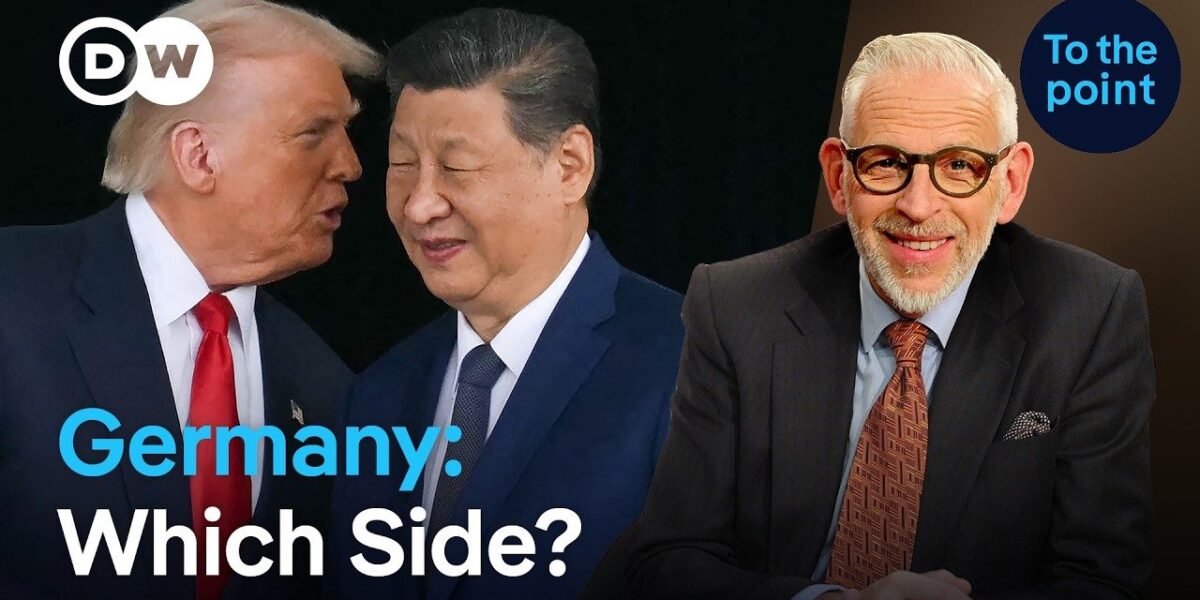
Germany at a Crossroads: Balancing US and China Relations
Germany, a global economic powerhouse, finds itself at a critical juncture, attempting to navigate the increasingly complex geopolitical landscape dominated by the United States and China. Chancellor Olaf Scholz’s recent diplomatic efforts, marked by visits to both Beijing and Washington, underscore Germany’s strategic dilemma: how to best secure its economic interests and strengthen its geopolitical standing when its two largest trading partners are locked in a deepening rivalry. The core question facing Germany and the broader European Union is who represents a more advantageous partner in a time of shifting global power dynamics.
Economic Realities: Trade Imbalances and Shifting Fortunes
The economic ties between Germany and China are substantial, with bilateral trade exceeding 250 billion euros last year. However, this relationship is not without its challenges. German products are reportedly facing declining sales in the Chinese market, a concern voiced by Chancellor Scholz himself.
Simultaneously, the traditional partnership with the United States, Germany’s second-largest trading partner, has been strained. Unpredictable trade policies and tariffs, particularly under the Trump administration, have led to a significant contraction in trade volume, with some reports indicating a drop of around 5%. This has led to a stark observation: German exports to China are plummeting while imports from China are rising, a phenomenon some experts are calling the “China shock.” This shock is perceived as a direct threat to Germany’s core industries, including automotive, machinery, and chemicals, which are increasingly facing intense competition from China, often strengthened by state subsidies.
“The mortal threat to the German industrial base is not Donald Trump. Uh Donald Trump wants to re-industrialize. Donald Trump experienced that in the US 15 years ago. What we’re experiencing now, a China shock that’s gutting our core industries. Uh Trump wants to rebuild America’s industries. Uh we need to protect and develop our industries and the threat is mostly from Chinese competition and not from US competition.” Toss Benner, Global Public Policy Institute
The Transatlantic Strain and the “China Shock”
The relationship with the United States, historically a cornerstone of German foreign policy, has been significantly impacted by political shifts in Washington. The imposition of tariffs and what has been described as a “free speech campaign to impose MAGA values on Europe” have created friction. While the US under Donald Trump aims to re-industrialize, the “China shock” presents a different, arguably more systemic, challenge to Germany’s industrial base.
The concern is that China’s state-backed capitalist model, characterized by artificial currency devaluation, subsidies, and a burgeoning innovation ecosystem, creates an uneven playing field that directly undermines German industries. This competition is not limited to traditional sectors; it extends to emerging fields like artificial intelligence and robotics, where Europe has potential strengths but faces significant challenges in developing a competitive ecosystem.
Digital Dependence and the Quest for European Autonomy
Beyond traditional trade, the future of economic independence for Germany and the EU hinges on their role in the digital services sector. As automobiles and other goods become increasingly integrated with digital services and software, the concentration of high-tech firms in the US and China presents a significant challenge. The European Union currently lacks major tech firms in this space, raising critical questions about where Europe will source its essential digital services in the future.
The panel discussed the need for Europe to foster its own tech ecosystem, either by nurturing nascent European firms, attracting American affiliates, or engaging with Chinese providers. However, the current regulatory environment and a perceived lack of market openness and innovation are seen as significant hurdles. Building a competitive digital infrastructure requires not only fostering domestic innovation but also establishing a clear regulatory framework for both domestic and foreign tech companies operating within Europe.
“So I think for Germany to think about its own independent economic power, you know, combined with that of Europe, there are a lot of people here that are going to be buying these services. And so the question is how do you build and structure and regulate the industry that’s providing those service flows because all these German cars are going to be using service flows and and thinking about what’s the right regulatory environment to get the firms that you want at some level.” Meredith Crowley, Professor of Economics, Cambridge University
Diversifying Markets and Strengthening the European Core
In light of these challenges, a consensus is emerging among experts that Germany’s traditional export-oriented model, heavily reliant on large markets like China and the US, may be unsustainable in its current form. The need for diversification is paramount. This involves exploring new partnerships in regions like India and Latin America, as well as deepening existing relationships within Europe.
A key recommendation is to strengthen the European Union’s internal market, a move that could unlock significant domestic demand and consumption. This includes implementing reforms to complete the single market, as advocated by figures like former ECB president Mario Draghi, and fostering greater risk-taking and innovation among European entrepreneurs. The idea is that a more robust and integrated European economy can better withstand external pressures and compete on a global scale.
A Complex Approach: Beyond Subsidies
Addressing the economic competition from China requires a comprehensive strategy that goes beyond simple subsidies. Experts emphasize the need to decrease dependencies on single points of failure, particularly concerning critical raw materials and rare earths where China holds significant market power. This may necessitate targeted subsidies or positive incentives to develop alternative supply chains.
Fostering reciprocity in trade agreements, reducing bureaucracy, and creating a more open and innovative market environment are crucial. The discussion also touched upon the potential for Europe to develop its own industrial policy, strategically identifying and supporting key industries for the future, such as robotics and embodied AI, where Europe has existing advantages. This approach acknowledges that while state intervention can play a role, it must be part of a broader toolkit that includes regulatory reform, market deepening, and international cooperation.
The Path Forward: European Strength and Strategic Autonomy
Ultimately, Germany’s strategic dilemma is intertwined with the broader question of European autonomy. The consensus suggests that Germany and the EU must invest in their own strengths, reduce dependencies, and develop a more assertive foreign and economic policy. This includes strengthening Europe’s ability to defend itself, both militarily and economically, to avoid being subject to external blackmail.
While the path to achieving political consensus for such a strategy is challenging, the need for a “complex approach” to China and the US is clear. This involves adapting to a world where “might makes right,” potentially by empowering the EU with greater competencies and forging “coalitions of the willing” to advance shared interests. The future success of Germany and Europe will likely depend on their ability to foster innovation, deepen internal markets, diversify partnerships, and strategically position themselves in key global industries.
Source: Germany’s strategic dilemma between the US and China: Who is the better partner? | To the Point (YouTube)

Related Articles


Putin’s Internet Shutdown: Paranoia or Precaution?
Russia's recent internet restrictions fuel speculation about President Putin's paranoia, potentially driven by fears of a coup and the weaponization of digital information by adversaries. Actions like buffer zones and dismissals suggest a leader under pressure.


EU Warships Near Cyprus Test Defense Without US
European Union warships have deployed near Cyprus, marking a potential turning point for the bloc's collective defense capabilities without U.S. involvement. The move follows a drone attack on a British base and highlights Cyprus's strategic location. While seen as a low-risk show of solidarity, it raises questions about Europe's long-term defense independence.


Diesel Tops $5 Per Gallon Amid Iran War
Diesel prices have surpassed $5 per gallon in the U.S. due to the war in Iran disrupting global oil supplies. This surge impacts everything from food to manufacturing, raising inflation concerns and potentially slowing economic growth through 2026.