Trump’s Shifting Sands: Ukraine War’s Complexity, Sanctions, and a Looming Iran Crisis
The war in Ukraine, now in its twelfth year, highlights a critical inconsistency in Western policy and a deep misunderstanding of Russia's enduring imperial ambitions. Donald Trump's transactional approach to sanctions and his 'Board of Peace' initiative underscore a shift in US foreign policy, potentially leading to dangerous distractions like a limited strike on Iran. This era of unpredictable leadership and global polarization demands a more unified and resolute international response to prevent further instability.

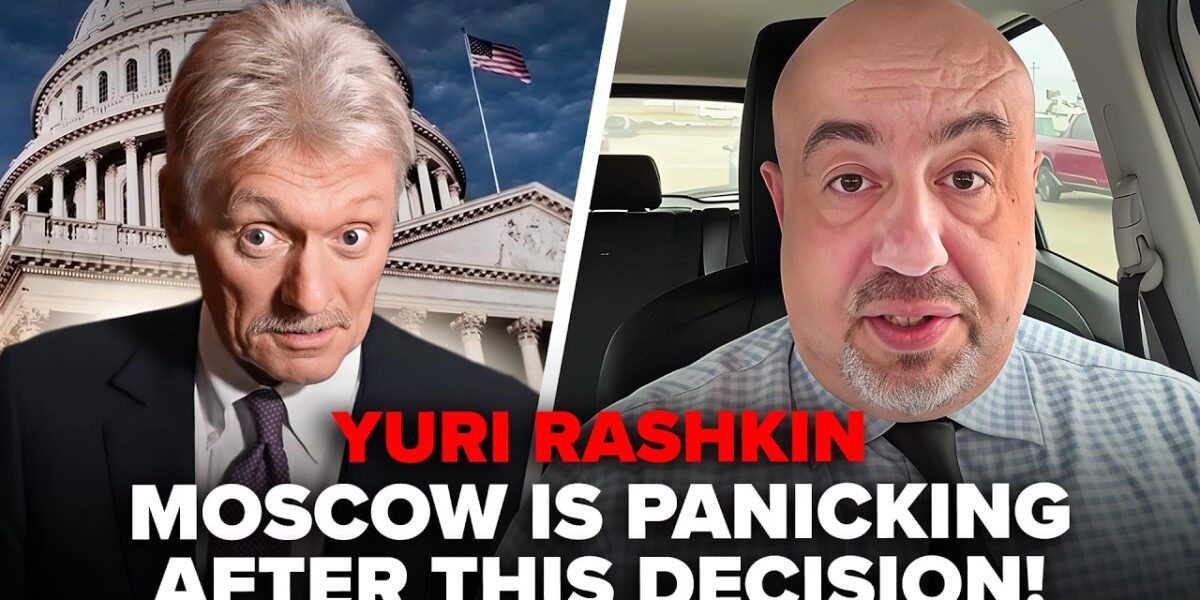
The Long Shadow of 2014: A War Misunderstood
The conflict in Ukraine, often perceived as a recent escalation, has a much deeper history, stretching back twelve years to Russia’s illegal annexation of Crimea in 2014. This crucial distinction, highlighted by political commentator Yuri Rashkin, underscores a fundamental misunderstanding in Western discourse. “When I talk about it, when other people talk about it, there’s this always desire to say the war four years, but really the war has been going on for 12 years since 2014,” Rashkin emphasized during a recent discussion. This perspective recontextualizes the entire conflict, moving it beyond the full-scale invasion of 2022 to acknowledge the prolonged aggression against Ukrainian sovereignty.
In 2014, the international community, particularly the Western powers, reacted with what many now consider insufficient resolve. The annexation of Crimea, a blatant violation of international law and Ukraine’s territorial integrity, was met primarily with expressions of concern and initial, relatively mild sanctions. This period, according to Rashkin, was a missed opportunity for the West to confront the Kremlin’s expansionist ambitions more forcefully. The perceived leniency at the time may have emboldened Russia, setting a dangerous precedent for future aggression.
The events leading up to 2014, specifically the Maidan Revolution, were a pivotal moment for Ukraine. This revolutionary uprising, which saw Ukrainians demanding closer ties with Europe and rejecting Russian influence, was not merely a political protest but, as Rashkin eloquently put it, “a rebirth for Ukrainian nation and Ukrainian state and Ukrainian identity.” This period solidified Ukraine’s resolve for self-determination and its distinct European path, directly clashing with Russia’s imperial aspirations. The subsequent Russian actions, including the annexation of Crimea and the instigation of conflict in eastern Ukraine, were direct responses to this burgeoning Ukrainian identity and its westward leanings.
The West’s preferred approach to international conflicts, characterized by a desire for peaceful resolutions, diplomatic pressures, and sanctions, is fundamentally mismatched against Russia’s aggressive and unpredictable modus operandi. “The West has grown up and matured and will never be mature enough at this pace to handle Putin the way West prefers to handle Putin. It’s just not the kind of challenge that today’s West is able to handle because we want to do things peacefully. We want to do things nice. We want to do things with sanctions, with pressures,” Rashkin observed. This ideological gap creates a significant challenge for formulating an effective strategy against a power that views international agreements as mere tactical pauses rather than binding commitments.
American Inconsistency: A Global Liability
Shifting Sands of US Foreign Policy
A critical factor contributing to the ongoing complexity of the Ukraine conflict and broader global security is the inherent inconsistency of American foreign policy, particularly within its two-party political system. Rashkin pointed out that “the most important lesson to me that should be taken away by anybody from the last 12 years is the inconsistency of American policy because we have some presidents that have diametrically different points of view and policies than other president who’s been president twice in the last 12 years significantly affecting the outcome of what happened in Ukraine and what’s going on in Ukraine and national security and world security.”
This inconsistency is a direct consequence of the United States’ deeply polarized political landscape. With two dominant parties, each encompassing a wide spectrum of ideologies from the center to their respective extremes, foreign policy can swing dramatically with each change in administration. For instance, the Obama administration, while condemning Russia’s actions in Crimea, pursued a relatively cautious approach, perhaps hoping to avoid a broader confrontation. The subsequent Trump administration, with its “America First” doctrine, often expressed skepticism about traditional alliances and multilateral institutions, at times appearing to favor rapprochement with Russia. The current Biden administration has, in contrast, championed a robust alliance-based approach and provided significant aid to Ukraine, marking another distinct shift.
These drastic policy shifts create an environment of uncertainty for allies and adversaries alike. For Ukraine, it has meant navigating fluctuating levels of support and commitment from its most crucial international partner. For Russia, this inconsistency can be perceived as weakness or an opportunity to exploit divisions, making long-term strategic planning for global stability exceedingly difficult. The world, as Rashkin noted, ultimately “pays the price” for this internal American political struggle.
NATO’s Defensive Dilemma
The North Atlantic Treaty Organization (NATO), fundamentally a defensive alliance, faces a unique challenge in confronting a revisionist power like Russia. While its core mandate is collective defense (Article 5), the nature of Russia’s aggression, which often involves hybrid warfare, cyberattacks, and proxy conflicts, pushes the boundaries of traditional defensive responses. Russia’s president, according to Rashkin, harbors a “crazy idea that it’s his job to restore the Soviet Union at least in scope and size and terrorist influence all over the world.” This ambition directly threatens the sovereignty of former Soviet republics and satellite states, many of which are now NATO members or aspire to join.
The dilemma for NATO and other Western powers lies in balancing the imperative to deter Russian aggression with the desire to avoid direct military confrontation. The emphasis on sanctions and diplomatic pressure, while important, has not proven sufficient to halt Russia’s territorial ambitions. The ongoing conflict in Ukraine serves as a stark reminder that a purely defensive posture, without proactive measures to counter an expansionist threat, may not be enough to safeguard European security. This situation calls for a re-evaluation of Western security doctrines and a more unified, assertive approach.
Russia’s Enduring Threat and Internal Strain
Despite its vast resources and military might, Russia has been significantly weakened by twelve years of continuous conflict, not only in Ukraine but also through the cumulative impact of international sanctions and isolation. “Moscow steel parties lights are on and life is great but they know it’s unbared time. I think they know how things are going in a wrong direction,” Rashkin commented, citing the unusual scale of Chinese New Year celebrations in Moscow as an indicator of Russia’s shifting geopolitical allegiances and economic reliance. This suggests a growing awareness within Russia, even among its elites, that the current trajectory is unsustainable.
However, this exhaustion does not equate to a diminished threat. Russia, under its current leadership, continues to act in ways that are neither sensible nor predictable, consistently flouting international norms and agreements. Numerous peace accords between Russia and Ukraine have been “destroyed and just used as a pause for fake peace,” as U.S. Secretary of State Antony Blinken has previously stated. This pattern underscores a crucial lesson learned over the past decade: making peace with a leadership that will not adhere to any agreement is a futile exercise.
The core of Russia’s aggression, according to Rashkin, is not merely about a particular Ukrainian leader but about Ukraine’s very existence as a sovereign state. “Changing Zalinski for another leader is not going to address Russia’s desires because Russia just wants to conquer Ukraine because whoever is going to be in charge of Ukraine, whoever Ukrainians elect their president will stand up for Ukrainian statethood.” This fundamental clash of objectives—Ukraine’s right to self-determination versus Russia’s imperial ambition—means the conflict is existential for Ukraine and cannot be resolved through mere leadership changes or superficial peace deals.
While the primary responsibility for Russia’s actions lies with its leadership and, to some extent, its populace, there is also a shared responsibility among neighboring countries and the broader international community to take a more proactive approach. This involves not only helping Ukraine more actively but also forming a united front to counter the Russian threat, taking advantage of its current weakened state. Without such a concerted effort, the cycle of aggression and instability is likely to continue.
Donald Trump’s Paradoxical Approach to Russia
Sanctions: Leverage or Leniency?
Donald Trump’s recent decision to extend sanctions against Russia for another year, a move described by the Kremlin’s press secretary Dmitry Peskov as “a mere automatic decision,” presents a complex picture of his approach to Moscow. These sanctions, initially imposed for Russia’s occupation of Crimea in 2014 and further expanded in 2018 and 2022 due to threats to Ukraine’s territorial integrity and recognition of separatist regions, were set to expire. The renewal, though seemingly a continuation of existing policy, was notably low-profile, reportedly lacking a presidential signature on the publicly available document and primarily reported by Ukrainian media.
Yuri Rashkin interprets Trump’s actions through a specific lens: “If we presume that Trump and Putin are basically functioning by the same set of rules and guidelines and approaches, sanctions are leverage.” For Trump, sanctions are not necessarily a tool for punishment or deterrence in the traditional sense, but rather “pieces on the board that he can at any point take away.” This transactional view suggests that sanctions are maintained as a bargaining chip, a means to ensure future negotiations or to extract concessions, rather than an end in themselves. The “hollowed out” process, lacking robust enforcement mechanisms and featuring numerous waivers, further supports the idea that their utility for Trump is primarily as a negotiation tool for a “better deal,” rather than a genuine effort to cripple the Russian economy or alter its behavior.
The fact that Trump’s associates are reportedly exploring future energy development opportunities with Russia, despite the sanctions, reinforces the perception that these measures are viewed as temporary and negotiable. This creates an environment of uncertainty for businesses and investors, who must weigh the current restrictions against the potential for their sudden removal under a future administration. The Kremlin’s dismissive reaction, labeling the extension “automatic,” could be a strategic downplaying of its significance, or it could reflect an understanding of Trump’s transactional approach, recognizing that the current sanctions are largely performative or designed to keep communication lines open.
The ‘Board of Peace’ and the Club of Dictators
Further illustrating Trump’s unconventional foreign policy initiatives is his “Board of Peace,” a “toy institution” that recently convened in Washington. During this meeting, attended by leaders of what Rashkin critically described as “about 20 of the world’s least powerful countries” and a “club of dictators,” Trump admitted a surprising realization: the war in Ukraine “turned out to be more difficult” than he had expected. He had initially believed it “would be the easiest.” This admission, while seemingly candid, highlighted a potential disconnect between his previous assertions of being able to end the war in 24 hours and the geopolitical realities.
Rashkin characterized the “Board of Peace” as a “joke,” a “narcissistic exercise” designed for Trump’s self-affirmation. The event’s low profile, lack of widespread media coverage, and the caliber of its attendees suggested it was more a personal vanity project than a serious diplomatic endeavor. “No normal country will stand next to him on that stage,” Rashkin asserted, pointing to figures like Hungary’s Viktor Orbán as examples of the types of leaders willing to participate. This initiative, rather than fostering genuine peace, appears to serve as a platform for leaders who share Trump’s skepticism of traditional international norms and institutions, potentially signaling a shift in US alliances towards less democratic regimes.
The analogy to the Soviet Union’s own “board of peace”—an institution created by Stalin that regularly lauded figures like Leonid Brezhnev as global peace defenders, only to collapse with the Soviet state—was particularly cutting. Rashkin suggested that Trump’s “Board of Peace” is similarly held together by the “duct tape” of his personal influence, destined to vanish once he is out of office because “nobody needs it except Donald Trump.” This initiative, therefore, not only highlights a departure from traditional multilateral diplomacy but also raises concerns about the stability and longevity of such ad-hoc alliances, particularly when led by a figure described as acting in an “immature, childish manner” while holding access to nuclear weapons.
A Dangerous Distraction: Trump’s Iran Gambit?
Amidst the complexities of Ukraine and the perceived failures of his domestic policies, Donald Trump is reportedly considering a “limited strike” on Iran. When pressed by a reporter about a military option in the absence of an agreement, Trump responded, “The most I can say is that I’m considering that option.” This contemplation of military action against Iran, according to Yuri Rashkin, could be a desperate measure to secure a much-needed “successful victory outcome” and a “serious distraction” from a series of domestic and international setbacks.
Rashkin suggested that Trump’s administration is facing significant challenges, including a recent “huge defeat” with the rejection of his tariff policy, which could lead to demands for money back from the government. In this context, a military engagement, particularly one perceived as a quick and decisive victory, could serve as a powerful diversion. “When we’re looking at a president who is failing at everything he touches… this president will need some serious distraction,” Rashkin argued, even going so far as to suggest the need to “start preparing ourselves for a small nuclear war” given the high stakes and the president’s unpredictable nature.
The potential for conflict with Iran is a deeply concerning prospect, with far-reaching implications for regional stability and global energy markets. Rashkin believes that both the Iranian side and the American public are being prepared for such a scenario. However, unlike traditional ground invasions, Trump’s preferred model of military intervention, as observed in previous instances, is likely to be limited to aerial or missile strikes, avoiding “boots on the ground.” This approach, while minimizing direct American casualties, still carries immense risks of escalation and unintended consequences, further destabilizing an already volatile region. The public’s reaction to such a move, particularly in light of domestic frustrations and economic woes, could be a critical factor, potentially leading to widespread demands for accountability from elected officials.
The Perilous Intersection of Domestic Politics and Global Security
The current geopolitical landscape is profoundly shaped by the intricate and often perilous intersection of domestic politics and global security, particularly within the United States. The deep polarization inherent in the American two-party system, where policy stances can be diametrically opposed between administrations, creates a ripple effect across the globe. This internal disunity, as highlighted by Rashkin, not only undermines the consistency of US foreign policy but also complicates the ability of allies to form cohesive long-term strategies against common threats.
The characterization of the current state of affairs as the “crazy states, United States of America” reflects a growing international concern about the predictability and reliability of American leadership. When a president with access to nuclear weapons is perceived to be acting in a manner akin to authoritarian leaders, prioritizing personal validation and transactional deals over established diplomatic norms, the global order faces unprecedented instability. The comparison of Trump’s behavior to Putin’s, suggesting they operate by a similar set of rules, is particularly alarming, implying a potential erosion of democratic principles in the conduct of international relations.
Ultimately, the challenges discussed—the protracted war in Ukraine, Russia’s enduring aggression, the inconsistencies of Western response, and the unpredictable foreign policy maneuvers of a key global player—underscore a period of profound uncertainty. The need for a coherent, unified, and principled approach to global security has never been more critical. Without it, the world risks further fragmentation, escalation of conflicts, and a dangerous erosion of the international rules-based order that has been painstakingly built over decades.
Source: 😱Putin IS AFRAID OF TRUMP'S BLOW! The Kremlin BROKE OFF NEGOTIATIONS. The US is starting A NEW WAR (YouTube)

Related Articles
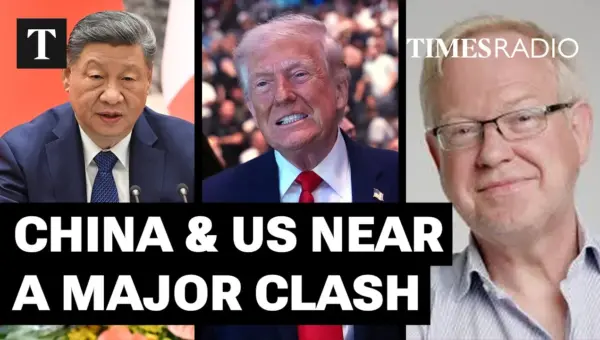
China-US Tensions Flare: Blockade Risk Sparks Superpower War Fears
The U.S. blockade in the Strait of Hormuz has intensified tensions with China, raising fears of a potential superpower conflict. Expert Roger Boyes highlights China's use of a "shadow fleet" and military support for Iran, while President Trump attempts a delicate diplomatic approach ahead of a key meeting with President Xi Jinping.
Trump Sees Iran Conflict Near End, Analysts Urge Caution
President Trump believes the conflict in Iran is "very close to over," but former advisor Keith Kellogg urges a cautious approach. The potential de-escalation could impact global markets, particularly oil prices. Investors should monitor the specifics of any resolution and its long-term implications for regional stability.

Doctor Rips Oz, Trump for ‘Lack of Seriousness’ on Health
A doctor has sharply criticized Donald Trump and Dr. Mehmet Oz for spreading health misinformation, calling their approach a "lack of seriousness." The doctor highlighted false claims about diet soda and cancer, and the dangers of appointing unqualified individuals to health agencies. He stressed the critical need for science-based leadership to ensure public well-being.