Deconstructing the Narrative: Separating Fact from Fiction in China’s Alleged Beijing Firefight and Nuclear Leak Scandal
Recent sensational claims of a Beijing firefight and a top general leaking nuclear secrets to the U.S. have been widely debunked as misinformation. While these dramatic narratives captivated global attention, they lack credible sourcing and are contradicted by the absence of corroborating evidence from international observers and Chinese state media. The underlying reality, however, points to Xi Jinping's ongoing, politically motivated purges within the military, highlighting his relentless consolidation of power and the opaque nature of China's elite politics.

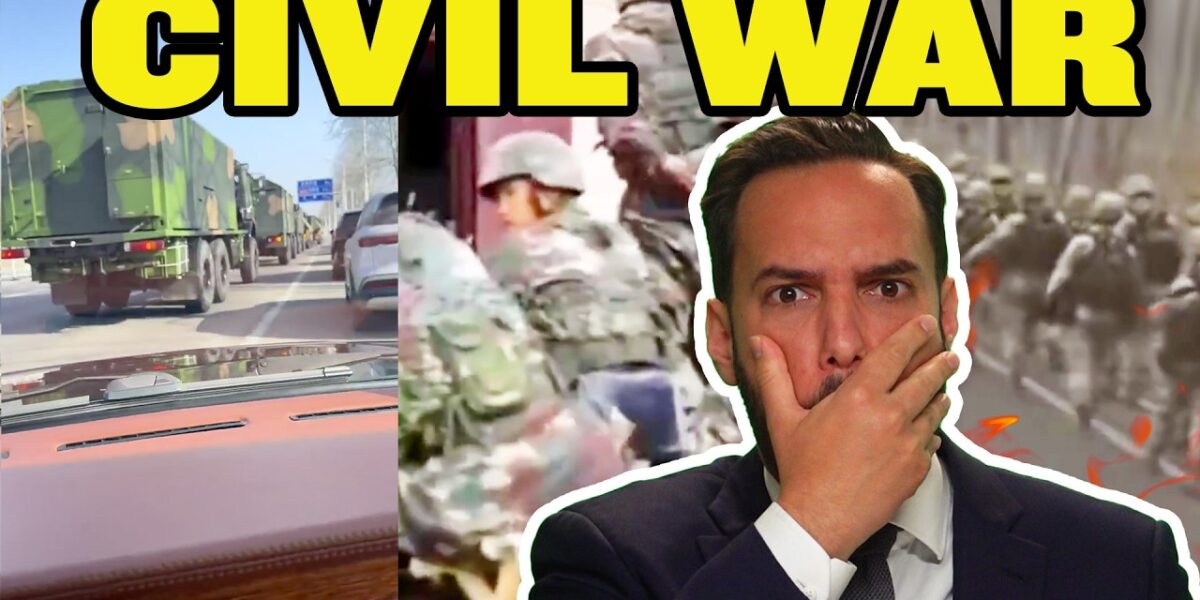
Deconstructing the Narrative: Separating Fact from Fiction in China’s Alleged Beijing Firefight and Nuclear Leak Scandal
In the often-opaque world of Chinese elite politics, rumors can spread like wildfire, fueled by limited official information and a global hunger for insights into the Communist Party’s inner workings. Recently, two explosive narratives gripped international attention: an alleged armed conflict in Beijing and a high-profile general leaking nuclear secrets to the United States. These sensational claims painted a picture of a nation teetering on the brink of internal strife and espionage at its highest echelons. However, a closer examination reveals that these reports, while captivating, largely dissolve under scrutiny, serving instead as potent examples of how misinformation can proliferate and complicate our understanding of China.
The initial reports suggested a dramatic escalation of an already tense political climate, following the widely reported purges of two top military officials: General Zhang Youxia, Vice Chairman of the Central Military Commission (second only to Xi Jinping), and General Liu Zhenli. These purges, coming on the heels of other high-level dismissals, were immediately interpreted by many as further evidence of President Xi Jinping’s relentless consolidation of power, echoing historical strongmen who purged rivals to cement their authority. Yet, the subsequent claims of a direct armed confrontation in the capital and a bombshell nuclear espionage case introduced a new, unprecedented level of alarm. This article delves into the origins and veracity of these claims, exploring why they gained traction and what the underlying reality of China’s political landscape might truly entail.
The Alleged Beijing Firefight: A Tale of Intrigue, Not Reality
The most sensational of the recent rumors was the purported “shooting war” in Beijing. The narrative, rich with cinematic details, suggested a dramatic confrontation between troops loyal to the recently purged General Zhang Youxia and those aligned with President Xi Jinping. According to this widely circulated account, Generals Zhang Youxia and Liu Zhenli had devised a plan to apprehend Xi Jinping at Beijing’s Jinshi Hotel on January 18th. However, their elaborate scheme was allegedly compromised a mere two hours before execution, allowing Xi to evade capture and set a trap for his would-be adversaries. This purported counter-operation reportedly culminated in a fierce firefight, with Xi’s loyalists suffering nine casualties.
Tracing the Rumor’s Genesis and Spread
Such a dramatic story, replete with close escapes, treachery, and gunfire, quickly captivated audiences worldwide. Its primary source, it appears, was a viral tweet by Canada-based writer Shang Shu. This initial post rapidly gained traction within the Mandarin-speaking diaspora, particularly among Chinese dissidents eager for news of internal instability within the CCP. From there, the story metastasized into the English-speaking world, often amplified by references to “sources cited by Reuters and Bloomberg” – a claim that lent an air of credibility to the narrative, particularly after a specific tweet garnered millions of views. Accompanying these claims were various “confirmatory” pieces of evidence: clips of Chinese military vehicles on the move, footage of military personnel, and a photograph purportedly showing plainclothes officers at General Zhang’s residence. On the surface, it all seemed to coalesce into a compelling, if alarming, picture.
Dismantling the Narrative: A Lack of Credibility
However, a closer look reveals significant cracks in this meticulously constructed narrative. The first and most critical flaw lies in the origin of Shang Shu’s information. The writer reportedly cited a “friend” referred to only as “X” – an anonymous, unverifiable source that provides no basis for substantiation. In journalism, the credibility of a source is paramount, and a nebulous “friend” without further identification or corroboration renders any claim highly suspect.
More problematic was the widespread reference to “sources cited by Reuters and Bloomberg.” This phrasing, often misinterpreted by readers, did not mean that Reuters or Bloomberg themselves reported on a Beijing firefight. Instead, it implied that individuals previously cited by these reputable news organizations had made such claims. A quick Google search, a minimal effort in fact-checking, would reveal a complete absence of any direct reporting on such an event by either Reuters or Bloomberg. The ambiguity was, perhaps, intentionally exploited, preying on the assumption that readers would not undertake even this basic verification.
Furthermore, the sheer scale of the alleged event makes its secrecy implausible. A firefight involving top military generals and resulting in casualties in the heart of Beijing – a city under intense surveillance and control – would be virtually impossible to conceal entirely. Even with China’s stringent censorship apparatus, such a monumental event would undoubtedly leave indelible traces. Chinese state-run media, despite their propagandistic nature, would likely be forced to acknowledge, however obliquely, an event of this magnitude, or at least a massive security crackdown that would indicate something significant had occurred. No such reports emerged.
Beyond domestic media, the silence from international observers is deafening. Beijing hosts numerous foreign embassies, including the American embassy, all equipped with sophisticated intelligence-gathering capabilities and a mandate to report on significant events impacting their nationals. If a civil war were indeed raging on the streets of the capital, these embassies would be among the first to know and would almost certainly issue warnings or advisories. Moreover, the presence of high-profile foreign dignitaries, such as the Prime Minister of Finland, in China during this alleged period, further undermines the credibility of the firefight claims. It is inconceivable that such a visit would proceed as planned if the capital were embroiled in armed conflict, or that the UK Prime Minister would confirm a trip to China under such circumstances. The collective silence from all these independent channels strongly suggests that the Beijing firefight was a fabrication, a compelling piece of fiction rather than an accurate reflection of reality.
The Nuclear Leak Allegations: A Potential Disinformation Campaign
Concurrently with the firefight rumors, another grave accusation emerged, specifically targeting General Zhang Youxia: that he had leaked nuclear secrets to the United States. This report, published by the Wall Street Journal, suggested that evidence against Zhang originated from the former general manager of the China National Nuclear Corporation (CNNC), a state-owned entity overseeing both civilian and military nuclear programs. The article further alleged that Xi Jinping had commissioned a dedicated task force to conduct a “deep dive investigation” into Zhang’s five-year tenure as commander of the Shenyang military region (2007-2012), with the task force reportedly operating from local hotels to avoid Zhang’s networks of support.
Red Flags and Expert Skepticism
While the Wall Street Journal is a reputable publication, the specific sourcing within this article immediately raised red flags for many China observers. The report cited “people familiar with a high-level briefing on the allegations.” This type of anonymous sourcing, while sometimes necessary, becomes highly problematic when dealing with a regime as secretive and manipulative as the Chinese Communist Party (CCP). Experts like Christopher Balding, a senior fellow at the Henry Jackson Society, and Michael Lushi, founder of State Armor, were quick to label the story a “SCOP” (psychological operation) or “CCP propaganda.” Joe Funo, founder of Human Rights in China, echoed these sentiments, suggesting the story “reads more like disinformation than genuine reporting.”
The core implausibility, as Balding astutely pointed out, lies in the fundamental risk assessment for any Chinese official. In a country where the regime has a documented history of brutally punishing, even executing, individuals suspected of collaborating with foreign powers – including CIA informants – it defies logic that an official “familiar with a high-level briefing” on a nuclear espionage case would immediately risk their life and the lives of their family by divulging such sensitive information to an American media outlet. This behavior is inconsistent with the extreme paranoia and control exerted by the CCP over its elite. Former President Trump’s observations of Chinese officials during meetings with Xi Jinping – describing them as “scared” and “in attention,” unwilling to speak without Xi’s explicit permission – paint a vivid picture of the pervasive fear that governs their actions. Such individuals are unlikely to become whistleblowers for a foreign press outlet, especially on a matter of national security, without an incredibly compelling and safe channel, which seems absent here.
Unanswered Questions and Lingering Doubts
Several other questions cast a shadow of doubt over the nuclear leak narrative. What could possibly motivate General Zhang Youxia, a man who dedicated his entire life to the CCP and has deep family ties within China, to betray his country and risk everything by siding with the US? Furthermore, if such a monumental breach of national security involving nuclear secrets had occurred, why would Chinese state media remain entirely silent on the matter? The CCP is known for publicly shaming and condemning high-profile traitors to deter others. The absence of any official commentary is highly conspicuous.
Moreover, the logistics of such a leak are questionable. While General Zhang held a high position, top-level officers in the CCP are subjected to intense scrutiny and constant monitoring, particularly under Xi Jinping’s regime. Gaining access to and successfully transmitting highly sensitive nuclear secrets without immediate detection would be an extraordinary feat, even for someone in his position, and would likely require a sophisticated, long-term operation that seems difficult to reconcile with the sudden nature of the allegations.
The Wall Street Journal’s Track Record and Lingling Wei’s Sourcing
The critique extends to the Wall Street Journal’s broader reporting on China, particularly regarding its reliance on anonymous sources. The question arises: how can one verify that “people familiar with a high-level briefing” are not misrepresenting information, or even outright fabricating it, perhaps at the behest of the CCP itself? This is not an unprecedented concern. In 2023, Politico, relying on “people with access to top Chinese officials,” reported that former Chinese ambassador to the US, Qin Gang, had died. Yet, Qin Gang was later spotted alive in October 2023, a stark reminder of the fallibility of such opaque sourcing.
Chinese commentator David Sai went as far as to suggest that the Wall Street Journal has, in some instances, become “the largest overseas rumor mill and top-tier mouthpiece of the Chinese regime’s external propaganda.” This harsh assessment highlights a growing concern about how Western media, in its pursuit of exclusive insights into China’s closed system, can inadvertently become conduits for state-sponsored disinformation.
Particular attention has been drawn to Lingling Wei, the author of the Wall Street Journal article in question. Wei, reportedly the granddaughter of a senior military officer in China, has a long history of relying on “nameless China connections” for her stories, using phrases like “people close to Chinese policymakers,” “people familiar with matters,” and “people who consult with Chinese officials.” While such sourcing can be invaluable in certain contexts, its consistent use without robust corroboration or transparency raises questions about its reliability, especially when previous narratives she has pushed have proven to be false. For instance, she once used “people close to internal discussions” to suggest China’s strategic goal had shifted to “defensive” postures – a claim widely contradicted by China’s assertive actions in the South China Sea and towards Taiwan. She also reported that former President Trump allegedly told Japan to “lower the volume on Taiwan” to avoid provoking China – a claim explicitly denied by Japan and inconsistent with Trump’s well-known communication style. These instances underscore the importance of critically evaluating not just the claims, but also the methods and historical accuracy of the reporting itself.
Xi Jinping’s Iron Grip: The Reality of the Purges
While the sensational claims of firefights and nuclear leaks appear to be largely unsubstantiated, the reality of high-level purges within the Chinese military is undeniable. The removals of General Zhang Youxia and General Liu Zhenli are part of a broader, ongoing campaign by Xi Jinping to consolidate power and ensure absolute loyalty within the People’s Liberation Army (PLA). This campaign, often framed as an “anti-corruption” drive, has been a hallmark of Xi’s leadership since he came to power, targeting both “tigers and flies” – high-ranking and low-ranking officials alike.
The Language of Purge and Power
Chinese state media’s response to these purges offers a telling glimpse into the Party’s internal discourse. Editorials, such as the front-page piece titled “Resolutely Win the Tough Protracted and Overall Battle Against Corruption in the Military,” circulated widely. The language used in these condemnations is remarkably similar to that deployed against previous purged generals, suggesting a standardized playbook for dealing with perceived disloyalty or corruption. However, a crucial distinction emerges: while many previous purges were explicitly linked to “serious duty-related crimes involving extremely large amounts of money,” the accusations against Zhang and Liu appear to be more singularly focused on “politics.”
This shift in emphasis is significant. It suggests that while corruption remains a convenient pretext, the underlying motivation for these purges is increasingly about political loyalty and the elimination of potential rivals or factions that might challenge Xi Jinping’s authority. Chinese dissident Guo Baoshung draws a chilling parallel to Joseph Stalin’s Great Purge, where top Red Army Marshal Mikhail Tukhachevsky was accused of selling intelligence to Germany. In both historical instances, accusations of treason or espionage served as potent tools to eliminate powerful figures under the guise of national security, effectively neutralizing threats to the supreme leader.
Xi’s Quest for Absolute Control
Xi Jinping’s relentless pursuit of loyalty within the military underscores his deep-seated insecurity and his determination to prevent any challenge to his singular leadership. The PLA, traditionally a powerful and sometimes autonomous force within the Party structure, has been systematically brought under tighter control, with Xi emphasizing the “Party’s absolute leadership over the military.” This involves not only purges but also ideological indoctrination, personnel reshuffles, and structural reforms designed to eliminate factionalism and ensure that all commanders owe their allegiance directly to Xi.
The opacity surrounding these purges is a deliberate design feature of the CCP. China operates as a “black hole for information” when it comes to elite party politics. This deliberate lack of transparency serves multiple purposes: it prevents the formation of opposition narratives, maintains an aura of unchallenged authority, and keeps both domestic and international observers guessing. This environment makes it incredibly difficult for anyone, even seasoned analysts, to truly know the nitty-gritty details of China’s internal power struggles. Those who claim definitive insight are often either speculating or, worse, unwittingly propagating misinformation.
The focus on alleged nuclear leaks or dramatic firefights might, in fact, be a calculated distraction. By drawing international attention to sensational but ultimately unverified claims, the CCP could be diverting focus from the true nature of the purges – a purely political consolidation of power – or even from other, more sensitive internal issues. This tactic, akin to “American politicians doing anything they can to distract from the Epstein files,” as the transcript notes, is a common feature of authoritarian regimes seeking to control narratives and manipulate perceptions.
The Peril of Uncritical Acceptance: Navigating China’s Information Landscape
The episode surrounding the alleged Beijing firefight and nuclear leak serves as a critical reminder of the challenges inherent in reporting on and understanding China. In an information environment often deliberately obscured by censorship and propaganda, the line between credible reporting and speculative rumor can become dangerously blurred. The temptation to embrace sensational narratives, especially when they confirm pre-existing biases about the nature of the Chinese regime, is strong. However, uncritical acceptance of such information risks playing directly into the hands of those who seek to manipulate global perceptions.
For journalists, analysts, and the public alike, the imperative is to exercise rigorous skepticism, demand verifiable sources, and cross-reference information from multiple, independent channels. Understanding that China’s political system is inherently opaque, and that definitive answers are rare, is the first step toward a more nuanced and accurate comprehension. Without recognizing this fundamental truth, the international community remains vulnerable to falling for Chinese misinformation, inadvertently thinking and doing precisely what the Party intends.
Ultimately, while the dramatic tales of a Beijing firefight and nuclear espionage appear to be largely unfounded, the underlying reality of Xi Jinping’s tightening grip on power and the ongoing purges within the military are very real. These purges, driven more by political loyalty than by the sensational crimes alleged, underscore a leader determined to eliminate all potential threats to his authority. Navigating this complex landscape requires not just vigilance, but a commitment to critical analysis, ensuring that our understanding of China is built on substantiated facts rather than captivating fictions.
Source: Shooting in the Streets! China Descends Into Civil War? (YouTube)

Related Articles

Oil Prices Surge to $91 Amid Geopolitical Tensions
Oil prices have surged to $91 a barrel, driven by disruptions in the Strait of Hormuz. This is leading to higher gas prices across the U.S., with California facing particularly steep costs. The situation is fueling debate on energy policy, exports, and the transition to renewable fuels.
China’s Iran Gambit: Deception or a New World Order?
President Trump claims China will stop sending weapons to Iran, but deep skepticism remains due to China's past support and use of spy satellites to aid Iran. This move could be a strategic ploy to weaken the US military.
China Aids Iran Amid US Conflict Escalation
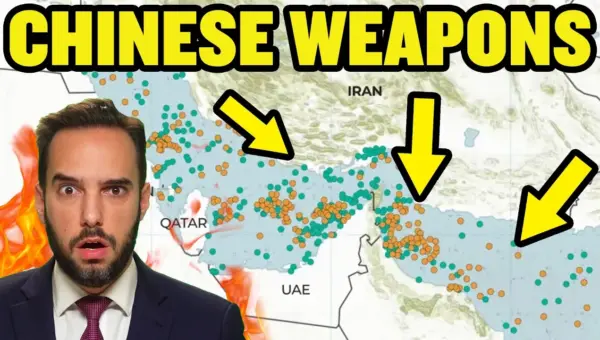
Recent intelligence suggests China is secretly supplying Iran with weapons like MANPADS and sharing critical intelligence, a significant escalation from its previous stance. This move, if confirmed, could deepen regional conflict and lead to severe US economic retaliation, while highlighting long-standing strategic ties between Beijing and Tehran.