US Troops Arrive in Nigeria for Anti-Terror Training
The United States has deployed approximately 100 troops to Nigeria to train local forces in anti-terrorism operations. This move aims to bolster regional stability amidst growing concerns over militant group expansion and the impact of geopolitical shifts. The deployment emphasizes intelligence gathering to inform U.S. strategy in a complex security environment.

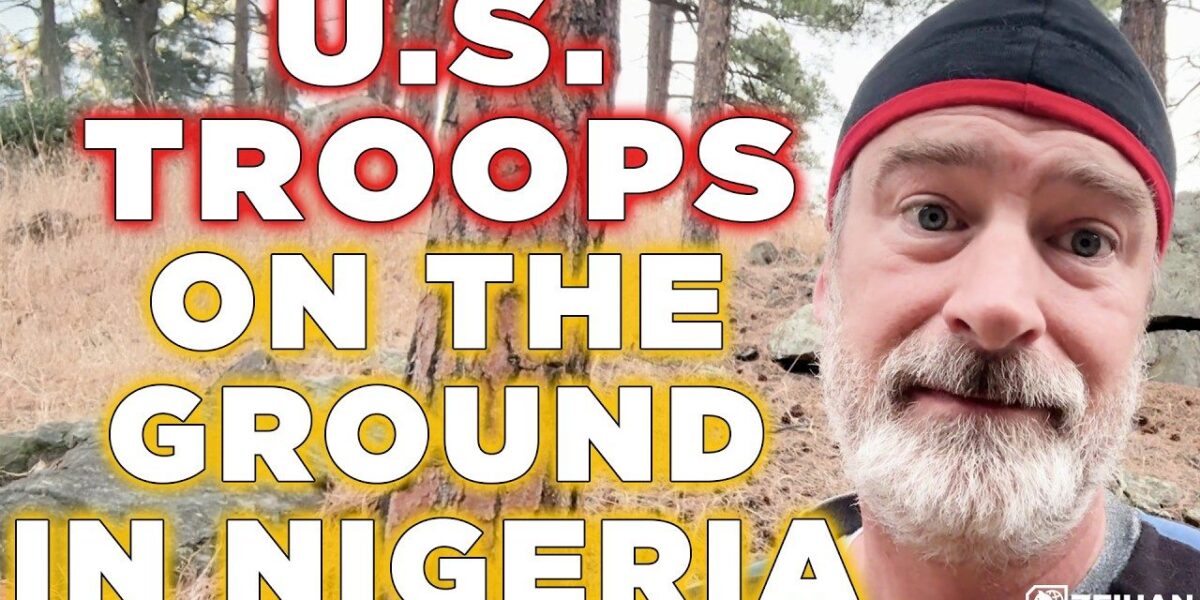
US Deploys Troops to Nigeria Amidst Growing Security Concerns
Colorado – On February 17th, the United States initiated a significant deployment of military personnel to Nigeria, marking a new phase in the international effort to combat terrorism in West Africa. Approximately 100 U.S. troops have arrived in the country to train local forces in counter-terrorism operations, with further contingents expected in the coming days and weeks. This move comes at a critical juncture for Nigeria, a nation grappling with complex internal security challenges and a vital player in regional stability.
Context: The Rise of Militancy and Misinformation
The deployment follows a period of heightened attention, particularly within certain political circles in the U.S., surrounding the security situation in Nigeria. Reports circulating during the Christmas season in December focused on alleged massacres of Christians, fueling calls for intervention. Notably, on Christmas Day, a U.S. military operation targeted a jihadi stronghold in northern Nigeria. This action, while seemingly responsive to reported threats, was described by geopolitical analyst Peter Zeihan as a response to a narrative that was largely a “collective MAGA fabrication.” The Nigerian government, while internally displeased with unilateral U.S. military action on its soil, opted for a diplomatic approach. Rather than publicly condemning the action, they acknowledged their own significant militancy problem and extended an invitation for U.S. assistance, a move that paved the way for the current training mission.
“Most of this was just a collective MAGA fabrication… but this time it resulted in the United States actually bombing someone which is generally not a good reason to do it.”
Why Nigeria? Strategic Importance and Regional Dynamics
The decision to focus on Nigeria is underscored by the nation’s immense strategic importance. With a population exceeding 230 million, Nigeria is the most populous country in Africa and a significant energy producer, capable of exporting between one and three million barrels of oil daily. It stands as the undisputed superpower of West Africa. When Nigeria is stable, it projects power and stability throughout the region. Conversely, internal instability can lead to widespread conflict, impacting neighboring countries and U.S. interests.
The current deployment is also seen as a direct consequence of shifting geopolitical dynamics, particularly the fallout from the war in Ukraine. Zeihan suggests that Russia actively sought to sow chaos globally to distract from its actions in Ukraine. In the Sahel region, south of the Sahara Desert, Russian influence is believed to have encouraged the proliferation of Islamic terrorism under the guise of counter-terrorism efforts. This strategy included supporting regimes undergoing coups and facilitating the withdrawal of French forces, who previously maintained a significant presence in former French West African colonies like Burkina Faso and Mali.
The departure of French forces has created a security vacuum, allowing militant groups to expand their reach into areas like northern Nigeria. The U.S. troop deployment is thus viewed as a crucial effort to push back against this tide of instability, with a consolidated Nigeria seen as the most viable bulwark against further regional disintegration. The absence of former European security partners means that Nigeria, with U.S. support, may have to shoulder a greater responsibility for regional security.
A New Approach: Fact-Finding on the Ground
A key aspect of this deployment is its nature: the U.S. troops are not primarily combat forces but advisers tasked with training and, crucially, gathering intelligence. This represents a departure from the current U.S. administration’s typical reliance on rhetoric and information gleaned from online sources. The presence of U.S. personnel directly interfacing with Nigerian forces on a daily basis aims to provide a ground-level understanding of a complex and nuanced security environment, one that may differ significantly from narratives circulating online.
The information gathered by these troops will be pivotal. While the U.S. may not have immense direct interests in the region, maintaining stability and containing the spread of Islamic terrorism is a strategic objective. The potential for these groups to penetrate further into central or southern Nigeria could destabilize the entire region, creating a far more severe crisis. The effectiveness of this mission will depend on how the U.S. government utilizes the intelligence gathered, balancing it against prevailing online narratives that may not accurately reflect the on-the-ground reality.
Looking Ahead: The Challenge of Information and Action
The coming months will be critical as the U.S. administration processes the intelligence gathered by its deployed forces. The challenge lies in synthesizing this on-the-ground information with the often-polarized and sometimes misleading narratives that dominate public discourse. The decision-making process will involve a careful balancing act, weighing strategic interests against the complex realities of Nigeria’s security landscape. The success of this training mission and its broader implications for regional stability will be closely watched, particularly in its ability to counter the spread of extremism and foster a more secure West Africa.
Source: U.S. Boots on the Ground in Nigeria || Peter Zeihan (YouTube)

Related Articles

US Markets Surge as Iran Tensions Ease, Oil Prices Steady
U.S. stock markets are hitting new highs as tensions with Iran ease, with the S&P 500 reaching record levels. Despite persistent oil prices around $92 a barrel, the U.S. economy shows resilience, boosted by record oil exports. The focus is shifting to the economic confrontation with Iran, including the non-renewal of oil sales waivers, and long-term strategies to bypass the Strait of Hormuz.


Trump’s Blockade Fails, Allies Shun Mission: A Pattern?
A reported failure of Donald Trump's blockade of the Strait of Hormuz, with ships passing through unimpeded, raises questions about policy effectiveness. This incident, coupled with allies' reluctance to join the mission, suggests a pattern of unintended consequences and strained international relations.


Russia’s War Costs Strain Putin’s Elite Bargain
Russia's prolonged war in Ukraine is straining President Putin's grip on power. Declining oil revenues and escalating military costs are forcing internal power shifts, with intelligence services reportedly gaining influence. This financial pressure is creating significant discontent among the elite and risking broader instability within the Kremlin.