Kremlin’s Ambiguity Masks Deeper Geopolitical Shifts as Ukraine War Enters New Phase
The Ukraine conflict is marked by Kremlin ambiguity on peace talks and covert destabilization efforts, even as Europe steps up as Kyiv's primary backer. This complex scenario is further complicated by a shadowy network of support for Russia from China, Iran, and North Korea, reshaping global security and energy markets while ordinary lives are irrevocably transformed by the ongoing war.

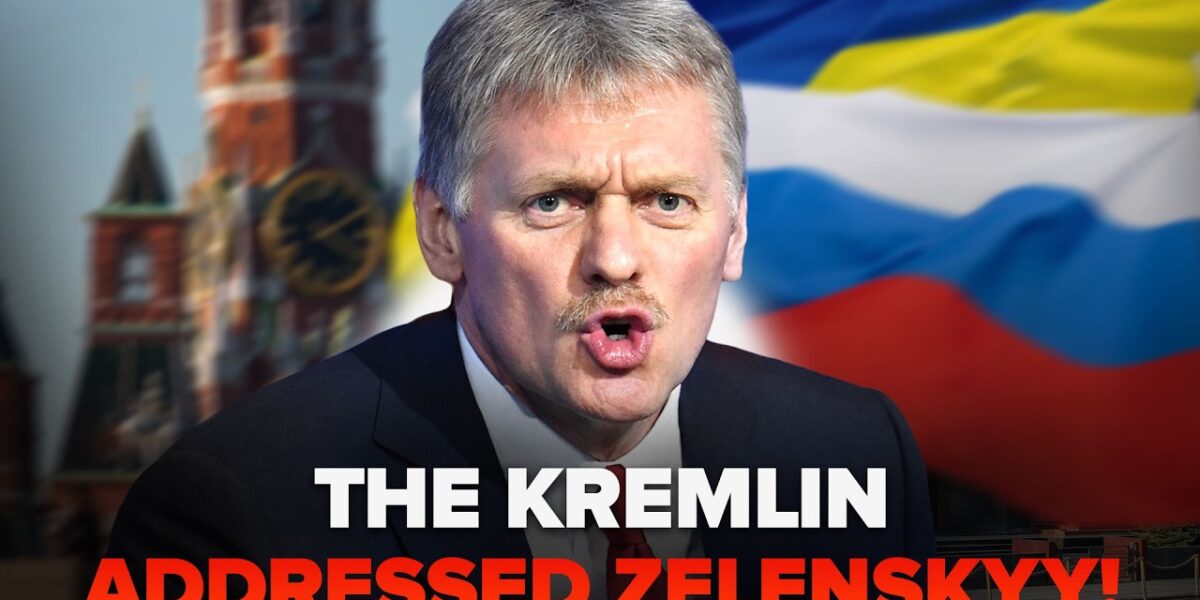
Kremlin’s Ambiguity Masks Deeper Geopolitical Shifts as Ukraine War Enters New Phase
The protracted conflict in Ukraine continues to unfold against a backdrop of diplomatic ambiguity, shifting international alliances, and intensifying battlefield dynamics. Recent developments highlight a stark disconnect between public statements and covert actions, particularly from Moscow, as global powers grapple with the war’s far-reaching implications. While Kyiv asserts its readiness for further peace talks in Switzerland, the Kremlin’s sudden denial of confirmation casts a long shadow over any immediate diplomatic breakthroughs, signaling a tactical maneuver that extends beyond mere negotiation.
This diplomatic stalemate is juxtaposed with revelations of a sophisticated Russian assassination plot targeting prominent Ukrainians and foreign nationals, underscoring Moscow’s multi-faceted strategy of destabilization. Concurrently, a significant shift in Western support sees Europe stepping up as Ukraine’s primary backer, challenging previous assumptions about the conflict’s trajectory. These intricate layers of overt and covert actions are further complicated by the emergence of a shadowy network of support for Russia, involving countries like China, Iran, and North Korea, reshaping global security paradigms and energy markets.
The Diplomatic Deadlock: Kremlin’s Ambiguity and Europe’s Assertiveness
Stalled Peace Talks and Russia’s Maximalist Stance
The prospect of a new round of Ukraine peace talks, reportedly scheduled for Switzerland, has been met with characteristic Kremlin opacity. While Ukrainian President Volodymyr Zelenskyy openly confirmed the planned meeting in an interview with Piers Morgan, stating unequivocally that “the next meeting is indeed planned in Switzerland,” Dmitry Peskov, Putin’s spokesperson, offered a starkly different narrative. Peskov claimed there was “no confirmation of Geneva talks” and asserted that Moscow would only comment once there was a “clear understanding.” This deliberate ambiguity from the Kremlin, described by observers as “playing dead,” stands in stark contrast to weeks of projected Russian confidence about negotiations, during which Moscow insisted talks must proceed on its own terms.
The sudden shift in tone, from insisting on negotiations to feigning ignorance, suggests several possibilities. It could indicate that the proposed terms or venue for the talks are not aligning with Moscow’s strategic objectives, or perhaps, as some analysts suggest, Russia remains unwilling to acknowledge Ukraine as an equal sovereign entity at the negotiating table. The core issues that divide the two nations – primarily territorial integrity and Ukraine’s sovereignty – remain insurmountable obstacles. Russia’s consistent maximalist demands, including territorial concessions and political control over Ukraine, have repeatedly derailed any meaningful progress. Western officials have openly expressed skepticism, noting that Moscow appears to be deliberately prolonging negotiations rather than genuinely seeking compromises. The latest US-brokered talks in Switzerland, the third direct contact between Ukrainian and Russian envoys, reportedly managed to discuss only technical issues, frontline dynamics, and potential ceasefire monitoring, with no visible progress on the central question of territory.
The choice of Russia’s negotiator further reinforces this perception of intransigence. Vladimir Medinski, known for his hardline rhetoric, once again led the Russian delegation. His presence, coupled with Russia’s repeated insistence on maximalist demands, suggests a strategy aimed more at projecting strength and diplomatic stonewalling than at achieving a genuine resolution. Concurrently, Russian Foreign Minister Sergey Lavrov has intensified his attacks on the United States on global issues, positioning Russia as a defender of the non-Western world, even as its war in Ukraine continues. This two-pronged approach – diplomatic obstructionism in direct talks and broader geopolitical posturing – underscores Russia’s strategy of leveraging the conflict to reshape global power dynamics, rather than focusing solely on a swift end to hostilities.
Europe Steps Up, Demanding a Seat at the Table
Amidst the diplomatic gridlock, President Zelenskyy has made it clear that Kyiv expects Europe to remain fully involved in any future peace process. Following the latest round of talks that yielded no breakthrough, Zelenskyy emphasized that any future negotiations must reflect European positions alongside Ukraine’s own. “It was essential that European partners were present in Switzerland and this is the approach we will continue to follow to ensure Europe’s views are fully reflected,” he stated, also commending his delegation for maintaining “clear discipline and unity.” This assertion highlights Ukraine’s desire for a broad, unified international front in negotiations, preventing any settlement framework from emerging without comprehensive European input.
This push for European involvement coincides with a significant shift in the dynamics of Western support for Ukraine. With the United States stepping back and holding direct military aid, Europe has increasingly demonstrated its capacity and willingness to carry the burden. Over the past year, European governments have sharply expanded weapons deliveries and financial support, effectively replacing Washington as Kyiv’s main lifeline. Much of this support is now funded by European taxpayers, even for weapons produced in the United States, signifying a profound commitment. European leaders argue that this increased responsibility grants them both the obligation and the right to shape decisions concerning the war and any future settlement. While America continues to provide critical intelligence and strategic capabilities, the balance of on-the-ground support is undeniably changing. Europe is transitioning from a junior partner to the primary backer of Ukraine’s defense, demonstrating its ability to sustain this crucial role even as US engagement becomes more uncertain. This evolving landscape of international support not only impacts the war’s trajectory but also strengthens Europe’s diplomatic leverage, aligning with Ukraine’s call for a more robust European presence at the negotiating table.
Shadow War and Destabilization: Russia’s Assassination Plots
Unveiling a Network of Contract Killers
Beyond the diplomatic arena and conventional battlefield, a darker, more insidious dimension of Russia’s war against Ukraine has come to light. Russian intelligence services were actively preparing a series of contract killings targeting prominent Ukrainians and foreign nationals, with the network’s organizer operating from abroad. This revelation underscores Russia’s continued reliance on hybrid warfare tactics, extending beyond military aggression to include covert operations aimed at destabilization and terror.
According to Ukraine’s Prosecutor General’s Office, a joint operation with Moldovan authorities successfully disrupted this plot, leading to the arrest of ten members of the group. Seven arrests were made in Ukraine, and three in Moldova, crucially including the coordinator of the network. Investigators revealed that the cell operated under direct supervision of Russian intelligence and was planning assassinations of at least five public figures. Among the intended targets was Ukrainian military intelligence spokesperson Andriy Yusov, a figure central to Ukraine’s information warfare efforts. The scope of the plot indicates a deliberate attempt to sow chaos and eliminate key voices within Ukraine’s defense and political establishment.
The operational details of the plot paint a chilling picture. Members of the network meticulously collected surveillance data on victims’ movements and residences, prepared weapons for the assassinations, and mapped out elaborate escape routes. They were promised substantial payments, reportedly up to $100,000, with the amount varying based on the prominence of the target. These financial incentives highlight the mercenary nature of such operations, leveraging individuals willing to engage in state-sponsored violence. More than 20 coordinated searches conducted across several Ukrainian regions uncovered a cache of firearms, explosives, sophisticated communications devices, and irrefutable evidence of direct contacts with their Russian handlers. Authorities believe these planned killings were not merely isolated acts but were intended to trigger major public shock and serve Russia’s broader strategy of destabilization inside Ukraine, aiming to undermine public confidence and create internal discord. The ongoing investigation is expected to reveal further details about the network’s reach and operational methods, potentially exposing additional layers of Russian covert influence.
Hybrid Warfare and the Threat to Stability
This assassination plot is a stark reminder of Russia’s long-standing use of hybrid warfare, a strategy that combines conventional military force with irregular tactics, including propaganda, cyberattacks, economic pressure, and covert operations. Historically, Russian intelligence agencies have been implicated in numerous assassinations and attempted assassinations of critics and defectors abroad, from the poisoning of Alexander Litvinenko in London to the Novichok attack on Sergei and Yulia Skripal in Salisbury. These incidents demonstrate a pattern of extraterritorial operations designed to project power, instill fear, and eliminate perceived enemies of the state.
The targeting of Ukrainian public figures and foreign nationals within Ukraine fits this established pattern, but with a heightened scale and audacity given the ongoing full-scale invasion. The involvement of Moldovan authorities in disrupting the plot also underscores the regional implications of Russia’s destabilization efforts. Moldova, a country with its own frozen conflict in Transnistria and a pro-Western government, is particularly vulnerable to Russian influence and covert operations. The success of this joint operation highlights the critical importance of international cooperation in countering such threats. For Ukraine, these plots represent a continuous challenge to its internal security and national cohesion, demanding constant vigilance and robust counter-intelligence measures. The broader implication is that Russia’s war extends far beyond the front lines, permeating the political and social fabric of Ukraine and its neighbors, utilizing terror and intimidation as instruments of state policy.
Shifting Tides on the Battlefield: Ukraine’s Resilience and Russia’s Strain
Technological Edge and Tactical Gains
While diplomatic efforts falter and covert operations persist, the battlefield remains the ultimate arbiter of the conflict’s direction. For months, a prevailing belief in some Western capitals suggested that Russia, with its larger troop numbers and greater equipment reserves, could simply outlast Ukraine. However, recent developments on the front lines are beginning to challenge this assumption, revealing a dynamic shift in momentum and capabilities.
In a significant tactical achievement, Ukrainian forces reportedly retook more than 200 square kilometers in the Zaporizhzhia sector in just five days. This rapid advance marks the fastest territorial gain in two and a half years and a quicker pace than Russia achieved during its entire offensive push last December. Such localized successes demonstrate Ukraine’s evolving combat effectiveness, supported by innovative use of technology and Western military aid.
Technology is indeed playing an increasingly pivotal role. New Ukrainian-developed fixed-wing FPV (First Person View) drones are now striking targets tens of kilometers beyond the front line, effectively bypassing sophisticated Russian electronic warfare defenses. These drones, often inexpensive and adaptable, provide Ukraine with a crucial asymmetric advantage, enabling precision strikes and disrupting Russian logistics and command structures from a distance. Furthermore, Western-supplied armored vehicles are helping to narrow Russia’s long-standing artillery advantage. These modern vehicles offer superior protection and mobility, improving crew survivability in intense combat environments and allowing Ukrainian forces to maneuver more effectively against entrenched Russian positions. The integration of these advanced technologies, coupled with adaptive tactics, is allowing Ukraine to challenge Russia’s numerical superiority and inflict disproportionate damage, thereby reshaping the tactical landscape.
Manpower Crisis and the Limits of Attrition
Beyond technological advancements, the human cost of the war is exerting immense pressure on both sides, but particularly on Russia. Ukrainian estimates suggest Russian losses now exceed over one million killed and wounded since the full-scale invasion began, a staggering figure that, if accurate, represents a catastrophic depletion of military personnel. Crucially, these casualties have reportedly exceeded new recruitment for several consecutive months, indicating a severe strain on Russia’s ability to replenish its forces through conventional means. This demographic and military pressure is becoming increasingly visible on the battlefield, impacting unit cohesion, morale, and overall combat effectiveness.
The strain on Russia’s mobilization pool is reflected in Moscow’s increasing reliance on foreign recruits. Reports indicate that Russia is actively recruiting mercenaries and soldiers from countries like Cuba, India, and various parts of Africa. This reliance on external manpower highlights the limits of Russia’s own domestic mobilization capacity and its struggle to sustain the war effort with its own citizens. While Russia initially seemed to pursue a strategy of attrition, banking on its larger population and industrial base to outlast Ukraine, these battlefield trends and attrition dynamics suggest that time is no longer working exclusively in Moscow’s favor. The trajectory of the conflict is gradually tilting towards Kyiv, as Ukraine demonstrates not only resilience but also an increasing capacity to innovate and adapt, effectively countering Russia’s numerical advantages and imposing significant costs on the invading forces.
The Covert Axis: China, Iran, and North Korea’s Roles in Sustaining Conflict
China’s “Neutrality” Under Scrutiny: The Drone Supply Chain
While the world’s attention remains fixed on negotiations and the role of Western powers, a less visible yet equally critical axis of support for Russia is becoming increasingly apparent. China, despite publicly presenting itself as a neutral mediator in the conflict and denying any military support to Russia, is reportedly playing a pivotal role in enabling Russia’s drone warfare against Ukraine. This support, rather than being direct, is channeled through a quiet transit hub in Southeast Asia, specifically Thailand.
According to Bloomberg, Thailand has emerged since 2022 as a key route for Chinese drones reaching Russia. The numbers are striking: in the first 11 months of 2025 alone, as reported, Russia imported an astonishing $125 million worth of drones from Thailand. This figure accounts for almost the entirety of Thailand’s drone exports during that period and represents an eightfold increase from the previous year. During the same timeframe, China shipped $186 million in drones to Thailand, effectively supplying nearly all of its imports. This intricate scheme reveals a textbook example of sanctions circumvention: Chinese drones enter Thailand and are then redirected to Russia through a network of intermediaries and shell companies. Some of these shipments include civilian models from Chinese manufacturer OTEL, which are known to be adapted and used on the battlefield for reconnaissance and attack purposes. The subtlety of this operation is further highlighted by the fact that one major trading firm involved, previously sanctioned by the United Kingdom for supplying technology to the Russian military, simply changed its name and continued its operations. Washington has repeatedly asserted that China provides the bulk of dual-use components sustaining Russia’s war effort, a claim Beijing consistently denies. However, the documented trade flows tell a different story, indicating that while China may not be openly supplying weapons, its covert facilitation of dual-use technologies, particularly drones, is a significant enabler of Russia’s military aggression.
The Russia-Iran Alliance: A New Geopolitical Front
Another crucial element of this emerging anti-Western axis is the deepening military cooperation between Russia and Iran. The two nations are now conducting joint military drills, a move interpreted as a direct response to rising tensions between Tehran and Washington. Iran has already established itself as a key military partner for the Kremlin, supplying a substantial number of drones, particularly the Shahed series, which Russia has used extensively and devastatingly against Ukrainian civilian infrastructure and military targets. This cooperation is now moving to a new level, openly demonstrating mutual support on the global stage, challenging the existing Western-led security order.
The implications of this alliance extend beyond the battlefield in Ukraine. Global oil prices recently surged to a six-month high, a direct market reaction after Donald Trump issued fresh threats to Iran over its nuclear program, almost immediately followed by Tehran’s announcement of joint naval exercises with Russia near the Strait of Hormuz. This critical maritime choke point, through which roughly one-fifth of the world’s oil supply passes, is a flashpoint for global energy security. Traders quickly priced in the risk of escalation and a potential disruption to energy flows, highlighting the immediate economic ramifications of this burgeoning axis. In effect, Moscow and Tehran are signaling their preparedness to act together, not only against Ukraine but more broadly against the Western security order. Russia gains access to crucial weapons technology and a strategic foothold in the Middle East, while Iran receives advanced military technology and invaluable political cover on the international stage. What is gradually emerging is a formidable military-political axis stretching from Eastern Europe to the Persian Gulf, a development that is already shaping not only the war in Ukraine but also the stability of global energy markets and the broader geopolitical landscape.
North Korea’s Soldiers: A Live Training Ground for Future Threats
Adding a further layer to this complex web of alliances, North Korea has also become an active participant, albeit indirectly, in Russia’s war effort, with significant long-term implications. Assessments from Ukrainian military intelligence and South Korea’s National Intelligence Service indicate that approximately 10,000 North Korean troops are currently on Russian territory. These forces are not merely observing; they are gaining real combat experience in the war against Ukraine, receiving training in artillery, reconnaissance, and multiple types of drones under actual battlefield conditions. This represents an unprecedented opportunity for North Korea to modernize its military doctrine and capabilities through practical, real-world application.
Units are reportedly rotated back to North Korea after their deployments, where many of these battle-hardened soldiers become instructors, transferring newly acquired skills across the North Korean military. In essence, Russia has inadvertently or deliberately transformed its war against Ukraine into a live training ground for Pyongyang’s army. The long-term risk of this arrangement is profound. These troops are not returning with theoretical knowledge but with hands-on expertise in modern warfare, including sophisticated drone operations and effective counter-strike tactics. This experience could significantly strengthen North Korea’s military capabilities, once it is disseminated throughout the regime’s armed forces. Such a development poses a serious threat to regional security in East Asia, potentially emboldening North Korea and exacerbating tensions with South Korea, Japan, and the United States, further complicating the already precarious global security environment.
The Human Cost: Lives Transformed by War
From Ballroom Dancer to Sniper: Tatiana’s Unforeseen Path
Amidst the grand geopolitical narratives and the grim statistics of war, the most poignant stories are those of ordinary individuals whose lives have been irrevocably altered. Tatiana, a 47-year-old mother of two from eastern Ukraine, embodies this profound transformation. Before Russia’s full-scale invasion, her life was a vibrant tapestry of movement and music. She was a ballroom dance instructor, an international judge, and the proud owner of her own studio, her days filled with competitions, travel, and constant motion across Europe and Asia. What once felt like a routine, she now misses the most.
February 21st, 2022, stopped the music. That morning, Tatiana understood she could no longer continue dancing and had to join the army. After rigorous training in Europe and service in several units, she made a deliberate choice to become a sniper in an air assault regiment. This was not a random decision; shooting had always been a part of her life, a quiet hobby she pursued while walking in the park with her children, often hitting bull’s-eyes at a small shooting range. Her explanation for choosing sniping is unexpectedly profound: for her, it is a creative profession. Having studied physics and mathematics at university, the blend of precision and creativity inherent in sniping felt natural. In combat, she operates with a calm, focused intensity, akin to an athlete in competition. Yet, the war has changed her permanently. She speaks quietly about becoming a different person, feeling as if the strongest emotions of her life have already been lived. She yearns to climb mountains, swim in the ocean, and see the world, but knows she will never feel the same way again. “Life goes on. This is our life and this is our choice but a choice made within the realities we found ourselves in. We are ordinary people who simply ended up in extraordinary circumstances. There wasn’t a single moment, no sudden click when I felt that my whole life had changed. But now it feels almost impossible to return to the life we had before.” Tatiana’s story is a powerful testament to the irreversible impact of war, illustrating how ordinary lives are pushed into extraordinary realities, and the painful truth that sometimes, there is simply no returning to who you were before.
The Vanuko Family’s Escape: A Glimpse into Occupation
The stark realities of occupation are brought into sharp focus through the harrowing experience of the Vanuko family. They woke one morning to the frantic barking of their dog, only to look outside and see Russian soldiers, identifiable by their white armbands, already patrolling their street. In that terrifying moment, they understood their village in eastern Ukraine was occupied, and the life they knew was irrevocably over. For days, they hid in a damp basement, enduring incessant shelling above while groundwater steadily rose from below. Russian troops, armed with rifles, patrolled the streets, conducted invasive searches of homes, and established intimidating checkpoints. The very essence of their identity – who they were, where they worked, what they believed – could suddenly put them in grave danger.
Ena, the mother, made the agonizing decision to flee with her teenage son, recognizing that staying could cost them their lives. Her husband, Alexi, remained behind for several days to safeguard their home. It was during this period that Russian soldiers dragged him off the street, pushed a rifle to the back of his head, and pulled the bolt, leaving him certain of imminent execution. Alexi miraculously survived this terrifying encounter and later managed to escape. The family eventually reached Estonia, carrying only a single suitcase containing “all the documents… everything we had. We had warm clothes on us, plus warm clothes as spares, socks, towels, toothpaste, and that’s it. We came here with that suitcase.” Today, they are painstakingly building a new life, working, raising their young daughter, and grappling with the painful reality that their parents still reside in their occupied village, where only a fraction of the original residents remain and basic services have completely collapsed. The plight of those remaining under occupation is dire, facing immense pressure to accept Russian passports. As the transcript states, “They have the right to live at home for a certain amount of time and then as non-citizens of the Russian Federation, they have to leave. And this, of course, leaves almost no opportunity to refuse a Russian passport, especially since a Russian passport is tied to a whole range of other things. You can’t find a job. You won’t get medical care. Your children don’t get educational services. Well, you’re simply excluded.” This coercive policy highlights the systematic efforts to consolidate control and erase Ukrainian identity in occupied territories, making refusal of a Russian passport tantamount to social and economic exclusion, and a direct threat to survival. The Vanuko family’s story is a powerful testament to the brutal realities faced by millions, forced to choose between fleeing their homes or enduring life under a hostile occupation.
Conclusion: A Prolonged Conflict with Global Ramifications
The war in Ukraine, now well into its third year, is evolving into a multifaceted conflict with profound geopolitical and humanitarian consequences. The Kremlin’s strategic ambiguity regarding peace talks, coupled with its covert destabilization efforts, suggests a long-term strategy aimed at exhausting Ukraine and fracturing international resolve. However, Ukraine’s resilience, bolstered by shifting Western support and its own tactical innovations, is challenging Russia’s assumptions about attrition and endurance.
The emergence of a complex network of support for Russia from China, Iran, and North Korea not only sustains Moscow’s war effort but also reconfigures global alliances, creating new axes of power that challenge the existing international order. These alignments have immediate implications for regional stability, energy markets, and the proliferation of military capabilities. Ultimately, while the grand strategies and geopolitical maneuvers unfold, the human cost remains staggering, with millions displaced and countless lives irrevocably transformed. The stories of individuals like Tatiana and the Vanuko family serve as a stark reminder of the personal tragedies behind the headlines, underscoring the urgent need for a just and lasting peace, even as the path to achieving it remains fraught with challenges.
Source: ⚡Peskov's new statement shocked everyone! Kremlin made an unthinkable move after negotiations (YouTube)

Related Articles


Oil Prices Surge to $91 Amid Geopolitical Tensions
Oil prices have surged to $91 a barrel, driven by disruptions in the Strait of Hormuz. This is leading to higher gas prices across the U.S., with California facing particularly steep costs. The situation is fueling debate on energy policy, exports, and the transition to renewable fuels.

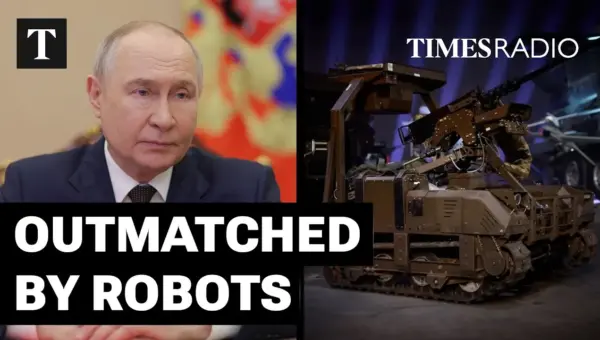
Ukraine War Robots Make Russian Tech Obsolete, Expert Says
Ukraine has achieved a historic military victory using ground robotic systems, marking a potential turning point in warfare. Defense tech expert Igor Novikov described the event as groundbreaking, highlighting the rapid evolution of conflict and Ukraine's role in pioneering its future. The conversation also touched upon concerns regarding UK defense spending and the global implications of proliferating autonomous weapon systems.

China’s Iran Gambit: Deception or a New World Order?
President Trump claims China will stop sending weapons to Iran, but deep skepticism remains due to China's past support and use of spy satellites to aid Iran. This move could be a strategic ploy to weaken the US military.