UK Military Readiness Questioned Amidst War Fears
A former top general and a government minister have issued a stark warning about the UK's military readiness, suggesting a potential war within three years is a real possibility. They criticize a lack of clear government signals and investment, which is causing the UK to fall behind European counterparts in defense preparedness and industrial strategy.

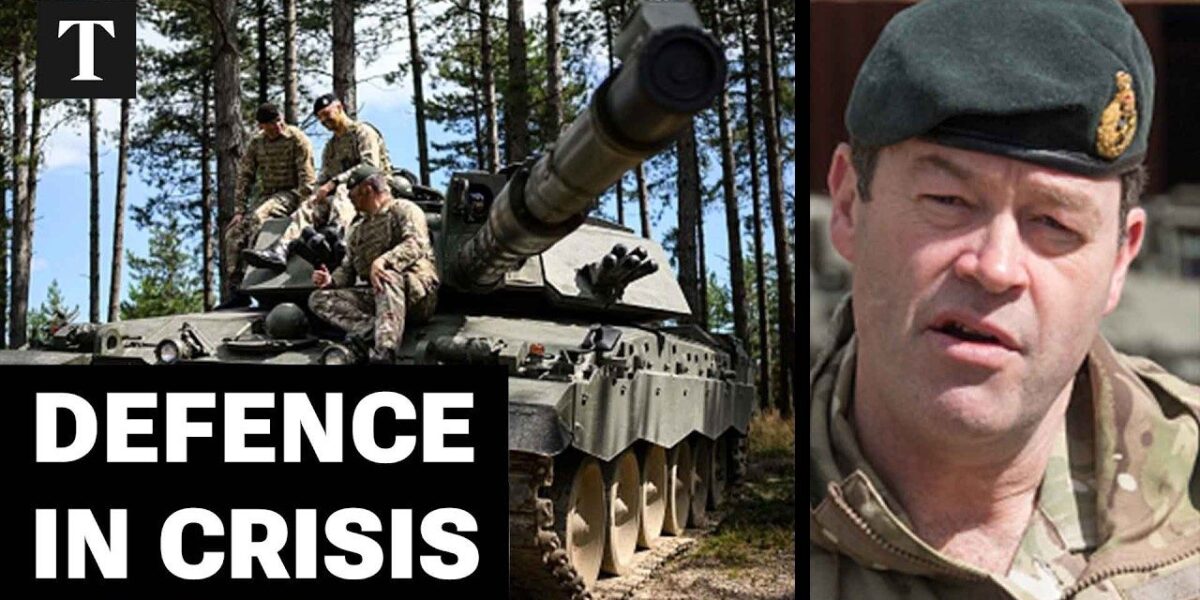
UK Faces Potential War Within Years, Lacks Readiness
A stark warning has emerged from the UK’s defense establishment, suggesting the nation could be on the brink of a major military confrontation within three years and is critically unprepared. The sentiment was voiced by Veterans Minister Alun Cairns, who, in a candid discussion with former Chief of the General Staff General Sir Patrick Sanders and The Times’ Tom Newton Dunn for their “General and the Journalist” podcast, highlighted the escalating risks and the UK’s lagging preparedness.
Urgency of the Threat: A 3-5 Year Window
General Sir Patrick Sanders, who has previously been clear about the potential for geographically constrained conflict within a 3 to 5-year timeframe, acknowledged the urgency. While specific dates like 2029 or 2030 have been mentioned by international counterparts, Sanders stressed that the reality is the UK simply needs to be ready. “We’d be lucky,” he stated, when pressed on the 2029 timeline, acknowledging that some now point to 2027 due to the increasing pace of global military developments. He underscored that historical attempts to predict such timelines have proven inaccurate, emphasizing the imperative of readiness regardless of precise forecasts.
“The potential for a military confrontation in quite a rapid time scale is increasing. People talk about dates like 2029. I think the Dutch defense minister did that. Uh 2030. First of all, do you recognize the urgency of that time frame when it comes to deterring Russia? Yes. So 3 to 5 years if I was always been clear on this and I’ve been clear with other people 3 to 5 years for geographically constrained conflict in some way shape or form.” – General Sir Patrick Sanders
Critique of Defense Investment and Industrial Strategy
A significant point of contention raised during the discussion was the perceived inaction and lack of clear signals from the government to the defense industry. General Sanders expressed frustration over the delayed publication of the Defense Industrial Strategy, a crucial document intended to provide confidence and direction to companies. “It’s mad,” he remarked, describing the situation from an industry perspective where companies are expending their own capital and innovating without clear government orders or demand signals.
He drew a parallel with other European nations, including Poland, the Nordics, Baltics, and Germany, which have actively engaged their industries to bolster defense capabilities. “The Poles have done it, the Nordics, the Baltics, the Germans are doing it right now, we’re not doing it. Um, and so we are falling behind,” Sanders stated, pointing to a critical gap in the UK’s approach.
Technological Adaptation and the Reality of Modern Warfare
The conversation also delved into the rapid evolution of warfare, particularly in light of the conflict in Ukraine. Alun Cairns’ observation that soldiers are being trained on technology that is becoming obsolete, while a drone operator could be trained in two weeks to achieve significant impact, highlighted a disconnect. General Sanders clarified that while technology like drones is crucial, it doesn’t render traditional capabilities obsolete. “Until a drone is capable of holding ground or taking a city or controlling resources, then you’re always going to need humans on the battlefield,” he explained. The key, he argued, is adaptation and integration, not replacement.
He elaborated on the continuous adaptation seen on the Ukrainian battlefield, noting that both sides are iterating on technologies at a rapid pace. “So, you know, the Ukrainians themselves and indeed the Russians have had to adapt in, you know, initially within a matter of months and now on a pretty much a fortnightly cycle of constant adaptation and iteration of the sort of technologies that we’re seeing playing out on the battlefield there,” Sanders said.
Leadership and Political Will
Both Cairns and Sanders implied a need for stronger leadership and a more unified political approach to defense. While Cairns was careful not to directly criticize the Prime Minister, his background as a former Royal Marine and his entry into politics to “fix things” suggested a deep-seated frustration with the pace of change. General Sanders echoed this, noting that “pretty much anybody who works uh in and around defense and security is frustrated by by the inaction and the lack of a sense of urgency.”
Sanders acknowledged the Prime Minister’s strong rhetoric, including his call to increase defense spending to 3% of GDP by 2029, but stressed that rhetoric must be matched by concrete action. He called for a cross-party consensus to depoliticize defense spending and a reprioritization of public funds or closer collaboration with private finance to secure the necessary investment. “But whatever mechanism it is, we need to do it now and urgently,” he urged.
Broader Implications: Commitments and Capabilities
The discussion touched upon the strain on UK military commitments, referencing a report suggesting the UK might struggle to deploy promised troops to Ukraine due to existing resource constraints. General Sanders noted that while he could not comment on specific plans, the situation highlights a trend of increasing and more frequent commitments coupled with static or even decreasing force sizes. “This tells us that commitments are getting bigger and harder and more often. They’re coming more often. They’re not getting fewer. And yet, the size of our armed forces either isn’t increasing or in some cases it’s reducing. So is it just a signal that the age needs us to invest in our own defense and resilience?” he questioned.
The Role of Artificial Intelligence
Addressing the growing role of Artificial Intelligence (AI) in military technology, General Sanders expressed a nuanced view. He confirmed that AI is already operational on the battlefield, offering significant benefits in areas like decision support, logistics efficiency, and removing personnel from harm’s way. However, he strongly emphasized the critical importance of AI safety, citing the UK’s world-leading AI Safety Institute. “But the thing we’ve always been clear about, and actually we’re very good at in this country, is the importance of focusing on AI safety,” he stated. He firmly asserted that the decision to use lethal force, particularly in contexts involving nuclear capabilities, must remain a human one.
Looking Ahead: A Call for Action
The conversation concludes with a palpable sense of urgency. The gap between strong rhetoric on defense and tangible action remains a significant concern. As global security dynamics continue to shift rapidly, the UK faces a critical juncture. The coming months will be crucial in determining whether the government can translate its pronouncements into concrete policies and investments, ensuring the nation is adequately prepared for the escalating challenges on the international stage. The need for a clear, sustained, and adequately funded defense strategy, supported by cross-party consensus, has never been more apparent.
Source: We Could Be At War In Three Years And The UK Is Not Ready | General Patrick Sanders (YouTube)

Related Articles

Iran War Costs Mount, Deal Prospects Dim
The war in Iran is costing the U.S. billions daily, impacting inflation and healthcare costs. While military gains are noted, concerns remain about Iran's nuclear ambitions and the lack of a clear diplomatic path. A "grand bargain" is sought, but the economic and human costs at home are rising.

China-US Tensions Flare: Blockade Risk Sparks Superpower War Fears
The U.S. blockade in the Strait of Hormuz has intensified tensions with China, raising fears of a potential superpower conflict. Expert Roger Boyes highlights China's use of a "shadow fleet" and military support for Iran, while President Trump attempts a delicate diplomatic approach ahead of a key meeting with President Xi Jinping.

Trump Sees Iran Conflict Near End, Analysts Urge Caution
President Trump believes the conflict in Iran is "very close to over," but former advisor Keith Kellogg urges a cautious approach. The potential de-escalation could impact global markets, particularly oil prices. Investors should monitor the specifics of any resolution and its long-term implications for regional stability.