GOP Lawmakers Part Ways With Trump on Tariffs Post-SCOTUS Ruling
Republican lawmakers are increasingly diverging from Donald Trump following a Supreme Court ruling that limits presidential tariff authority. This shift highlights fractures within the GOP and raises questions about Trump's influence on economic policy.

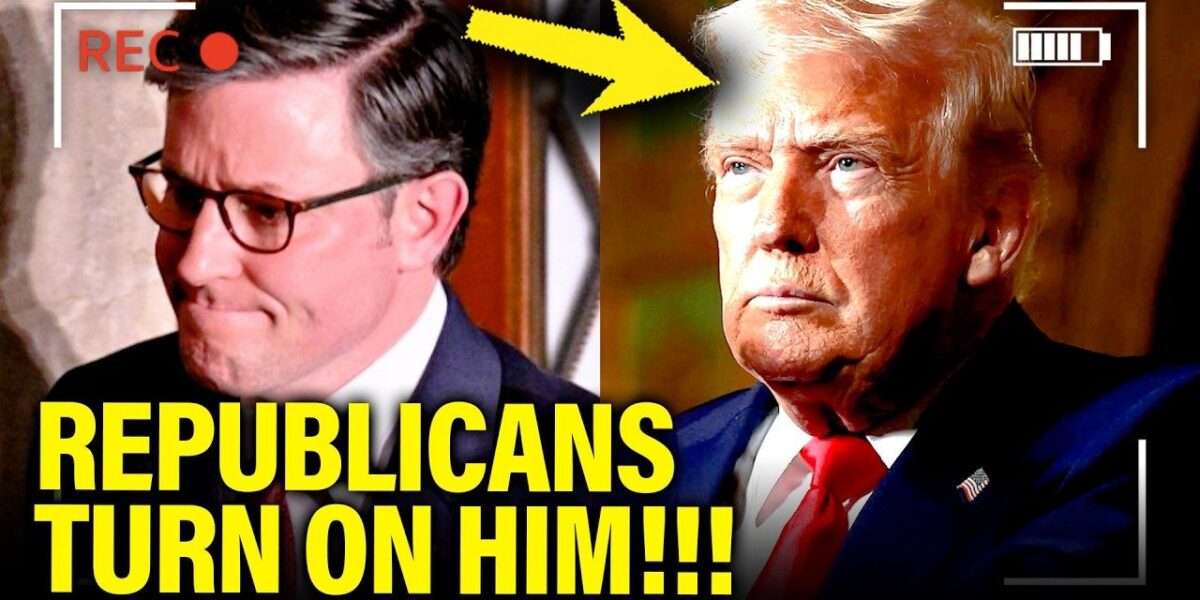
GOP Lawmakers Diverge from Trump on Tariffs Following Supreme Court Decision
In a significant shift, a growing number of Republican lawmakers and leaders are publicly aligning with a recent Supreme Court ruling that curtails presidential authority on tariffs, placing them at odds with former President Donald Trump’s signature economic policy. This divergence signals a deepening fracture within the GOP, challenging Trump’s influence and raising questions about the party’s future economic direction.
Supreme Court Ruling and Congressional Authority
The Supreme Court’s decision, described as a “very narrow reading of the president’s authority under the AIPA tariffs,” has affirmed that the power to impose tariffs rests with Congress, not the executive branch acting unilaterally. This stance directly contradicts Trump’s approach during his presidency, where he frequently utilized tariffs as a key economic tool. While the Supreme Court did not directly rule on the refunding of previously collected tariffs, remanding the case to a lower court, the principle established is clear: unilateral executive action on tariffs is constitutionally questionable.
Treasury Secretary Janet Yellen, when pressed on the issue, emphasized that the administration would follow the court’s direction, but noted that any decision on refunds could be weeks or months away. She clarified that the authority to decide on refunds does not lie with the Treasury Department or the current administration but with the lower courts. This legal ambiguity surrounding refunds adds another layer of complexity to the situation.
Trump’s Reaction and Policy Defense
Former President Trump has vehemently criticized the Supreme Court’s decision, expressing his frustration through characteristic strong language. He argued that while he could “cut off any and all trade or business with that same country” or “destroy the trade” and even “impose an embargo,” he was inexplicably prevented from charging even a nominal fee, like one dollar, through tariffs. Trump perceives this as an absurd limitation, suggesting the ruling undermines his ability to protect American interests.
“Can’t charge a dollar. I would have used one penny, but we don’t make the pennies anymore. We save money. Can’t charge one dollar to any country under AIPA. Not one dollar, I assume, to protect other countries. This must have been done to protect those other countries. Certainly not the United States of America, which they should be interested in protecting. That’s what they’re supposed to be protecting. But I am allowed to cut off any and all trade or business with that same country. In other words, I can destroy the trade. I can destroy the country. I’m even allowed to impose a foreign country destroying embargo. I can embargo. I can do anything I want, but I can’t charge $1.”
Trump’s defense of his tariff policy centers on its perceived effectiveness in protecting American industries and national interests. He views tariffs as a crucial tool for leverage and national security, capable of forcing concessions from other nations.
GOP Lawmakers’ Stance: Tariffs Belong to Congress
Conversely, many Republican lawmakers have embraced the Supreme Court’s ruling, framing it as a victory for constitutional balance and a reaffirmation that legislative power over taxation and trade rests with Congress. They argue that unilateral executive imposition of tariffs bypasses the democratic process and concentrates too much power in the hands of the president. This perspective aligns with traditional conservative principles advocating for limited government and congressional oversight.
Some commentators have pointed out the hypocrisy or ideological inconsistency, questioning whether conservatives now support taxes simply because they are Donald Trump’s taxes, or if they will adhere to the principle of opposing increased revenue collection through taxes, advocating instead for spending cuts to balance the budget. The debate highlights a fundamental question for the GOP: whether loyalty to Trump outweighs core economic philosophies.
Broader Political Ramifications and Public Opinion
The rift over tariffs extends beyond policy disagreements, reflecting deeper divisions within the Republican party. Polls conducted prior to the Supreme Court decision indicated that a majority of Americans disapprove of Trump’s handling of tariffs and their impact on the economy. This disapproval cuts across various demographics, including key Trump constituencies like farmers, who have vocalized their struggles due to retaliatory tariffs and economic pressures.
Impact on Agriculture
Recent reports highlight a concerning trend in American agriculture. The number of U.S. farms decreased by 15,000 in 2025, bringing the total to approximately 1.865 million. This decline is part of a long-term trend exacerbated by economic factors such as urbanization and low, or even negative, returns per acre. Farm bankruptcies are reportedly on the rise, with states like Texas, Illinois, Iowa, Indiana, and Minnesota experiencing significant losses in farm operations. While farms with annual sales exceeding $1 million saw a minor increase, the overall picture remains grim for the agricultural sector, a traditional base of Republican support.
Shifting Voter Sentiment
The broader public sentiment towards Trump’s economic policies, particularly tariffs, appears to be negative. National polls show significant disapproval ratings for Trump, with a substantial portion of independents expressing opposition. This bipartisan opposition suggests that the tariff strategy has become a political liability rather than a rallying point. Even self-described non-MAGA Republicans and Republican-leaning independents show substantial disapproval of Trump’s tariff policies.
Furthermore, a Pew Research poll indicated that a growing majority of Republicans (61%) believe that GOP congressional members are not obligated to support Trump’s agenda if they disagree with it. This suggests a weakening of the party’s unified front behind Trump and an increasing willingness among Republicans to prioritize their own convictions or broader party principles over strict adherence to Trump’s directives.
Tariffs as a Wedge Issue
Historically, tariffs were intended to be an administration highlight, a policy designed to deliver economic leverage and political credit. However, they have evolved into a wedge issue, exposing divisions within the Republican party and contributing to broader dissatisfaction with Trump’s leadership. The policy gamble appears to have backfired, alienating key voter groups and undermining Trump’s image as an effective economic manager.
The political fallout is evident in recent election results. In areas traditionally dominated by Republicans, the party has faced setbacks, including special election losses in districts that Trump had previously won by significant margins. This trend, coupled with ongoing concerns about immigration and the economy, suggests that the GOP faces significant challenges if it continues to align strictly with Trump’s agenda.
Conclusion: A Fractured Party and Uncertain Future
The growing schism between Donald Trump and a segment of the Republican party over the issue of tariffs, amplified by the Supreme Court’s ruling, underscores a critical juncture for the GOP. As the party grapples with its identity and future direction, the ability to maintain internal cohesion and appeal to a broad electorate will be paramount. The coming months will likely see further debate and maneuvering as Republicans navigate the complex landscape of economic policy, party loyalty, and public opinion, with the effectiveness of Trump’s influence facing its sternest test yet.
Source: GOP PART WAYS with Trump after SCOTUS RULING (YouTube)

Related Articles

Trump’s Diet Soda Claim: A Joke or Dangerous Denial?
President Trump's alleged comment that diet soda kills grass and therefore cancer cells has sparked debate. While defended as a joke, critics worry about the normalization of health misinformation. This incident highlights the impact of public figures' words on health perceptions.

White House Ignores Crises for Trump’s 80th Birthday Bash
The White House's social media team focused on promoting Donald Trump's 80th birthday party instead of addressing failed US-Iran talks and rising prices. This decision raises questions about the administration's priorities and its use of government platforms.

Trump’s Core Voters Flee: A Stunning Political Reversal
Donald Trump's support among white, non-college-educated voters has dramatically fallen from a 36-point lead to a negative 4-point rating. This marks an unprecedented situation where he is reportedly underwater with every demographic group.