Tear Downs Reshape Luxury Markets Amid Shifting Demand
Developers are increasingly employing the "tear down" strategy in affluent neighborhoods, demolishing existing homes to build luxury mansions. While this can offer significant profit potential, shifting migration patterns and cooling demand in markets like Nashville raise questions about the success of these high-value projects.

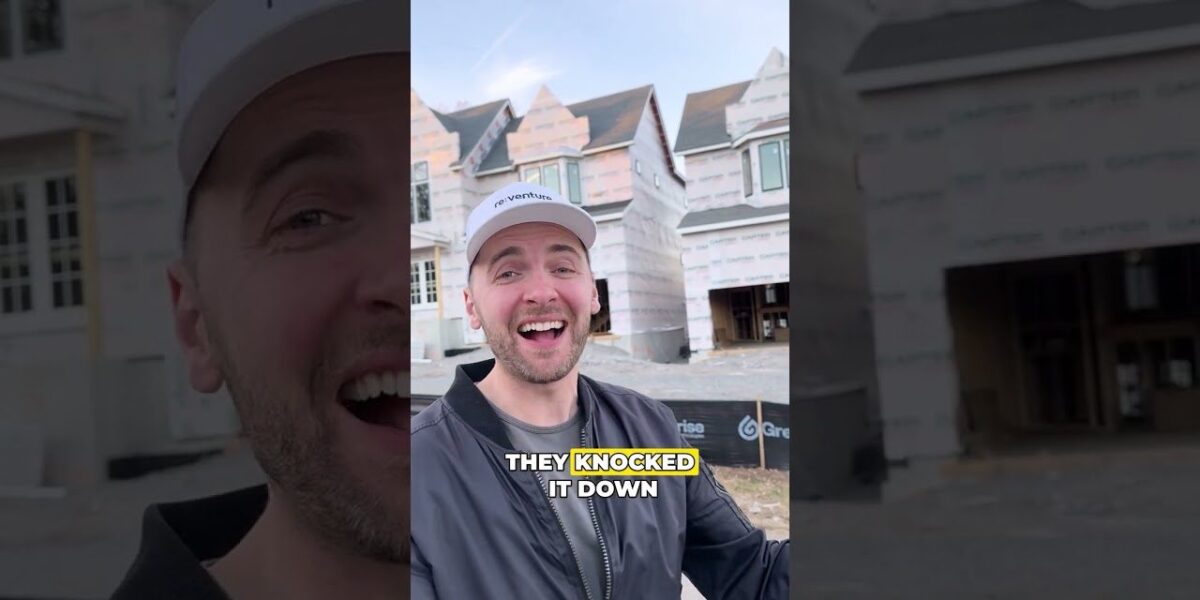
Luxury Redevelopment: The Rise of the “Tear Down” in Premium Neighborhoods
A striking trend is reshaping high-end real estate markets: the strategic demolition of existing homes to make way for significantly larger, more valuable luxury residences. This practice, often termed a “tear down,” is becoming increasingly prevalent in affluent areas as developers identify opportunities to maximize land value and cater to a perceived demand for ultra-luxury properties. In a prime example observed near Green Hills in Nashville, a single-family home previously valued at approximately $1 million was purchased and subsequently demolished.
In its place, two expansive mansions, each slated for a potential asking price of $3 to $4 million, are now under construction. This redevelopment strategy represents a quadrupling of the initial investment value, highlighting the immense profit potential developers aim to capture.
Economic Drivers and Regional Dynamics
The allure of the “tear down” strategy is fueled by several economic factors. Developers are often responding to perceived shifts in population demographics and wealth concentration. In markets like Nashville, which have seen an influx of residents from higher-cost states such as California, there’s been an assumption of sustained demand for high-value homes.
Builders are betting that these new residents, bringing significant capital, will drive up prices for premium properties. The ability to acquire older, potentially smaller homes on desirable lots and replace them with state-of-the-art, larger residences allows developers to tap into a market segment willing to pay a premium for location, size, and modern amenities.
Nashville’s Shifting Market Landscape
While the “tear down” strategy is a calculated investment, its success hinges on sustained market demand. The Nashville market, particularly in areas like Green Hills, has experienced significant growth. However, recent observations suggest a potential cooling or recalibration.
The narrative of continuous migration from expensive coastal cities to burgeoning Southern hubs like Nashville is facing new realities. Reports indicate that demand in certain zip codes, even those typically considered prime real estate, has reached a ten-year low.
This suggests that the pool of buyers, particularly those relocating with substantial purchasing power, may be shrinking or shifting their preferences. The question remains whether the two newly constructed mansions in Nashville will find buyers at their projected multi-million dollar price points, given this evolving demand dynamic.
Implications for Buyers, Sellers, and Investors
The “tear down” phenomenon has complex implications across the real estate spectrum:
- For Buyers: In neighborhoods experiencing “tear down” activity, buyers seeking older, more affordable homes may find their options dwindling. Conversely, those in the market for ultra-luxury properties will see an increasing supply of new, high-end constructions. However, the success of these projects at their asking prices will ultimately influence future pricing trends.
- For Sellers: Sellers of older, well-located homes may find themselves in a strong position, as developers are actively seeking such properties for redevelopment. This can drive up prices for homes that might otherwise be considered outdated. Sellers of comparable, non-renovated homes might face increased competition from new constructions.
- For Investors: Real estate investors are keenly watching markets where “tear down” activity is prominent. The strategy itself is a high-stakes investment, relying on accurate market forecasting and development execution. Understanding the underlying economic factors, local demand, and the broader housing cycle is crucial for assessing the viability and potential returns of such projects. Concepts like Capitalization Rate (Cap Rate), which measures the potential return on investment property, and Loan-to-Value (LTV) ratio, indicating the loan amount relative to the property’s value, are critical metrics for investors evaluating such developments. The potential for positive cash flow, the net income generated after all expenses, is a primary goal, though speculative redevelopment projects like “tear downs” often prioritize capital appreciation over immediate rental income.
Broader Economic Context
The current real estate climate is influenced by a confluence of economic factors. Rising interest rates, while potentially cooling the broader market, can also impact the cost of development financing, adding pressure on builders. Inflationary pressures affect construction material costs and labor.
Shifts in remote work policies and the overall economic outlook can influence migration patterns and housing demand. The success of speculative luxury developments like “tear downs” is therefore closely tied to these larger economic forces. As the market continues to normalize and economic conditions evolve, the long-term viability of such aggressive redevelopment strategies will be put to the test.
Source: Home builder knocked down $1M house to build two $3M Houses (YouTube)

Related Articles


Mortgage Math Traps: Why Refinancing Costs You More
Refinancing your mortgage might seem like a smart way to save money, but it often resets your payment schedule. This means you'll start paying more interest again, potentially costing you more over the loan's life. Homeowners need to understand amortization schedules before refinancing.


50% Property Tax Hike Looms in Massachusetts Town
Residents in South Hadley, Massachusetts, face a potential 50% property tax hike, sparking concerns especially among retirees. This local issue reflects a broader national trend of rising property taxes and taxpayer dissatisfaction, with several states considering tax reduction measures.


Rent to Buy Investment: Smart Move Now?
Buying a primary residence means personal choices can limit investment potential. Conversely, an investment property offers detachment for profit. Renting to buy an investment property is presented as a strategy to efficiently build wealth in the current market.