Trump’s Abrupt Milan Cancellation Ignites Firestorm of Controversy, Diverting Focus to Domestic and International Scrutiny
Donald Trump's abrupt cancellation of his Milan Olympics trip, reportedly due to fear of public backlash, set off a chain of controversies. Instead, he hosted a Republican governors' meeting, where he made 'unhinged' remarks and promoted 'Trump Bibles,' while simultaneously facing scrutiny for a false 'Greenland hospital boat' claim, alleged financial ties to Russia, and challenges to EU defense policies.

Trump’s Abrupt Milan Cancellation Ignites Firestorm of Controversy, Diverting Focus to Domestic and International Scrutiny
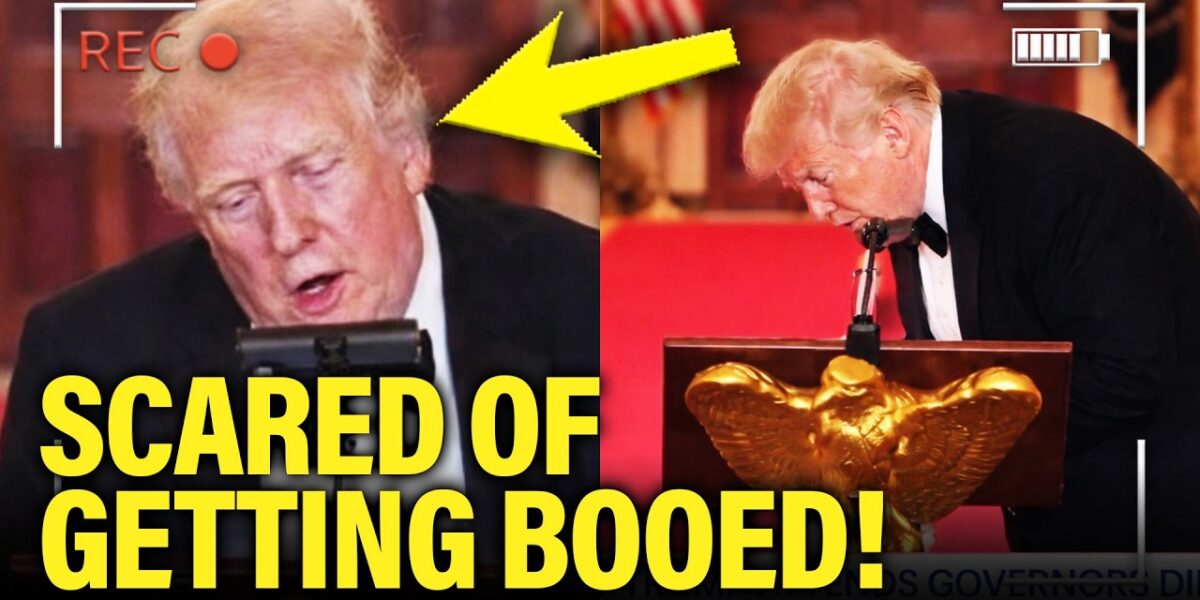
In a sudden and unexpected turn of events, former President Donald Trump abruptly canceled a planned trip to Milan, Italy, where he was slated to attend the Winter Olympics gold medal hockey matchup between the United States and Canada. The cancellation, reportedly driven by concerns over potential public protests and a fear of being booed, quickly spiraled into a broader narrative of political maneuvering, controversial claims, and escalating international tensions, drawing a sharp contrast between his public persona and the realities of global diplomacy.
Instead of appearing on the international stage, Trump chose to host a gathering of Republican governors at the White House, an event that, according to critical reports, featured an ‘unhinged speech,’ the sale of signed Bibles, and a series of other pronouncements that have since garnered widespread scrutiny. This pivot from international sports diplomacy to a domestically focused, highly partisan event has opened a Pandora’s Box of discussions surrounding his political strategies, his relationship with truth, and his impact on both American policy and global alliances.
The Milan Trip That Never Was: Fear of Public Disapproval
The core of the initial controversy lies in the cancellation of Trump’s trip to Milan. According to Italian newspapers and corroborated by multiple sources, the former president opted out of attending the high-profile hockey game due to apprehension about the reception he might receive. Reports indicated a concern that large-scale protests would materialize, leading to public humiliation through boos and demonstrations. This fear of public disapproval on an international stage is significant, especially for a figure who often projects an image of unwavering support and strength.
International sporting events, particularly those as globally visible as the Olympics, often serve as platforms for leaders to project national pride and engage in soft diplomacy. A last-minute cancellation under such circumstances, particularly when attributed to fears of public backlash, can be interpreted in various ways: as a tactical avoidance of potential embarrassment, a miscalculation of international sentiment, or an indication of a leader’s sensitivity to criticism. The transcript highlights visual evidence of planned protests in Milan, including large floats depicting Trump, suggesting that such concerns were not entirely unfounded. The decision to forgo an appearance at an event celebrating athletic achievement, especially one involving a direct rivalry between the U.S. and Canada, underscores a perceived vulnerability to global public opinion that runs counter to his usual public narrative.
A Diverted Agenda: The Governor’s Association Meeting and Its Peculiarities
Rather than traversing the Atlantic, Trump instead hosted a Republican Governor’s Association meeting at the White House. This event quickly became a focal point of criticism, characterized in the transcript as ‘one of the most unhinged things I’ve ever seen.’ Key highlights from the meeting, as reported, included:
- ‘Unhinged Speech’: The nature of the speech given to the assembled Republican governors was described as highly erratic.
- ‘Trump Bibles’: A notable and widely criticized moment involved Trump signing ‘holy Bibles’ emblazoned with his name, which are reportedly sold for $65. The sight of a former president signing religious texts for commercial purposes, particularly within the White House, sparked debates about the commingling of religion, commerce, and politics. The mention of Nicki Minaj receiving a signed Bible further amplified the unusual nature of this particular endeavor.
- Melania as ‘Movie Star’: During his address, Trump reportedly referred to his wife, Melania, as a ‘movie star,’ adding a layer of personal anecdote that some found incongruous with the serious nature of a political gathering.
- Presidential Ambitions: Trump alluded to the governors and cabinet secretaries present, suggesting that ‘every time they look in the mirror, every time they wake up or go to sleep, they look in that mirror and they say, “I should be president, not him.”’ This remark, while potentially intended as a lighthearted observation, could also be interpreted as reflecting underlying tensions or perceived rivalries within the Republican Party.
- The ‘Greatest Ballroom’: A significant portion of the speech was dedicated to the construction of a new, ‘greatest ballroom anywhere in the world’ at the White House. Trump detailed the planned magnificence of this ballroom, including ‘gold curtains’ and a ‘magnificent walkway.’ The emphasis on such a project, especially amidst pressing national and international issues, was highlighted as a peculiar priority.
The overall impression conveyed by the transcript regarding this event is one of a leader consumed by personal grievances, self-aggrandizement, and a focus on projects of questionable national priority, rather than substantive policy discussions.
The ‘Greenland Hospital Boat’ Saga: A Digital Deception and Policy Paradox
Further adding to the week’s controversies was Trump’s claim, made via Truth Social, that the United States was sending a ‘great hospital boat to Greenland to take care of the many people who are sick and not being taken care of there.’ This statement was accompanied by an image, later identified as AI-generated, of the USNS Mercy, one of the Navy’s hospital ships.
The claim quickly unraveled under scrutiny:
- Factual Inaccuracies: Greenland, a self-governing territory of Denmark, boasts universal healthcare, rendering the premise of its population being ‘sick and not being taken care of’ largely false. As one Greenland resident, Orla Jolson, reportedly stated, ‘No thanks. We in Greenland are healthy. we’re doing well sustained by our own traditional foods including seal seal blubber which is rich in vitamins and nutrients that have kept our population strong for generations.’
- AI-Generated Image: The image accompanying Trump’s post was identified as AI-generated, highlighting the growing concern over the use of artificial intelligence to create misleading political content.
- Non-Operational Ships: Both of the U.S. Navy’s hospital ships, the USNS Mercy and her sister ship, the USNS Comfort, were reportedly undergoing repairs at an Alabama shipyard, making their deployment to Greenland impossible.
- Policy Contradictions: Critics pointed out the stark contradiction between Trump’s supposed concern for Greenland’s healthcare and his domestic policies, which saw cuts to Medicaid and the removal of Affordable Care Act (ACA) subsidies, impacting millions of Americans’ access to healthcare. The transcript notes, ‘millions of Americans right now are not going to doctor appointments because they can’t afford it. And they’re hoping that they don’t die. And Donald Trump’s response to them evidently is that he’s sending hospital boats to Greenland, except it’s an AI image.’
This incident exemplifies a pattern of disseminating unsubstantiated claims and images, raising questions about the reliability of information emanating from political figures and the impact of such misinformation on public discourse and policy understanding.
Echoes of Russia: Allegations of Influence and Deals
The transcript also delves into renewed allegations of financial ties between individuals close to Trump and Russian interests. Specifically, it highlights a report by the Wall Street Journal concerning Gentury Beach, described as Donald Trump Jr.’s college roommate and a significant campaign donor to Donald Trump.
According to the report, Beach has been in talks to acquire a major stake in a Russian Arctic gas project in Alaska, signing an agreement with the Russian company Novatek. This is described as ‘likely the first deal between a US citizen and a major Russian company’ since the Kremlin began to offer cooperation to the U.S. administration. The implications of such a deal are profound:
- Geopolitical Sensitivity: Arctic natural gas projects are strategically sensitive, given Russia’s geopolitical ambitions in the region and ongoing international sanctions.
- Conflict of Interest Concerns: The involvement of a close associate and major donor to the former president in a significant deal with a Russian company raises ethical concerns and questions about potential conflicts of interest, particularly given the historical scrutiny of Trump’s administration regarding its relationship with Russia.
These revelations reignite long-standing debates about the influence of foreign capital on American politics and the potential for private business dealings to intersect with national security interests, especially in the context of strained U.S.-Russia relations.
Fundraising Tactics and Political Messaging: The ‘Megaillions Club’ and ‘Epstein Hoax’
Amidst these controversies, Trump’s fundraising efforts also came under fire. An email sent to supporters, headlined ‘You hit the jackpot. Join the Megaillions Club,’ promised recipients they had ‘won’ and invited them to ‘Claim your spot now.’ This tactic, leveraging a lottery-style appeal, is designed to encourage donations by creating a sense of exclusivity and reward.
More controversially, the email also contained language dismissing significant events as ‘hoaxes’ and ‘witch hunts,’ stating, ‘The radical left, deep state, and fake news tried to stop us. They came after me and you. They wanted to take away our voice, but you didn’t let them. You fought through the hoaxes and the witch hunts because you are incredible loyalty.’ The transcript explicitly notes that ‘Donald Trump calls Epstein a hoax. The Epstein hoax.’ This reference is particularly striking given the gravity of the Jeffrey Epstein sex trafficking scandal and the widespread legal and moral condemnation it has received. Dismissing such a serious matter as a ‘hoax’ further fuels criticism regarding Trump’s approach to accountability and truth.
Transatlantic Tensions: The EU Defense Standoff
The transcript also highlights a significant point of contention in transatlantic relations: the European Union’s defense procurement directive. The EU’s move to prioritize European military supplies and aircraft (‘Buy Europe first’) is a direct response to perceived shifts in U.S. policy and rhetoric under the Trump administration, which had previously urged Europe to increase its defense spending and reduce reliance on the U.S.
However, the U.S. ambassador to the EU reportedly stated, ‘The United States opposes any efforts to incorporate European preference in the EU defense procurement directive. We fully support European rearmin and revital revitalization of the European defense industrial base. However, European preference in the directive would undermine state flexibility and you need to buy American.’ This stance creates a paradoxical situation:
- Contradictory Demands: On one hand, the Trump administration pushed Europe to bolster its own defense capabilities; on the other, it now opposes efforts by the EU to create a unified European defense market that would naturally favor European industries.
- Impact on Alliances: Such opposition risks undermining NATO cohesion and straining relations with key European allies, who interpret this as the U.S. seeking to benefit economically from European rearmament while simultaneously demanding greater burden-sharing.
- Historical Context: The move by the EU reflects a broader desire for strategic autonomy and reduced dependence on external powers, particularly after experiencing disruptions and uncertainties in supply chains and political commitments.
This diplomatic standoff underscores the complexities of international alliances in an era of shifting geopolitical priorities and nationalist economic policies. It reveals a deep-seated tension between the rhetoric of burden-sharing and the economic realities of defense procurement, further complicated by a perceived lack of trust and consistency in U.S. foreign policy.
Domestic Policy Critiques: Healthcare and Social Issues
Beyond international affairs, the transcript reiterates domestic policy critiques, particularly concerning healthcare. The accusation that Trump ‘ripped away healthcare from tens of millions of Americans here who no longer have healthcare because he ripped away the Affordable Care Act subsidies’ is a significant point of contention. The transcript also states that ‘Donald Trump has cut Medicaid and ripped away affordable care act plans here in the United States and has gutted Medicaid.’ These claims refer to the Trump administration’s repeated efforts to dismantle the ACA and implement cuts to Medicaid, programs that provide health coverage to millions of low-income Americans.
The discussion also touches upon comments made by JD Vance, who, speaking with Lara Trump, reportedly criticized Democrats for wanting to ‘let sex offenders stay on the streets of America.’ The transcript juxtaposes this statement with the ongoing Ghislaine Maxwell/Epstein scandal, alleging that the ‘Trump regime is the cabal in the Oval Office’ and suggesting an irony in Vance’s comments given the broader context of the Epstein case.
Public Perception and Political Comparisons
The article also references polling data comparing Trump’s performance with that of former Presidents Obama and Biden. According to the transcript, a YouGov poll indicated that 55% of respondents believed Obama did a better job than Trump, compared to 37% who favored Trump. Similarly, 49% felt Biden had done a better job than Trump, versus 41% for Trump. These figures, while snapshots, suggest a significant portion of the public views Trump’s performance less favorably than his predecessors, challenging the narrative of widespread approval often projected by his base.
The Epstein Files: A Lingering Shadow
A particularly grave accusation detailed in the transcript concerns Ghislaine Maxwell and the alleged withholding of documents related to the Jeffrey Epstein sex trafficking network. It claims that Maxwell is ‘working with Trump’s DOJ to hold up 90,000 documents’ including ‘deposition transcripts, witness statements.’ The transcript suggests Maxwell is ‘playing the part that Donald Trump wants her to play by moving her over to that minimum uh clubfed facility in Camp Brian, Texas,’ and that she is ‘filing documents claiming her own privacy to block 90,000 additional Epstein documents that are highly highly devastating documents uh for in my opinion for co-conspirators and and and as such.’
These are serious allegations, implying a coordinated effort to suppress information related to a heinous crime, potentially to protect powerful individuals. If true, such actions would constitute a grave obstruction of justice and raise profound questions about the integrity of the justice system under a previous administration. The Epstein scandal has far-reaching implications, and any alleged attempt to conceal information from public view would be met with intense scrutiny and outrage.
Conclusion: A Week of Unraveling Narratives
Donald Trump’s abrupt cancellation of his Milan trip served as a prelude to a week filled with contentious events and revelations. From the peculiar proceedings of the Governor’s Association meeting and the deceptive ‘Greenland hospital boat’ claim to the reemergence of allegations concerning Russian ties and the standoff over EU defense policy, the former president’s actions and associated controversies continue to shape political discourse both domestically and internationally. The accusations regarding the suppression of Epstein documents and the ongoing critiques of his healthcare policies underscore a persistent pattern of challenges to established norms and policies.
These incidents, taken together, paint a picture of a political figure whose influence remains potent but whose methods and claims are subject to intense scrutiny. The constant interplay between his public pronouncements, the factual realities, and the broader geopolitical landscape ensures that his presence continues to generate significant debate and analysis, forcing a continuous examination of truth, accountability, and the future direction of American policy.
Source: Trump gets SCARED and Abruptly CANCELS OLYMPIC TRIP!! (YouTube)

Related Articles


Trump’s Allies Rebel: Conservatives Slam President’s Policies
Prominent conservative figures and lawmakers are openly criticizing President Trump's policies in 2026, signaling a growing divide within the movement. From Candace Owens questioning the Iran conflict to Senator Rand Paul challenging trade policy, a wave of dissent is challenging the president's agenda.
Trump Threatens Fed Chair Powell, Faces Nomination Blockade
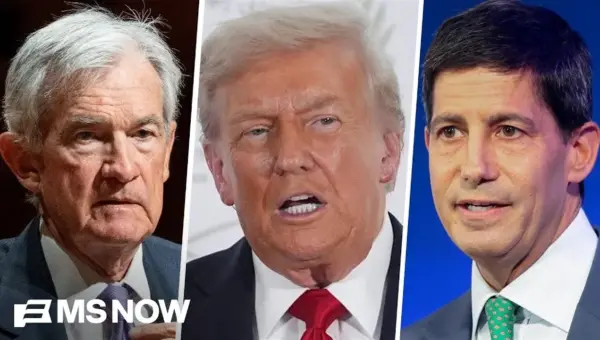
President Trump is threatening to fire Fed Chair Jerome Powell over a renovation probe, creating a political stalemate. Senator Tom Tillis is blocking Trump's nominee, Kevin Warsh, until the investigation concludes. Warsh himself faces scrutiny over his vast personal wealth, estimated between $135-226 million, raising conflict of interest concerns.


Trump’s Grip Weakens as Allies Falter, Democracy’s Future Hinges
Donald Trump's approval ratings are plummeting, even among his core supporters, signaling a potential collapse of the MAGA movement. Global events, like Hungary's shift to democracy, and domestic economic woes are fueling discontent and opening doors for broader political coalitions.