Eastern Europe’s View of Putin’s Ambitions: A Different Reality
Eastern European nations, particularly the Baltic states and Poland, view Putin's war aims as a direct threat to their own sovereignty, seeing it as a broader challenge to the European security order. This perspective contrasts with the historical tendency of some Western European powers to view Russia as a more rational actor, leading to different levels of urgency and support for Ukraine.

Eastern Europe’s Distinct Perspective on Putin’s War Aims
As the conflict in Ukraine grinds on, a crucial distinction in perception emerges when examining how Eastern European nations view Vladimir Putin’s ambitions compared to some of their Western European counterparts. Far from a limited territorial dispute, Putin’s objectives are understood in the region as a fundamental challenge to the post-Cold War security order, potentially aiming to re-establish spheres of influence reminiscent of the post-World War II era.
The Baltic States and Poland: Self-Defense, Not Abstract Solidarity
For countries like Estonia, Latvia, and Lithuania, the war in Ukraine is not an abstract exercise in international solidarity but a direct matter of self-defense. These nations, having experienced Soviet domination firsthand, possess a deep-seated understanding of Russian historical expansionism. They perceive Russia’s actions in Ukraine as a clear indication that if Moscow succeeds, they will be the next targets.
This perspective is echoed by Poland, which has consistently been one of Ukraine’s most robust supporters. The shared history and geographical proximity breed a sense of urgency and an unwavering conviction that appeasement is not an option. The strategic imperative for these states is clear: a Russian victory in Ukraine would embolden Moscow and directly threaten their own sovereignty and security.
A Historical Divide: Germany and France’s Rational Actor Assumption
In contrast, some major European powers, notably Germany and France, have historically tended to view Russia through a different lens. Prior to the full-scale invasion in February 2022, there was a prevailing belief in these capitals that Putin could be reasoned with and that diplomatic solutions were achievable. This assumption of Russia as a rational actor, capable of being swayed by negotiation and economic interdependence, has been a point of friction and misunderstanding.
This approach, while perhaps well-intentioned in seeking to maintain stability, has been criticized by Eastern European nations as naive and dangerously miscalculating Putin’s true intentions. The experience of living under the shadow of Russian influence for decades has fostered a more pragmatic and less optimistic outlook on Moscow’s geopolitical aspirations.
Denmark, Nordic States, and Ukraine’s Trusted Allies
Amidst this complex geopolitical landscape, Denmark is now a surprisingly strong and dedicated supporter of Ukraine. The Scandinavian nation has become one of Ukraine’s most significant backers, providing substantial military aid. This commitment is shared by other Nordic countries, including Finland and Sweden, who have also stepped up their support significantly, particularly in light of their own historical experiences with Russia and their recent NATO accession.
Ukraine’s leadership has expressed gratitude for the assistance provided by all its European allies, acknowledging the critical role played by major powers like Germany and France. However, the transcript highlights that the countries Ukraine instinctively trusts the most are those that have never underestimated Russia. These include the Baltic states, Poland, the Nordic nations, and even Moldova, a country with its own unique vulnerabilities regarding Russian influence.
“The Baltic states, Poland, the Nordic states, they are the biggest advocates of Ukraine right now and their support is essential for Ukraine’s survival.”
Understanding Russia: A Matter of Lived Experience
The core of this divergence in perspective lies in a fundamental difference in understanding Russia itself. Officials and citizens in Eastern and Nordic European countries often speak with a clarity born of proximity and historical memory. They see Russia not as a predictable entity governed by conventional diplomatic norms, but as a state with a persistent revisionist agenda.
This understanding translates into a more immediate and visceral response to Russian aggression. When Baltic officials discuss the conflict, there is an inherent recognition that the threat is not confined to Ukraine’s borders. This shared awareness fuels their advocacy and makes their support for Ukraine a matter of existential importance.
Broader Implications for European Security
The differing views on Putin’s ambitions have significant implications for the future of European security. The continued support and advocacy from Eastern and Nordic European nations are crucial for Ukraine’s ability to resist Russian aggression. Their unwavering stance is a vital counterpoint to any lingering tendencies towards appeasement or underestimation of the threat posed by Moscow.
This regional alignment highlights the evolving nature of European alliances and security architecture. The increased assertiveness and strategic clarity of countries like Poland and the Baltic states highlight their growing influence within NATO and the EU. Their insights, shaped by decades of direct experience with Russian policy, offer invaluable guidance for collective security strategies.
Looking Ahead: Sustaining Unity and Vigilance
As the war continues, the challenge for Europe will be to bridge these perceptual divides and maintain a unified front against Russian aggression. The unwavering commitment of Eastern and Nordic European states is a powerful reminder of the stakes involved.
Their perspective, grounded in historical reality and immediate security concerns, is essential for navigating the complex geopolitical challenges ahead. The continued vigilance and robust support from these nations will be critical not only for Ukraine’s survival but for the long-term stability and security of the entire European continent.
Source: Why Eastern Europe views Putin’s ambitions differently (YouTube)

Related Articles


Putin’s Internet Shutdown: Paranoia or Precaution?
Russia's recent internet restrictions fuel speculation about President Putin's paranoia, potentially driven by fears of a coup and the weaponization of digital information by adversaries. Actions like buffer zones and dismissals suggest a leader under pressure.


EU Warships Near Cyprus Test Defense Without US
European Union warships have deployed near Cyprus, marking a potential turning point for the bloc's collective defense capabilities without U.S. involvement. The move follows a drone attack on a British base and highlights Cyprus's strategic location. While seen as a low-risk show of solidarity, it raises questions about Europe's long-term defense independence.
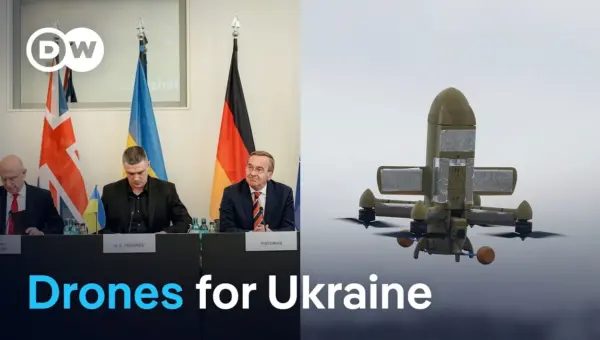
UK Pledges 120,000 Drones to Ukraine in Major Aid Package
Britain has pledged 120,000 drones to Ukraine, marking its largest aid package of its kind, during a meeting of the Ukraine Defense Contact Group in Berlin. The meeting highlighted both strong international solidarity and ongoing challenges in aid delivery, as Germany also boosts its own defense capabilities.