Peru President Ousted Amid Chinese Influence Scandal
Peru's President Dina Boluarte has been ousted following a scandal involving alleged secret meetings with Chinese businessmen and accusations of undue influence. The 'Chifa gate' controversy highlights concerns over Beijing's growing footprint in the region and has led to renewed geopolitical maneuvering.

Peru’s President Ousted Amid Allegations of Chinese Influence
In a dramatic political upheaval, the President of Peru, Dina Boluarte, has been ousted from office following a series of scandals involving alleged clandestine meetings with Chinese nationals and accusations of undue influence. The controversy, dubbed ‘Chifa gate,’ has sent shockwaves through the South American nation, raising serious questions about Beijing’s growing economic and political footprint in the region.
The ‘Chifa Gate’ Scandal Unfolds
The downfall of President Boluarte was precipitated by the release of several video recordings that captured her meeting with Chinese businessmen under questionable circumstances. The first video, dating back to December 26th of the previous year, shows the president emerging from a vehicle late at night, accompanied by Peru’s Interior Minister, before entering a Chinese restaurant named Restaurant Shinyan in Lima. Another recording from January 6th of this year depicts the president entering a wholesale shop, which had reportedly been temporarily closed by municipal authorities earlier that day for ‘regulatory breaches,’ to meet with a Chinese national. A third video from the same day showed Boluarte’s team collecting bags of items from the same individual, with an off-camera voice remarking, “This is for the commandante.”
Key Figures and Suspicious Dealings
The central figure in these meetings has been identified as Yangjer Hua, a Chinese businessman whom Boluarte reportedly referred to as ‘Johnny.’ Hua owns both the Chinese restaurant and the wholesale shop visited by the president. Hua, a long-term resident of Peru, operates several businesses, including a construction firm that has secured contracts with the police, a hydroelectric company granted a state concession for a dam, and a ceramics factory allegedly built without proper permits. A confidential report obtained by The New York Times also identified Hua as a junior partner in a significant highway project led by a subsidiary of China Railway Engineering Corporation, a project that became entangled in an arbitration dispute. The report further accused Hua’s construction company of conspiring to defraud the Peruvian state by leveraging the economic power of large Chinese state-owned enterprises to obtain contracts for projects that were later abandoned.
Adding another layer of complexity, President Boluarte also reportedly met with another Chinese national, Ji Wu Shiao Dong, at the Chinese restaurant. Ji Wu has been accused of involvement in an illegal timber trafficking network known as ‘Los Hostile Deas Amazonia.’ This network is reportedly responsible for corrupting regional government officials, police, and customs authorities through bribes and intimidation. Alarmingly, Ji Wu had allegedly visited the presidential palace three times since Boluarte took office, even while reportedly serving a two-year house arrest sentence.
President’s Defense and Congressional Response
President Boluarte defended her actions, claiming ignorance of Ji Wu’s alleged criminal activities and stating that her interactions with him were minimal due to language barriers. She asserted that the undisclosed meetings were part of coordinating the Peruvian-Chinese friendship anniversary celebration. However, her explanations, particularly the late-night, secretive nature of the meetings, failed to convince the Peruvian Congress. The president’s explanations were not deemed sufficient, leading to her ouster. This marks the third consecutive Peruvian president to be removed from office and the seventh since 2016, highlighting Peru’s ongoing political instability.
China’s Expanding Influence in Peru
The ‘Chifa gate’ scandal is being viewed by many as a stark example of China’s broader strategy of elite capture and influence operations across the globe. China has become Peru’s largest trading partner and has invested heavily in the country’s infrastructure as part of its Belt and Road Initiative. Significant Chinese investments include Peru’s telecommunications and energy sectors, as well as the Chon Mega Deep Water Port. This port, in particular, is considered strategically important, drastically reducing shipping times and logistics costs between China and Peru. Concerns have been raised about its potential use in a conflict scenario in the Americas, especially given a recent lower court ruling that barred oversight from Peru’s regulator on the port, despite Peruvian law mandating such oversight for both state-run and privately developed ports. The ruling effectively suggested ‘nothing to see here,’ further fueling suspicions.
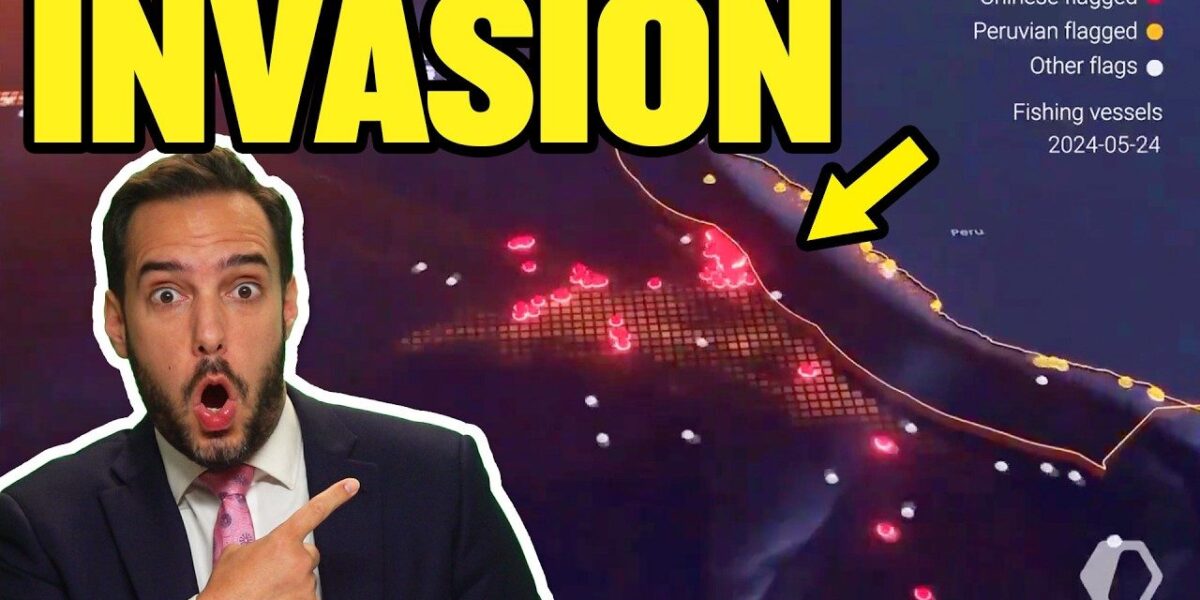
Beyond infrastructure, China’s presence is also felt through its extensive fishing fleet, which is accused of illegal fishing operations, costing Peru hundreds of millions of dollars annually and often employing forced labor, much to the dismay of local fishermen. The report also highlighted accusations that Chinese companies, including the state-owned Costco, are operating with impunity, potentially being the only entities providing services to the public that cannot be supervised.
Shifting Geopolitical Dynamics and US Involvement
Despite the deepening Chinese influence, there are signs that the tide may be turning. The appointment of Bernie Navaro as the new US Ambassador to Peru in December last year signals a potential shift in US engagement. Navaro has been vocal about countering China’s expanding economic and soft power influence, vowing to work towards rooting out Chinese influence in Peru, similar to his efforts within the United States. Furthermore, President Trump has expressed intentions to designate Peru as a Major Non-NATO Ally. This status grants significant benefits in defense, trade, and security cooperation, including eligibility for US loans, storage of war reserve stockpiles, training agreements, and access to excess defense equipment.
In line with this strategic realignment, the US State Department recently approved a potential $1.5 billion sale of equipment and services to aid Peru in relocating its main naval base. This relocation is expected to facilitate the expansion of Peru’s primary commercial port, a move that directly competes with the Chinese-built Chon mega port. The US has also publicly warned about Peru’s potential inability to oversee the Chon port due to its Chinese ownership, emphasizing that ‘cheap Chinese money costs sovereignty’ – a sentiment echoed by long-time observers of Chinese influence operations.
Looking Ahead
The ousting of President Boluarte amidst the ‘Chifa gate’ scandal marks a critical juncture for Peru. While the immediate political future remains uncertain, the events underscore the intense geopolitical competition playing out in Latin America. The coming months will be crucial in determining whether Peru can successfully navigate the complex web of Chinese influence and strengthen its ties with Western partners, particularly the United States. The effectiveness of US diplomatic and security initiatives, coupled with Peru’s domestic efforts to ensure transparency and good governance, will be key factors in shaping the nation’s trajectory and its role in the broader regional security landscape.
Source: China Invaded. And A President Falls (YouTube)

Related Articles

Greenland’s Leader: Trump’s Threats Make Citizens Unsafe
Greenland's Prime Minister revealed that citizens felt unsafe and angry after then-President Trump's 'threats' to buy the island. The comments highlight the human impact of geopolitical discussions on national sovereignty.
Iran Shuns Trump’s Deal Demands, Escalating Global Tensions
Iran has rejected President Trump's demands in ongoing negotiations, leading to heightened global tensions. Pakistan has stepped in as a mediator amid fears of escalating conflict. Meanwhile, the White House press briefings presented mixed messages on the economy and policy, facing scrutiny over strategy and communication.
Navy Tightens Grip: US Enforces Strict Blockade on Iran
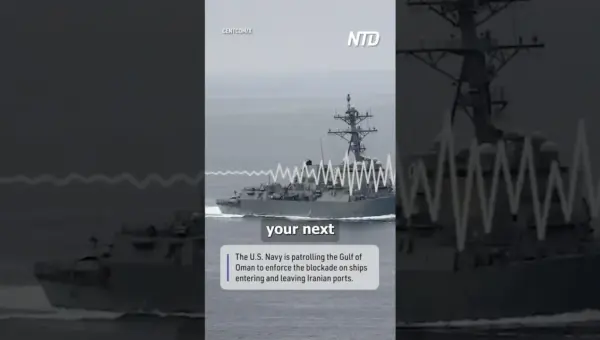
The US Navy has formally declared a blockade on Iranian ports, warning all vessels to turn back or face boarding and seizure. This significant move aims to exert economic and political pressure on Iran, with explicit threats of force for non-compliance.